
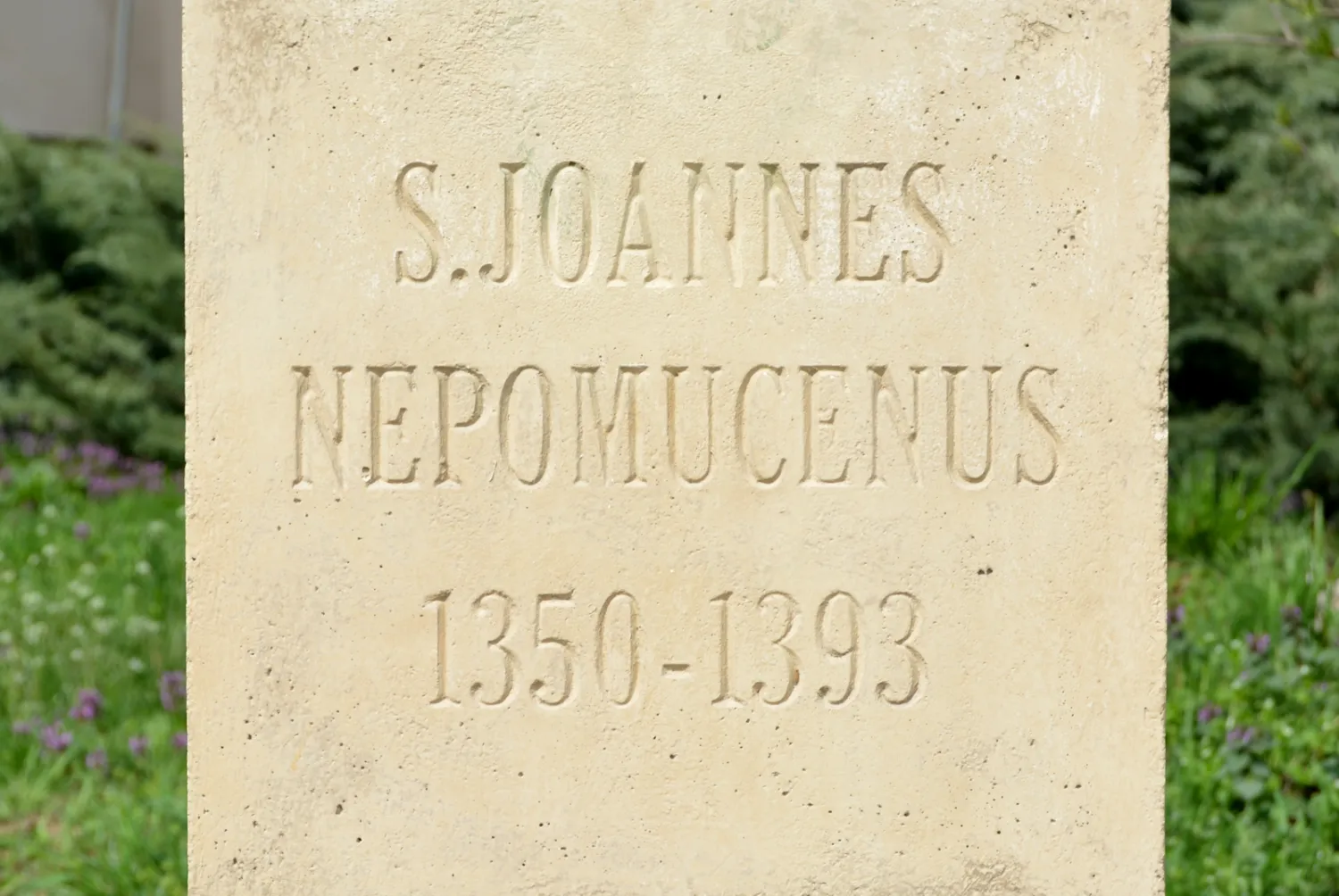
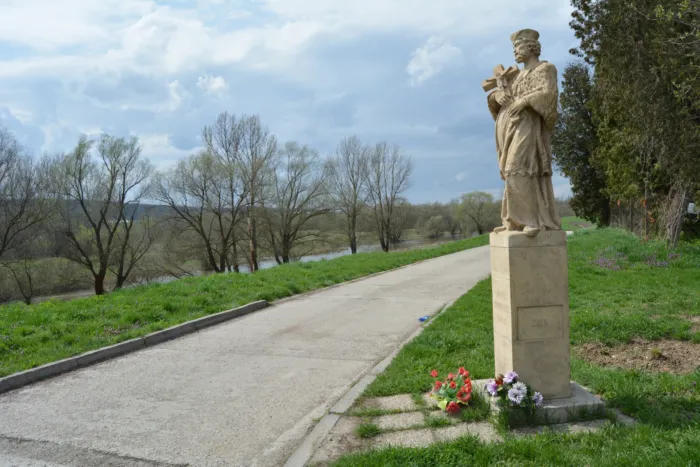
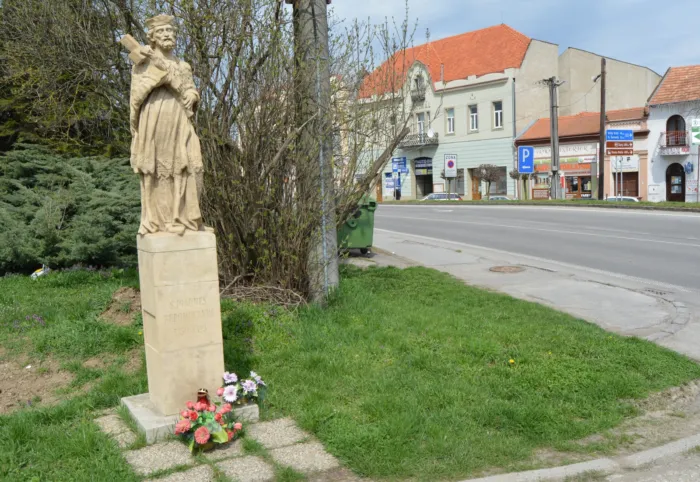
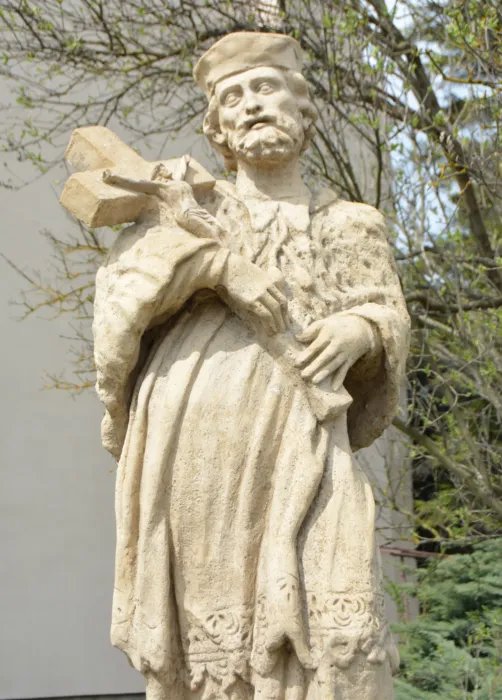
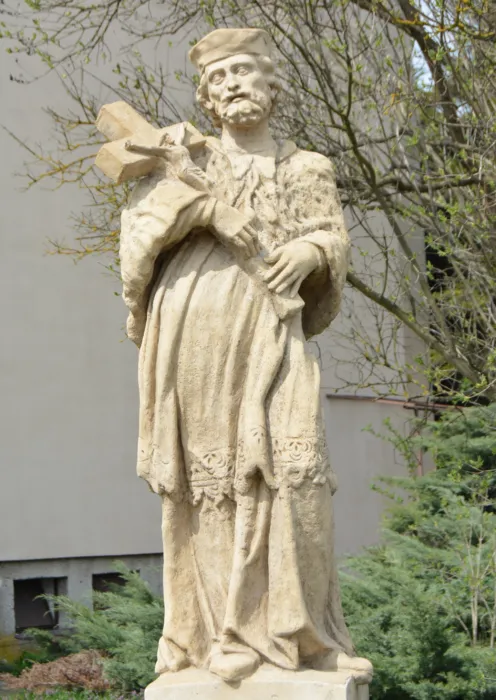
Statue of Saint John of Nepomuk
Statue, monument, memorial plaque
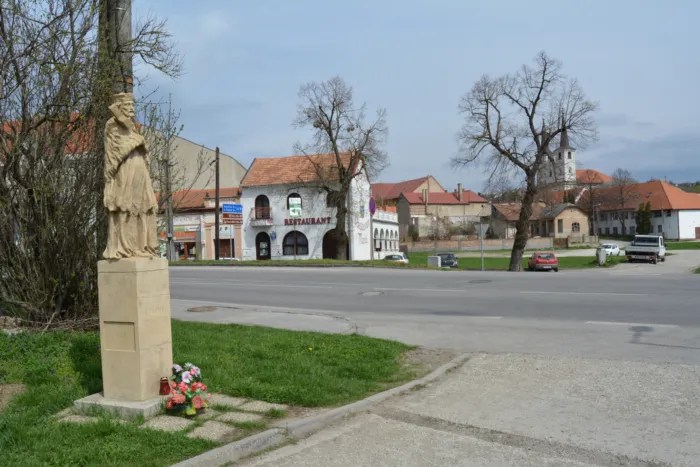
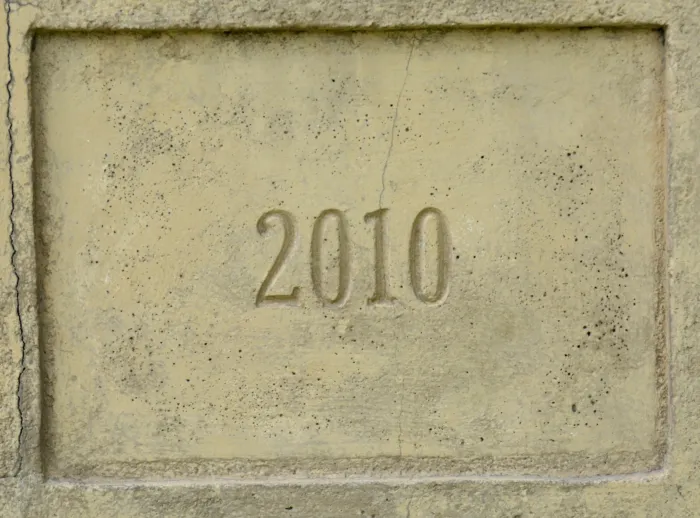
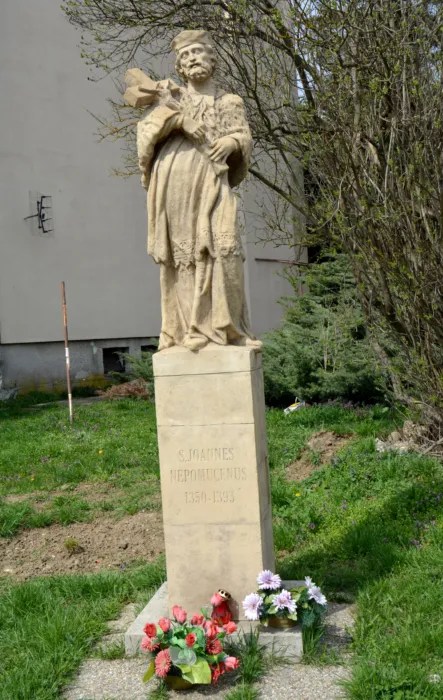
Not only was another statue of St. John of Nepomuk inaugurated in Ipolyság in 2010, a piece of the town's history came to life again. For more than one hundred and fifty years, the artwork guarding the Ipoly River was part of the image of the settlement; the baroque-style statue was probably placed in Ipolyság sometime in the second half of the 18th century; there is no exact information about its origin. During World War II, the retreating German and Allied armies blew up the bridge along with it, thus trying to stop the Soviet army. ; Only contemporary postcards and a 19th-century oil painting by Lajos Kubinyi preserve the memory of the bridge and the statue of the patron saint. The statue once stood on the wide stone railing of the bridge, but there is no suitable place for it on the current bridge, so the patron saint was placed on the right bank of the river, on the side facing Pereszlény. The initiator of the statue was Béla Tóth, who, although he has lived in Komárom for decades, has always remained a local patriot. Seventeen of the twenty-nine donors no longer live in Ipolyság, but they considered the cause important. The amount covering the costs of the statue, a total of 2,548 euros, was collected in four months. The smallest amount was 10 euros, and the largest was 500 euros, donated by Béla Tóth himself. The city government and the MKP representatives also contributed to the costs, and the city's public space maintenance company also carried out the landscaping for free. ; The statue cost 2,490 euros, the additional costs reached seven hundred euros, most of which was paid for by the Ipolyság City Seal Foundation, which carried out the organizational tasks. The 170-centimeter-high, cast artificial stone work is the work of Gyula Mag, a sculptor from Dunaszerdahely, and was modeled after the statue of Saint John of Nepomuk restored in Bratislava in 2009. ; Béla Tóth said that he moved from Ipolyság fifty-three years ago. When he was working on the newly built bridge in 1953, he found several pieces of the blown-up artwork in the then-dried riverbed. Ever since then, he has felt remorse for not collecting the remains. He wanted to make amends. Thanks to the cooperation of the people of Ipolyság, he finally succeeded after fifty-seven years.