
Statue of Saint John of Nepomuk
Sacral small monument
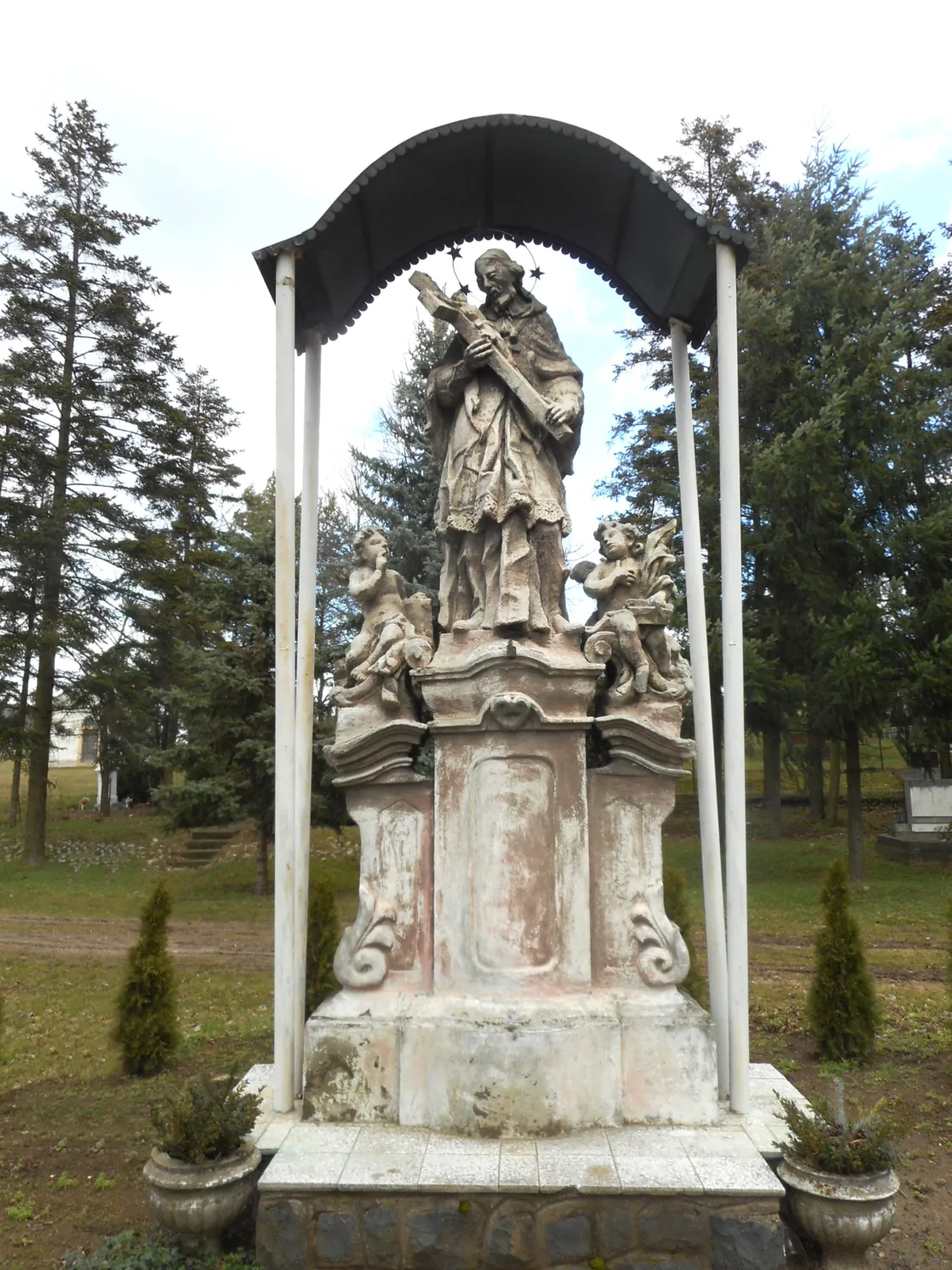
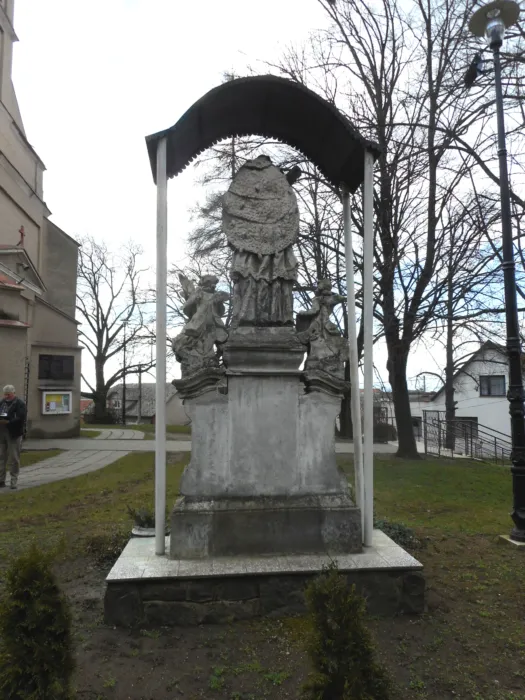
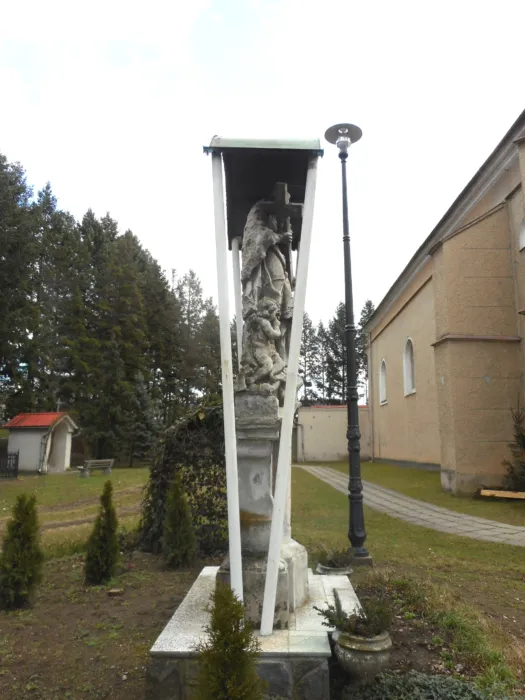
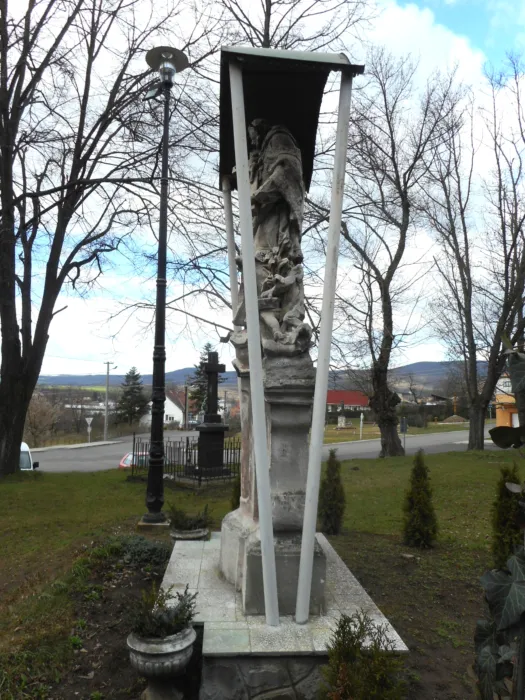
"The population of the present village, united from the villages of Alsó-, Felső- and Egyházasnyék, has faithfully stood by its Roman Catholic faith in recent centuries. The religious fervor of the population is preserved in the settlement by countless so-called "sacral monuments", chapels, crosses and statues. ; One of these is the monumental Baroque sculpture group that stands today in the churchyard. The 18th-century creation originally did not stand here, but on the then unbuilt square southwest of the church, from where it was squeezed into the church yard. The very high-quality sculpture group was carved from soft stone. The life-size, standing statues stand on a moving, articulated, ornate, curved cornice crowned with a pedestal higher in the middle and lower on two sides. The central figure is Saint John of Nepomuk, beloved and revered since the Baroque era, the patron saint of the confessional secret and water people, whom the The unknown artist is depicted with the usual iconography: in priestly attire, stole, collar, cloak, with a crucifix in his hand. A halo of stars rises above his head. John is flanked on both sides by an angel - depicted as a winged child. A curved tin roof with decorated edges was erected over the work." ; "The most beautiful and oldest outdoor work of the Ipolyny family is the 18th century Baroque statue of St. John of Nepomuk, which is located in the churchyard. The monumental-looking work stands on a decorated pedestal and is made of stone. Its dedication is no longer legible. It bears a resemblance to the statue of St. John of Kemence in Hont County. John stands before us with his head uncovered, holding a large crucifix in his hand, and a starry halo above his head. The two sides of the statue are decorated with an artistically crafted Baroque angel. The entire work is protected by a laced zinc cover." ; The statue of the patron saint of rivers, bridges, sailors, water millers, and fishermen was moved to the churchyard in 2006, as a statue of King St. Stephen was erected in its previous place.