
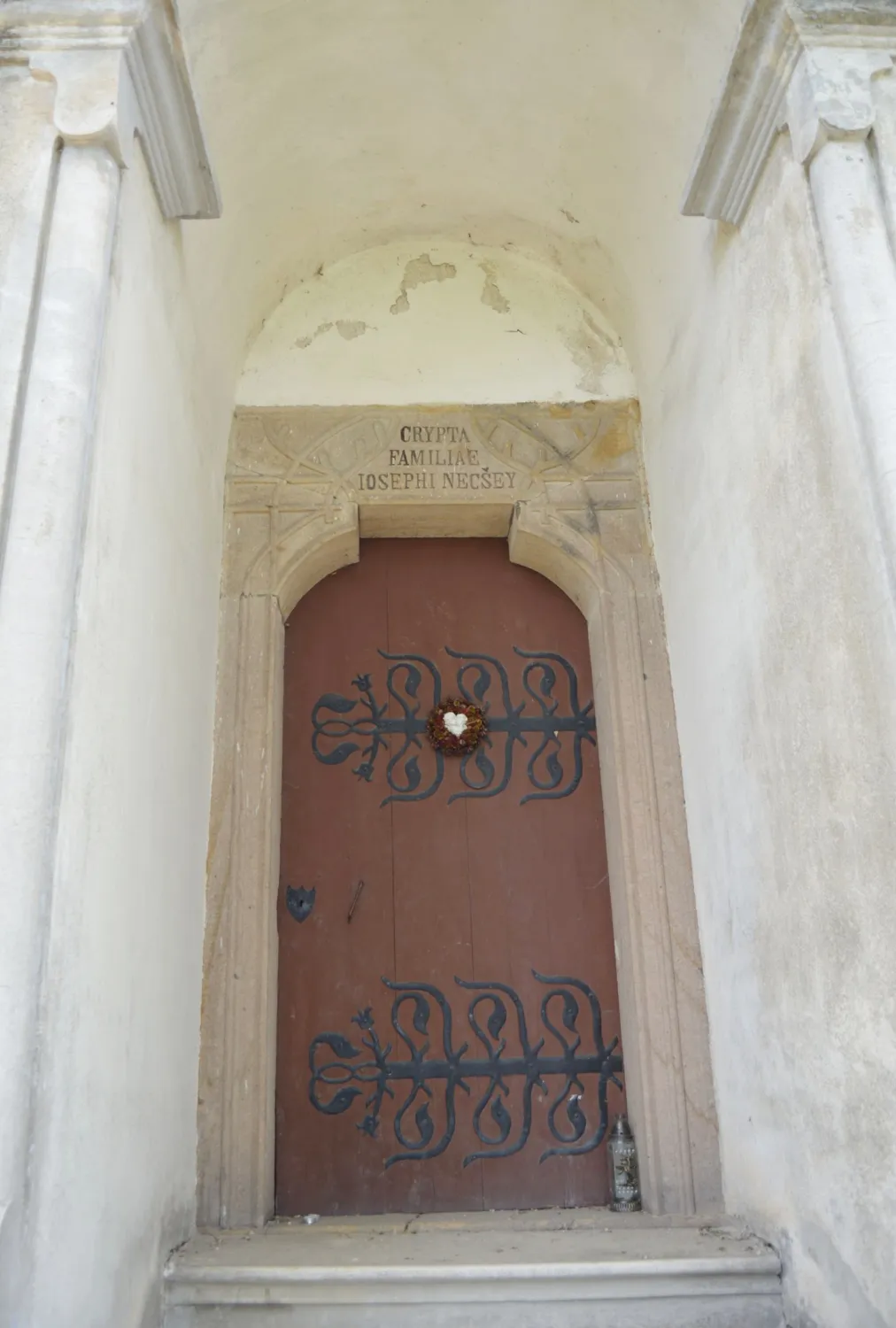
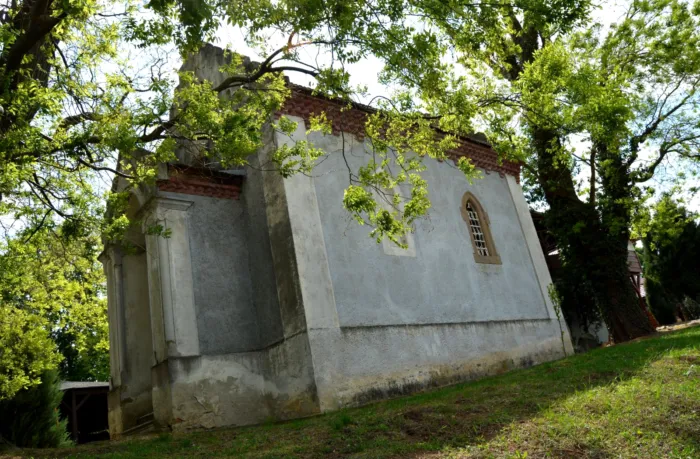
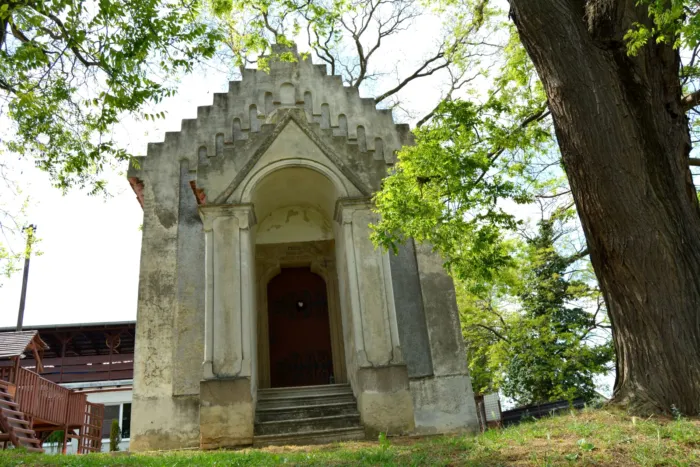
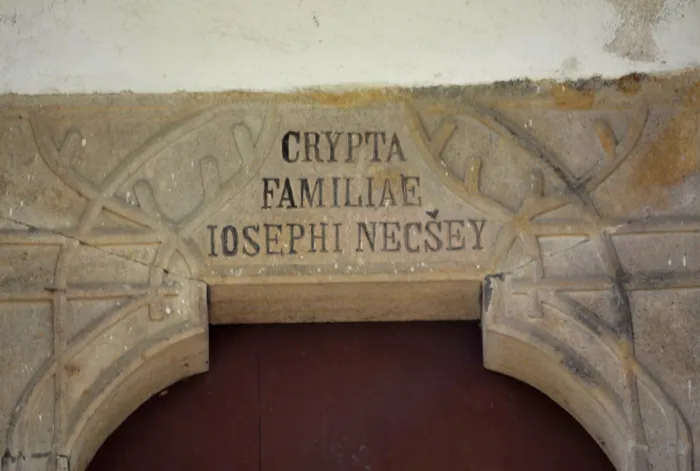
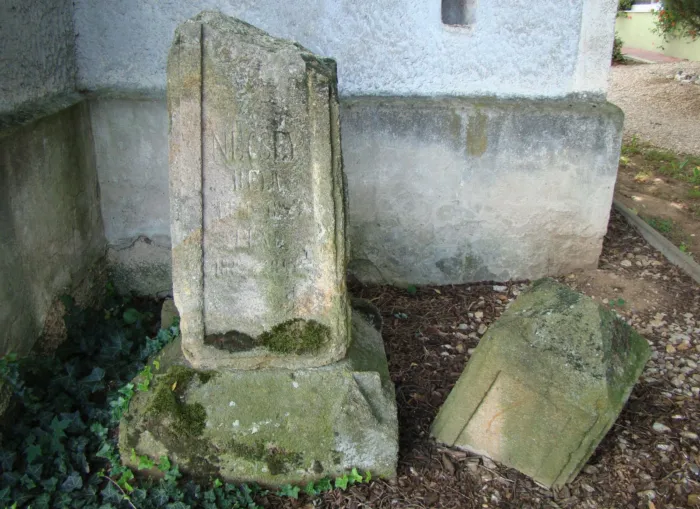
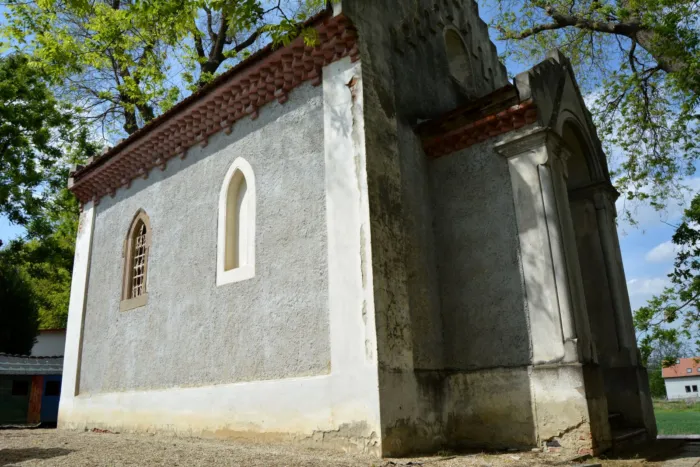
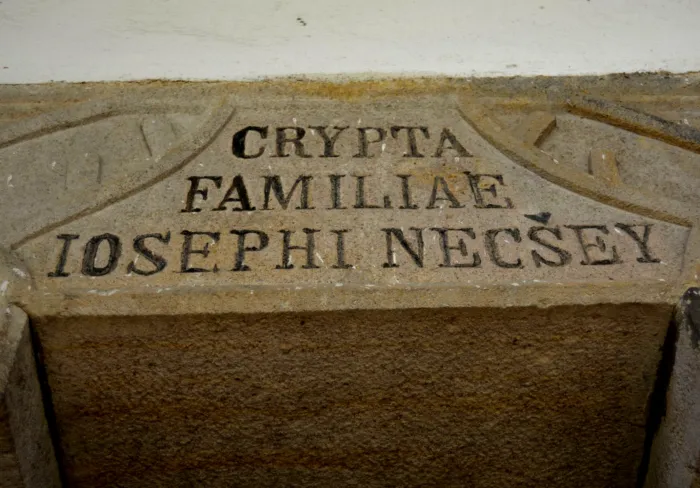
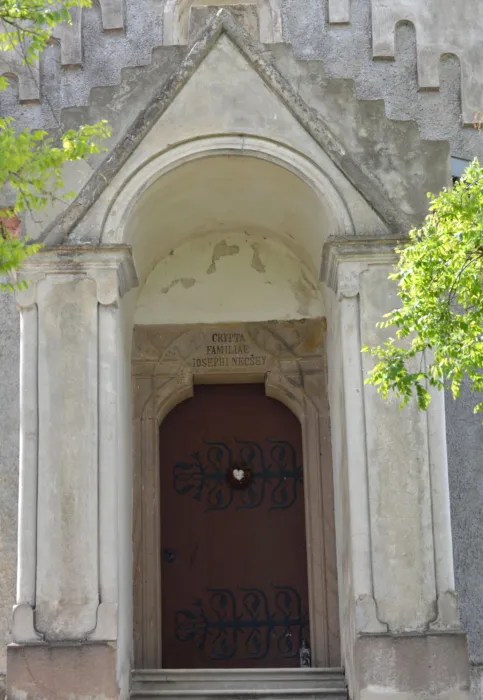
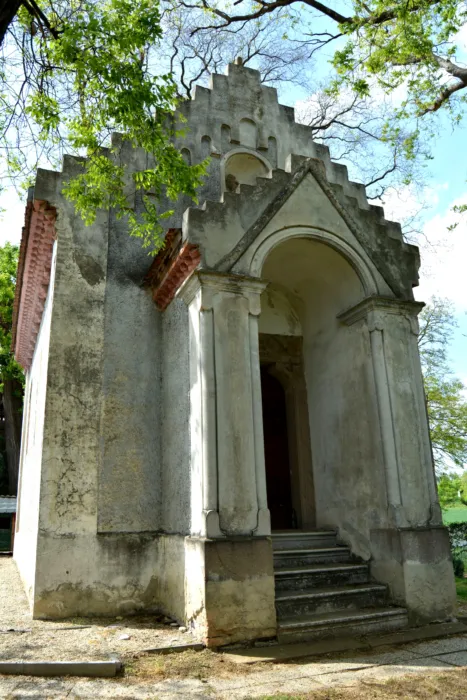
Resting place of art historian László Nécsey
Building, structure
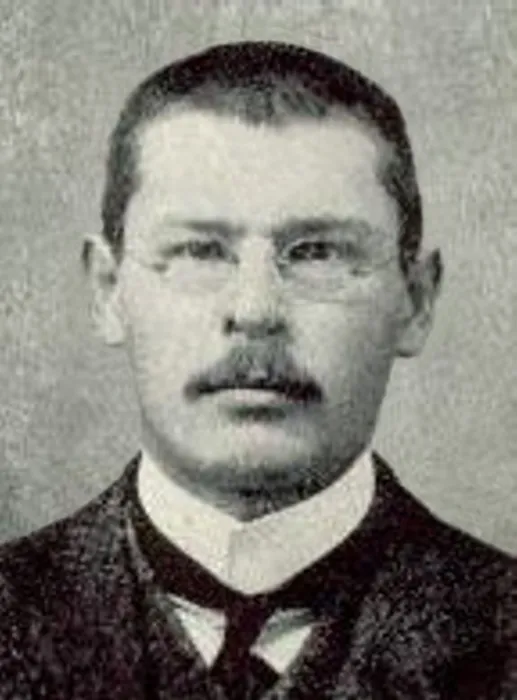
In the first issue of the fine arts journal Művészet, edited by Károly Lyka, who grew up in Nyitra, published in 1910, we can read the following about Dr. László Nécsey (1878-1909): ; "Devastating news arrived at the Museum of Fine Arts at the beginning of November last year. One of the institute's distinguished officials, who had gone to the Dalmatian coast to save his young life, had a terrible death agony with a deadly disease. Loving parents and good friends could not even begin to comprehend the terrible reality when the wire signaled the end of the tragedy on November 11. ; The news of the death of Doctor László Nécsey was received with deep sorrow by everyone who was close to the deceased. He was a serious, gentle-hearted, selfless man. He lived solely for his profession. Anyone who knew him could only be his friend. ; His fate spared him from the struggle for existence. However, his inner struggles were all the greater until he found a career suitable to his profession. And just when he began to take root in the favorable soil - an unexpectedly occurring pneumonia destroyed him in a few short weeks. ; On December 19, 1878 was born in Verebély, Barsmegye. When he was a high school student, he went to Érsekújvár, but he only attended the first grade of high school there. He completed the remaining weeks in Bánya Beszterce. He passed his matriculation examination in 1890. Without a sense of vocation, he enrolled as a lawyer at the University of Budapest. He did not even take the final exams. When he returned home, he announced to his parents that he was switching to the humanities. ; Initially, he studied Hungarian and French literature. He studied the latter with particular love. In the meantime, he became increasingly attracted to art history, until he finally chose its research as the main task of his life. ; In 1903, he went to the University of Munich, where he mainly studied Voll and Furtwängler for two years, and then spent a year at the University of Paris. In 1906, he enrolled again in Budapest and obtained his doctoral degree there in June 1907, as Pasteiner Gyula's student. He began his service at the Museum of Fine Arts on March 1 of the following year. ; László Nécsey was the purest type of a serious-minded man with noble aspirations, without any trace of willfulness. He was not guided by petty considerations. The most beautiful harmony reigned between his life and his scientific work. He worked for pleasure and for this very reason did not get around to publishing much. He only wrote about what really interested him and what he found worthy of processing. He prepared his works carefully and put every word on paper with thorough consideration. ; His doctoral dissertation "Vittore Pisano" was published in 1907 by the Franklin Society. The stylistic criticism thesis, written with great depth, tries to shed light on the sources of Pisanello's art. (It has since been shown that the artist's first name was not Vittore, but Antonio.) ; Several people have already dealt with the question and Nécsey only contributed to it with additions. to prove the theory that the art of this Italian painter is most closely related to the approach of the Burgundian and French miniaturists of the 14th century. The richest part of the dissertation in terms of independent results is the analysis of two well-known portraits by Pisano. A whole series of subtle observations serve here to prove three theorems. Pisanello's painterly style is basically the same as that of the aforementioned northern artists. The former is the older of his art as a painter and as a coin modeller. Of his two portraits, the miniature-like painting depicting Princess Ginevra in the evening was created from a different artistic perspective than the plastic-like image depicting Lionel in the evening. ; Among Nécsey's other literary works, the most valuable are the criticisms he wrote for the magazine "Revue ele Hongrie" published in Budapest. In these, he reported on all notable artistic events and always expressed his opinion with commendable objectivity. Speaking about the latest boom in Hungarian painting, he did not fail to point out, for example, the merits of Simon Hollósy. Nécsey himself was in close contact with the artist who suffered many indignities for a while, who was of great help to him in his studies. We cannot leave without mentioning his articles on Velazquez published in Budapesti Hírlap and Az Újság, as well as the anonymous criticisms that he wrote for Független Magyarország when he was still a young university student. ; He had no time for anything else. He considered the increase of his knowledge more important than the publication of his achievements. He did not desire cheap successes or the airing of his name. In general, his entire operation was nothing more than a careful basic study, the collection of the most important information. ; A rare phenomenon in our society, where the low exploitation of art is now also on the agenda. It was therefore a great injustice from fate that he sentenced him to death at the age of five. His grieving parents lost their third son in him. One of those who moved away was István Nécsey, who died tragically in 1902 at the age of 32. painter. ; His body was brought home to Verebély and buried on November 20. The deep grief of the Museum of Fine Arts was expressed by Dr. Ernő Krammer, director. We, who knew him well, bid farewell to him with the painful knowledge that this time we had to give up an impeccable man who was destined for many things.“ ; ; Dr. László Nécsey (born December 19, 1878 in Verebély, Bars County), a very outstanding worker of Hungarian culture, a young official of the Museum of Fine Arts, died on November 11 on the Dalmatian island of Lesina, where he had traveled to treat his lung disease. He was a modest, inconspicuous person.