
Nagyőr bell tower
Building, structure
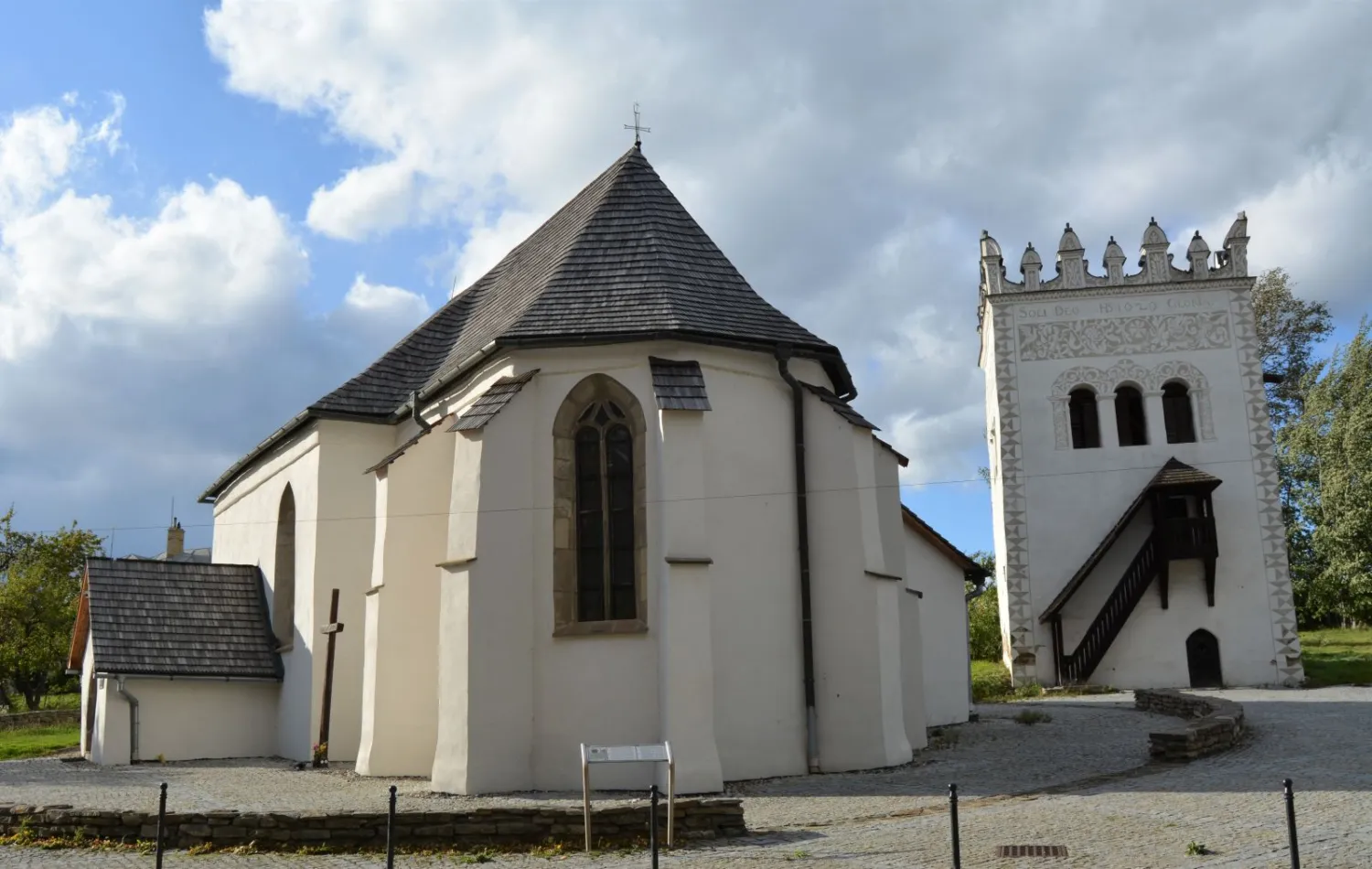
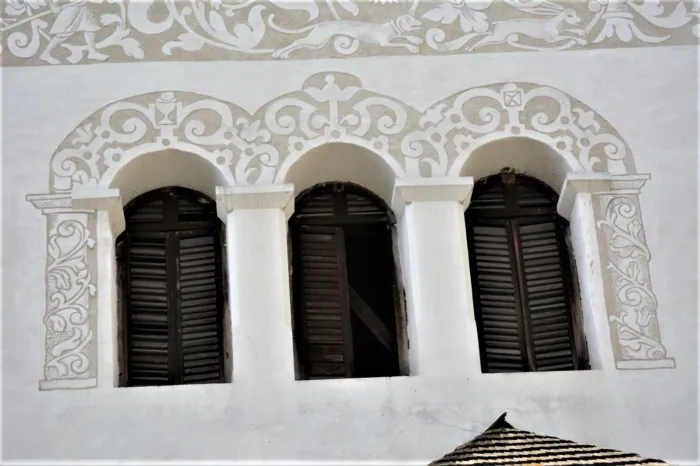
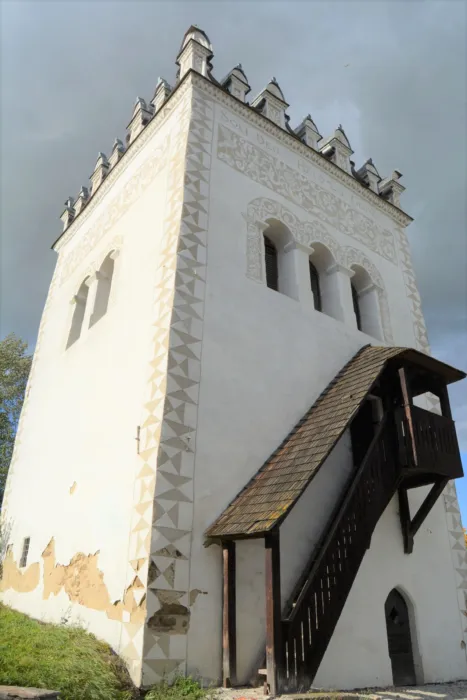
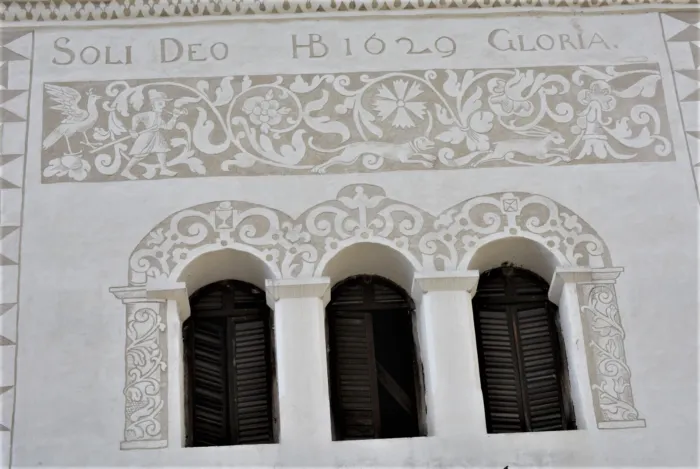
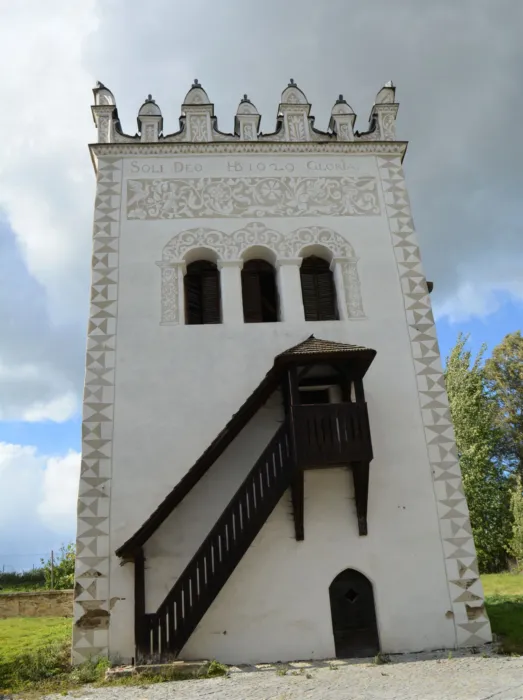
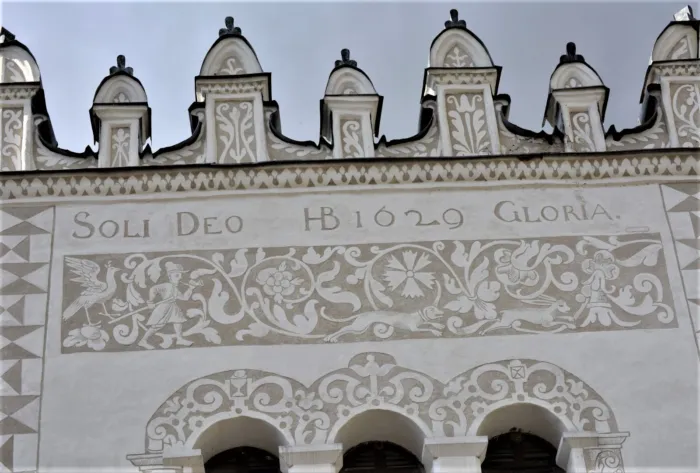
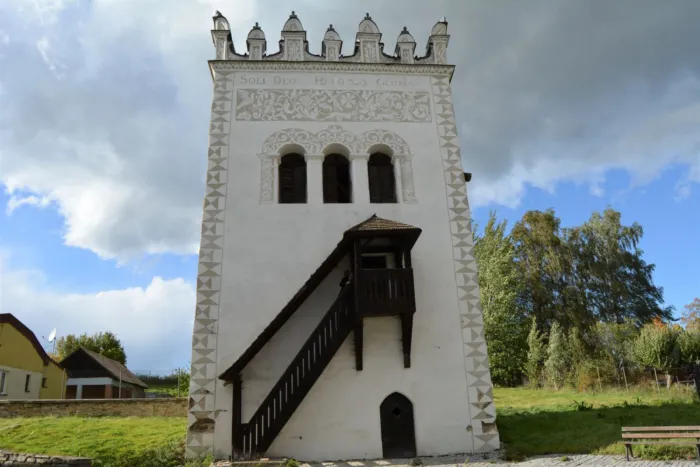
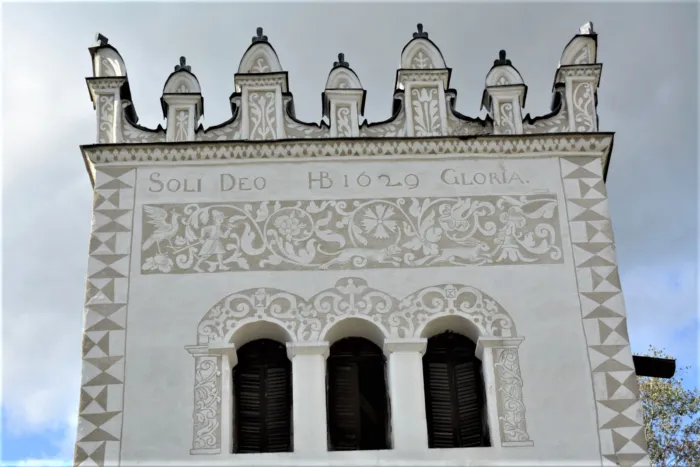
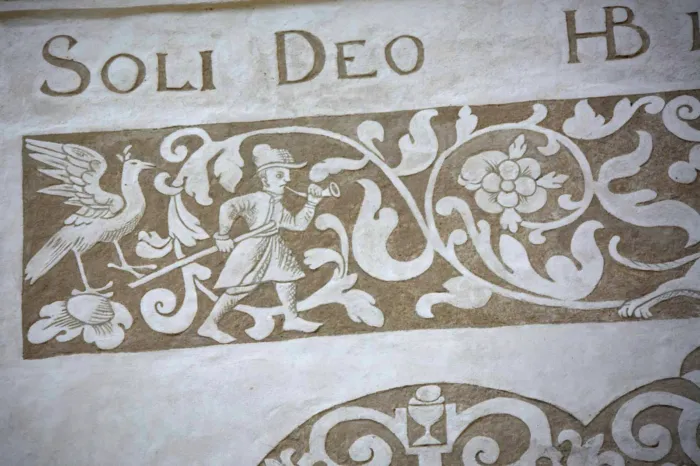
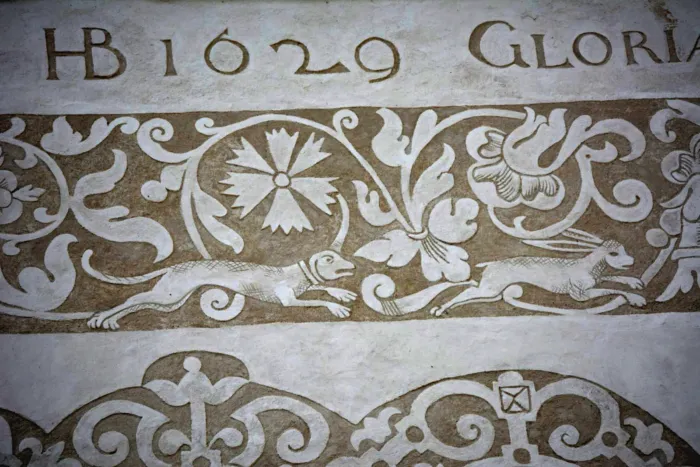
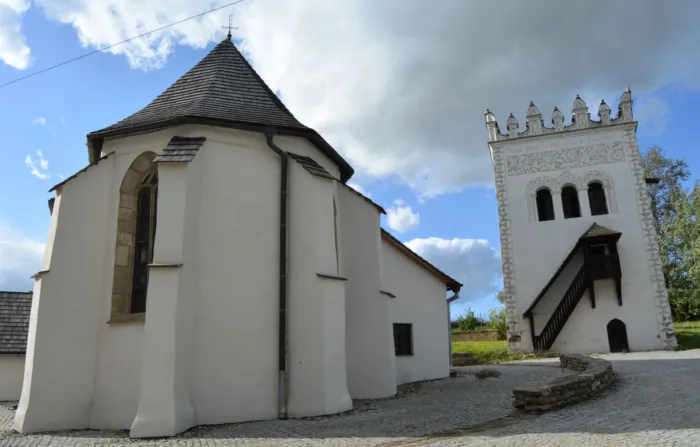
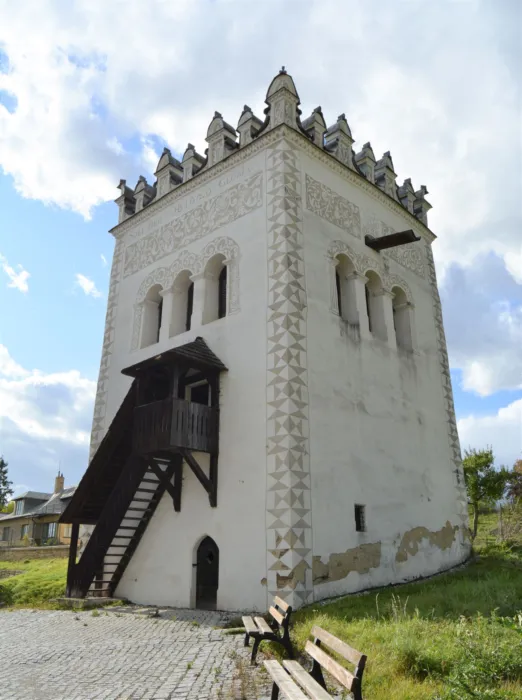
This type (square, with a platband, white with sgraffito decoration) is very common in the Spiš region. The one in Nagyőr is the most beautiful after the one in Keszthely. Since the church does not have, nor did it have its own tower, it was probably built on the site of a wooden belfry or a wooden Gothic bell tower, such as can still be found in many places in the Carpathian Mountains and the interior of the Carpathian Basin, from Orawka in Poland to Szépescsütört and the Upper Tisza region to Bánffyhunyad in Transylvania. ; The most beautiful decoration can be seen on the facade of the beautifully restored squat bell tower. Sgraffito adorns the twenty-four branches of the “platband crown”. Below it, a pattern imitating a carved cornice runs around. On the edges of the tower, a flat-pyramidal sgraffito, imitating so-called diamond-ash masonry, was carved. Under the cornice runs an inscribed hunting scene. The inscription: SOLI DEO HB 1629 GLORIA. The Latin motto “Soli Deo gloria: To God alone be the glory” is one of the five “solas” of the Reformers. In our country, it is most associated with the Reformed. (The five solas are so Protestant that they go against Catholic teaching, the Hungarian Catholic Lexicon did not even give it an entry.) This makes me think, because the Gothic altars stand in the small church, the walls are covered with frescoes, a Reformed patron, community, pastor and its superiors would not have tolerated this. Evangelicals do. I looked it up: I learned from Dániel Bothár's article about István Lethenyei (Theologiai Szaklap, April 1–2, 1912) that the Horváth-Stansiths, along with other lords of Nagyőr, the Berzeviczyeks, and the Thököly counts, were "good Lutherans". And Luther's followers did not destroy, as I experienced from Levoca to Kisszeben. My sources describe the church as Roman Catholic. This means that in Nagyőr, too, people changed religion, especially during the wars of order and religion, which took place in the Kuruc-Labanc colors, as in the parishes of the former eastern half of Upper Hungary. According to these, the HB monogram certainly means the Augustinian builder, Boldizsár Horváth-Stansith, and the date marks the completion of the construction. Ludwig Emil, on the other hand, writes that the “monogram is the same as the letter of the unknown mason of the Késmárk bell tower from 1591.” ; On the ribbon decoration below the inscription, a bird, a man with a staff playing a trumpet, a running dog, and a rabbit running away from them are surrounded by a garland of flowers. We also find floral decorations on the other sides. Below the decoration, three windows can be seen on two sides and a pair of windows on two sides. Their archways are also framed by sgraffito. The tower can be entered through a wooden door on the front side and another door opening from a wooden staircase.