
NAGYMEGYERI COUNTRY HOUSE
Built heritage
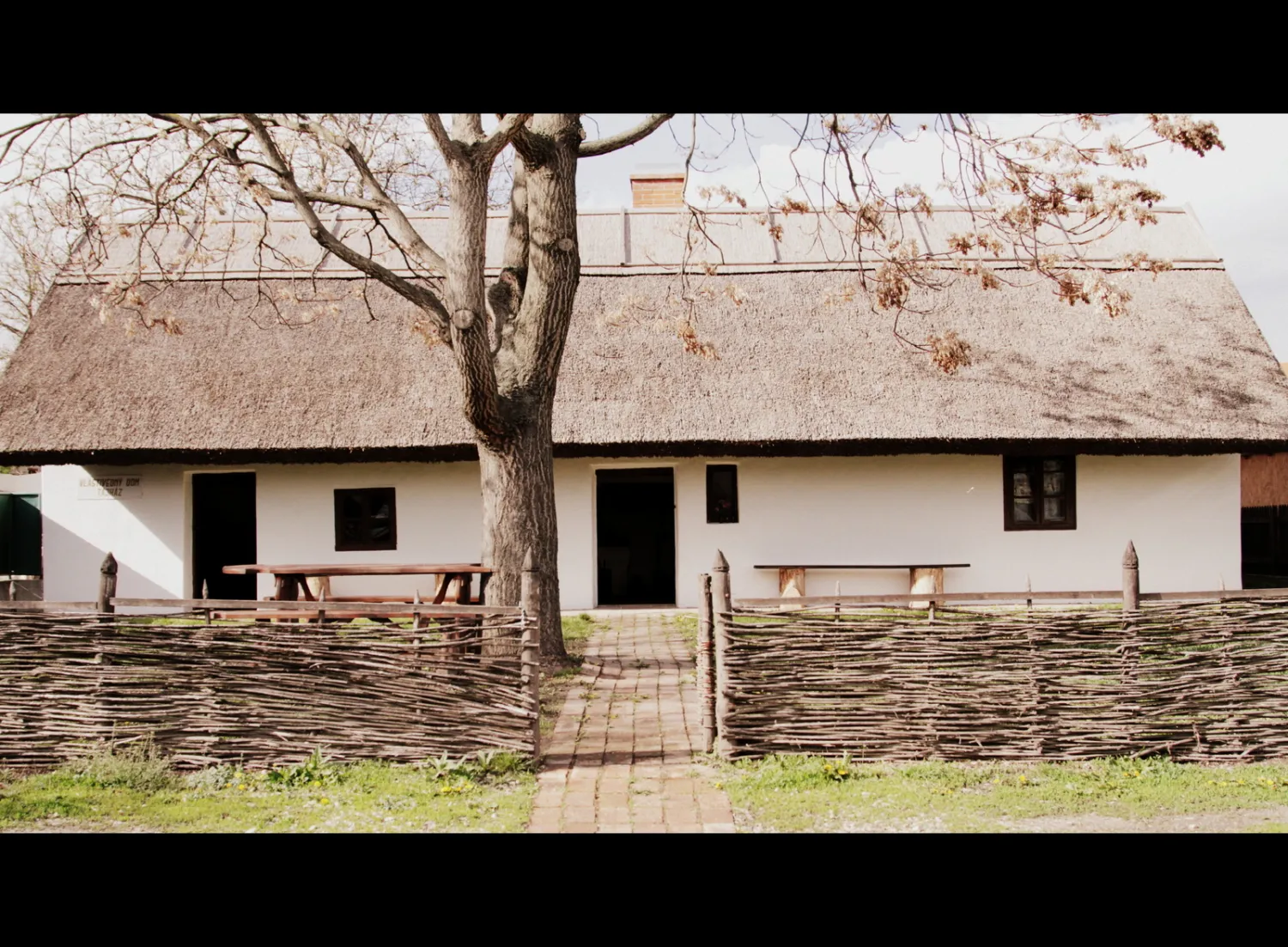
Alsó Csallóköz is a small town in Nagymegyer with a rich historical past. The initiator of the creation of the urban country house was the city organization of the Csemadok, after the local high school students, led by teacher László Varga, collected a significant number of ethnographic objects between 1978-80, and the then City Local National Committee purchased the thatched building on Rózsa Street, which was built in 1836 according to the year found on the master beam: "István Nemes Lovas and his wife N. Mikolai Tóth Mária." The building was built with an axis parallel to the street, slightly set back from the street front inside the plot. The house, made of traditional natural materials, has a gable roof covered with reeds. The country house was decorated in the summer of 1980 by the participants of the local history camp organized in the city (high school students from Nagymegyer and Győr-Sopron County), teachers József Szabó, Gyula Bedécs and László Varga, and the specialists of the Győr János Xantus Museum, Judit Csere and Ibolya Bíró. The country house was opened on December 1, 1980, and its furnishings were brought here from the place and the surrounding area. Its furnishings show the small peasant housing and object culture of the turn of the 19th and 20th centuries, as well as the tools of agriculture and local home industry. The building consists of four rooms arranged in a row. Entering the atrium from the courtyard, we reach the first room on the right, and the back room on the left. The fourth room, the pantry, opens from the courtyard with a separate entrance. Tools used in the household and agriculture were placed here. The first room is unheated, the kitchen has an open chimney, and in the back part there is the cauldron and the built-in stove. The tools for baking and cooking can also be found in the kitchen. Here is the baking shovel, the kneading bowl, the spit, the planer, the pepper mill, the carving basket, etc. There are colorful plates on the walls, and on the shelves we find milk jugs, harvest jugs and other utensils and tools necessary for cooking. The back room's stove is also connected here. The period furnishings of the rooms are gifts from local residents. The owner of the plot and the residential building on it is the Nagymegyer City Government, which had the 185-year-old building renovated in 2000. The exhibition visible in it is operated by the Nagymegyer City Cultural Center. There is a permanent exhibition in the courtyard of the country house that presents the most significant periods of the historical development of the 553-year-old settlement. The country house can be visited between April 30 and September 30. Its annual major city programs include the Maypole setting (April 30) and the presentation of traditional dishes (June) ; ; Justification ; ; The furnishings of the Nagymegyer country house still preserve the small-scale peasant housing and object culture of the Alsó Csallóközi Hungarians at the turn of the 19th and 20th centuries, the tools of agriculture and local cottage industry. In this respect, it is a unique monument in Alsó-Csallóz, which has nearly 500 visitors per year. ; ; Source, donor ; ; 1. László Varga: Nagymegyer 1268-2008, Nagymegyer City Government, 20092. ; 2. Vlastivedný dom- Tájház, Veľký Meder-Nagymegyer, VMK, 2000 ; 3. Nagymegyer walk, Nagymegyer city office, 2004. ; 4. Nagymegyer the wonderful message of thermal water from the heart of Europe, Nagymegyer city office, 2005 ; 5, László Varga: Nagymegyer -Inhabitants' information, Nészek Civic Association, 2015 ; 6. László Varga: 550th anniversary of the charter of the city of Nagymegyer, Nagymegyer City Government, 2016