
Assumption of the Virgin Mary statue group
Statue, monument, memorial plaque
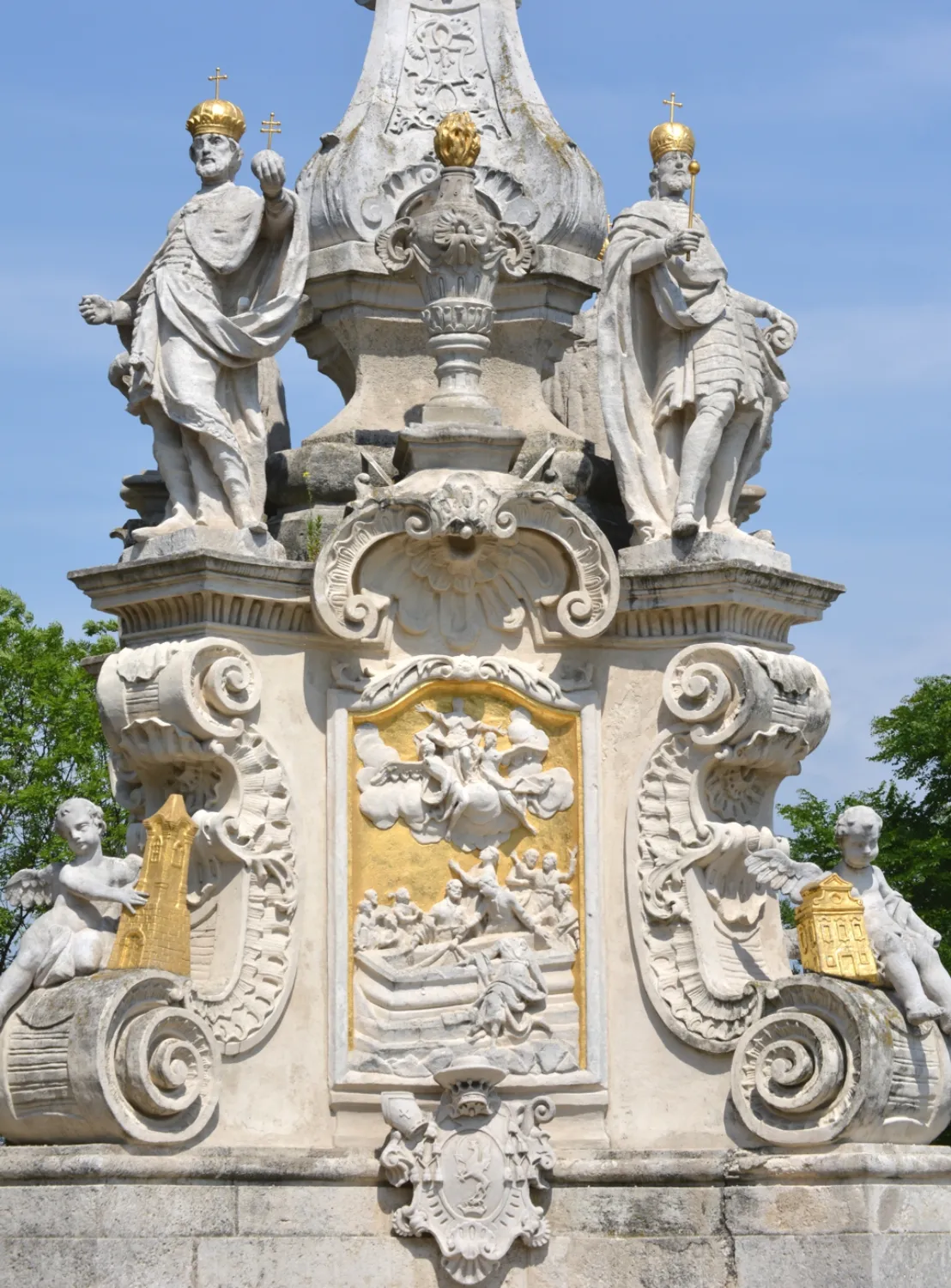
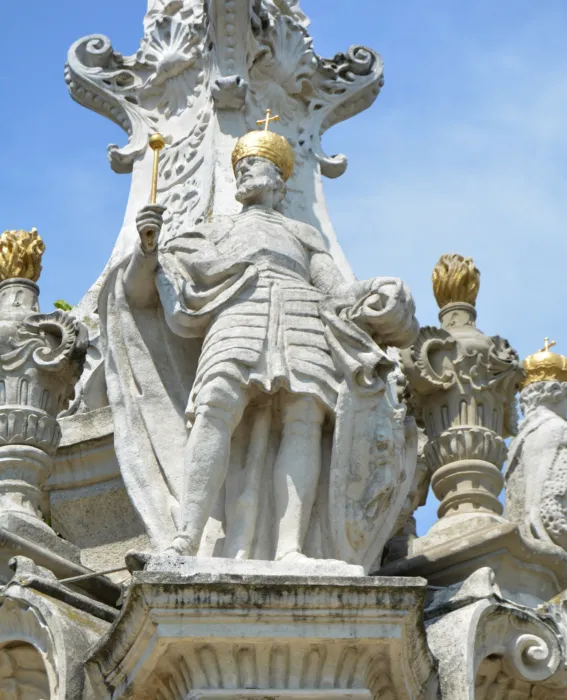
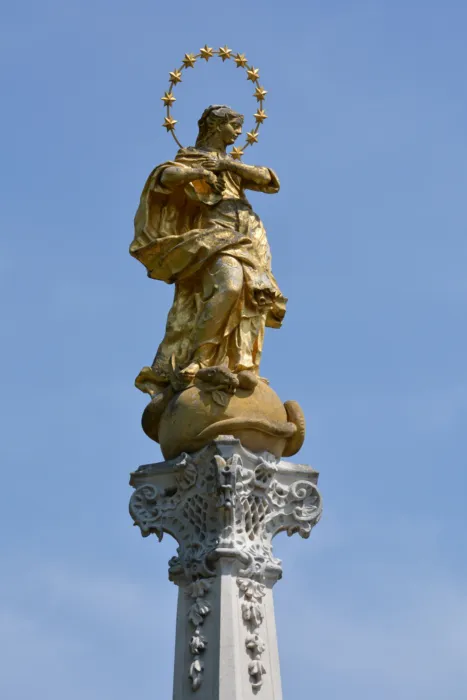
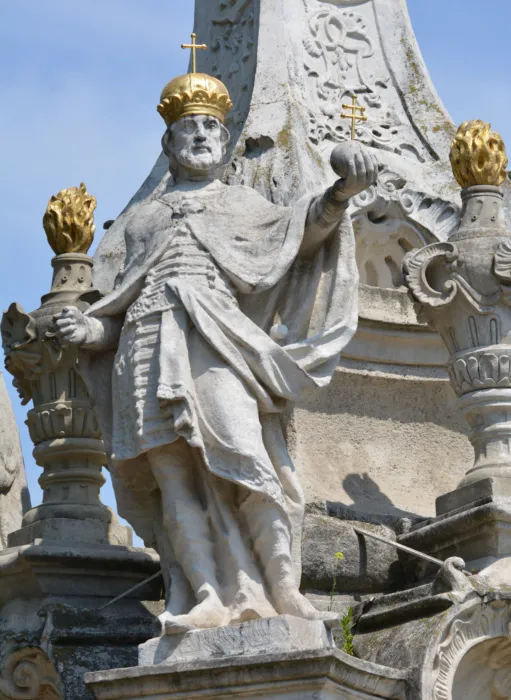
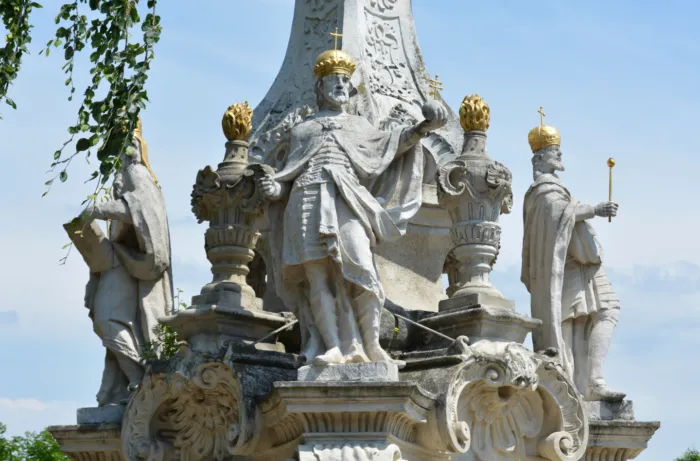
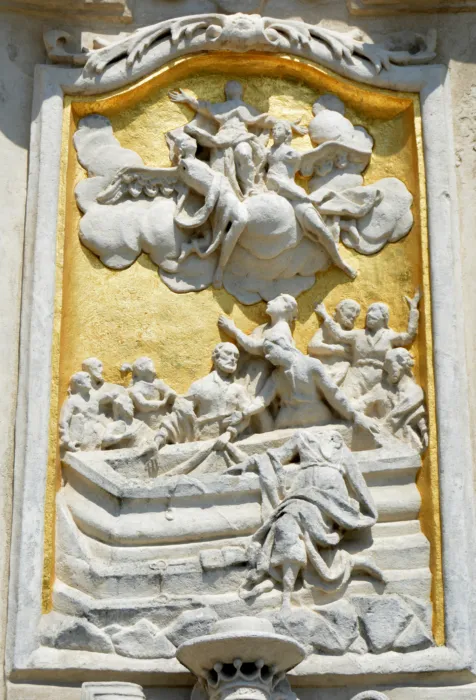
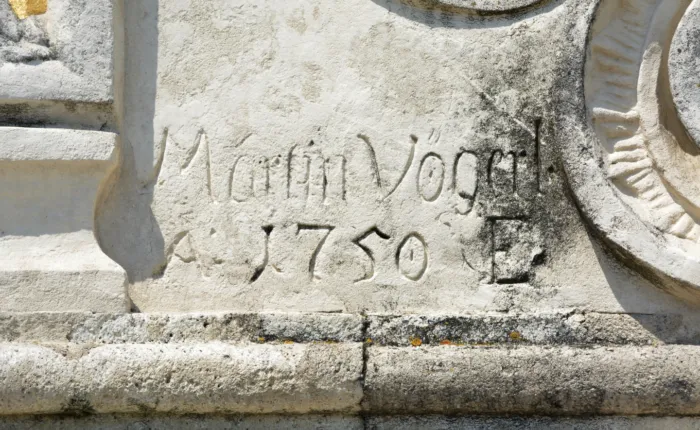
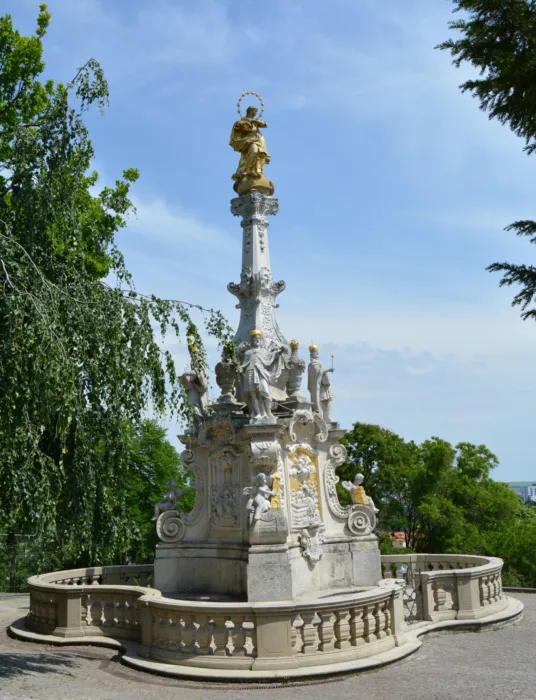
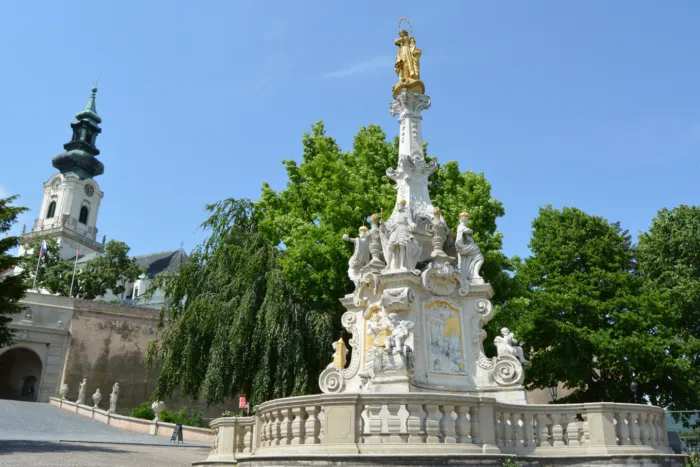
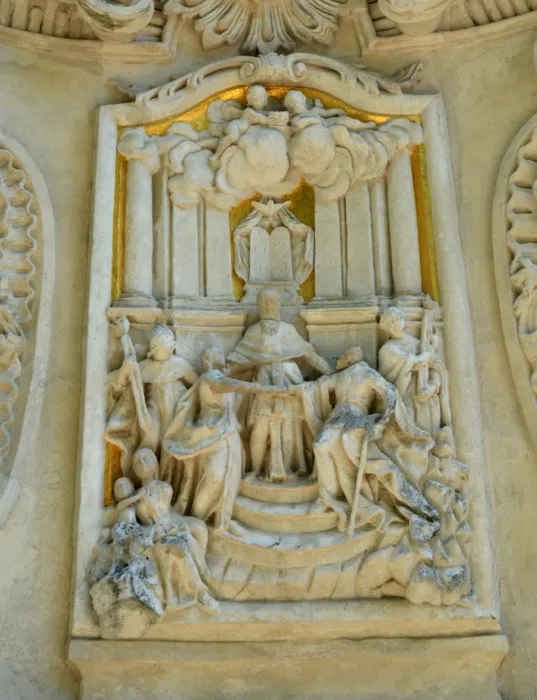
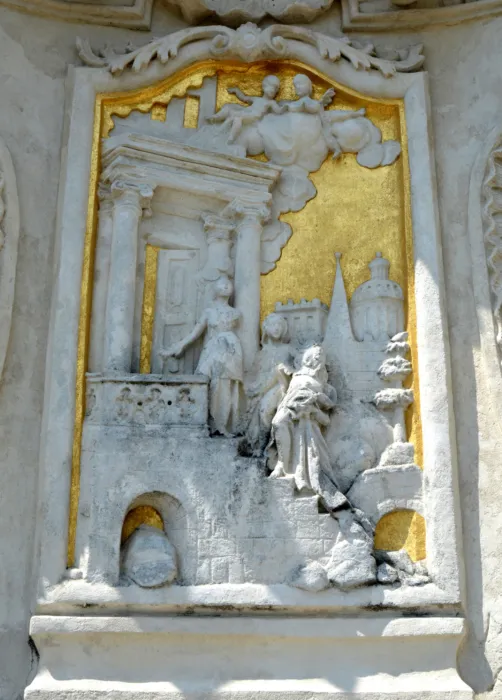
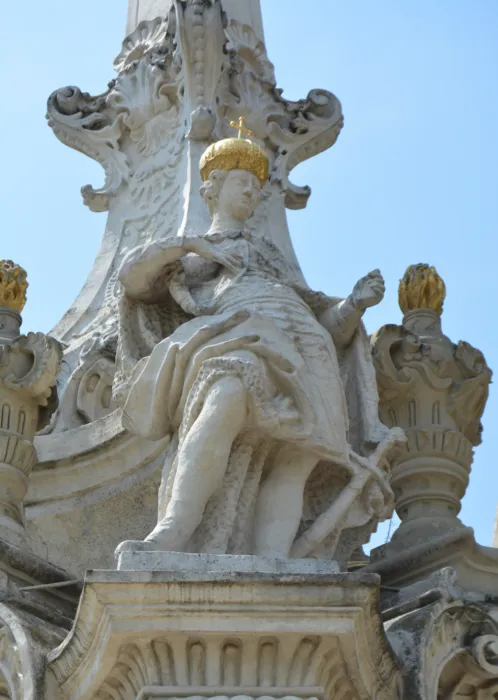
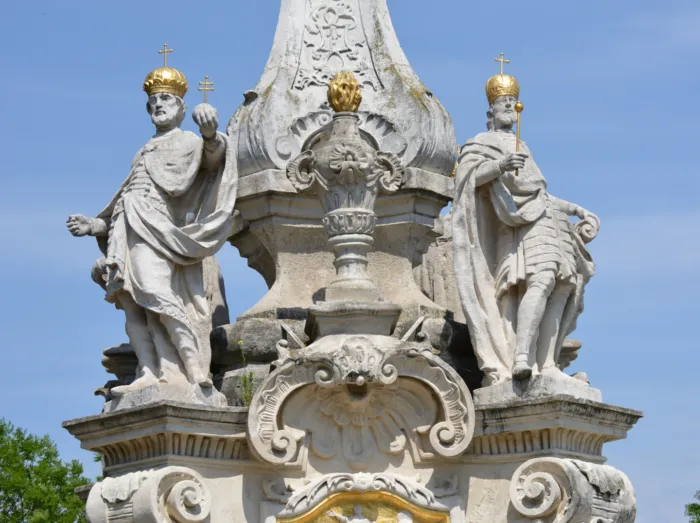
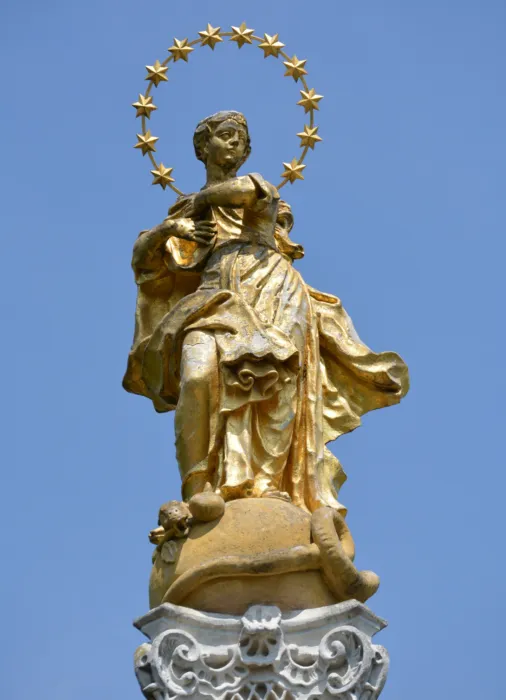
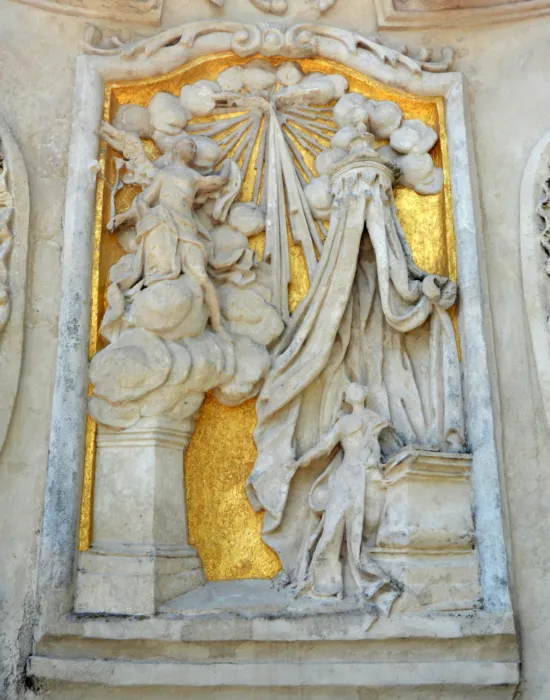
(Mary Column and Statue Group, Immaculata Memorial, Votive Plague Column) ; ; The Assumption Statue Group is a religious-themed statue group located in the city of Nyitra, on the Castle Hill, in the area of the square in front of the bridge leading to the castle gate. The sacred-themed building is also known by the locals as the Mary Column and Statue Group, Immaculata Memorial, and the Votive Plague Column. The total height of the statue group is about eleven meters. The Assumption Statue Group was erected by Prince Primate, Catholic High Priest and Chancellor Imre Esterházy (1663–1745) to commemorate the end of the devastating plague epidemic that had occurred a year earlier, around 1749. The monument was commissioned by Austrian-born Baroque sculptor and stonemason Martin Vogerl (1714–1770), who had already created and erected the Marian column and the figures of the sculpture group in 1750. The monument is also known as the votive plague column due to the reason for its creation. The group was made in a rich Baroque style. The name of the creator can also be found on the pedestal of the sculpture group. The column was originally made of sandstone, similar to the statues of kings and angels that make up the sculpture group, which are located around the column holding the Marian figure. As a result, partly due to moisture, the sculptures began to crumble, and some of them even disappeared. The most important reason for this was that rainwater from the slope leading to the castle flowed into the pedestal of the statue and then accumulated in it. For this reason, the monument had to be renovated and restored relatively often due to its condition, so the statue group was first restored in 1850, then in 1933, 1944, and in 1955 and 1956. Around the 1970s, the condition of the statue group deteriorated again so much that it needed another renovation. In 1974, monument conservationists had already drawn the attention of the authorities to the problem that there was a chance that the central Marian column might fall at any moment. Despite this, the tender for the restoration of the monument was only announced eighteen years later, in 1992, by the Nitra Bishop's Office, because at that time such authorities did not pay special attention to the preservation of statues of an ecclesiastical nature. The winner of the competition was Slovak sculptor and restorer Marián Hruštinec, who estimated the total cost of the renovation at around seven and a half million Czechoslovak crowns and promised to complete the work by 1994. However, the restorer entrusted with the renovation was unable to meet either the cost of the work or the promised completion date. In addition, the sculptor's financial abuses related to the reconstruction were revealed, and Hruštinec was expelled from the Chamber of Restorers in 1997, and three years later, in 2000, the commissioning bishop's office officially terminated his contract with him. After all this, it was also revealed that the copies of the secondary figures of the Immaculata monument, the kings, that had already been completed, were not accurate either, so they had to be recast. This task was completed by Hruštinec, but the bishop's office had a long dispute with him regarding the money due for the work. In 2008, the municipality of Nitra provided financial support for the further development of the area around the statue group - thanks to this donation, the area around the statue was drained and its pedestal was dried. Subsequently, at the suggestion of the monument protection office, the renovated Immaculata statue was returned to its original place, on top of the Marian column. The auxiliary figures of the group, the four kings and the angels, together with the noble coats of arms, were placed in a warehouse in 2006. Then, the stone steps and the stone railing surrounding the statue group were renovated, and later the whole thing was conserved. Finally, the statues were also restored. The work was completely completed at the end of June 2008. The total cost of the restoration process was estimated at more than ten million Slovak crowns. The statue was rededicated on August 15, the day of the Assumption. ; The sculpture group is made of several types of stone. It was originally decorated in several colors and gilded. The central and most important element of the eleven-meter-high sculpture group is the Marian Column, on top of which is an Immaculata statue of the Virgin Mary. The coat of arms of Bishop Eszterházy was placed on the cartouche below it. On the four sides of the pedestal are royal statues depicting the figures of four Hungarian rulers – Saint Stephen, Saint Imre, Saint Ladislaus and Béla IV. The decorative elements of the sculpture group are interesting, e.g. snail and shell ornaments, acanthus leaves, and seated figures of angels. The space between the spiral decorations is filled with reliefs depicting details of the Marian cycle: Mary's Visit to Elizabeth, Annunciation, Mary's Betrothal, Mary's Assumption. The work is square in plan and is separated from the square by a parapet. The valuable public sculpture is under camera surveillance. In many elements, the Nitra monument is very similar to the Marian Column in the Lower Austrian town of Hainburg an der Donau, which is also considered one of Martin Vogerl's public works. The Austrian master also created the Marian Column in Gödöllő, for which he based the sculptures in Nitra and Hainburg.