
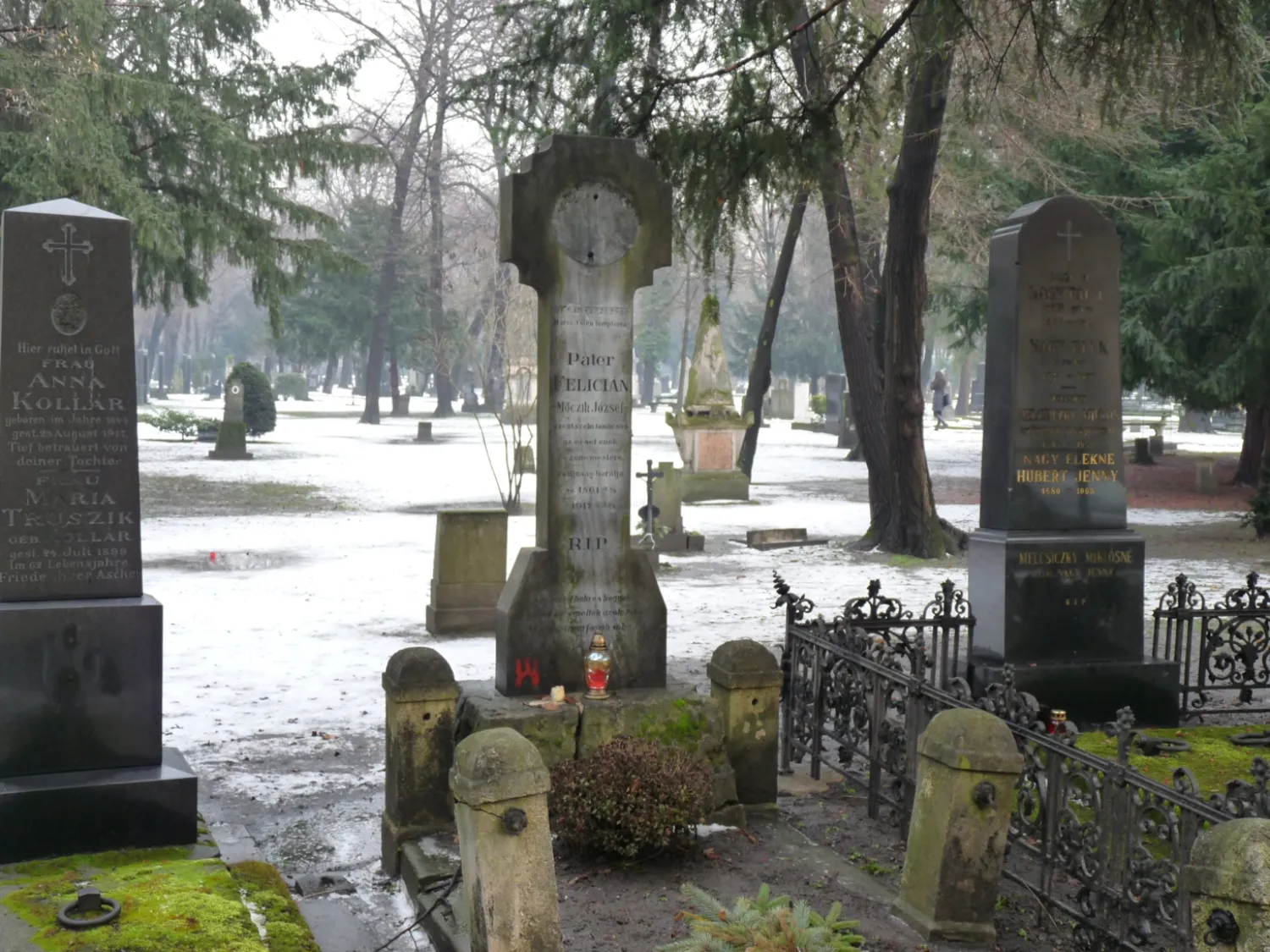
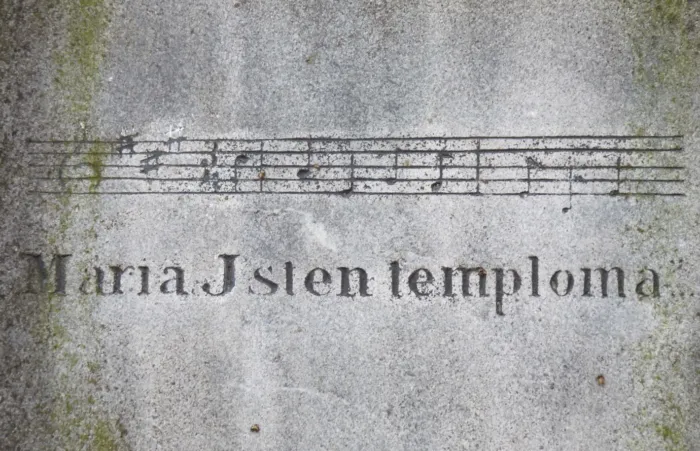
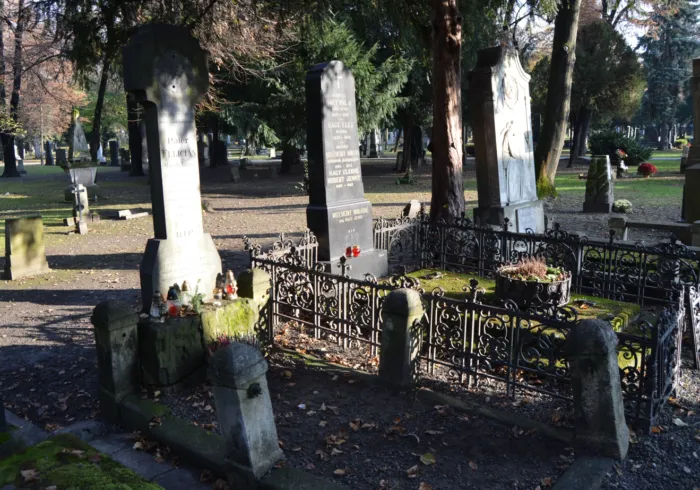
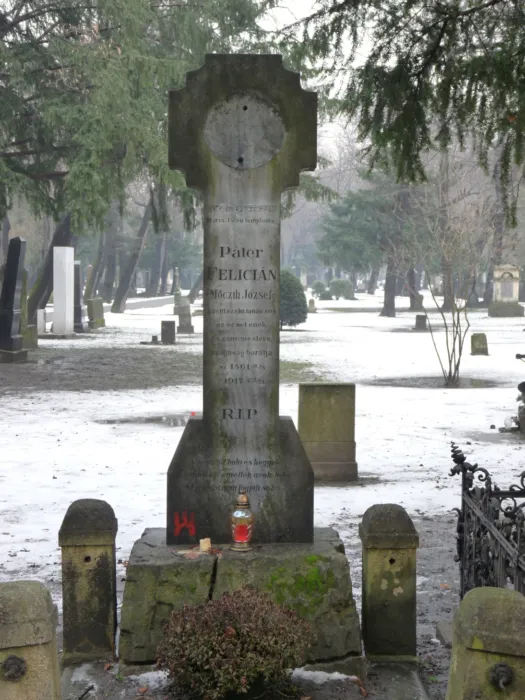
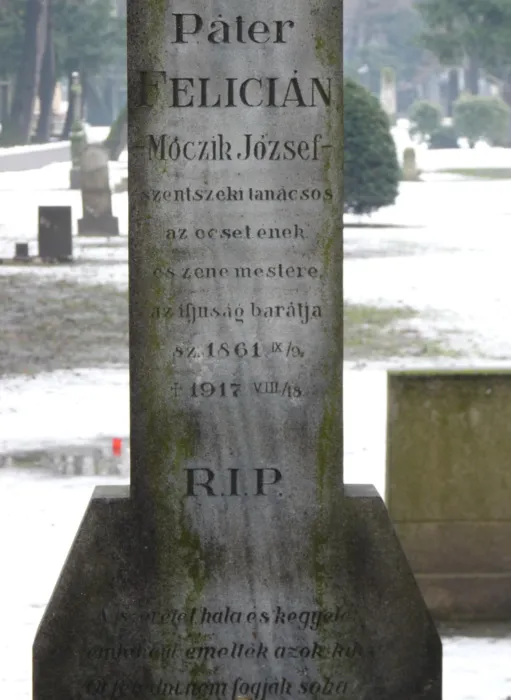
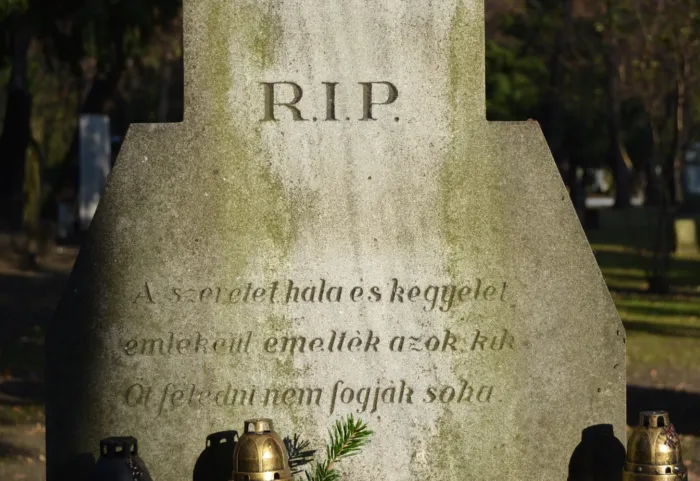
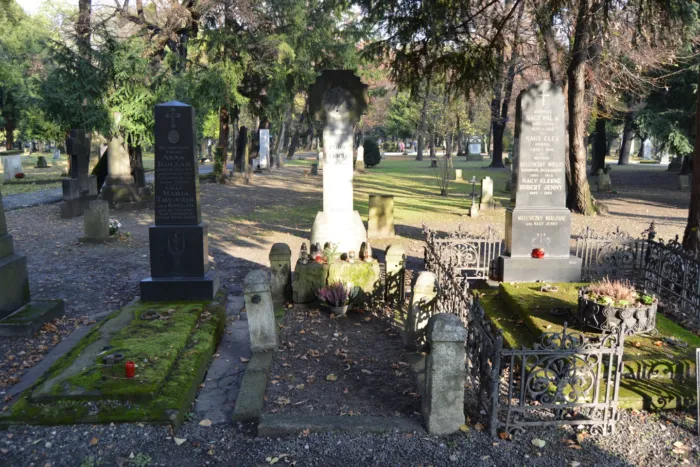
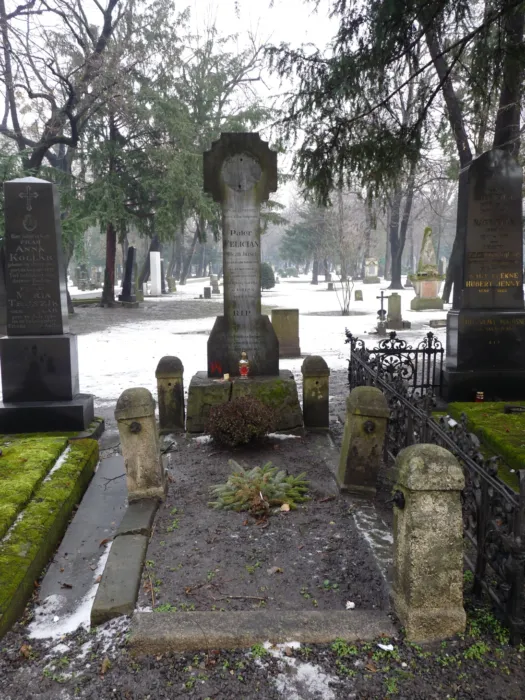
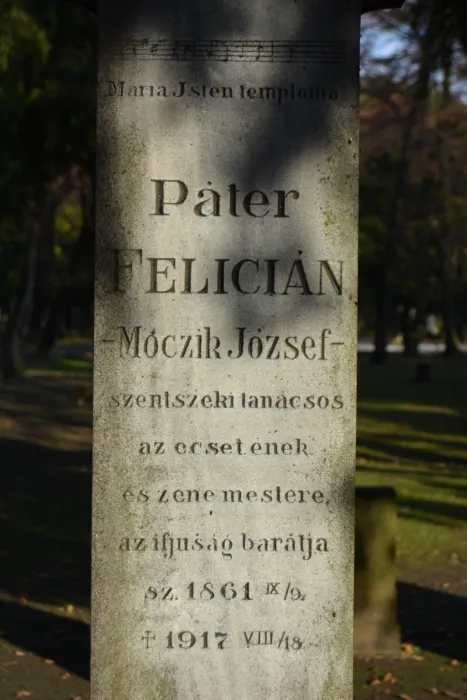
The grave of József Móczik (Father Felicián)
Cemeteries, tombstones, graves
József Móczik was born on September 9, 1861 in Selmecbánya. In his youth, he studied carpentry, then enrolled in theology. In 1883, he entered the Franciscan congregation, and in 1893, he was ordained a priest. For a while, he was a cantor in the Franciscan church in Bratislava, then his vocation called him to the countryside, and later between 1893 and 1900, he performed priestly service in Budapest. Here, as a student, he attended the Budapest Academy of Fine Arts, further developing the painting experiences that he had already practiced in addition to his cantor and priestly vocations. In addition to landscapes, he painted vedutas, but his stay in Pest and his newly acquired academic knowledge increasingly led him towards sacred painting. Of course, his love for music did not let him down either; as a former cantor, he also had the opportunity to develop his skills in organ playing and composing in the capital. He then returns to his beloved city, Bratislava, where he puts the vast and diverse knowledge he has acquired over the years to good use. He continues his priestly service, participates in charity work, leads the children's choir of St. Martin's Cathedral, and as a composer participates in expanding the church's sacred music repertoire, which later becomes effective in the most important religious centers of the monarchy. He teaches music and fine arts to the children of Archduke Frederick. In addition to all this, he continues to paint, and in addition to his icons - which are still the decorations of many churches today and can be found in the depositories of both the Bratislava City Museum and the Slovak National Gallery - he also depicts fallen people and the poor. His vast knowledge, love of humanity, and humble helpfulness towards his faith community lead him to higher positions in the priestly career. He is later promoted to the position of councilor of the Holy See. Father Felicián passed away on August 18, 1917, and was buried behind the back wall of the church of the András cemetery, next to other ecclesiastical eminences. ; Father Felicián's grave (on the western side of the cemetery's II. sector) – is in a deplorable state. The bronze relief on the upper part of the cross-shaped marble tombstone is missing (the work of Róbert Kühmayer), the letters – although they are clearly legible – are waiting to be cleaned and gilded, and none of the chain-holding columns are missing – including the decorative chains. ; Composer and conductor István Németh Somorjai was also a student of József Móczik, who was a member of the St. Martin Cathedral children's choir under the father's direction between 1908 and 1912. ; National cultural monument: NKP 279/76.