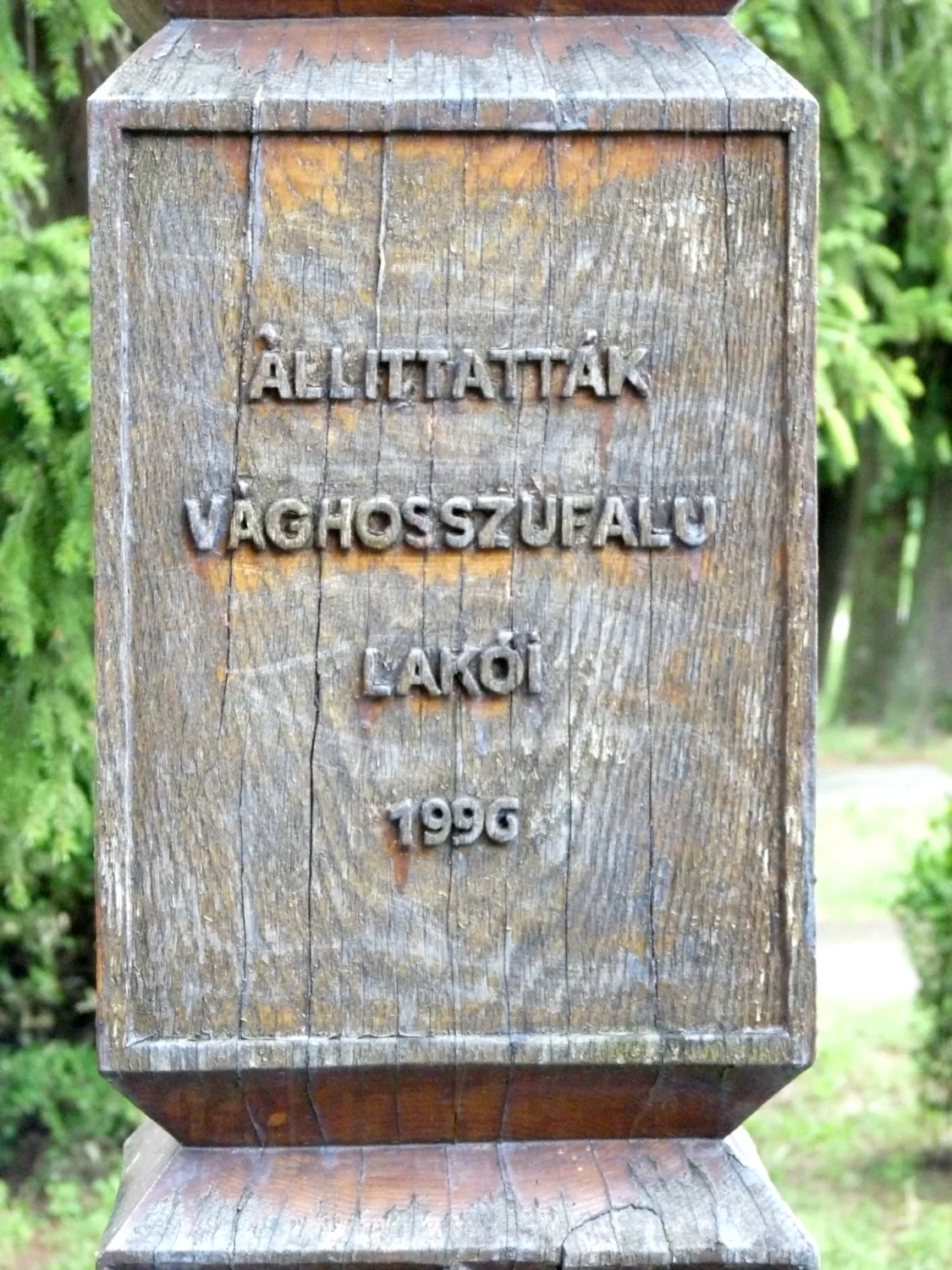
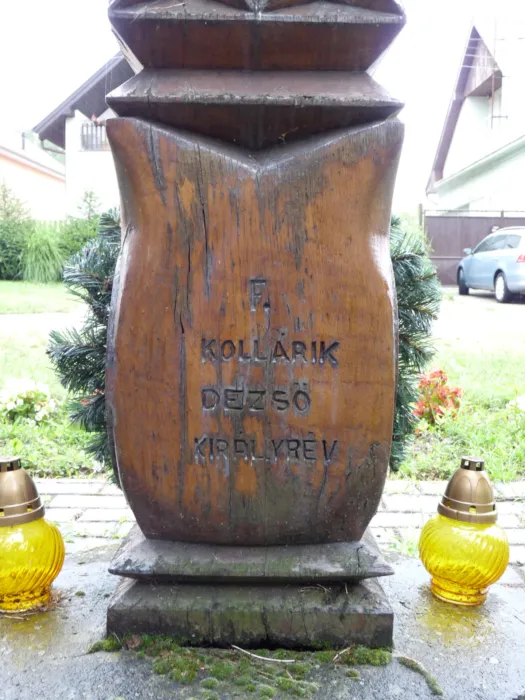
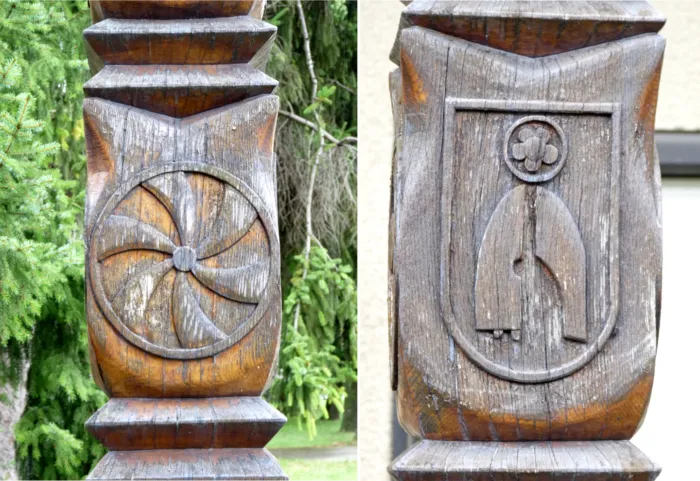
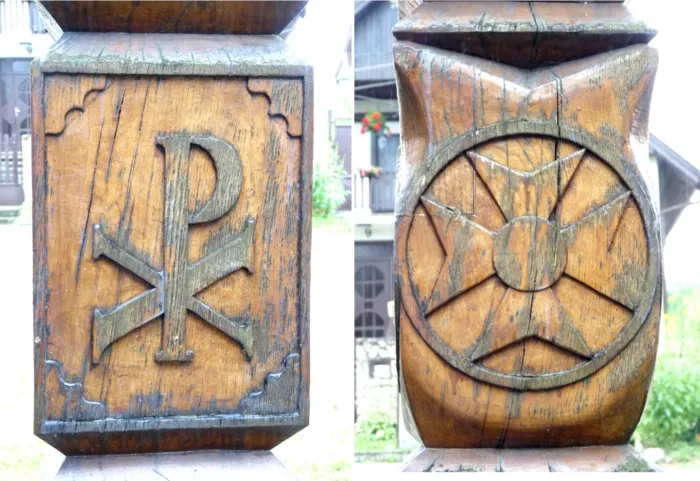
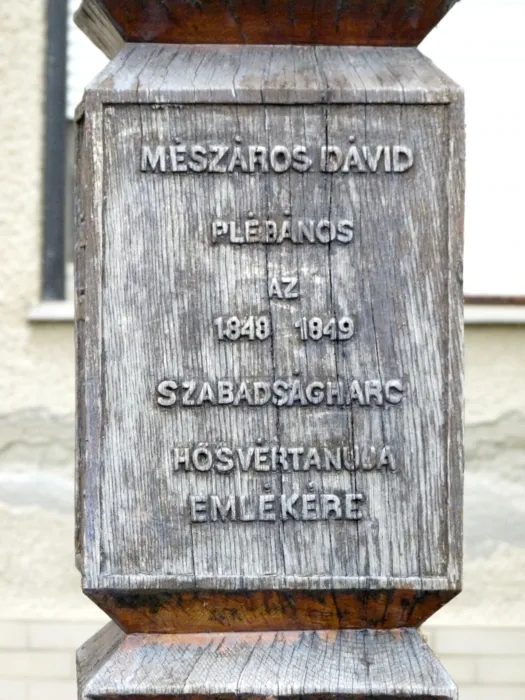
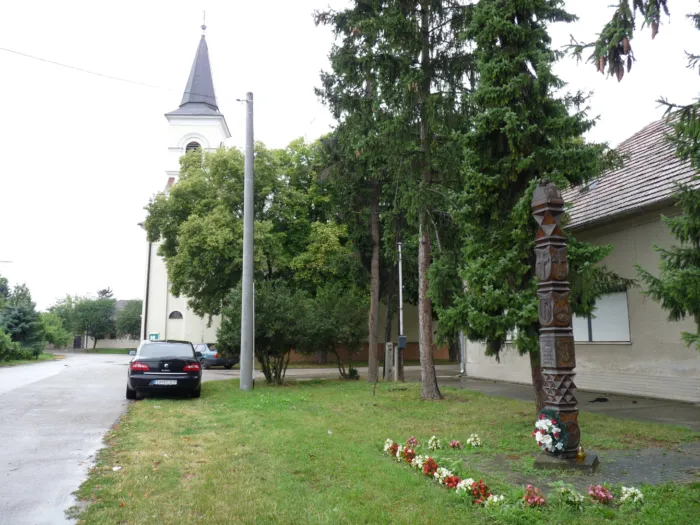
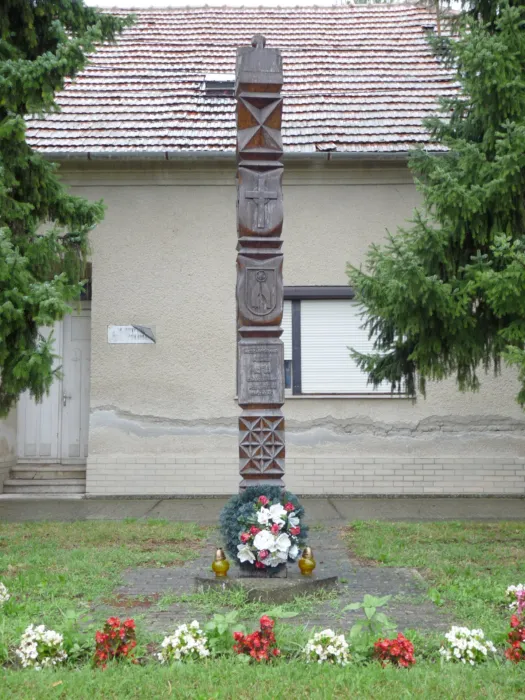
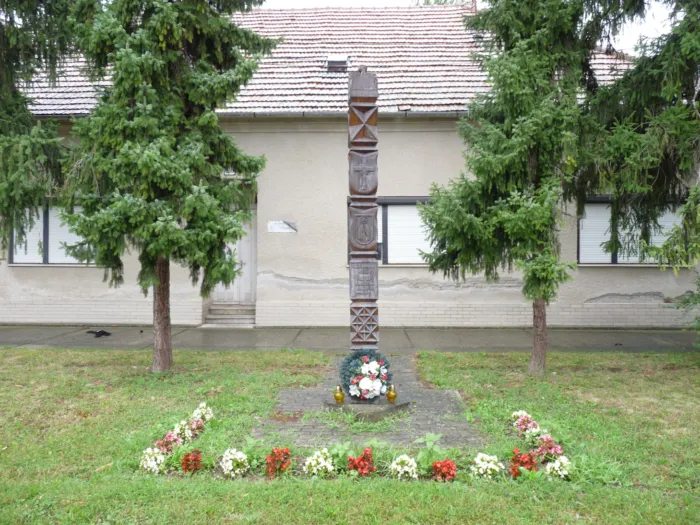
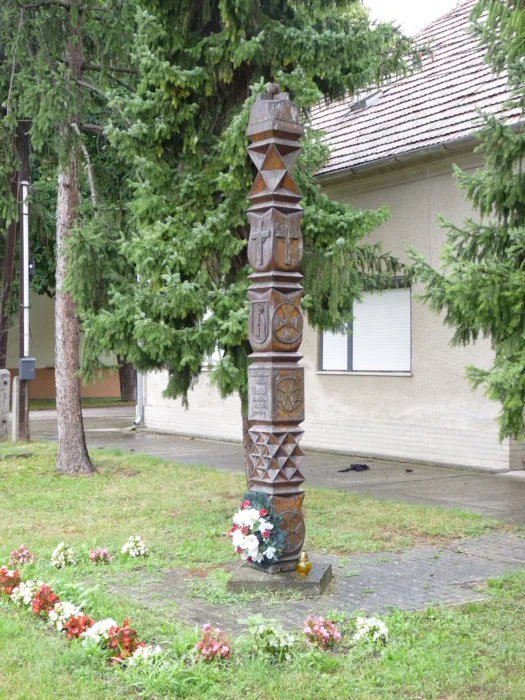
The headstone of David Mészáros
Statue, monument, memorial plaque
One of the outstanding personalities of the first half of the 19th century was Dávid Mészáros, a Catholic priest who was among the first to fall victim to reprisals after the suppression of the Hungarian War of Independence and Revolution. With his life's standing for progress, he deserves the respect of not only the present but also future generations. According to the civil registry entries, he was born on January 7, 1799 in Hosszúfalu, the second child of the marriage of Péter Mészáros and Ilona Oláh on February 9, 1794. Both parents were residents of Hosszúfalu. According to the 1828 tax census, Péter Mészáros was one of the richest serfs in the village. He was not only engaged in farming, but was also a miller. It is likely that the good economic situation of the family made it possible for the young Dávid to study to be a priest, as this promised a secure future for the young man who had risen from a serf family. He began his studies in Nagyszombat, then continued at the Pest seminary between 1819 and 1822. From there he went to Esztergom, where he was ordained a priest in 1823. He prepared for the priesthood in the Esztergom presbytery, but only for a short time, as he already worked as a chaplain in Galánta in 1825, and then in Szered in 1826. In 1827 he worked as a priest in Alsójató, from where he moved to Nagymácséd in 1828. Here he spent 17 years among his followers, whose recognition he also managed to gain with his steadfastness during the devastating cholera epidemic of 1831. From Nagymácséd he moved to Sopornya in 1844. The majority of the population of the strongly Catholic village was Slovak-speaking. As it turns out from his later testimony, Dávid Mészáros spoke the Slovak language well, which his student years in Nagyszombaty certainly contributed to his acquisition. The young priest certainly had no idea that this village would be the last stop of his priestly work. Sopornya Pata, together with its daughter church, had about 3,000 followers at that time, and the landlord of the village was the Esterházy family. The priest, who himself came from a serf family, was certainly familiar with the life of serfs with fragmented plots of land. Perhaps this fact also contributed to his becoming a promoter of the ideas of the 1848 revolution and freedom struggle. We know from contemporary sources that the slogans of the Pest March “equality, brotherhood, freedom” also resonated strongly in our region. Several members of the clergy openly supported these ideas in our area and became active participants in the events of the revolution. We know about Dávid Mészáros' activities in this direction from the indictment filed against him, according to which he was a supporter of the independence proclaimed in April 1849. He called on his followers from the pulpit to stand up against the enemy, and the successes of the freedom struggle were celebrated with the Te Deum in Sopornya. He did not recognize Ferdinand's election as king, which he did not hide from his followers. When the imperial army occupied our area in May 1849, he was among the first to be arrested. On May 29, 1849, soldiers of the 3rd imperial military unit took him to Diószeg, together with 4 other serfs, where the interrogation of Dávid Mészáros began. According to the chronicle of the Nagymácséd parish, their former priest was taken bound through the village, and only the numerical superiority of the imperial army stopped the priest's former followers from attacking the soldiers. Dávid Mészáros was interrogated in Diószeg together with the witnesses until June 16, after which he was taken to Bratislava, where he was brought before a summary court on July 14, 1849, which sentenced him to death by bullet that same day. Dávid Mészáros's trial allows us to get a closer look at the court proceedings against the Catholic priest convicted for his views. During the search of the house following his arrest, 10 documents with political content from the years 1848-1849 were found in the Sopornya parish, four of which were classified as incitement by the authorities. These are the declarations of the revolutionary government issued in Debrecen on April 10 and 22, 1849, as well as the appeal of Lajos Kossuth in Gödöllő on April 7, 1849, and the appeal of Baron Jeszenák in Komárom on April 29, 1949. Of course, the concealment of these documents was classified as treason by the Austrian authorities, since they incited the fight against the Austrian Emperor, reported on the dethronement of the Habsburgs, and were also documents of the independent Hungarian government, which were directed against the Austrian Emperor. The indictment also states in the statement of facts that Dávid Mészáros incited his followers to throw stones and bricks at the enemy - the Austrian military. In May 1849, he declared from the church pulpit that he did not consider King Ferdinand to be the legitimate king of Hungary, since he had not been crowned. These accusations against him were confirmed during the interrogation by the testimonies of witnesses József Baranyai, György Kosicsár, György Gáll, József Szekeres and Ferenc Gáll. József Baranyai was the first to testify, confirming the accusations against Dávid Mészáros, and said that the Catholic priest addressed these words to his followers in Slovak. The testimonies of the other witnesses were similar. In defense of Dávid Mészáros, he stated that he was unaware of the fact that it was forbidden to keep the documents in question found with him. Since they were written in Hungarian, he only intended to translate them into Slovak for his Slovak followers. The summary trial court, under the command of Pál Kempen of Fichtenstam, delivered its verdict in Bratislava on July 14, 1849. Dávid Mészáros, a 49-year-old Catholic priest from Hossúfalus, Nitra County, who was most recently active in Sopornya, was found guilty. The charge against him was the crime of incitement against the king, which he committed by calling on his followers to throw stones and bricks at the enemy, calling King Ferdinand the illegitimate ruler of Hungary, inciting his people to fight against the enemy, and guarding banned proclamations issued by Lajos Kossuth. The fourteen-member summary military court unanimously sentenced Dávid Mészáros to death by bullet. The verdict was signed on July 14, 1849, by Pál Kempen as president of the court and J. Kovács as judge. The notes on the verdict prove that it was publicly announced in Bratislava that same day. The sentence was carried out on July 16, 1849, as evidenced by the sentence recorded by Judge J. Kovács in the sentence. The source does not mention the grave of Dávid Mészáros. ; The career of the Catholic priest Dávid Mészáros was thus concluded. In his person, a man died whose views were proven correct by history. It is clear from the pleading and the short newspaper articles published about him so far that the Catholic church authorities tried to save their young priest. Canon Count Forgách of Bratislava personally appealed to Commander Pál Kempen - unsuccessfully. The appendix to the pleading mentions a letter from the vicarage of Nagyszombat, which was written in order to save the priest. The vicar of Nagyszombat, József Víber, also asked the emperor for the intercession of the church authorities in Esztergom. However, everything was in vain, because the Austrian authorities decided to punish the Hungarian "rebels" as an example. The revolution and war of independence of 1848-1849 was part of a progressive movement sweeping across Europe, Sicily, Paris, Prague and Vienna, which lasted the longest in Hungary. Fear of the changes brought about by the possible revolution forced the Russian Tsar Nicholas I to lend a helping hand to the Austrian Emperor. The execution of Pastor Dávid Mészáros took place at a time when the fate of the revolution was already sealed. History has proven the correctness of the ideas for which Dávid Mészáros sacrificed his life.