
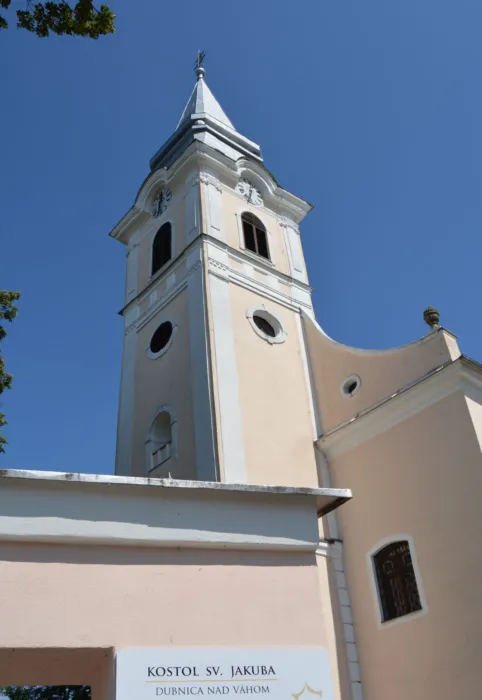
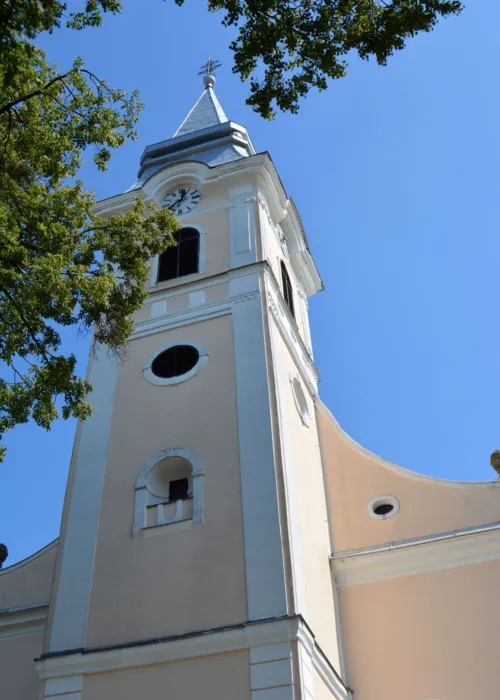
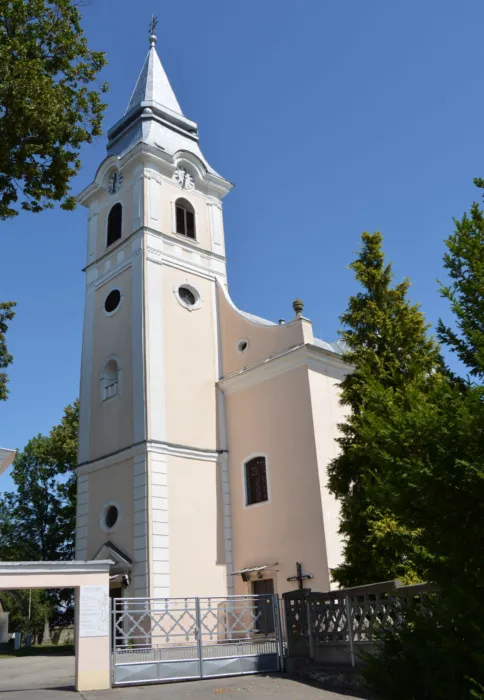
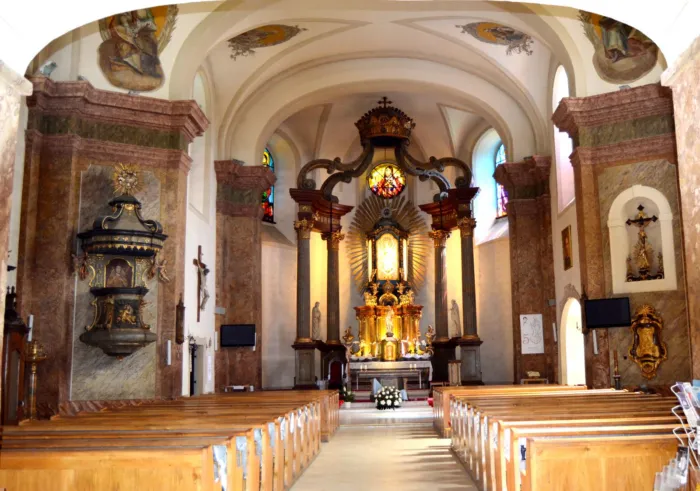
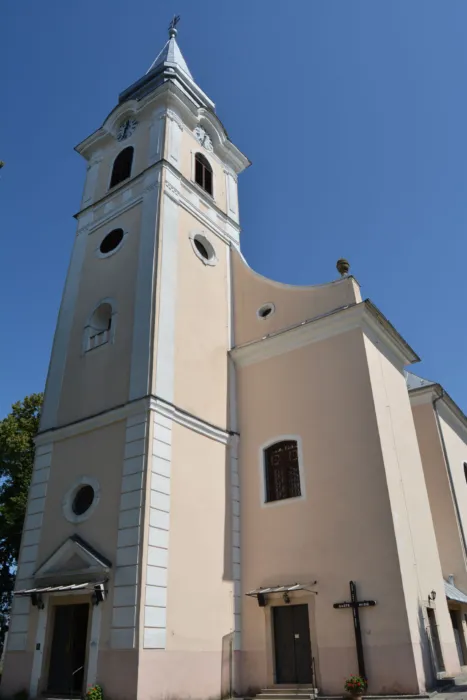
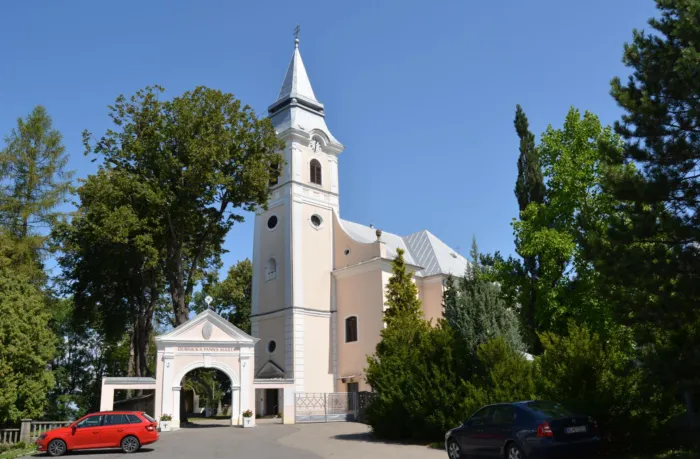
St. James Church in Máriatölgyes, pilgrimage site of Our Lady
Building, structure
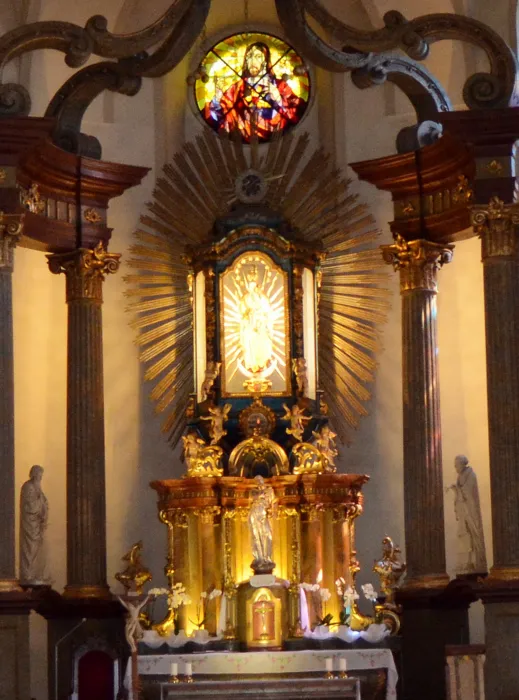
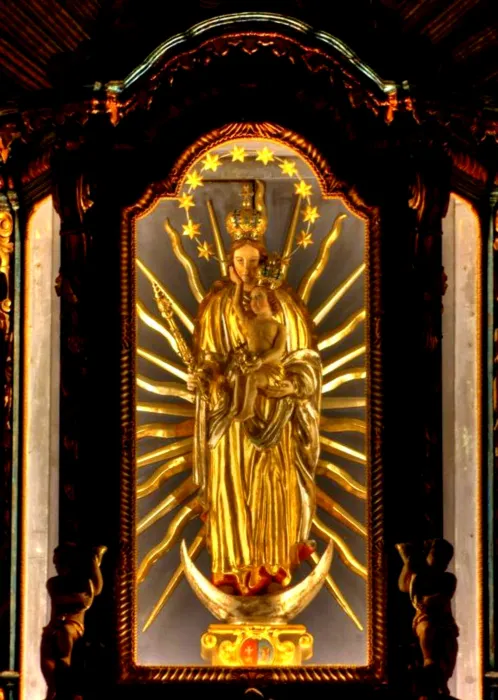
Máriatölgyes is located in the middle section of the Váh River, on the alluvium of the Tölgyes stream, in the Illava Valley. The 1193 charter mentions it as "terra Dubnicza" and it was the property of the Vratslav and Piskin brothers. Until 1439 it belonged to the noble families. In 1439 it became the property of the Trenčín castle lordship. In the 18th century it was owned by the Illésházy family. The oldest archival data about the church in Máriatölgyes can be found in the 1276 charter of the Esztergom chapter. (Wenzel G.: Codex diplomaticus Arpadianus. p. 75§.) In this chapter it is proven that Sámson and Jakab, the comes of Csepke of Trenčín, sold Mániatölgyes to Oltuman comes and his son Chamar, where the church is dedicated to Saint James. The parish of Máriatölgyes is also mentioned in the papal tithe register of 1332-1337. Some of the 16th century The name of the parish priest also survived. Thus in 1509 Márton, in 1557 Bricius and in 1577 Colombus István. At the end of the 16th century the parish of Máriatölgyes was occupied by the Lutherans. Gáspár Illésházy, who in 1600 also won the hereditary lordship of Trencsén and Lipót, was a zealous believer in the Reformation. His successors also did for a while, because in the middle of the 17th century Gábor and György IIlésházy became Catholics again. ; When Gábor died, after his death György became the sole heir. He returned the church of Máriatölgyes to the Catholics in 1657. We also know the names of some parish priests of Máriatölgyes from the 17th and 18th centuries. The best known of them are: János Boldizsár Magin, a writer, Dániel Kolacsényi, the new church its builder in 1754. This new church soon became the parish church. The special veneration of the Virgin Mary in Máriatölgyes and its villages had spread as a result of the statue of the Virgin Mary even before the middle of the 18th century. During the canonical visit of the Bishop of Nyitra, János Gusztinyi, in 1766, he noted: this statue of the Virgin Mary came here from the castle chapel in Trenčín, from where the Illésházys first transferred it to the chapel of their own castle in Térgyes, and then Miklós Illésházy (1723) donated it to the parish church. ; This wooden statue of the Virgin Mary was probably made on the order of György Illésházy in the middle of the 17th century. After he became a Catholic again, he became a zealous devotee of Mary and was the leader of the Marian congregation in Trenčín for thirty-two years. The chapel in the castle of Trenčín was had it renovated and dedicated to the Immaculate Conception. He erected this statue above his altar. The statue was carved by a Hungarian sculptor after an older late Gothic model. The Virgin Mary holds the baby Jesus in her arms. The Virgin Mary's dress is decorated with a wide collar, wears a waist stone and falls from there with dense, sharply cut ruffles above the ground, above her shoes and here she turns back. She displays the characteristics of late Gothic statues in this. Her mantle is spread out, thrown over two shoulders, falls over her two lower arms, and from there to the ground, where its edge is delicately ruffled. The mantle forms a shallow bay under her right arm, which is also characteristic of 14th century Gothic statues. What is new about the statue: the long, narrow shawl around her hand. The figure of the baby Jesus also refers to the late Gothic. She is dressed in a shirt. With a round face and sharply cut hair, she is reminiscent of the statues of the late Gothic period. Although her figure is stiff, she is still childishly charming. In her right hand she holds the globe like the lord of the universe, her left arm is not raised in blessing, but gently caresses Mary's face. The sculptor deliberately carves this childish charm and humanly warm expression into the statue. With this work, the sculptor imitates the late Gothic queen of heaven: the Regina coeli. ; Originally, this statue of piety stood on the side altar of the parish church. But around 1742, beliefs in healing took wing, and pilgrims began to flock to the statue: The description of the place, a certain Balogh from 1872, mentions that on the important holidays: Holy Thursday, For the feasts of Pentecost, Peter and Paul, and Mary, pilgrims came mainly from the distant regions of Trenčín County. The most famous were the processions in the city of Trenčín, followed by the pilgrimages in Bosác, Beckó, Nagytapolcsány, Bellus, Puchó, Lednice, and Illava. The number of pilgrims was estimated at about fifteen thousand per year.