
Sándor Márai Monument
Statue, monument, memorial plaque
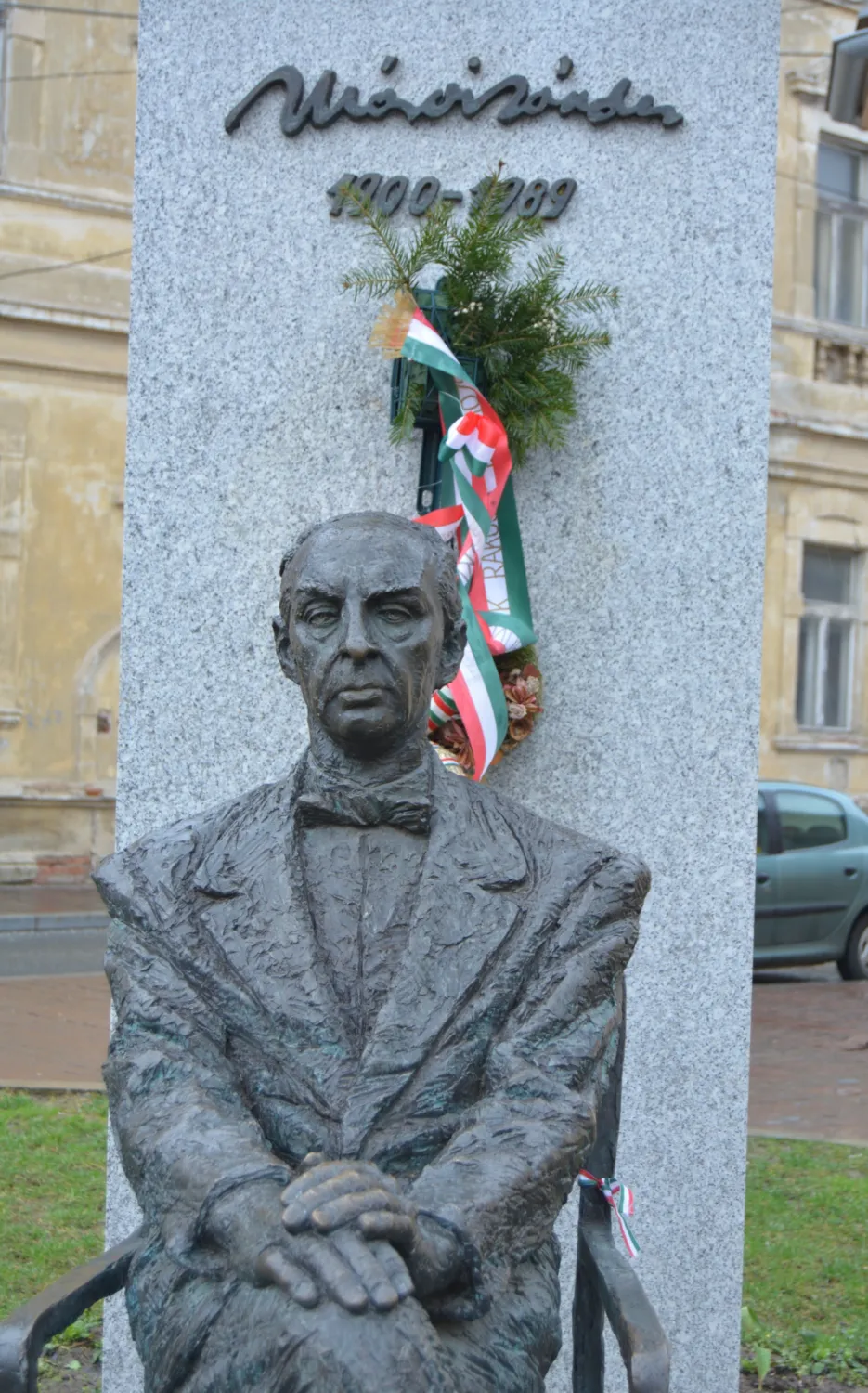
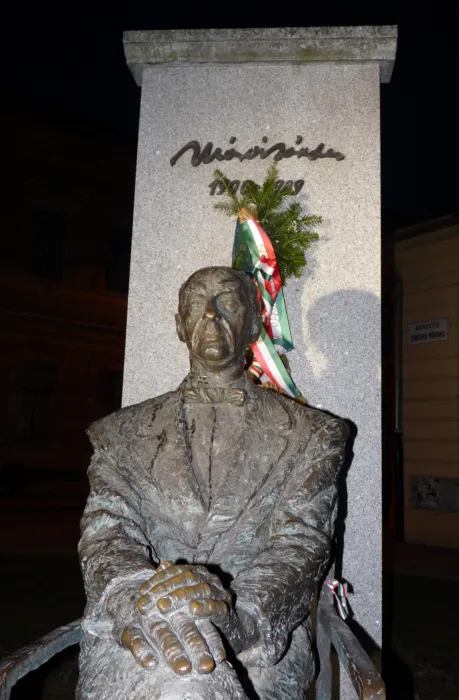
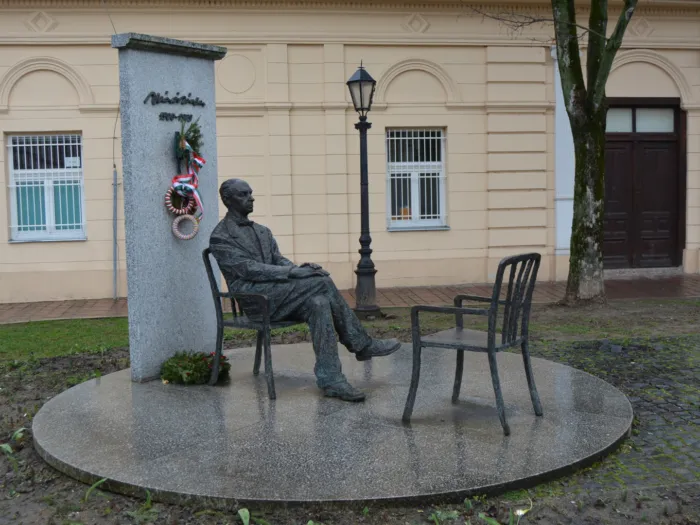
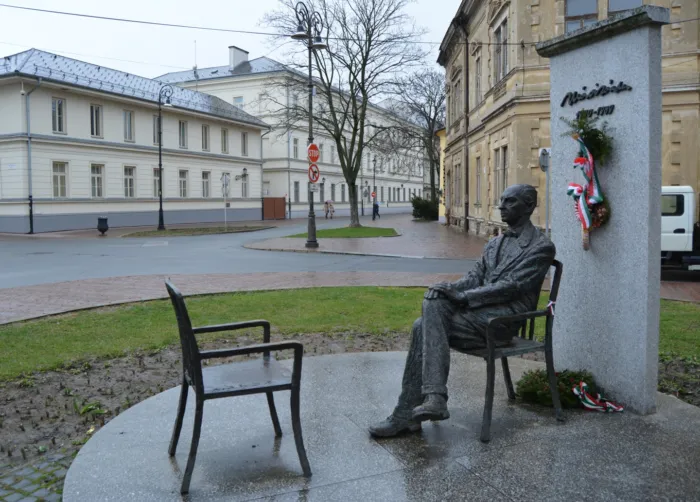
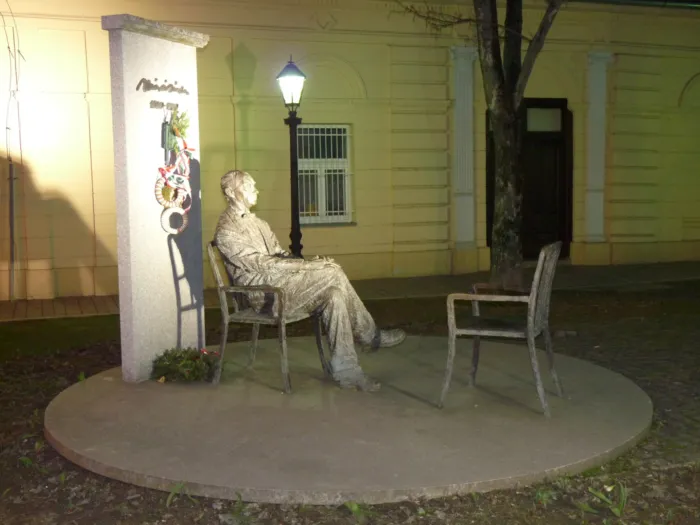
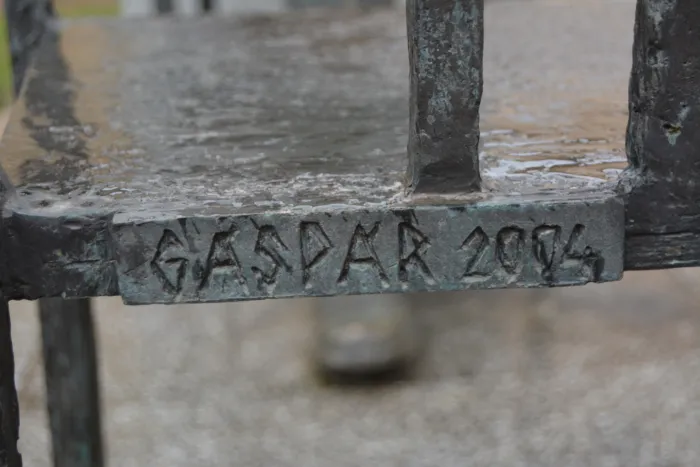
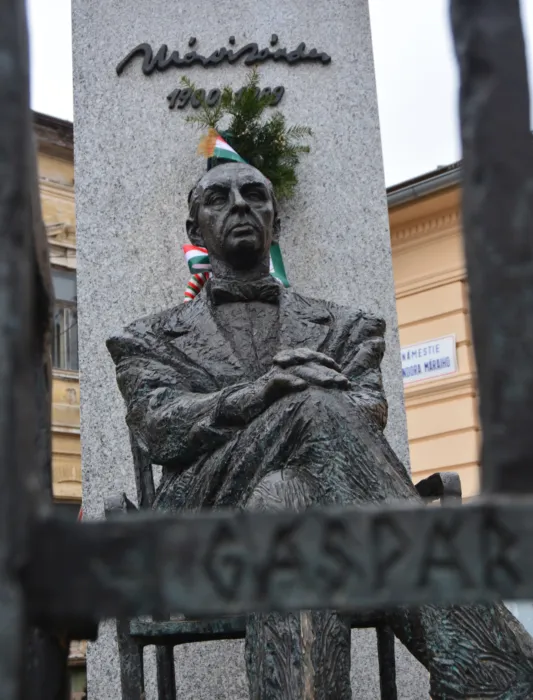
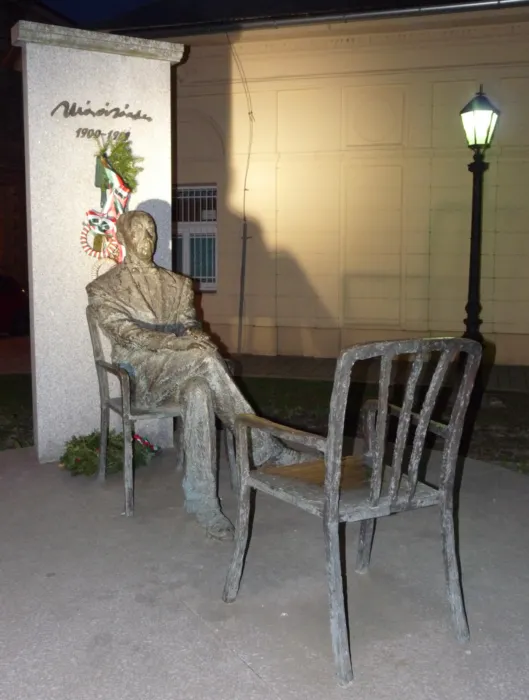
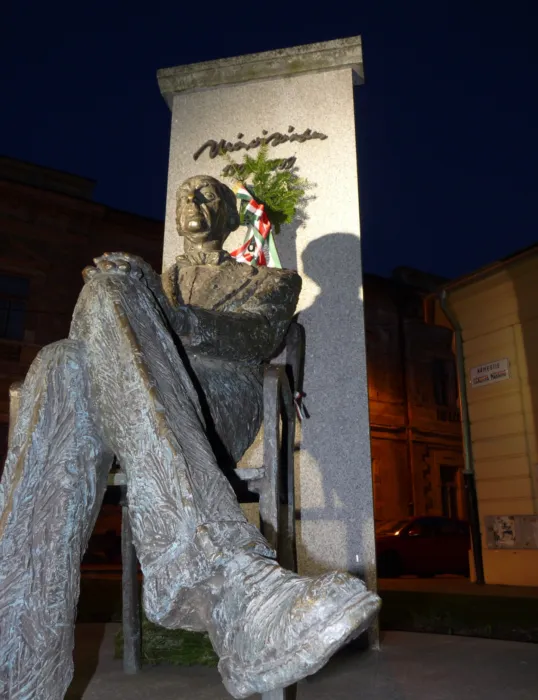
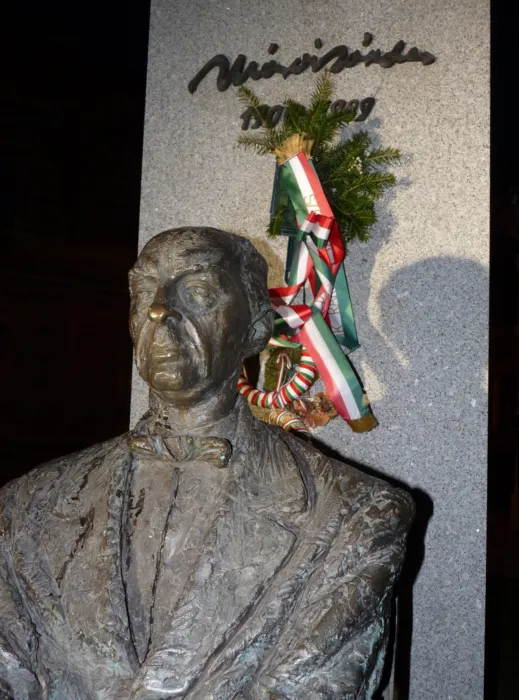
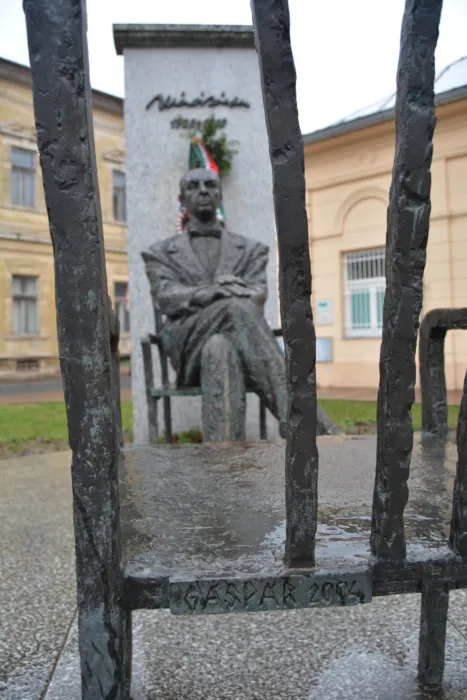
Košice cannot be left without mentioning Sándor Márai, the author of Candles Burn to a Stub. He lived in Košice until he was eighteen, was born here and completed part of his studies here. He moved to Budapest when he went to university. ; Márai wrote about his beloved city: “The summer morning is fresh and windy, as it always is in the City, whose air flows from the great mountains into the narrow street, and from the Tatra Mountains it brings the tart-delicious scent of alpine plants and cold lakes.” ; ; The monument is at the end of the street where he lived with his parents as a child. ; The bronze statue sitting on the chair is slightly larger than life-size. In front of it is another chair made of bronze, and behind it rises a gray granite wall. ; The statue was inaugurated on December 11, 2004. The work is the work of Péter Gáspár, a sculptor from Felvidék. The square where his statue stands has been named after him since 2013. ; Sándor Márai (originally named Sándor Károly Henrik Márai Grosschmid) was born in Košice on April 11, 1900. Márai's life path is one of the most unique among 20th-century Hungarian writers. Already in the 1930s, he was one of the best-known and most respected writers of his time. Communist cultural policy tried to make Sándor Márai forget him from 1948. However, when he left his homeland in 1948, his works were consciously and consistently eliminated from the Hungarian literary scene, and his name was barely mentioned until his death. ; This is not only due to his emigration and his anti-Bolshevism, but also to the fact that he was the literary representative of the Hungarian bourgeoisie, and for a long time nothing good could be said about this class. However, Márai found nothing more valuable than classical bourgeois ideals, so he considered it his duty to give voice to these ideals in his works. ; In the 1980s, it would have been possible to publish his works in Hungary, but he vowed that as long as there were occupying troops in Hungary and there were no democratic elections, he would not contribute to the publication or performance of anything. He has been an American citizen since 1957. He has lived in San Diego for the last ten years. From 1985, a series of family tragedies struck: he lost his sister Kató, then his brother Gábor. His wife was already half-blind by then – Márai’s days were now mainly spent caring for her – Lola died on January 4, 1986. The woman was cremated, and the writer scattered her ashes from a boat into the ocean. In connection with the Chernobyl nuclear disaster, he sharply criticized the fact that, despite glasnost, the Soviet leadership tried to cover it up and silence its danger. The many tragedies led him to consider suicide: “I bought a handgun here two weeks ago,” he wrote in his last diary. On November 26 of that year, he also lost his younger brother Géza, the famous film director. He summarized his death as follows: “He was an emigrant, he moved home a year ago. He went home to die. Or he went home and died of it.” In 1987, he lived almost like a hermit, in deep depression due to his loneliness and advanced cancer. He hardly received visitors. He wrote to Zsuzsa Szőnyi: “I live alone. János and his family are an hour’s drive away from me, they are helpful, I see them often. Otherwise, it would be like living in a cave where only bats wander in. It cannot be otherwise. In old age, one has to decide what to do with loneliness. Perhaps it is better to be alone and lonely than in company. But old age is still a problem.” ; The physical ordeal was followed by strong mental pain when her adopted son, János, died. She perceived her son’s death as a real attack. “I cannot account for this blow of fate now. Lola imagined that if one of us left, János would take care of the one who stayed behind. That is not how it happened.” – she wrote in a letter to a friend. On January 15, 1989, she wrote her last diary entry by hand: “I am waiting for the call-up, I am not rushing it, but I am not postponing it either. The time has come.” Finally, on February 21, 1989, he ended his life with a gunshot. His ashes were scattered in the Pacific Ocean. ; The re-publication of his life's work series was launched after his death, in 1990. In the same year, he was awarded the Kossuth Prize posthumously. ; Márai is survived by three step-granddaughters: Lisa, Sarah and Jennifer Márai, who live in the United States. Since they were not taught Hungarian, they were never able to understand their grandfather's life's work. ; He was first rediscovered abroad in France in the early 1990s. Within a short period of time, four of his novels were published in Paris. Before that, although his novels were often published in the West – with the exception of Vendégjáték Bolzano (which was a great success in the German-speaking world and went through many editions) – he was not really noticed. His Italian publisher, who discovered his works in French translation, decided to start his Márai series with the novel The Candles Are Burning to a Stub. Le braci quickly entered the Italian bestseller list. ; After that, novels published primarily by the French, but more recently also by his other works, were published with great success in German, Spanish, Portuguese and English-speaking countries, as well as in many Eastern European languages. It is a strange twist of fate that in the case of several novels, foreign publishers prefer the title given by the French instead of their original Hungarian title. ; Márai's writing style is most often compared to the style of Thomas Mann, Robert Musil, the Austrian Joseph Roth and Arthur Schnitzler. Sándor Márai is now considered to be one of the outstanding figures of 20th century European literature, both abroad and in his own country. The reception of his works in Western Europe, especially in Italy and France, played a decisive role in establishing his recognition in Hungary. Sándor Márai is currently experiencing a renaissance, his works are being made into films one after another, and his theater plays have been re-performed.