
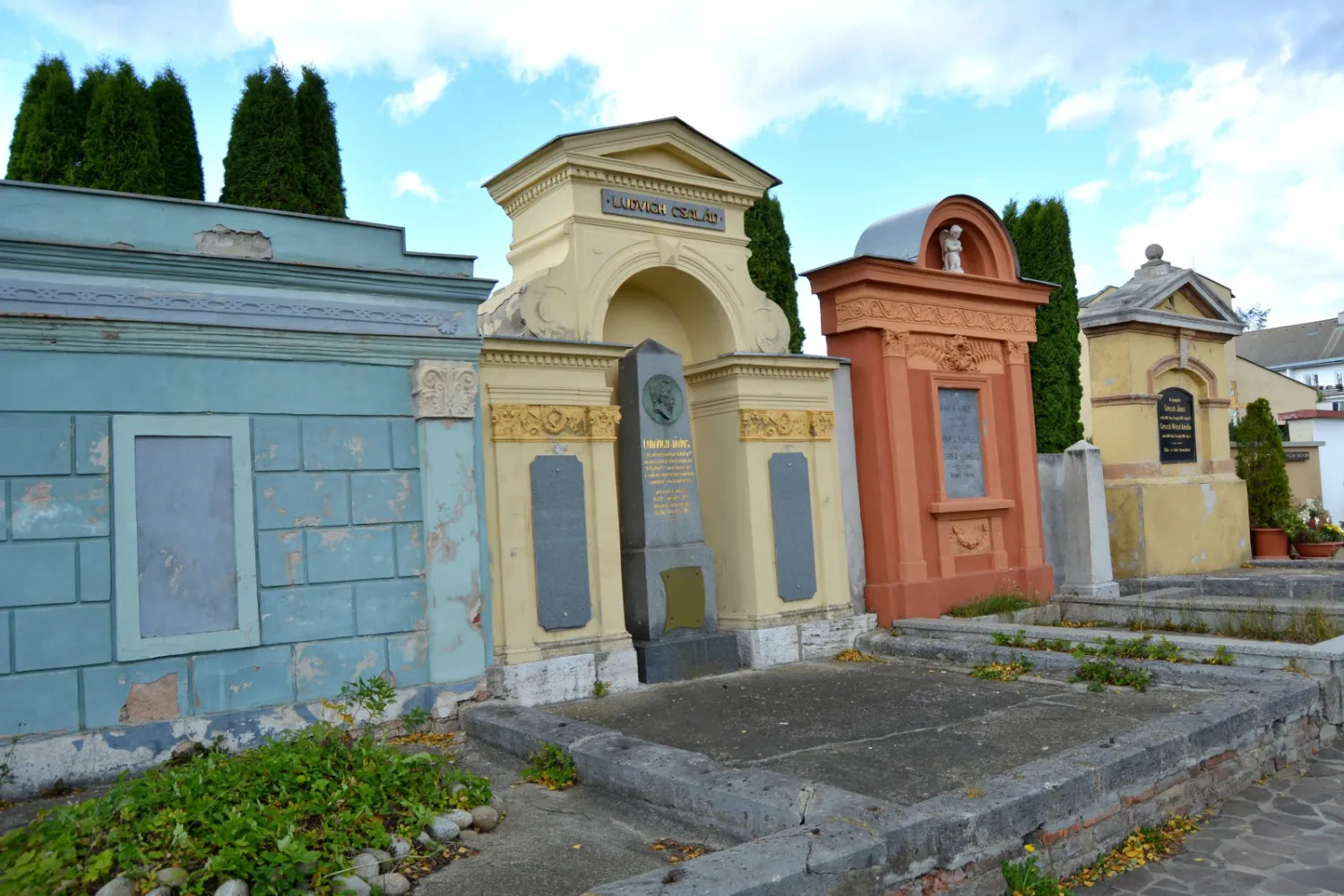
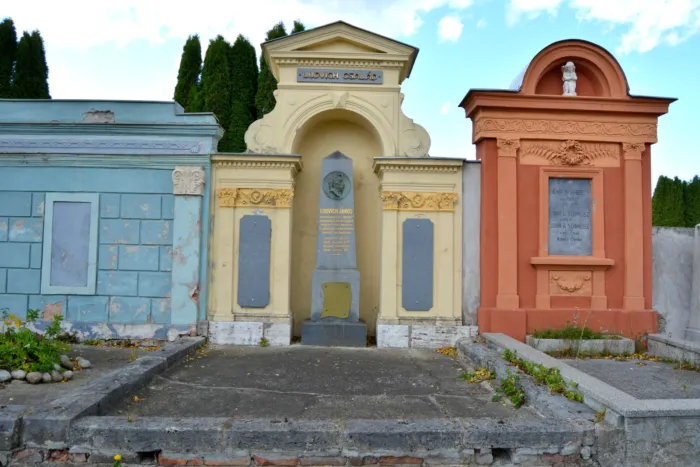
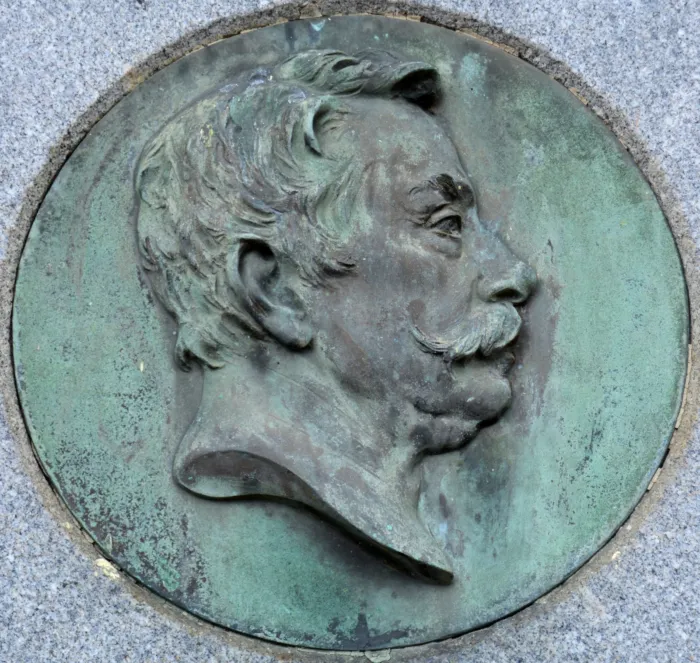
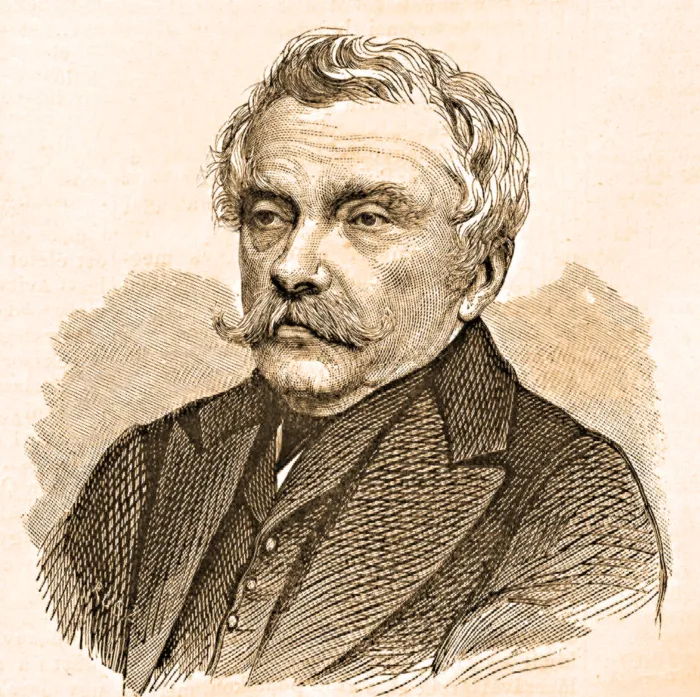
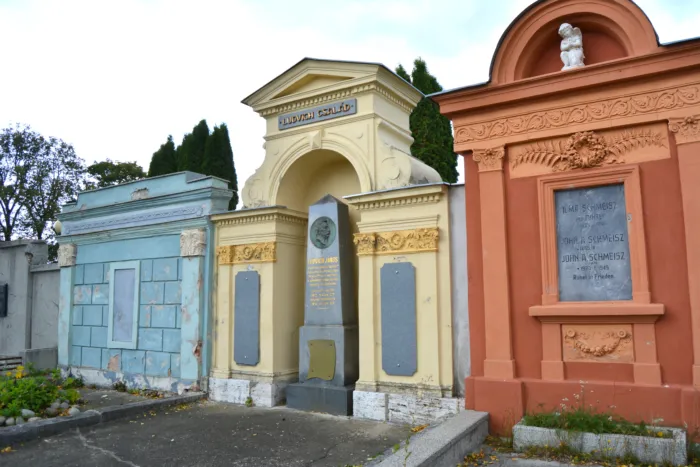
Tomb of John Ludvigh
Cemeteries, tombstones, graves
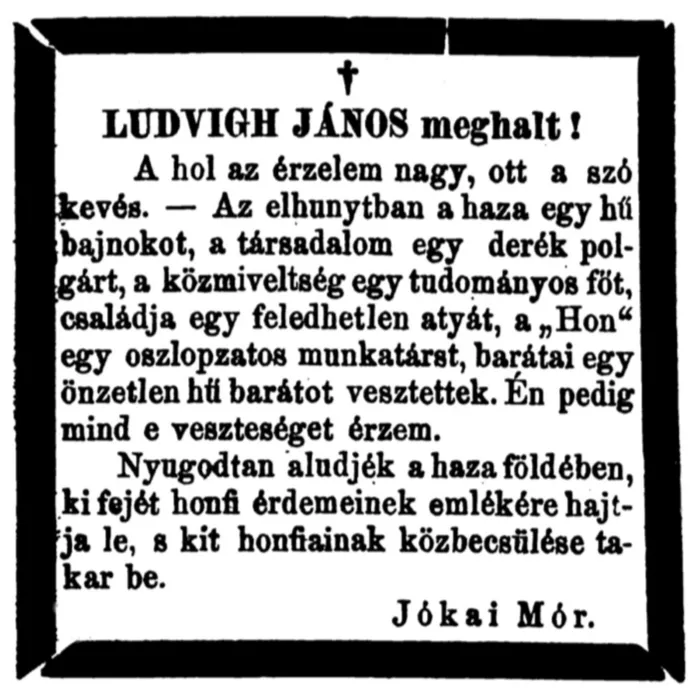
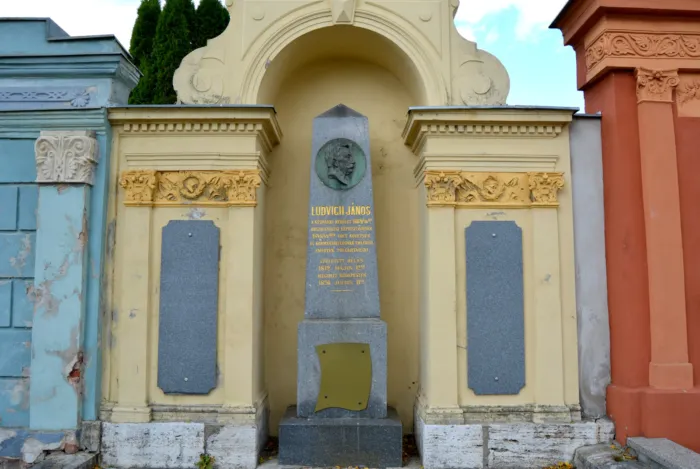
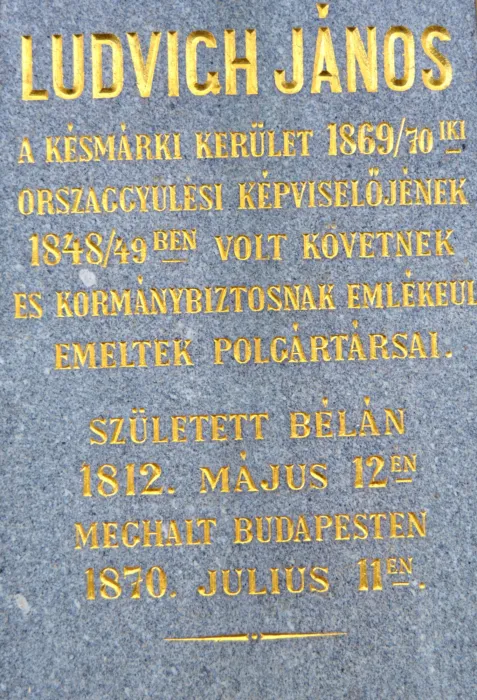
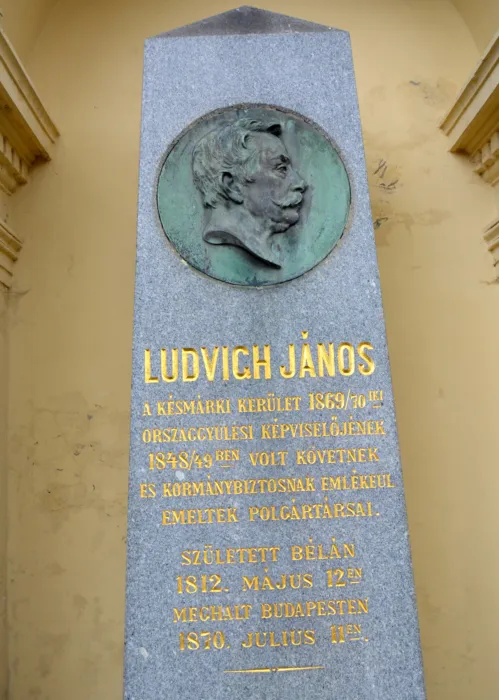
János Ludvigh, member of parliament, was born in 1812 in Szepes-Béla, and attended school in Késmárk, Eperjes and Sárospatak, among others as a schoolmate of Ferencz Pulszky and Imre Henszlmann. Already when he was a lawyer, he was interested in literature, and later he formed a Hungarian suffrage society in Szepesség, which was banned by the Palatine and the Chancellery. The first reward for his remarkable talents and work was that he was elected first as the chief notary of the city of Szepes-Béla, and later of the 16th district of the city of Szepes. The cities of Szepes also sent him to the parliament, where he fought vigorously for their ancient right to vote in parliament, for which purpose he compiled a document that caused a great sensation at the time and submitted it to the parliament in the form of a petition, which included the diplomatic history of the cities of Szepes. At this time he began to deal with newspaper literature, as a diligent correspondent for several newspapers, including Kossuth's Pesti Hirlap. In 1848 he represented the Igló district, at which time he was elected one of the notaries of the parliament and was a colleague of Kossuth's Hirlap. He took a prominent part in the War of Independence and worked as a government commissioner in Görgey's camp, and was present at the siege of Buda. In 1849, in recognition of his talents and merits, he was appointed judge of the seven-person board, but due to other important missions he received from the government, he could not take up this position. Kossuth once offered him the portfolio of Minister of Finance, but he did not accept it. In 1850, when Haynau issued an arrest warrant against him, he fled abroad and settled in Brussels. Here he lived in close friendship with Baron Miklós Jósika and worked tirelessly for his own and his family's support, serving patriotic interests without a break. He tried to introduce Hungarian wines, but without much success, due to the inaccuracy and bad management of domestic wine handlers. During this time he was a colleague of the Indépendance Belge and the Magyar Sajtó, from 1865 to the Hon, and in 1867 to the Magyarország correspondent in Brussels. In 1861, the Keszmárk district elected him as its representative, but he did not come home, and in 1865 he did not accept this invitation either. However, in 1869, when two districts elected him as their representative, Keszmárk (March 16) and the city of Szeged, accepting the mandate of Keszmárk as his native land, he came home and took a seat on the left center, remaining a regular colleague of the Hon. By this time, having fallen ill a lot, he was only active in political movements with his pen until his death. His last article: Why must the Rajner bill be rejected? was published in Hon (1870. 150., 151. 154. July 9.). Shortly before his death, he asked his nurses to put him at his desk, at which he worked so much, and he died with his head bowed on his desk on July 11, 1870 in Budapest. His grave can be found in the Szepesbéla cemetery. ; Czikkei in Sas (XI. 1832. Jefferson Tamás), in Századunk (1840. 20. Maronites), in Pesti Hirlap (1841. 89. Tithe, 1842. 142. Tithe opposition, 186. Criminal law observations, 1843. 224. On the question of the life of the XVI city of Spišskég sat.), in La Libre Recherche (LXI. Aug. vol. Donne és historiques fournies par les étymologies magyares), in Hon (1868. 66. Asbóth Sándor and Paraguaya, 84. Házasság Angliyán, 88. Easter eggs), in Igazmondó (1868. 18. Turin, Apr. 22.) sat. ; ; Works: ; 1. A pragmatic history and a sketch of the composition of the XVI city of Spišské. Levoča, 1842. (Also in German. U. ott, 1842.) ; 2. Nouvelle page de l'histoire des Habspourgs. Bruxelles, 1859. ; 3. La Hongrie et la germanisation autrichienne. U. ott, 1860. ; 4. La Liberté religieuse et le protestantisme en Hongrie. U. ott, 1860. ; 5. La Hongrie devant l'Europe. U. ott, 1860. ; 6. Qui payera les dettes de l'Autriche. U. ott, 1861. (Pamphlets that were banned in the empire.) ; 7. Let's abolish the Ministry of Religion as an obstacle to progress. Pest, 1868. ; 8. To my fellow citizens and voters of the Késmark constituency. U. there, 1869. ; His speeches to the National Assembly are in the Diaries. ; His letter to Mihály Horváth, Brussels, 1865. Apr. 22. (in the m. n. museum), to Kertbeny, 1866. Jul. 24. (in my collection).