
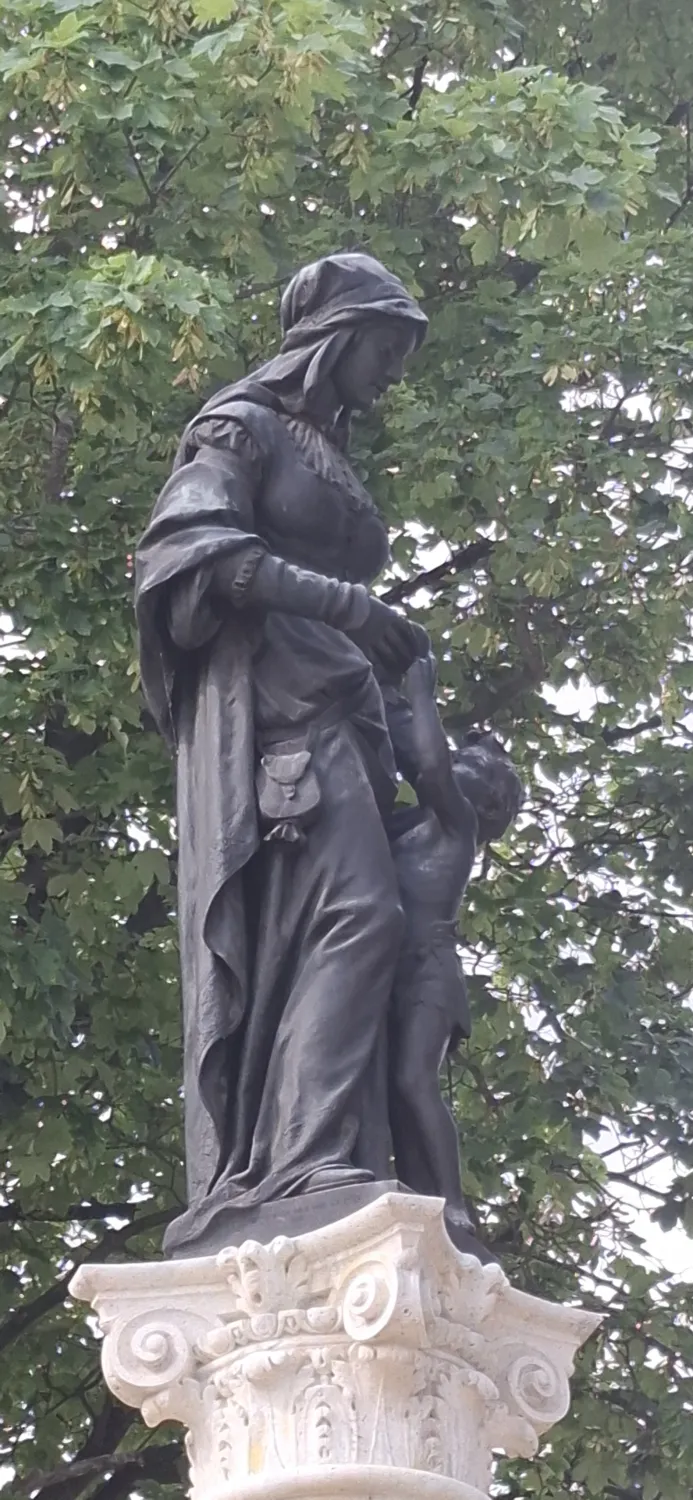
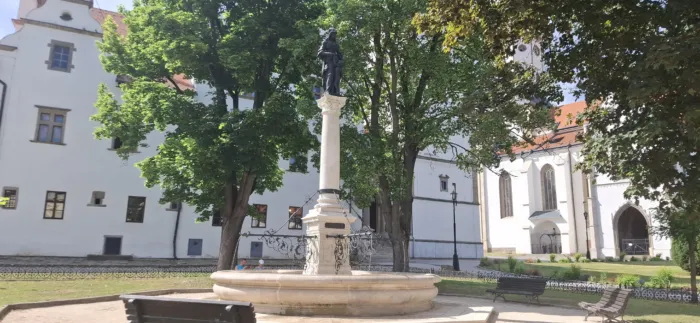
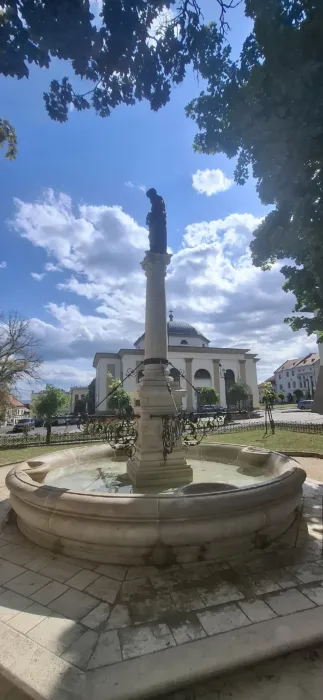
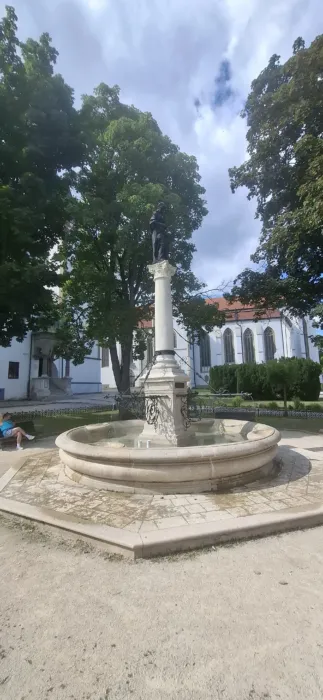
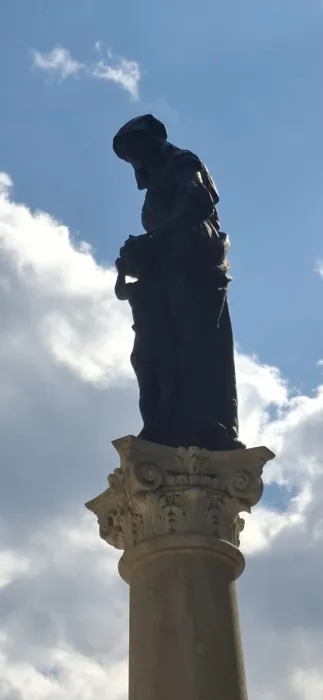
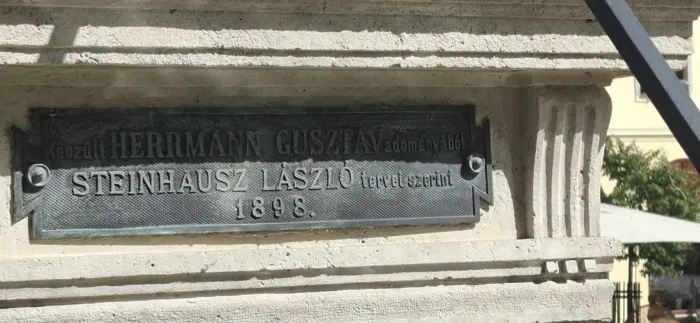
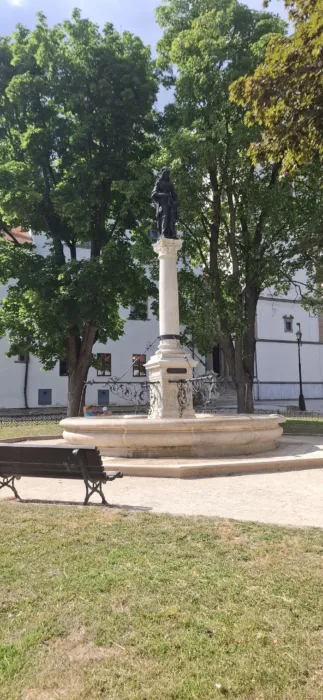
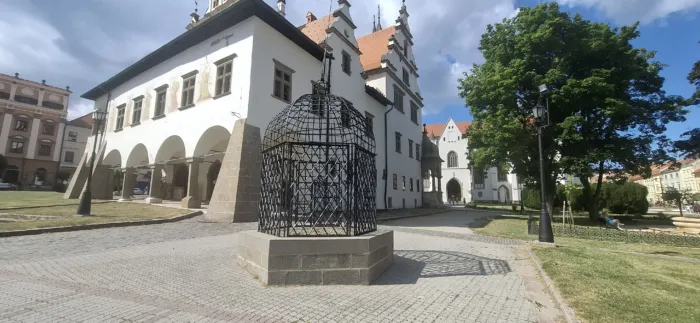
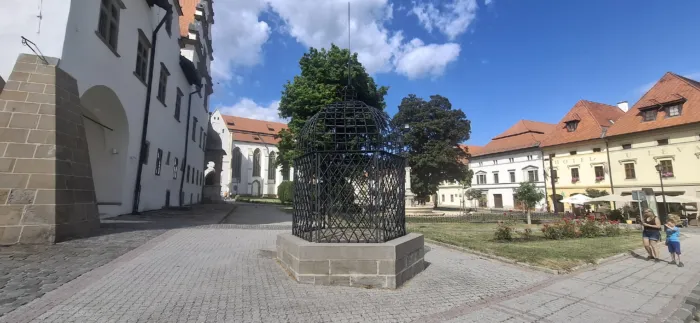
Levoca White Woman Monument
The monument was built in 1898 based on the designs of Gusztáv Hermann
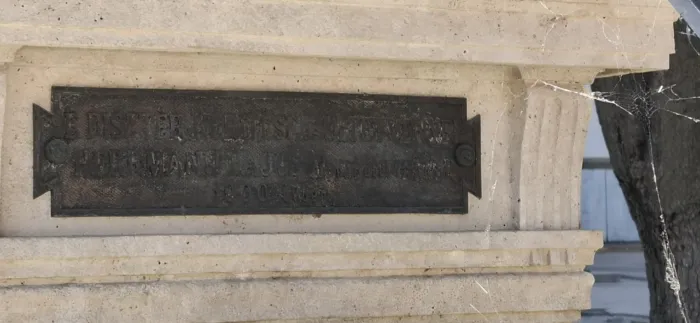
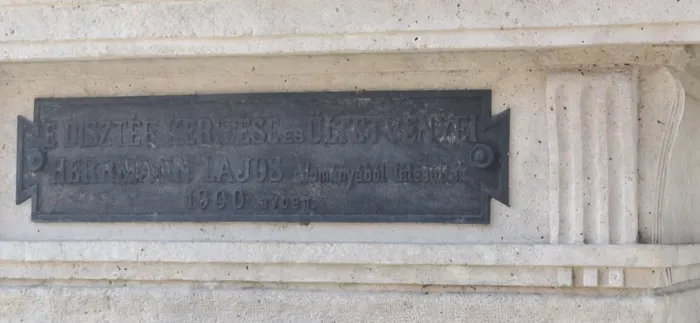
The fence and plants around the monument were built with the donation of Lajos Hermann in 1900.
The White Lady of Levoča - Korponayné Julianna Géczy (c. 1680 – 1714)
The figure of Korponayné is one of the most tragic and controversial figures in Hungarian history. His life was spent in the storms of the Rákóczi War of Independence, where he balanced on the border between loyalty and betrayal.
Key facts
Born: around 1680, in Osgyán (now Ožďany, Slovakia).
Executed: September 25, 1714, in Győr.
Family: His father was Colonel Zsigmond Géczy, a Kuruc officer, and his husband János Korponay, a nobleman loyal to the emperor.
The Levoča episode: Legend vs. Reality
In the public consciousness, based on Mór Jókai's novel, she lives as the woman who had a love affair with the kuruc general István Andrássy and stole the city's keys to let the imperial troops in.
The legend: Julianna is a traitor who gave up Levski for a kiss or power.
The historical fact: According to modern research, Levski fell into the hands of the imperialists not through betrayal, but through regular military negotiations and capitulation. Julianna was probably only a mediator between the parties.
Downfall and execution
After the War of Independence, Julianna became involved in new political intrigues. Letters came to her that spoke of restarting the uprising. To save herself and her family, she reported the existence of the letters to the Viennese court, but burned the evidence. This aroused suspicion on both sides.
She was arrested in 1712.
She was tortured and then sentenced to death on charges of treason.
She is the only woman in Hungarian history to be executed on this charge (she was beheaded in the main square of Győr).
Her memory
Her figure has inspired numerous writers (in addition to Jókai, also Krúdy and Endré Ady). We see in her both the traitor who destroyed the nation and the martyr who became a victim of politics. In 2014, on the 300th anniversary of her execution, the city of Levoca solemnly rehabilitated her memory.