
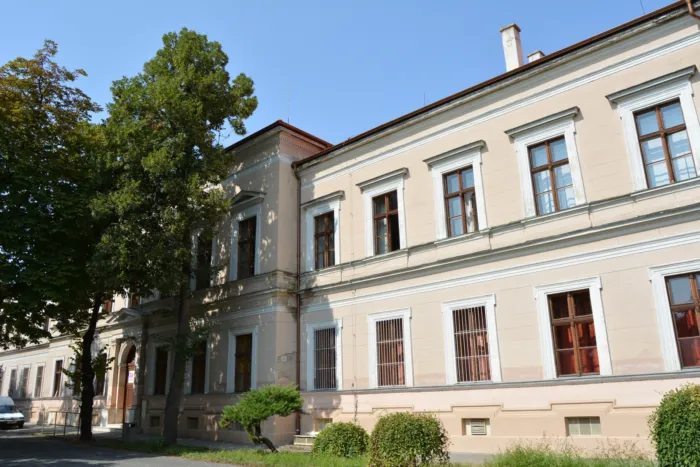
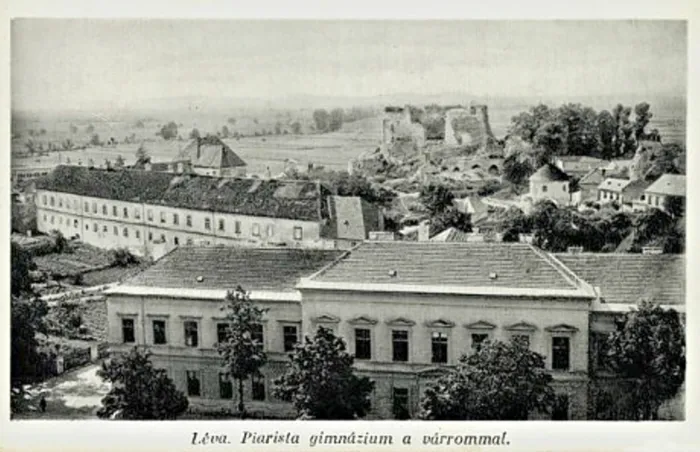
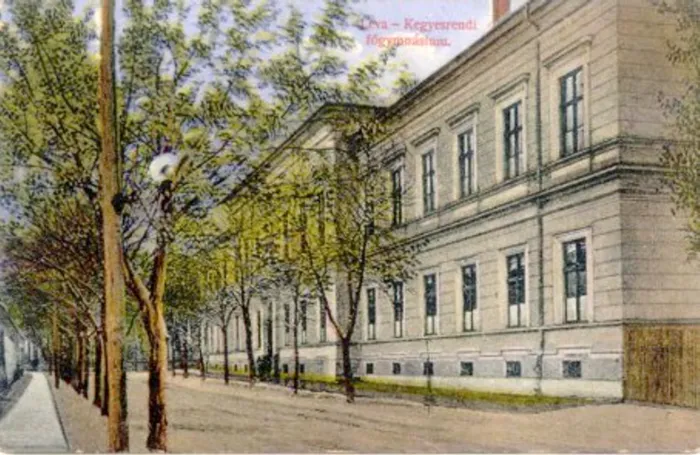
Léva Piarist High School
Building, structure
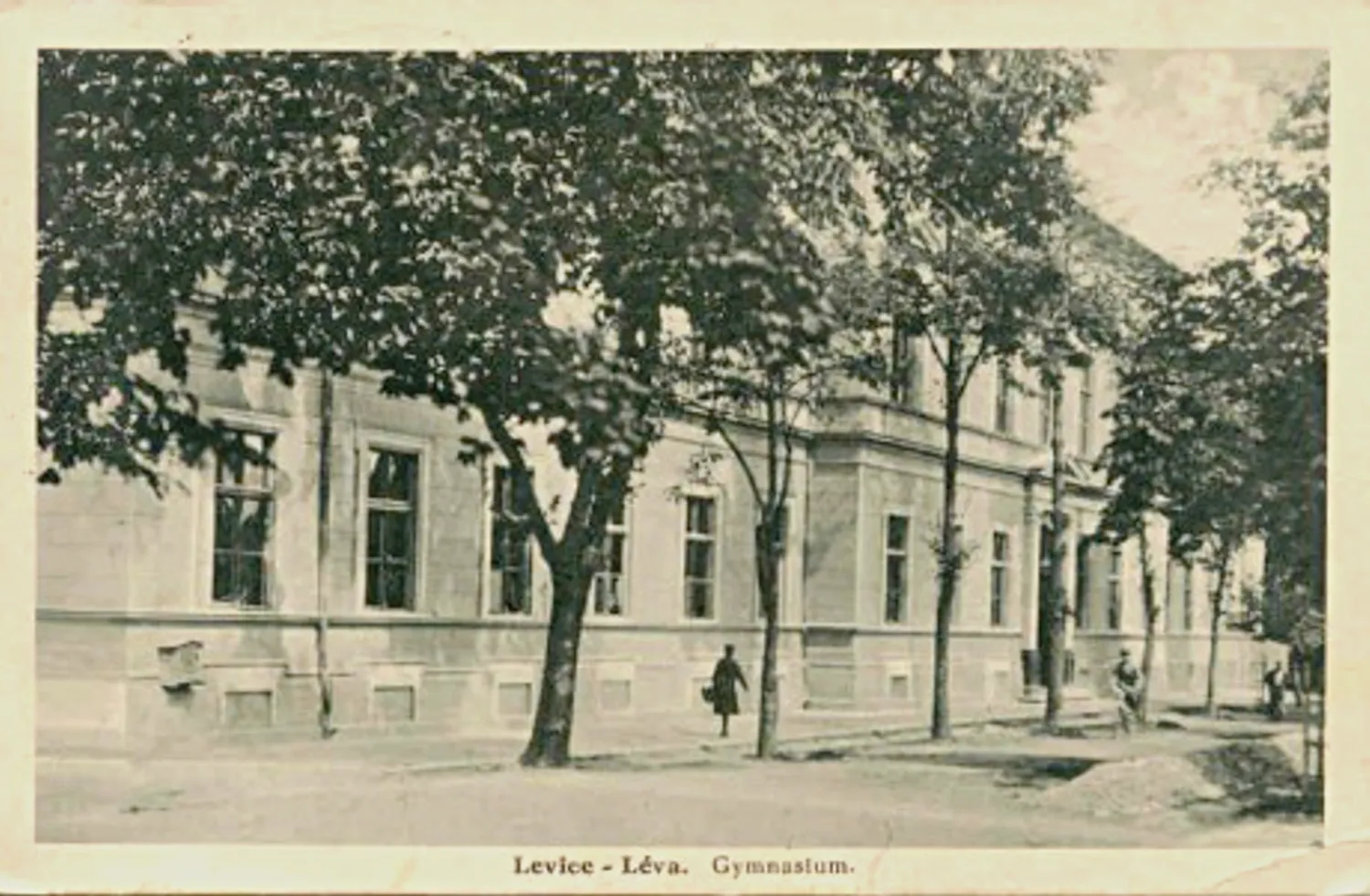
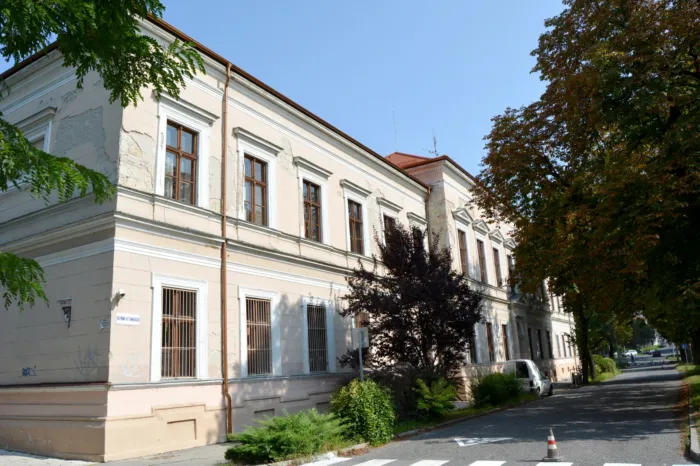
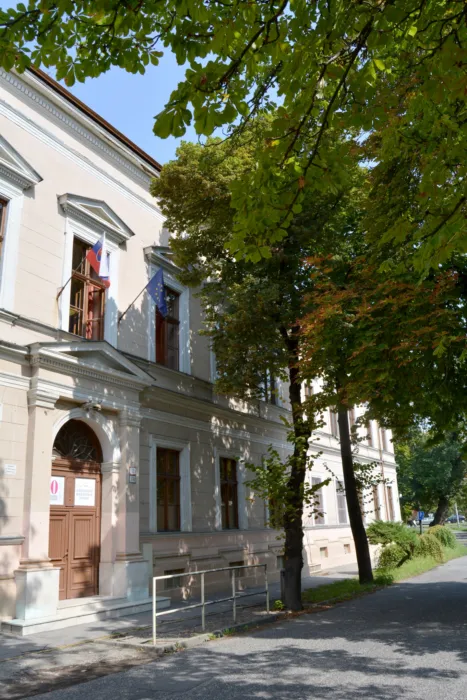
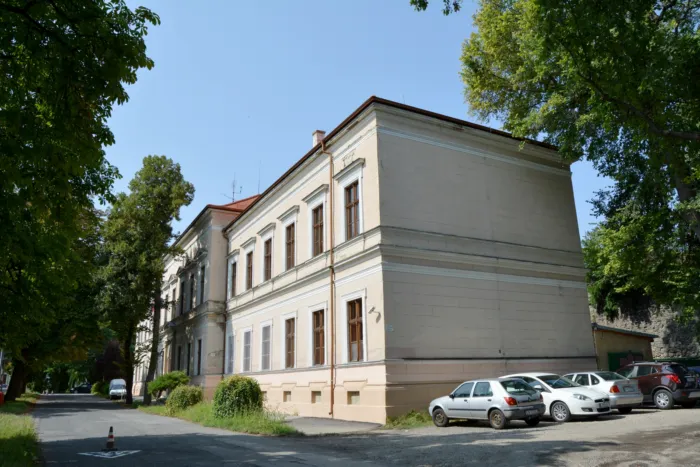
In 1675, members of the Franciscan Order settled in Léva, who, with the help of Baron Jaklin, built a church next to the monastery in 1720. However, in 1786, due to the anti-monastic decrees of Emperor Joseph II, the Franciscan fathers of Léva had to leave Léva and rented out their properties, and in 1806 they were put up for auction. When news of the auction reached the ears of Krisztina Bossányi, the wife of János Szentiványi, royal councilor and vice-governor of Bars, she persuaded her husband to do everything in his power to transform the former Franciscan monastery into a grammar school. After persistent and lengthy measures and collections, the Léva Piarist High School was opened on November 5, 1815, the feast day of Saint Imre, with the first teachers: Dr. Ferenc Ugróczy, director, Ágoston Pek, deputy head of the monastery, chaplain Bartholomeus Antalnai and the 4 class teachers: Gáspár Zelneki, Mihály Bartek, Jeromos Mojzer and Ignácz Hoffmann. ; The school operated as a 4-class high school and had 135 students in the first school year. The school operated primarily with the financial support of the landowner of the Léva manor, Prince Miklós Esterházy, and the Marczibányi Foundation in Puhó, and 243 enthusiastic Léva citizens donated 615 forints (which was a very large amount at that time) every year for the maintenance of the high school building. The Piarist or pious teaching order is one of the best-known teaching orders that educated children religiously. The Piarist high school was located in the building of the present-day parish of Léva, and before every school day, the students attended mass with their Piarist teachers in the present-day St. Joseph's Church. In September 1816, the Léva high school expanded to 6 classes and gradually developed, and by the autumn of 1824 it was attended by 312 high school students. During the War of Independence of 1848, a hospital was set up in the church and the convent several times, and the wounded of the Battle of Nagysalló were also cared for here. In 1850, the imperial authorities closed the high school. After lengthy measures, the Léva Piarist High School reopened in the autumn of 1851, but with only four classes and 57 students. In 1881, the Léva Gymnasium was reorganized into a senior high school, in 1882 the school had 6 classes again, and in 1886 it was finally transformed into an 8-class senior high school, where students could also obtain a high school diploma. At that time, the school had so many students (248) that the new building of the gymnasium was completed in 1886, in which the Academy of Commerce now operates. The school was so famous that it had students from distant counties. The gymnasium not only had excellent teachers, but was also excellently equipped: the Piarist library had 7,822 volumes, the teachers' library had 2,027 volumes, the youth library had 1,517 volumes, the zoological collection had 3,317 pieces, the botanical collection had 1,888 pieces, the mineralogical collection had 1,867 pieces, the natural history instrument collection had 373 pieces, etc. The Piarist High School in Léva operated until 1919. ; On December 1, 1919, the Czechoslovak authorities opened a secondary school in the former Piarist school, partly with Hungarian-language education. The Piarists handed over the monastery in Léva to the Roman Catholic parish by contract on June 17, 1922. ; In November 1938, the First Vienna Decision annexed Léva to the mother country. The city's leadership requested the return of the Piarists, but external and internal conditions did not allow this. The lack of money necessary for the Tatarization, as well as the issue of the three Transylvanian Piarist schools and monasteries returned in the Second Vienna Decision, pushed the solution of resettlement to the background due to the shortness of time. ; The Léva Piarist High School carried out its blessed activities in Léva, Bars County, for 104 years, and through its educational work, it spread its spirituality to the entire country. It is interesting to mention that the school's students included Imre Erdősi, the hero of Branyszko, Gábor Baross, the iron minister, Ede Boleman, the famous pharmacist, Tivadar Botka, a member of the Hungarian Academy of Sciences, a member of parliament, József Samassa, the cardinal-archbishop of Eger, a church writer, a member of the Hungarian Academy of Sciences, Vilmos Migazzi, a member of parliament, the lord of Barsmegye, canon László Báthy, István Nécsey, a Hungarian painter, bird and butterfly illustrator, a member of parliament, Kálmán Kittenberger, an African traveler, hunter, writer, Géza József Attila Féja, an award-winning writer, Alajos Szokolyi, the first modern Olympian, Ferenc Kucsera, the martyr of Szentendre, Gyula Forgács, a renowned personality of the Reformed inner mission, János Stampay, a cantor teacher who was awarded twice by the Holy Father for his hymnbook, Pál Huljak, a teacher, museologist, János Kersék, a poet and even we could list.