
Polish refugees in Bény
Cultural heritage
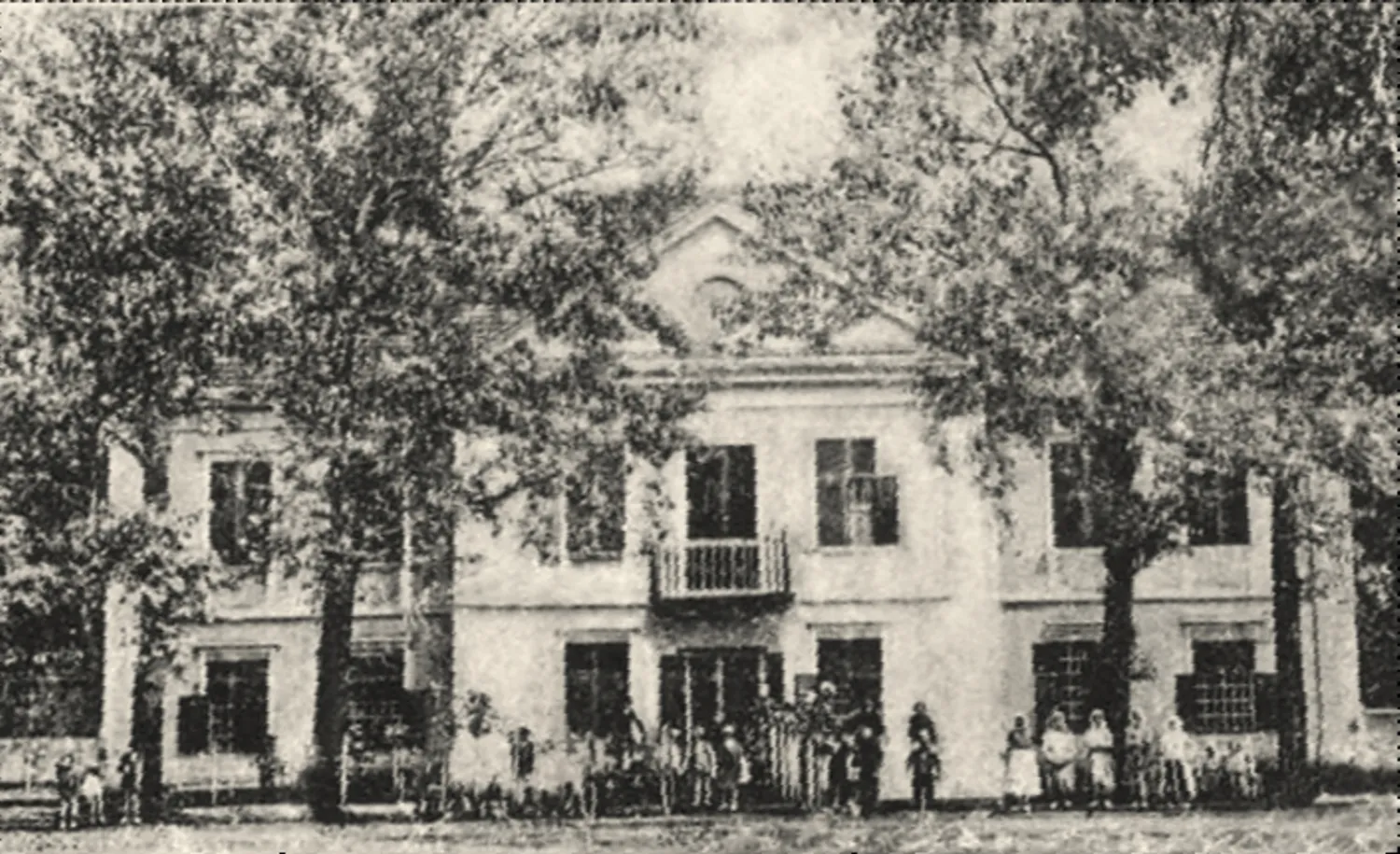
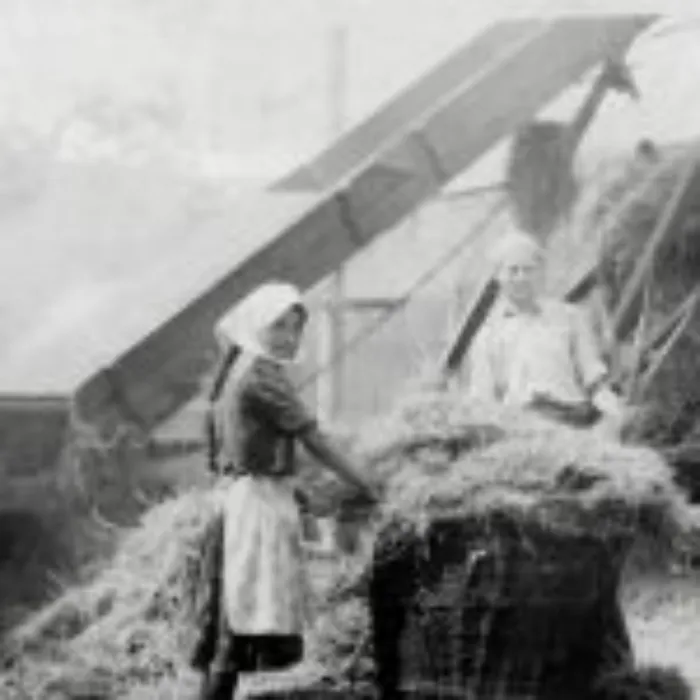
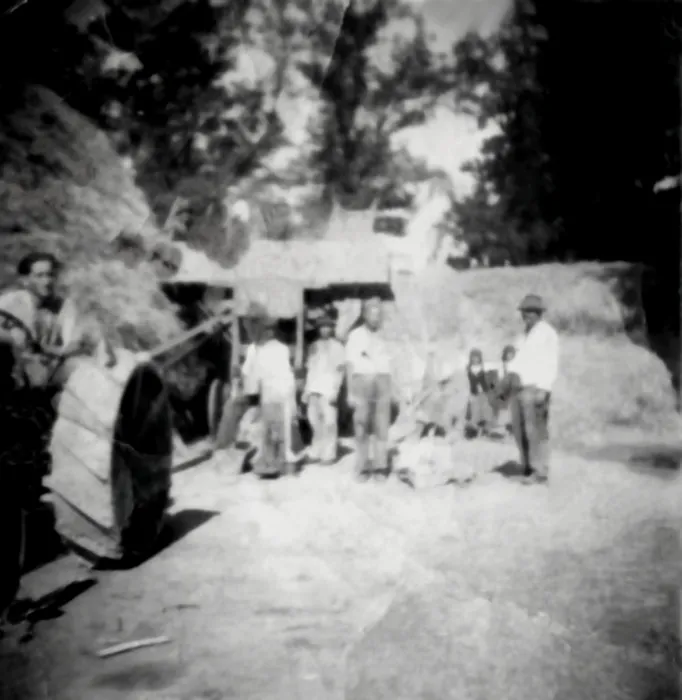
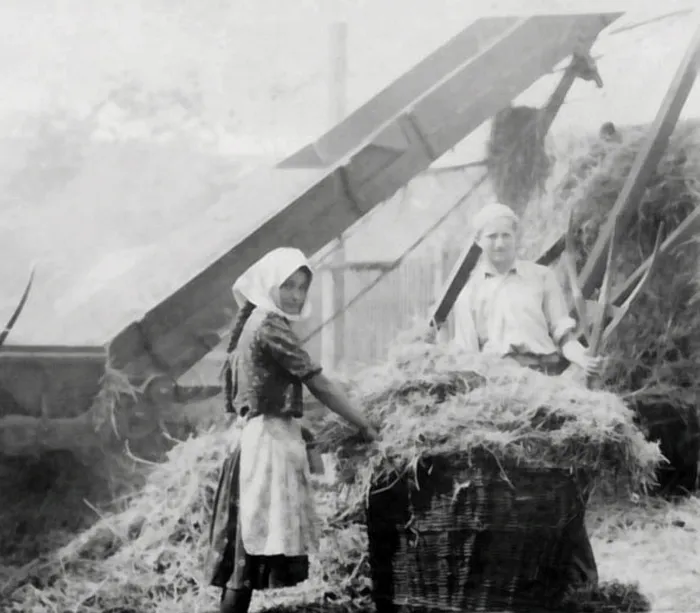
Cséplés ; Immediately before the outbreak of World War II, or perhaps even before that, the persecution of Poles began, so many families, but also single men, saw it better to temporarily leave their homeland and sought asylum wherever they could. This is how Polish refugees ended up in Bény. No one can give an exact date, because the number of people who remember them has greatly decreased, meaning they have permanently left the ranks of the living. ; What is certain is that they came to Bény between 1939-40 and left the village in the spring of 1945. The reminiscences claim that they were hardworking, family-loving, God-fearing people. The reminiscences and documents have confirmed that 30-35 families received temporary settlement permits. The vacant Pálffy hunting lodge came in handy for them. The Pálffys used the hunting lodge only during the hunting season, but when the war broke out, they left for abroad. The manor lands belonging to the lodge provided the Poles with a livelihood, but they also got involved in the work going on in the village. They tried to integrate, but the village also accepted them. They ran a common kitchen in the lodge from the produce, and a local woman, Zsófia Lehotkai, born Ernő Csákvári, cooked for them. She also cooked for the Pálffys when they stayed in the lodge. ; The lodge was supervised by Timinsky, the chief governor of the Kraków Voivodeship. He also lived in the lodge. Their economic manager, Otowski, was the chief engineer of the city of Kraków. He, on the other hand, lived in the Bényi settlement with his family. They did their share of all the work, as evidenced by a photograph where the locally born Teréz Schmíd, aged 15-16, works at the threshing machine with a Polish boy of her age. ; ;
1944-1945. Teréz Schmíd and the Polish boy while threshing grain
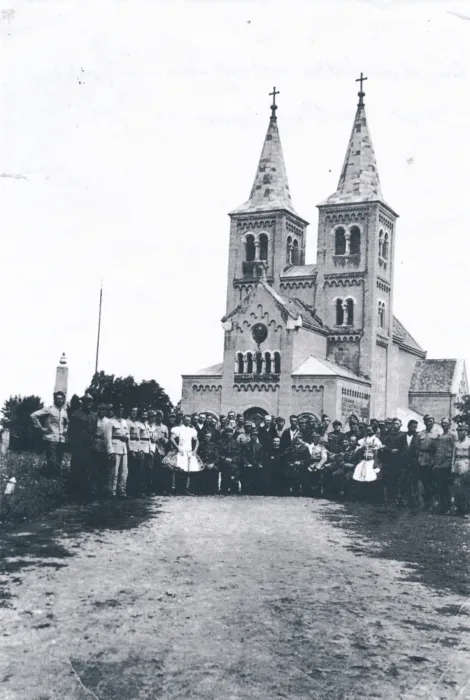
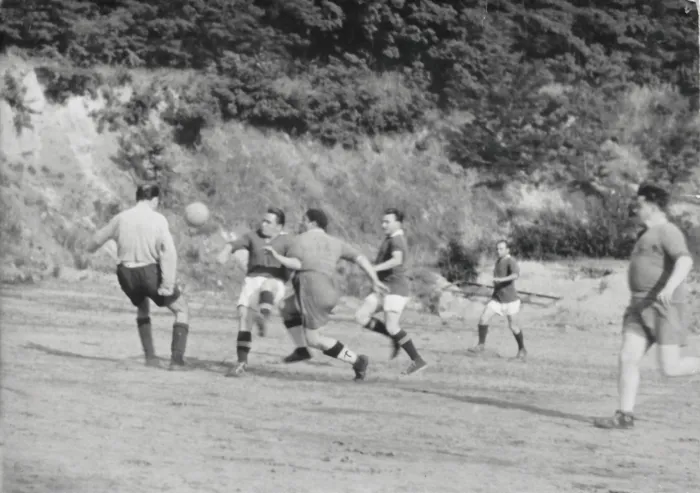
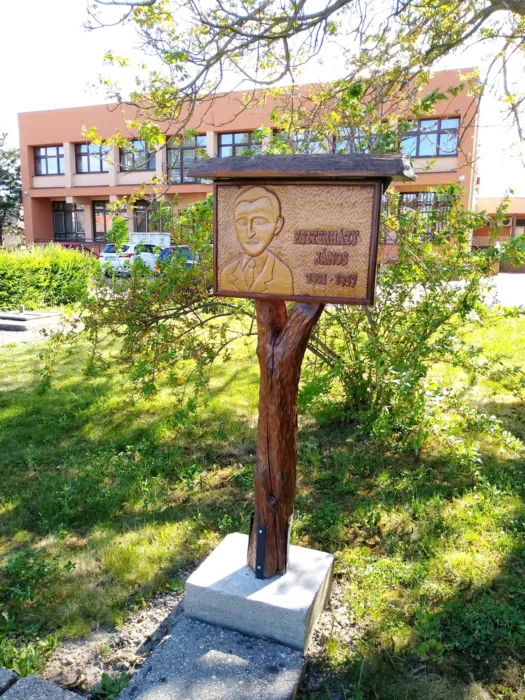
; The war, which dragged on for an indefinite period, also required the establishment of a school for them. According to the records from 1943, only Bény had an agricultural and commercial school for Polish refugees in the then greater Hungary, which also included a dormitory for 30 people. The school was under the jurisdiction of the Ministry of Agriculture, just like the one in Balatonboglár. ; The men were very involved in the life of the village, they also took their part in sports. They organized an independent football team and competed with the locals several times, but they also played football in the surrounding villages. However, the training sessions were often held together. It is a photographic memory, as they kick the ball together at the foot of the ramparts. My uncle is among them, that is how I got the picture. ; ; József Pallos plays football with the Poles; being devout people, everyone participated in the services regardless of religion, and even helped in cultivating the church lands. They found an understanding man and a loving head of the church in the then deacon István Kubis. ; ; Polish refugees after the mass, with some villagers. ; Deacon István Kubis in the middle. 1939-1945. ; Before the end of the war, when the persecution of the Poles had subsided a bit, they tried to somehow return to their homeland or settle in a country offering a safer life. ; The castle was hit by a bomb in the early spring of 1945, so the people who remained here were also forced to leave the village. The castle was destroyed and scattered in the early 1950s out of some malice, so only a few photographs remain as a memory of it and the Polish refugees who were sheltering there. I must mention that the patron of the Poles was Count János Esterházi. Due to his Polish connections, he took the fate of the refugees to heart. More than likely, he brought them to Bény, as he visited the Pálffy estate several times and knew that they were no longer staying here. There were several reasons for the frequent visits to the area, as János Esterházy was the chairman of the board of directors of the Oroszkai Sugar Factory, and he always spent his free time on the Pálffy estate. Unfortunately, this is not mentioned anywhere, so either no one knows about it or they don't want to know about it. But the people living in the village remembered him, and with this in mind, we had an Esterházy monument made by woodcarver Vincze Buják three years ago. ; The data was collected by Katalin Koczka. ; Bény, 2020.4.24.