
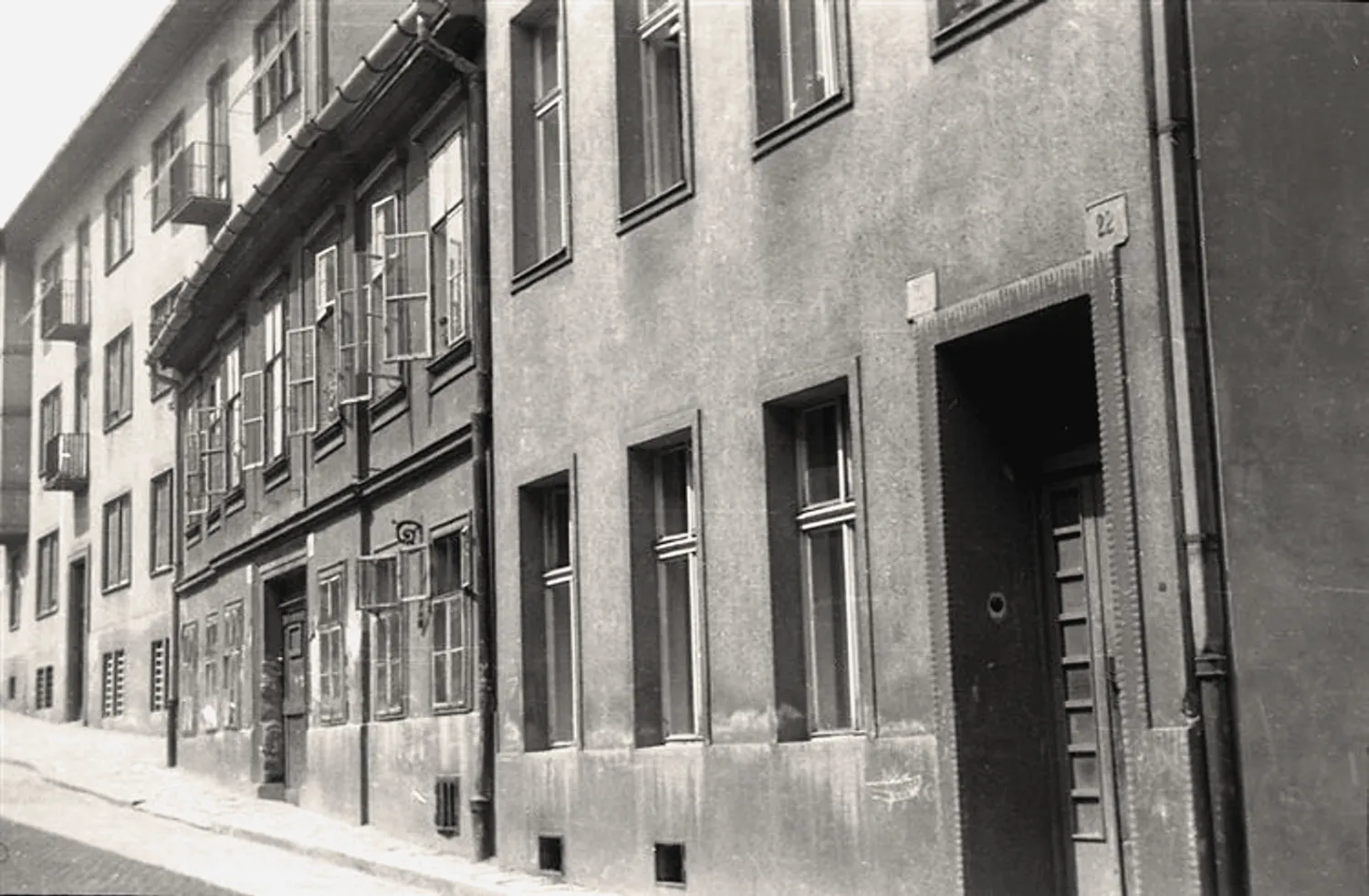

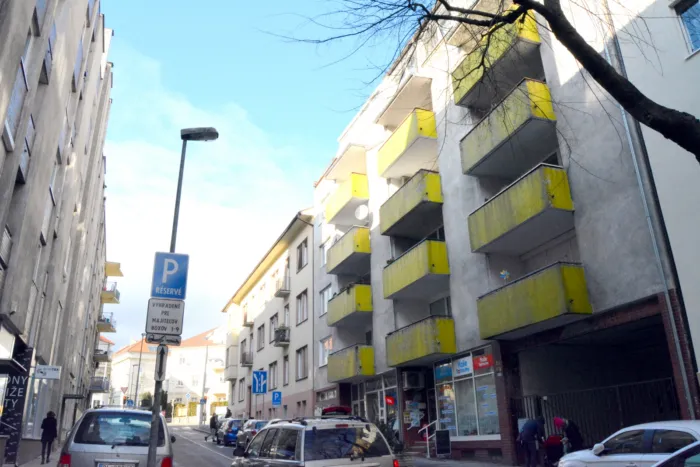
Place of birth of Philip Lenard
Building, structure
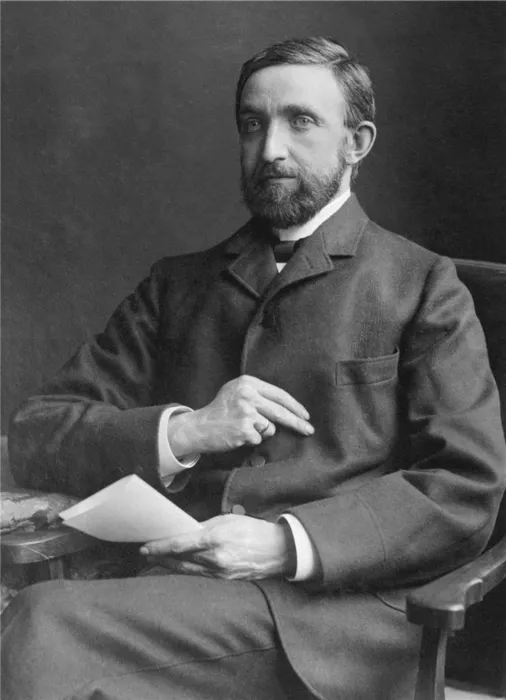
Fülöp Lénárd (German: Philipp Eduard Anton (von) Lenard) (Bratislava, 7 June 1862 – Messelhausen, 20 May 1947) was an Austro-Hungarian physicist, university professor, member of the Hungarian Academy of Sciences, one of the most outstanding experimental physicists of his time, the first Hungarian-born and the only Nobel Prize-winning scientist born in Bratislava. ; Born in 1862 at 69 Kisfaludy Károly Street (today Kecske Street 24–26). He completed his elementary and secondary school education in Bratislava. His family spoke German, but he attended a Hungarian school and received a Hungarian education. His physics teacher was Virgil Klatt, who later became his colleague. His father was a wine merchant and, according to his wishes, he studied wine chemistry in Vienna, but that was not his world, so he took up chemistry in Budapest with Károly Than. He also studied mathematics in Heidelberg and Berlin. He received his doctorate in 1886 from the University of Heidelberg. With the permission of Loránd Eötvös, he also worked for a short time at the Budapest University of Science. ; He worked mainly in Germany, researching the properties of cathode rays. He succeeded in leading the cathode rays (electrons) out of the discharge tube filled with very rarefied gas through a thin metal foil - this outlet opening became the so-called "Lénárd window". A serious problem was that at that time it was believed that 1) atoms were impenetrable, 2) the atoms of metals fit tightly together, so the electrons should have been absorbed in the metal. Lénárd concluded that only a very small region inside the atoms was impenetrable. He imagined these regions as intense force fields and called them "dynamides". This model was considered valid until the development of J. J. Thomson's atomic model. ; His explanation of the photoelectric effect is generally accepted today. For this and for his atomic model based on cathode ray studies, he received the Nobel Prize in Physics in 1905. He maintained contact with the Hungarian Academy of Sciences until the end of his life. He published about a hundred scientific articles and wrote two books. ; As an exponent of the Aryan-cosmopolitan contrast, he became an active supporter of the National Socialist system in his older years. As a leading figure of the so-called "Deutsche Physik", he played a role in discrediting the results of Albert Einstein. ; “Lénárd was convinced that he was surrounded by charlatans who had stolen his glory, and by Jewish conspirators who were trying to replace authentic science with abstract and obscure mathematics, and so he was a natural ally of the rising German National Socialist party. Under Hitler he became the leading figure of Aryan physics and wrote his four-volume Deutsche Physik (German Physics), in which he denounced the theory of relativity as a Jewish fraud and Wilhelm Conrad Röntgen as the creator of Jewish physics. This sounded bizarre and ridiculous, all the more so since Röntgen was not Jewish. ; Lénárd had lost touch with the new direction that physics was taking in the 20th century and was now merely a mouthpiece for the National Socialist propaganda machine. He spent his last years in bitter isolation, his own great achievements, for which he had earned recognition and the Nobel Prize, almost forgotten.” ; ; His main works: ; Über des Verhalten von Kathodenstrahlen (Budapest, 1899); Über Kathodenstrahlen (Nobel-Vorlesung, Leipzig, 1906); Über Relativitatsprinzip, Aether, Gravitation (Leipzig, 1918) ; Quantitatives über Kathodenstrahlen (Heidelberg, 1925)