
Binding
Foreign national part value
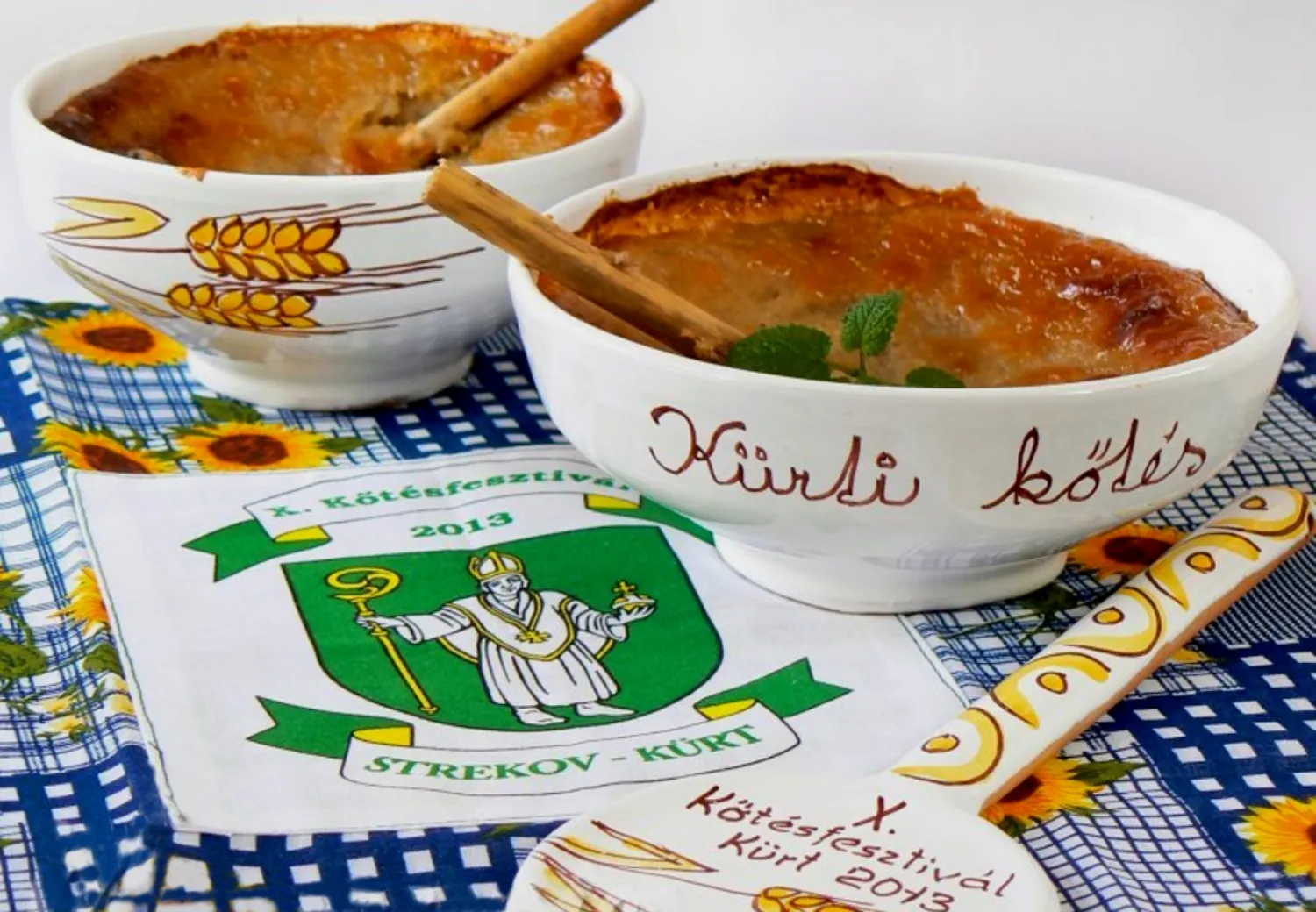
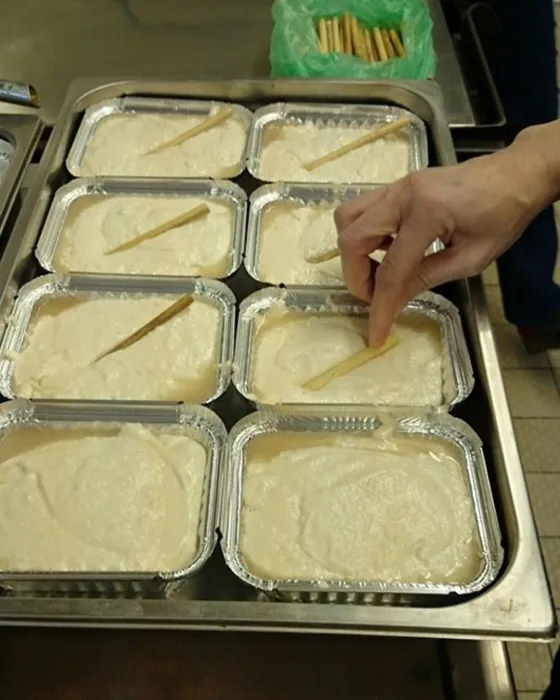
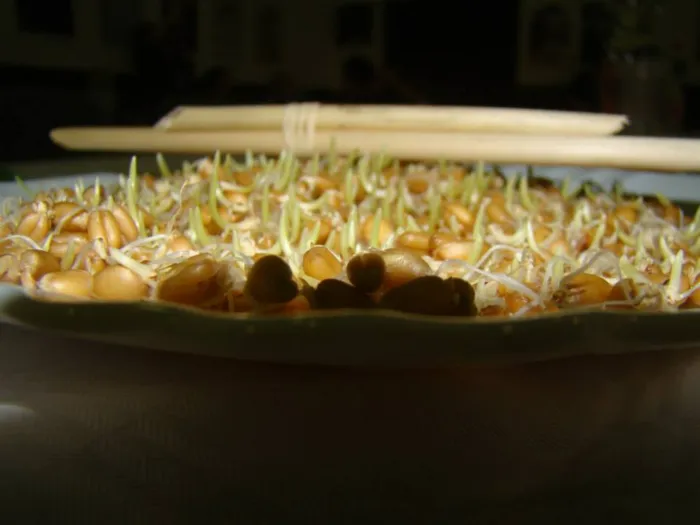
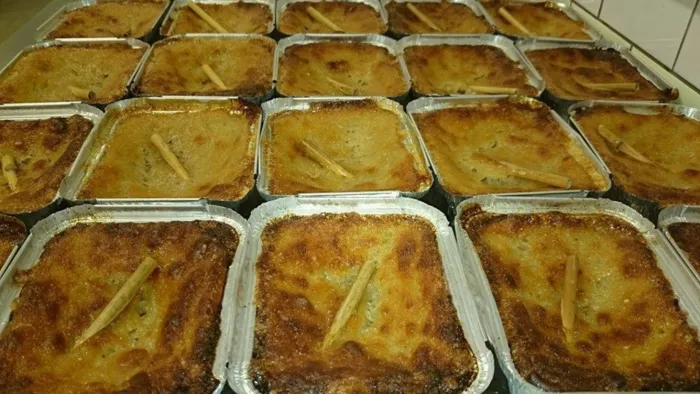
Description: ; Kötés, also known as köttés, kötís, szalados, biracs, méra, ciripiszli, círamálé, búcciramálé, is a sweet porridge known since the time of our ancestors in some regions of historical Hungary, most often consumed during the fasting period. Its ingredients are exclusively natural ingredients: sprouted wheat or rye, water and flour. Due to its 20-22% exclusively natural sugar content, it can also be consumed by diabetics. The particularly rich vitamin and mineral content of wheat germ makes the food extremely valuable. ; The carefully selected wheat is soaked in water, then watered and cared for for days in a semi-shaded, airy, warm environment until the wheat grain completely transforms into a sprout, a root. The white root germ is ground, water is added, and then filtered. Flour is mixed with this white sweet juice, then poured into a baking dish and a reed is inserted to ensure the escape of air. If possible, it is baked in an oven or in a furnace (depending on the quantity) in 1-2 hours. ,
History: ; The science of its preparation has been passed down from mother to daughter, some stories trace its origin back to the time of the conquest. According to this, our ancestors successfully used it in the healing process of cancer patients as the exclusive food. No specialized literature is known. The food is and has remained in the possession of the common people to this day. It is also called the sweetness of the poor. For them, the food also represented completeness, since all five elements are necessary for its preparation: ; - the earth, from which the grain grew, ; - the water, without which there would be no germ or wheat, ; - the air, without which the wheat germinates, molds, and when baked, it escapes from the food through the inserted reed; - the fire, with the power of the sun and the long baking process; - and the human factor, with constant care and attention over the days. ; ; Based on our winemakers who travel the world and our own research and knowledge, only Hungarians know, consume and prepare the food. The otherwise inexplicable sad fact that it is known among Hungarians only in some regions and in fewer and fewer places, while in other places, often very close to the known areas, it is completely unknown. In many settlements, only a very old housewife knows the science of its preparation. According to our surveys, with the arrival of the new generation, food has completely disappeared from the public consciousness of the settlement in many places. ,
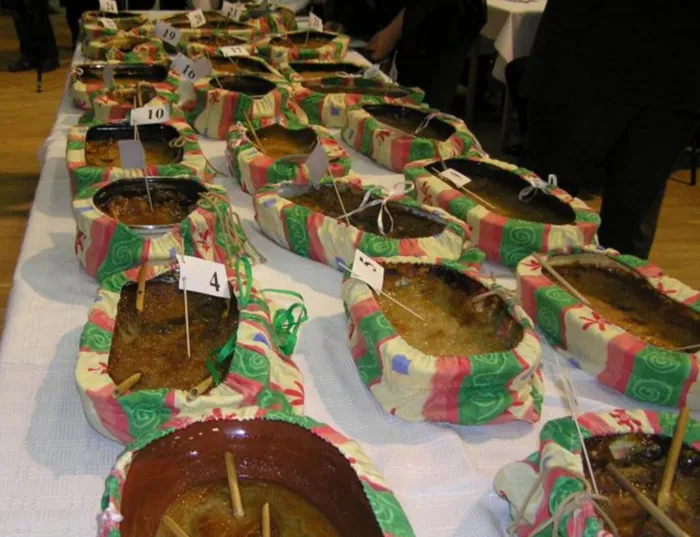
To counteract this, the Kőtéskóstoló initiative was launched 10 years ago in Kürtő in the Upper Hungary, which grew into a festival in 4-5 years. Here, you can not only taste the food, but also learn the science of its preparation in practice. Professional lectures and awareness-raising additional programs help to lead people back to appreciating the value of food, thus promoting its survival in our Hungarian community. The many hundreds of visitors who last tasted the food in their grandmother's kitchen are growing year by year. There is also increasing interest in the joint wheat selection that takes place weeks before the event. There is an initiative to market sprouted wheat in powdered form to make the food easier to prepare, but its texture and taste cannot be compared to the original. Experienced housewives and true sprout enthusiasts did not like sprouts made from powdered sprouts. ; ; Preparation: ; Grains must be selected individually before sprouting. Neither damaged, unhealthy, nor half-broken grains can be used for sprouting, because the sprout around them will deteriorate, rot, mold, and the whole thing will take on a spoiled taste. The dish cannot be prepared according to a recipe given in exact units. The amount of water needed for the ground sprouts depends on the quality of the wheat and the germination process. Everyone uses different flours according to their own taste to achieve a smoother or more fluffy porridge consistency. A little juice is always poured into the bottom of the baking dish, but sometimes also on top of the raw dough. If you don't stick a reed in the dough before baking, the air can't escape, so the edges will cook, sometimes leaking out of the pan. ; Some people sprout rye in half or less proportion with the wheat - although their germination times are not always the same - to achieve a sweeter taste. Special attention is needed in the last phase of the germination process, because if the tips of the sprout turn green, the rye will be bitter. When the germination has reached its peak, it must be ground, because greening will begin 4-5 hours later. The juice squeezed from the root remains can only be stored frozen. The baked rye, on the other hand, will remain intact for weeks.