
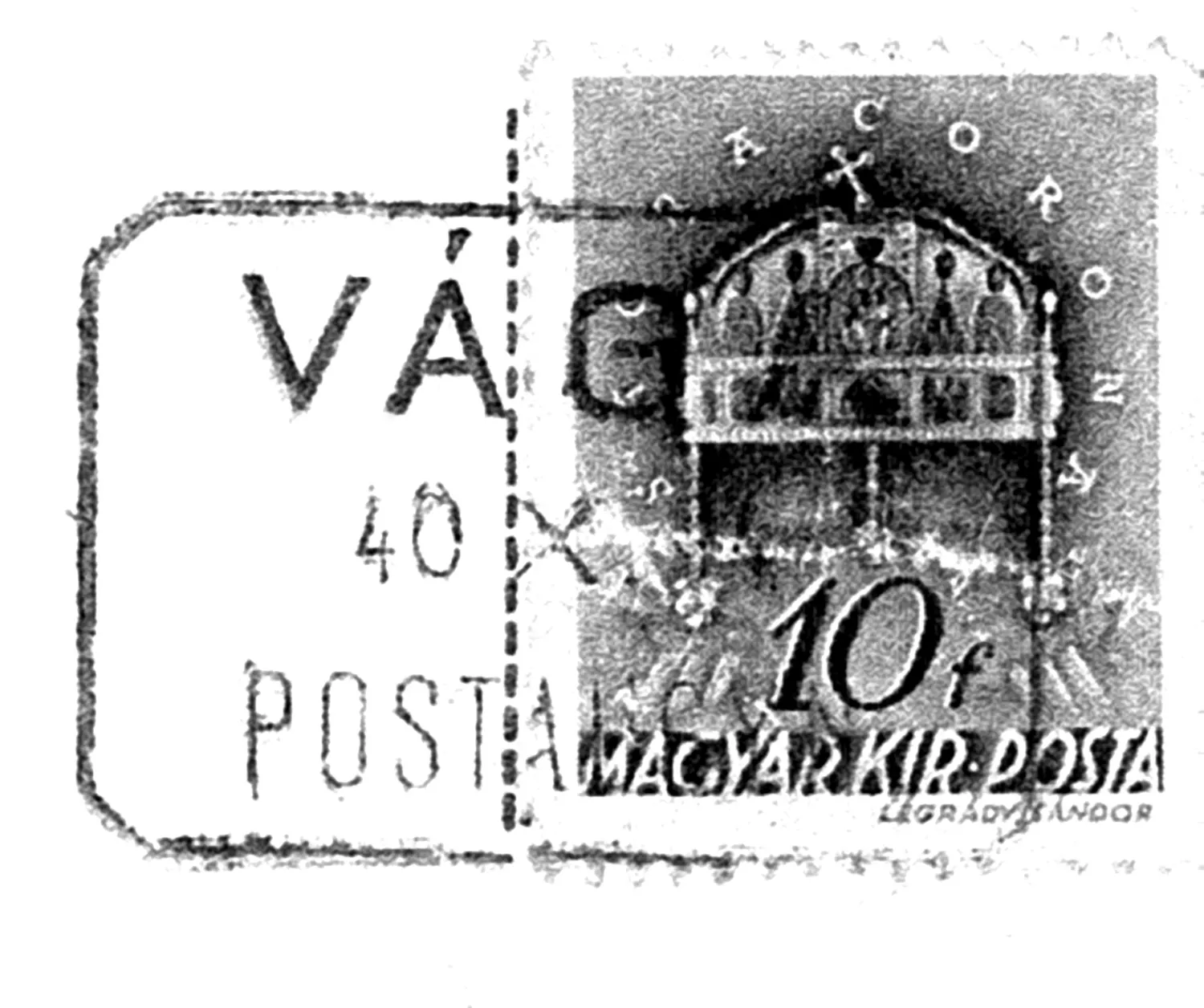
Part of the back of a postcard from the first half of the 1940s
Postcard
"The 16th century brought serious changes to the life of the village. Shortly after the Battle of Mohács, the Turkish expansion began again. From 1543, the seat of the Esztergom archdiocese became Nagyszombat, and the economic management of the estates was also transferred here, although after 1543 Vága belonged to the Újvár manor for a short time. However, in the 1670s, Vága, Vágszerdahely and Zsigárd formed a separate economic unit, which was subordinated to the Nagyszombat manor. In 1571, taxes were paid for 13 entire serf plots in Vága, 3 1/4 of the serf plots were uninhabited and there was one serf in the village who had redeemed himself from his serf obligations for money. There were 13 squires in the village who owned a house. On St. George's Day, 46 denars were paid for the entire plot, on St. Michael's Day 52 denars and During Lent, they were obliged to pay 6 denarii to their landlord. They did not have to plough, reap or mow the landlord's lands, but they were obliged to transport the wine tithe from the Sempte vineyards to Vecsé or Gúta to the ships. They paid 60 denarii each for the four mills and owed 2-3 gold pieces a year for fishing on the Váh." ; From the book by Dr. László Pukkai: History of the Váha Village