
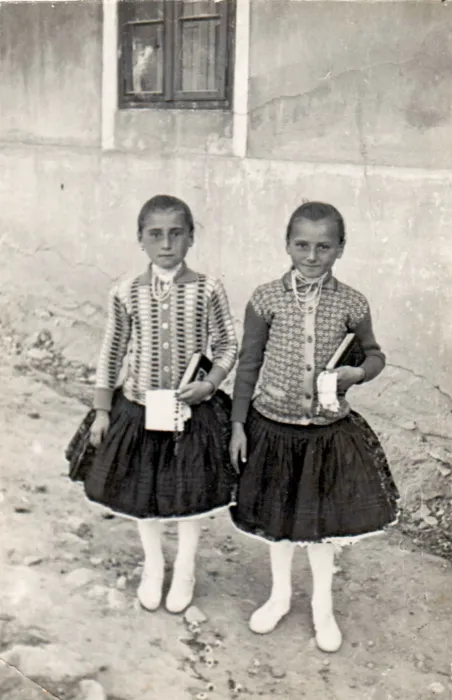
Folk costumes and traditions of kurta-wearing villages
Cultural heritage
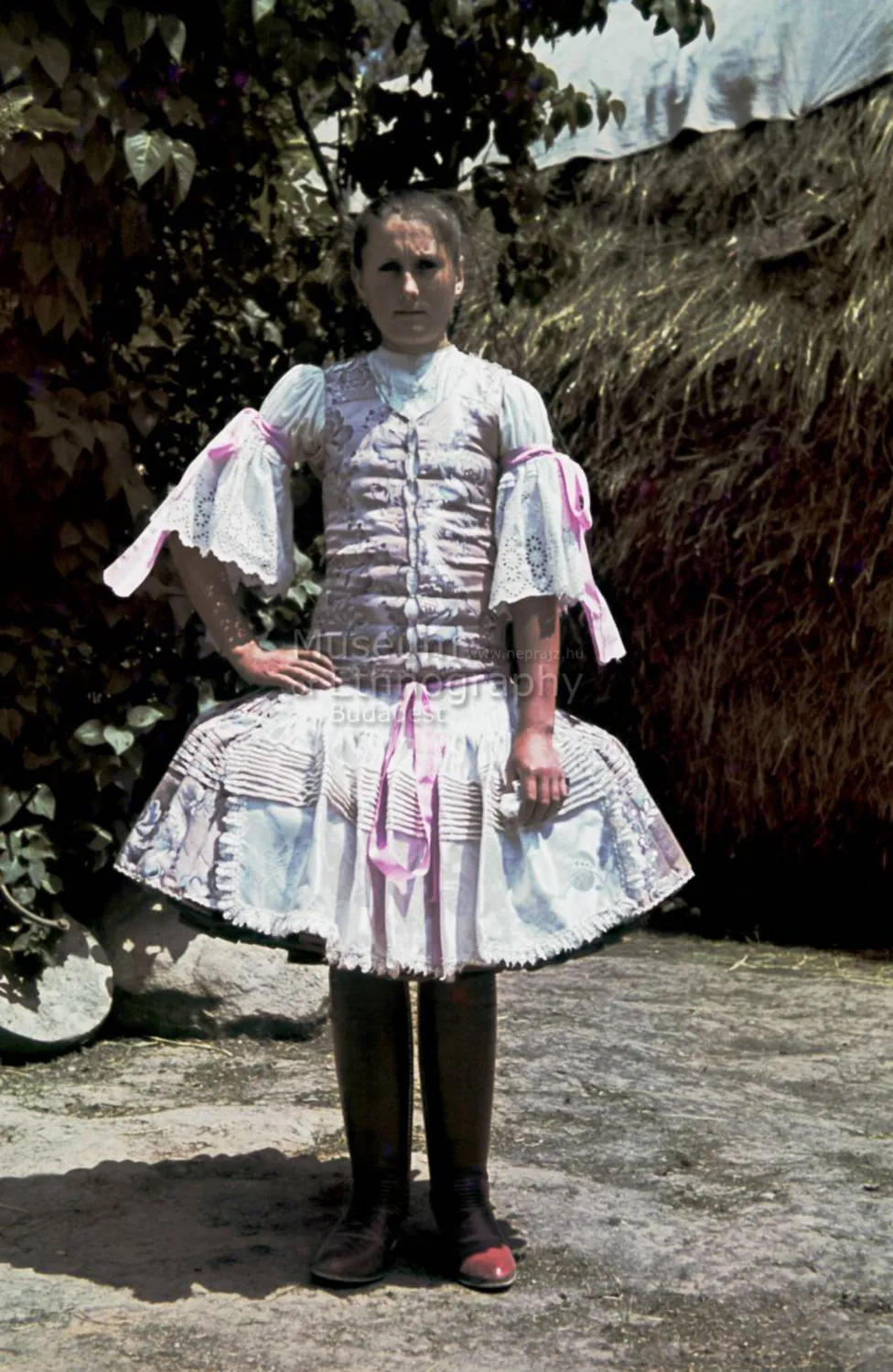
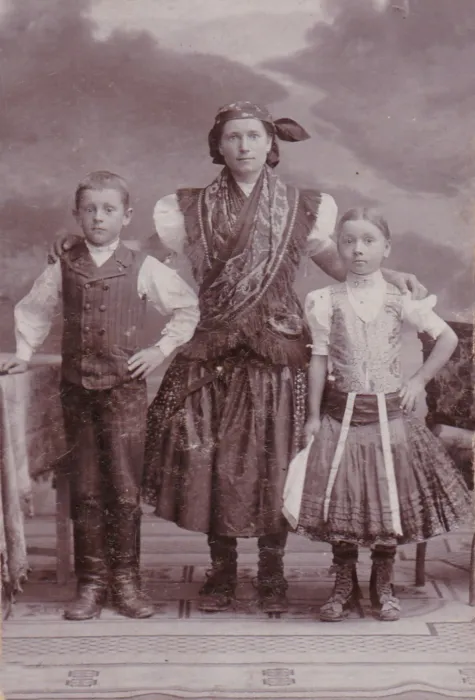
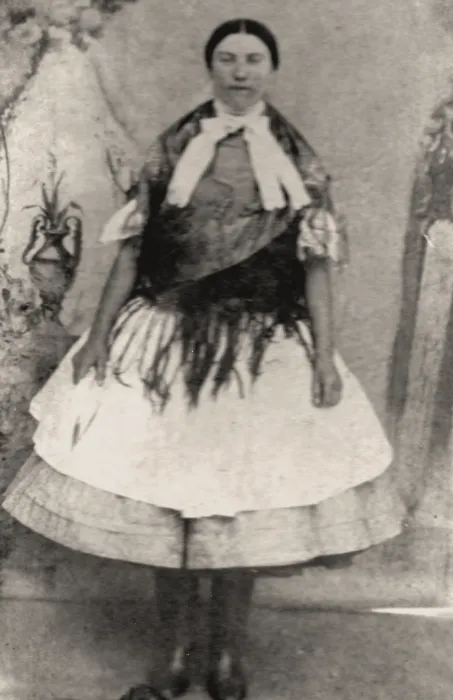
Kéménd is the center of the six villages of the Lower Garam region (Kéménd, Bény, Kőhídgyarmat, Bart, Garampáld, Kisgyarmat) with kurta skirts. The characteristic women's attire is the kurta skirt, which is unique and was worn only in these six villages in the world. ,
I present Emerencia Jancsovics' bridal attire. The wedding was held on October 15, 1931 in Kéménd. ; The shirt was made of linen, the sleeves of which were made of purchased lace, decorated with a white ribbon - armband. ; The shirt was worn with a pruszlik, on which a pofándli (a sausage-like butt pad) was sewn from hip to hip. The pofándli holds the skirts and strengthens the hips. The lower part of the body is covered with underskirts, which are made of velvet and cloth and are hemmed with green silk ribbon. The bride wore six underskirts. The underskirts were covered with a skirt made of thick silk, which was pink (flesh-colored). ; The apron was covered with the silk skirt, which covered the skirt. It was called an apron. The hips were tied with a white ribbon, from which a bow was tied in front and this was called an elibevaló. ; A close accessory of the bridal outfit is the nyecces scarf. The scarf is decorated with a farraválo (ribbon) at the back. ; The neck is decorated with silver pearls and pearl necklaces, which are made of white ribbons. ; The white stockings were covered with red boots with wrinkled necks, rattling, squeaking, and rotating. ; The head is decorated with a towering wreath made of flowers, daisies, and butterflies. The head is decorated with a small wreath at the back, from which ribbons hung down the length of the skirt. ; For the wedding, the bride had a handkerchief in her hand, namely, a prayer book, a rosary, and a handkerchief. ,
The informant is the bride wearing a black apron, Jancsovicsné Veronika Mocsi, born in 1914, died in 2010. ; She is wearing a black apron because the groom has not yet asked her out. She was only dressed in the white apron after being asked out. ; The traditionalists of the “Kurtasoknyás falvak” faithfully preserve the attire and cherish the traditions of our great-grandfathers.