
Kuffner Castle in Diószeg
Building, structure
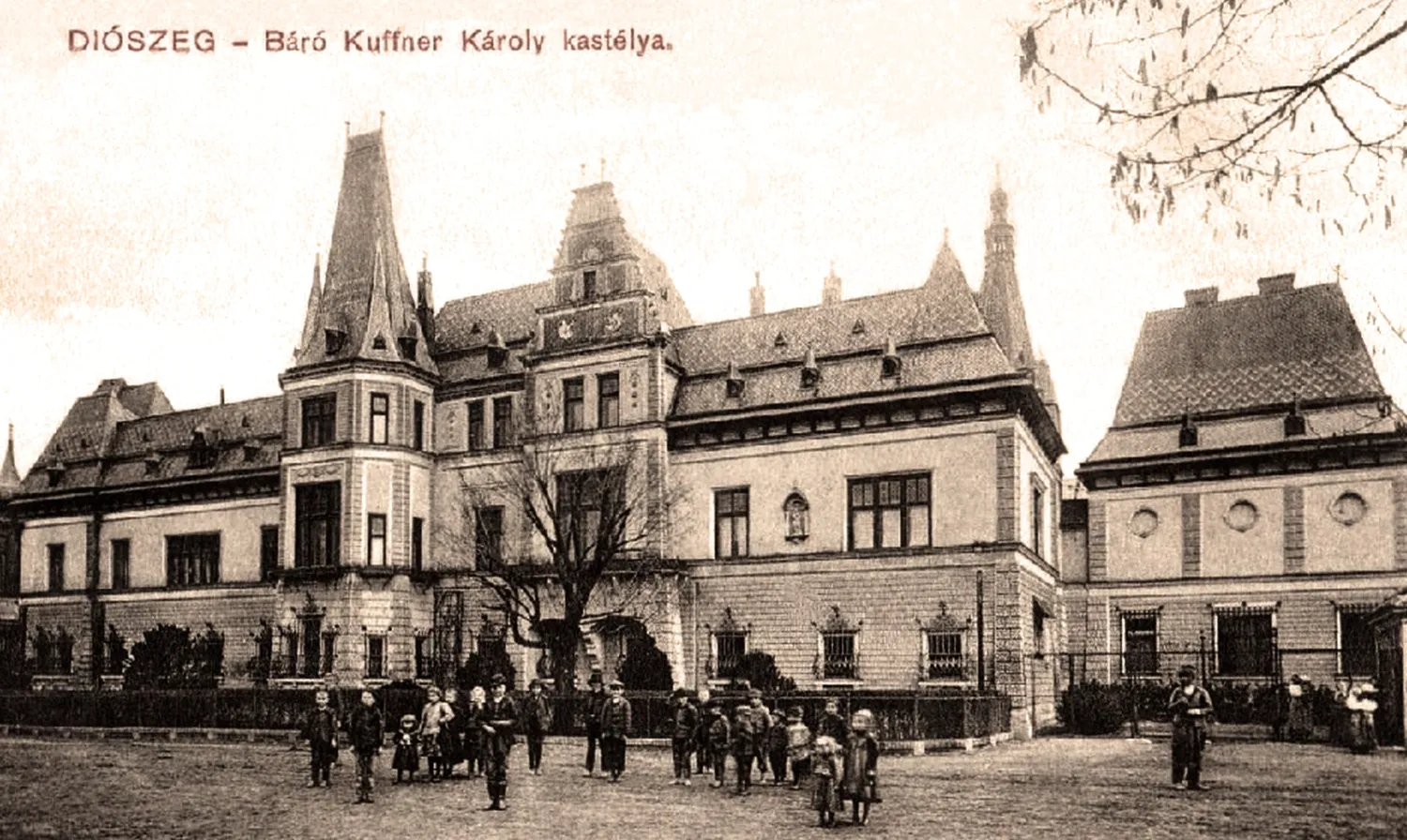
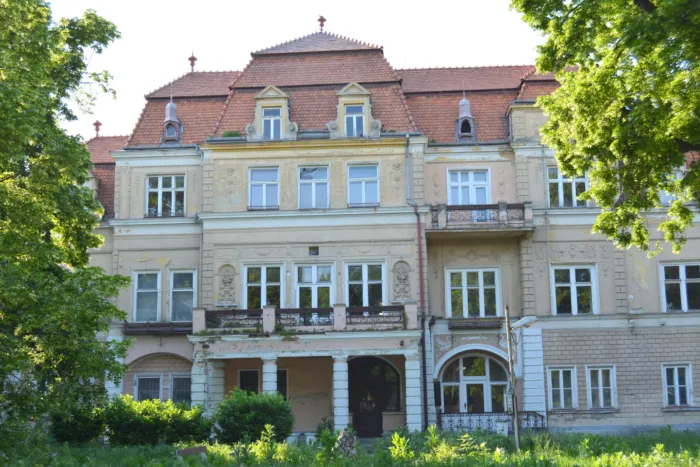
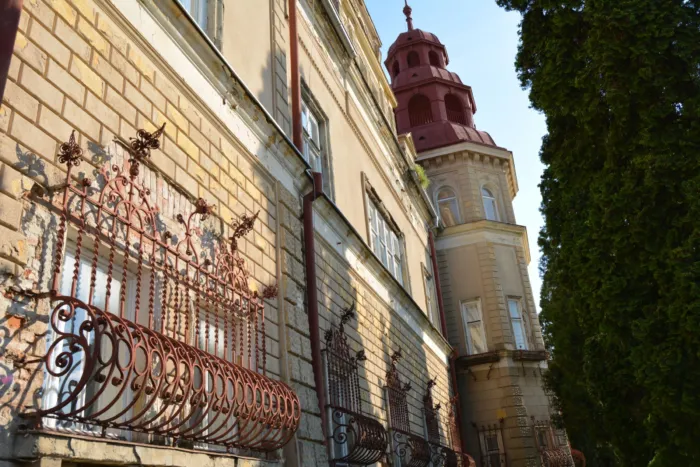
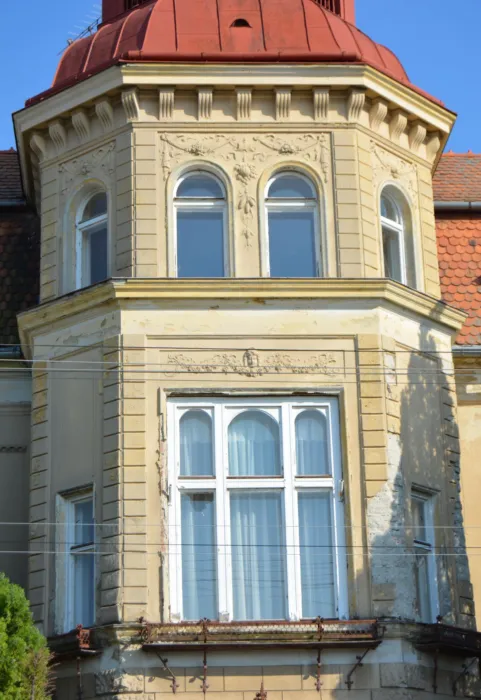
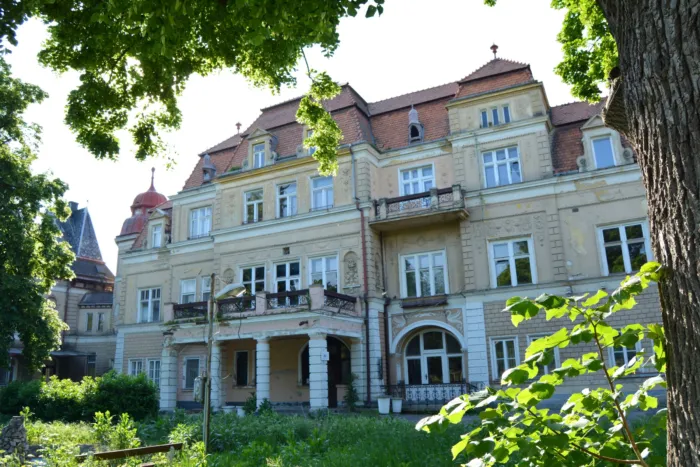
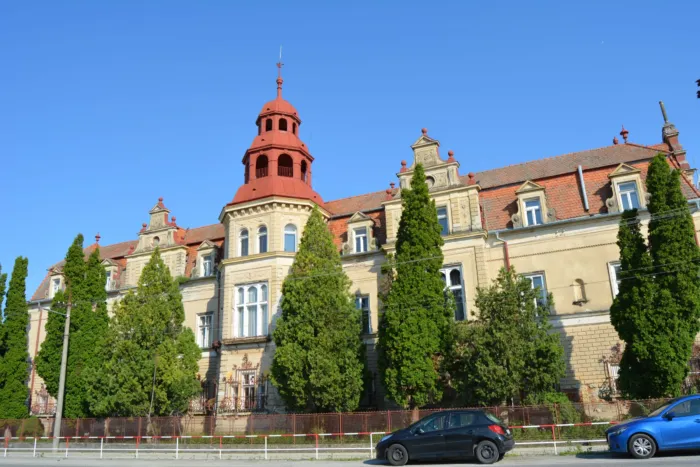
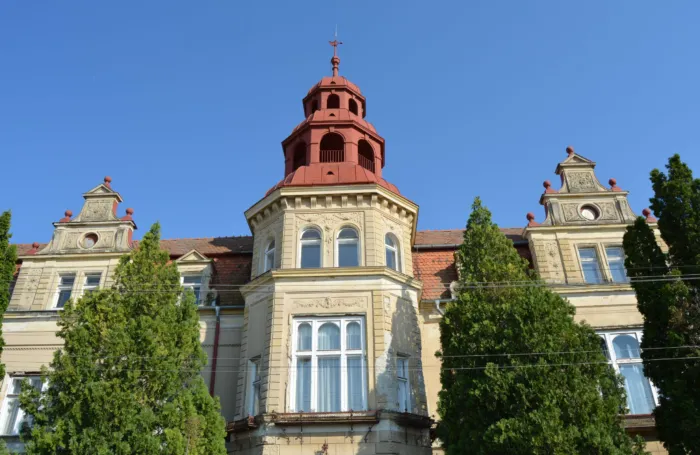
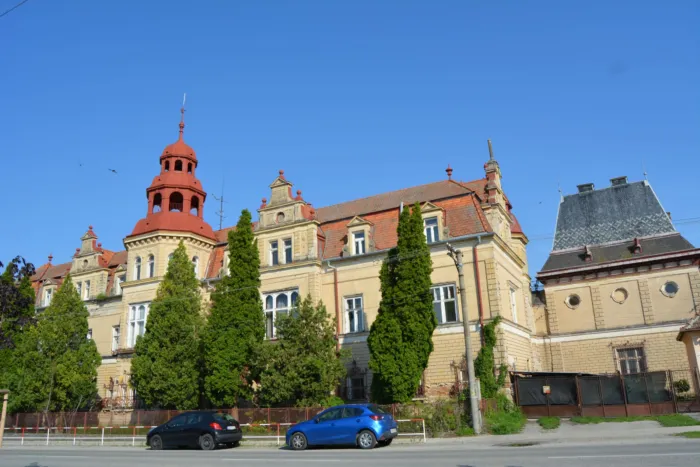
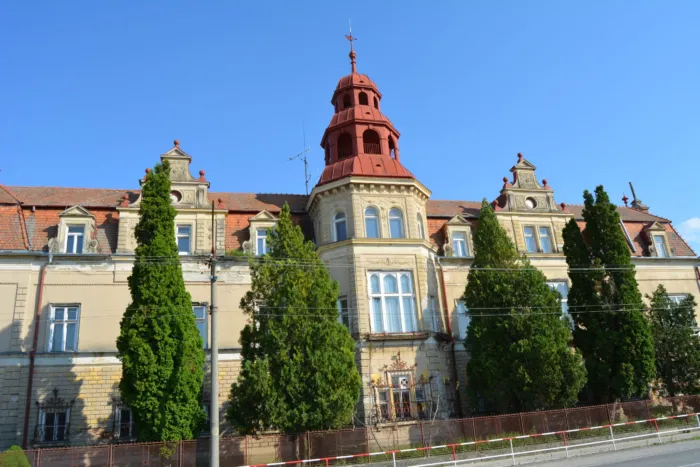
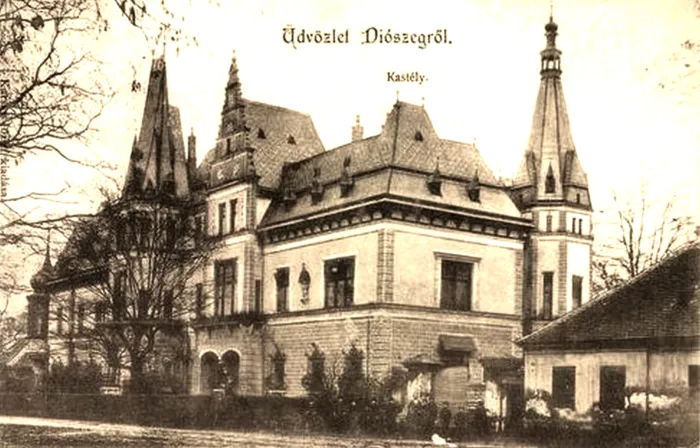
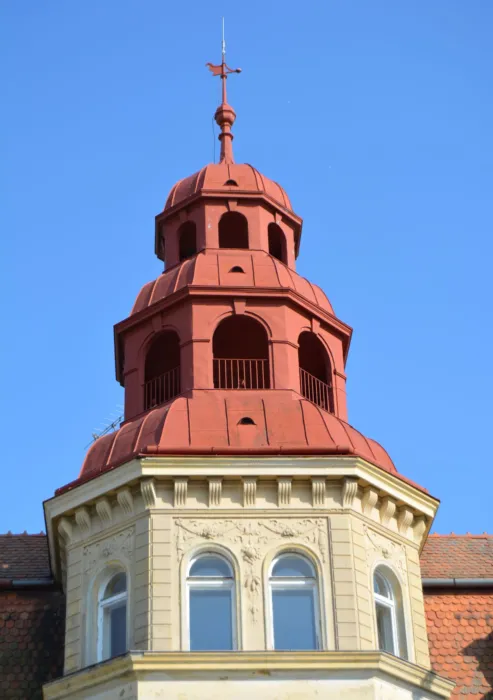
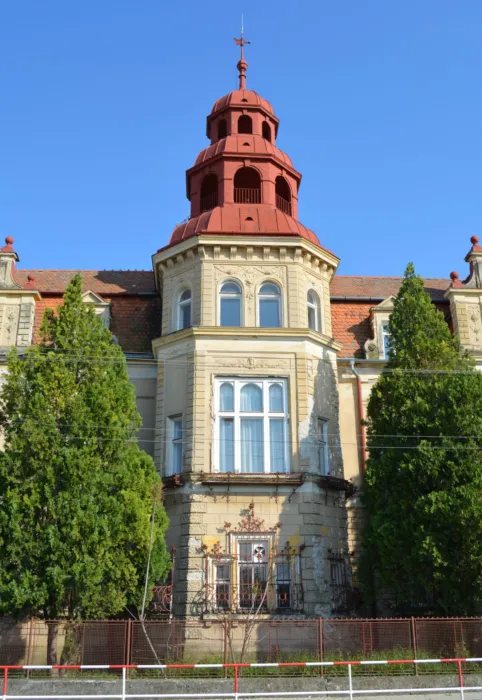
In Diószeg, a market town in northern Kisalföld, the Guttmann–Kuffner company built a sugar factory and established a model farm in the area. The factory director, Károly Kuffner (1847-1924), who was born in Moravia, married in 1884 and then had his castle built in Diószeg. In 1896 he was given the Hungarian nobility with the first name “Diószeghi”, and in 1904 he was given the rank of baron. Originally, a single-storey mansion with a porch stood on the site of the castle. Its thick walls made it possible for the new castle to be built using the old building. The plans for this were drawn up by Franz Neumann from Vienna, according to the Budapesti Látogatók Lapja, so that “both the architect and the owner had a tendency towards a picturesque design of the transformation”, and the shape of the building was determined by “mutual agreement”. The construction took place in 1885-86, except for the masonry work, everything was done by Viennese companies (Oesterreicher, Beschorner, Falkenstein, Schwarz, Milde). The construction cost a relatively small amount, only 60,000 forints. The castle was intended as the permanent residence of Károly Kuffner. In 1908, its side wing was expanded to a two-story building. In 1919, its first floor and roof were damaged by fire, and in 1921 this part was rebuilt in a modified form. The one-story castle has an elongated brick shape, a varied roof shape, and is made with a strange combination of elements of German Renaissance and timber-frame architecture. A two-story, polygonal building section rises in the middle of its main facade, whose striking, tower-like appearance is given by its steeply tapering roof enriched with small turrets. To the right of this, another two-storey building section advances, originally crowned by a pointed, five-stepped gable. The left end of the castle was covered by a higher, complex roof form. The extravagance and imbalance of the massing arrangement was enhanced by a circular-arched enclosed balcony attached to the left corner of the building, supported by thick consoles, on which sat a small onion dome. The windows of the ashlar ground floor were protected by a neo-Baroque iron grille. Its main cornice sat on pediments, and its otherwise striking roof had a pattern drawn in black and green slate. The left side facade and the rear facade were counterpointed by steep gables with a beam frame. A two-storey, octagonal-plan, timber-framed veranda adjoined the right side of the rear facade, which had a separate, pointed roof. A tower with a pointed helmet rose at the left end of the facade. A side wing is connected to the left rear corner of the building with a narrow neck. It is possible that an earlier outbuilding originally stood here, which was only expanded in 1908 to create a winter garden. On the ground floor of the castle with a central corridor, the vaulted spaces of the street section reveal their earlier origin. During the construction in 1885-86, this level was expanded towards the rear, and the spacious, three-flight main staircase was also placed on this side. The main rooms were created on the newly built floor, which also has a central corridor. The Budapesti Látogató Lapja published a description of the interior, which is still partly in existence today, in 1894: “From the entrance on the garden side we reach the main staircase, which leads from the ground floor to the first floor: this is a beautiful, spacious hall with a wooden ceiling, in which the wooden staircase hangs freely in the manner of English buildings. A lodge-like space opens to the side of the staircase, which, connected to the foyer, serves as a garden hall and, furnished similarly to the staircase, gives the impression of a pleasant family home upon entry. On the first floor, a narrow gallery runs along both sides of the staircase, from which arriving guests can be greeted, while on the third side the large main corridor opens down, from which all the reception and living rooms can be reached. The kitchen and the servants’ rooms are located at the western end of the corridor, which are connected to the ground floor and the upper floor by a side staircase. are connected to the attic floor, on which the spare family guest rooms are located together with the restrooms. The principle of habitability comfort is also applied in the details of the interior decoration. The halls and dressing rooms with arched plasterwork, light clay-colored ceilings and similarly colored gold-colored tapestries form comfortable dwellings in the late Renaissance style, while the dining room, i.e. its wooden ceiling, room lining, balcony and fireplace, adapt to the outer facade. The other living rooms are connected to these with a nice variety, but with simpler furnishings according to their purpose. [ …] The windows on all sides and divided into many parts are enlivened by mullions and stand out as effective details with their dazzling lead lines. [ … The castle] hides a great treasure of old furniture from the early Renaissance. "The castle, located in the center of the town, looks out onto the main street of the settlement with its main facade. Behind it is a walled garden, where the elegant, classicist-style mausoleum of the Kuffner family is located, built in 1926 based on a design by architect Milan Harminc. There was also a gate in the garden wall at the back, from which one could go straight to the sugar factory on the other side of the street - and clearly visible from the castle.