
The tomb of Miklós Konkoly Thege and the tomb chapel of the Konkoly Thege family
Cemeteries, tombstones, grave sites
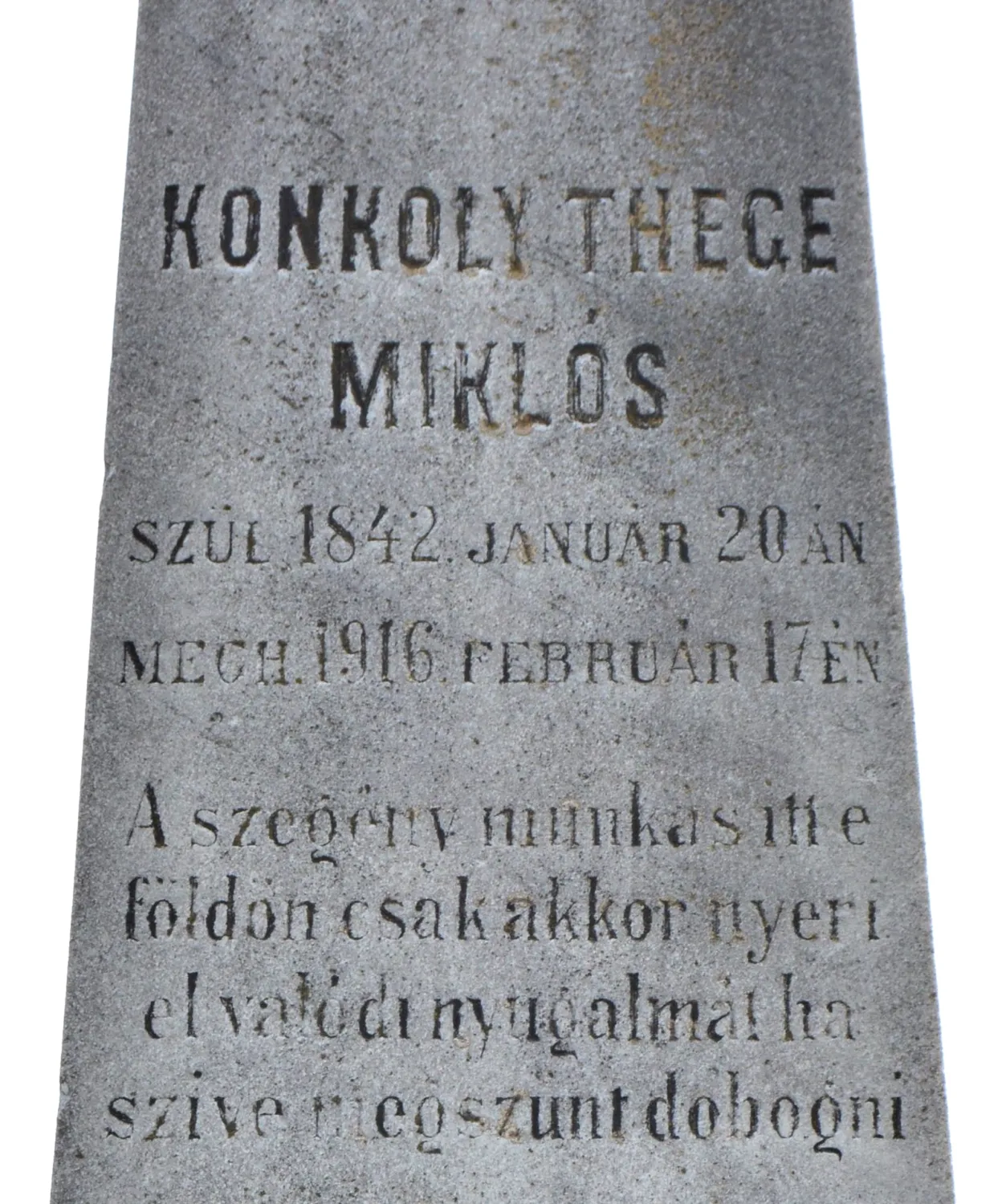
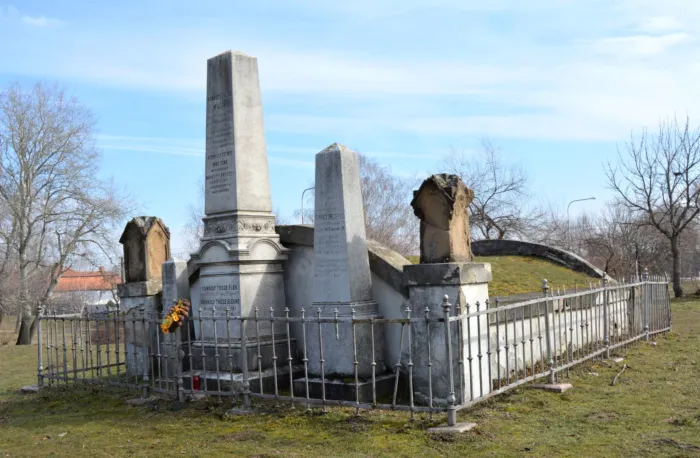
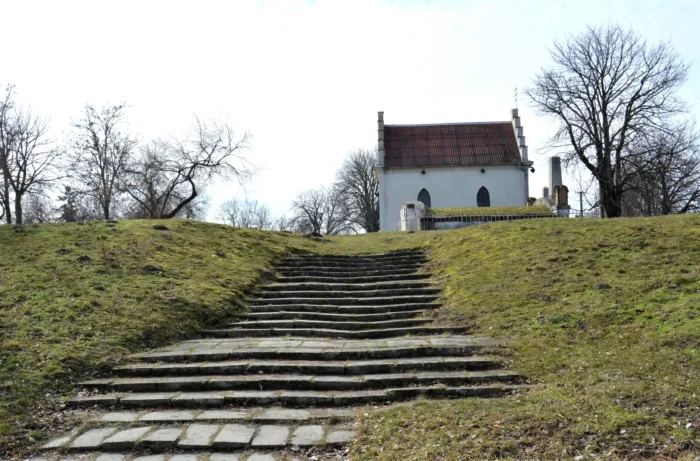
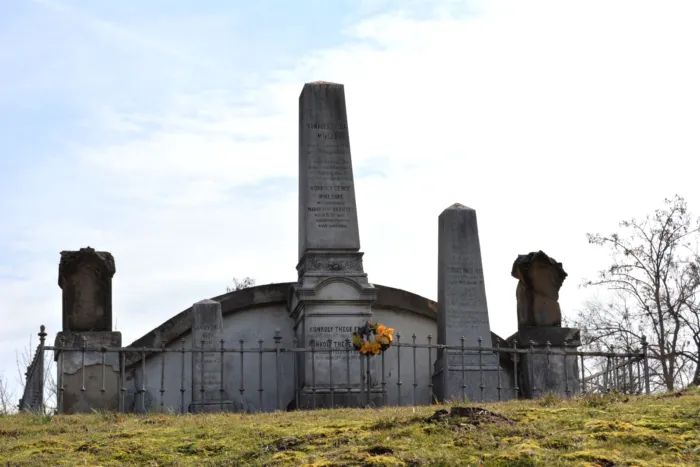
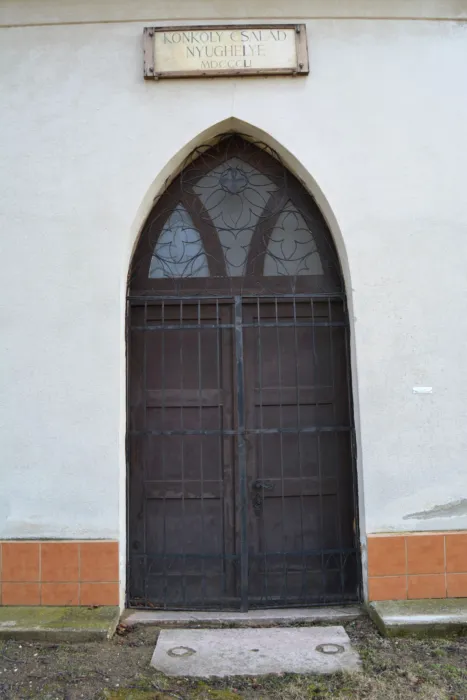
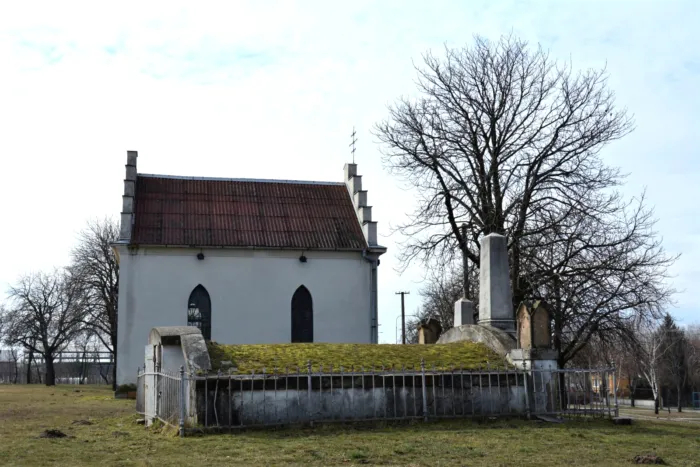
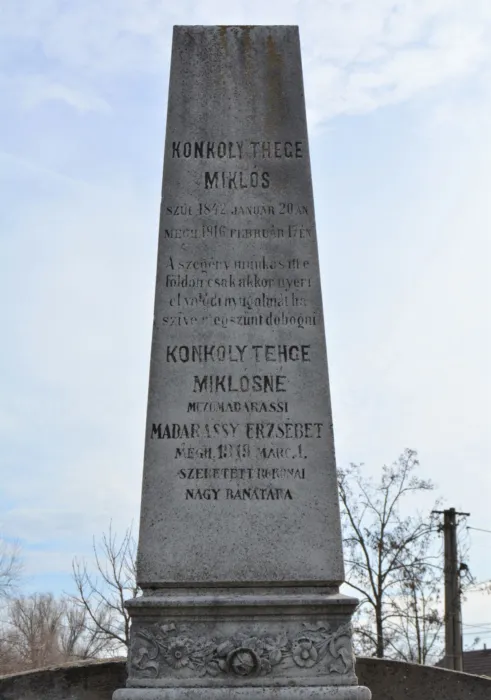
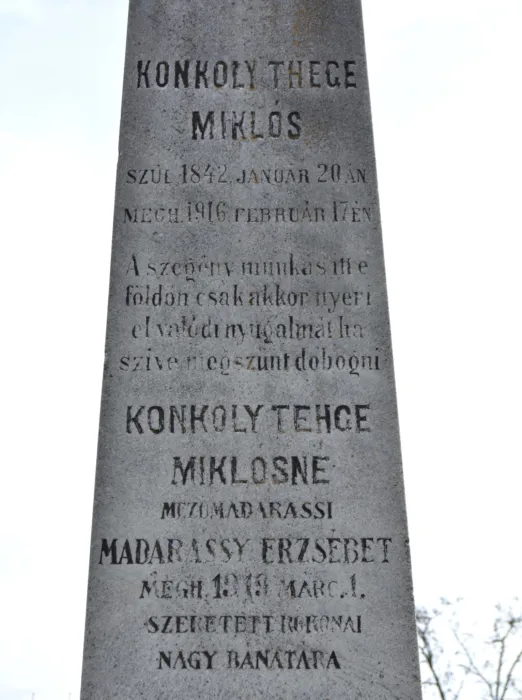
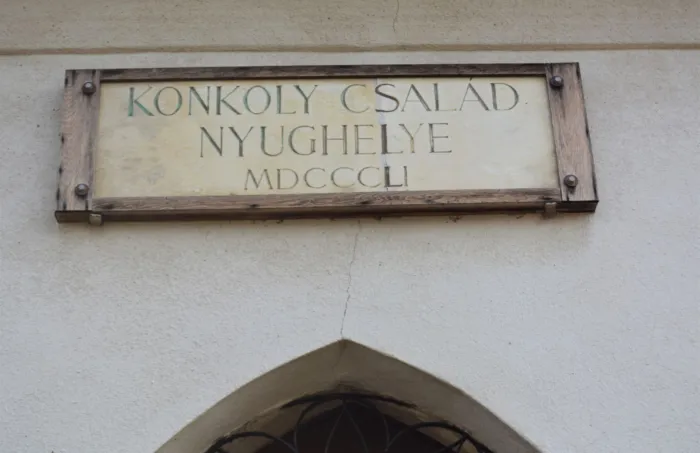
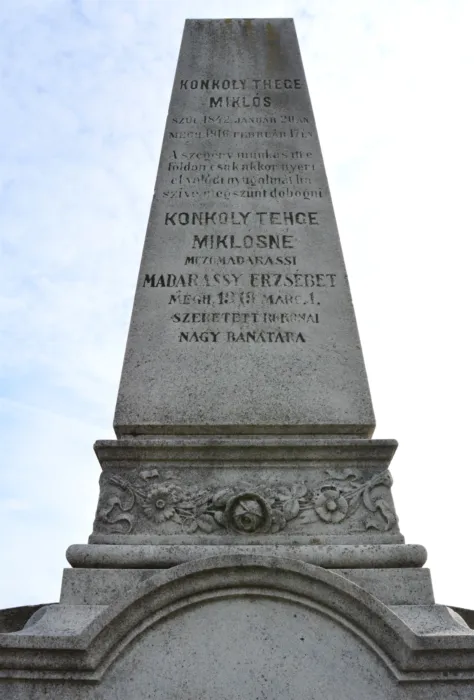
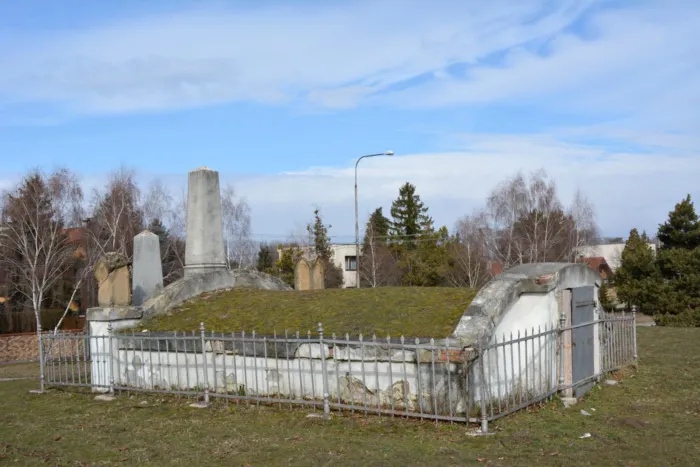
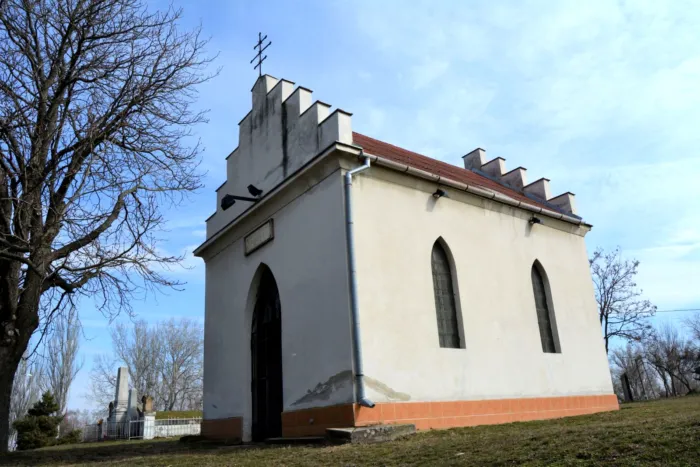
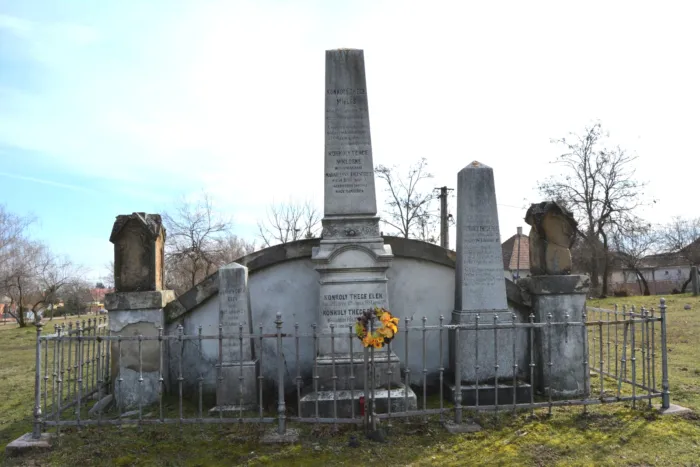
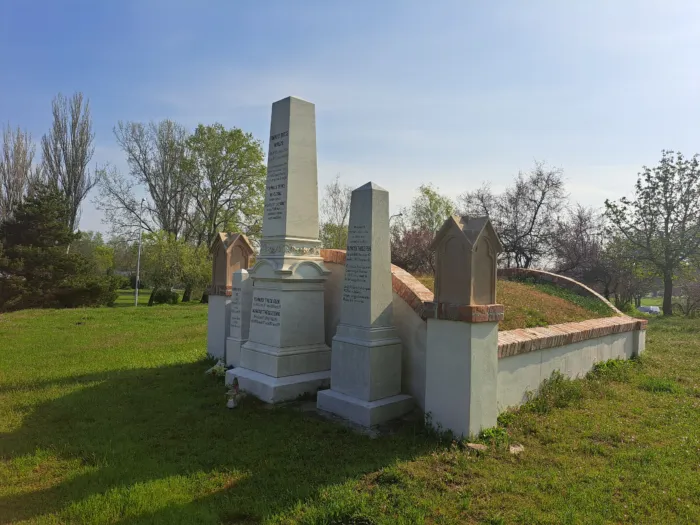
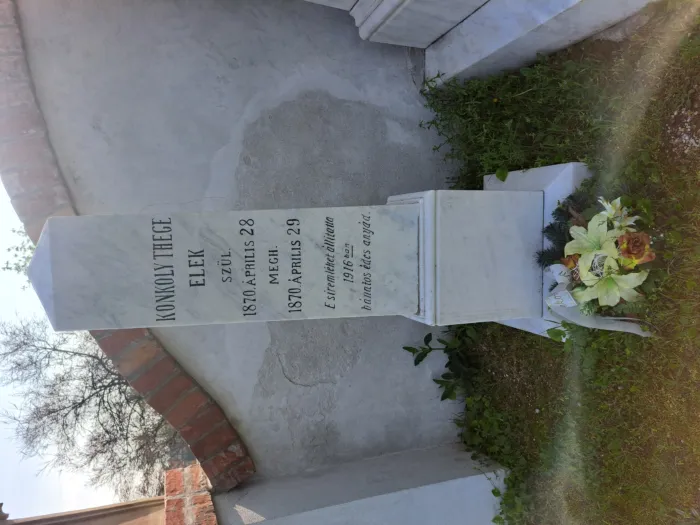
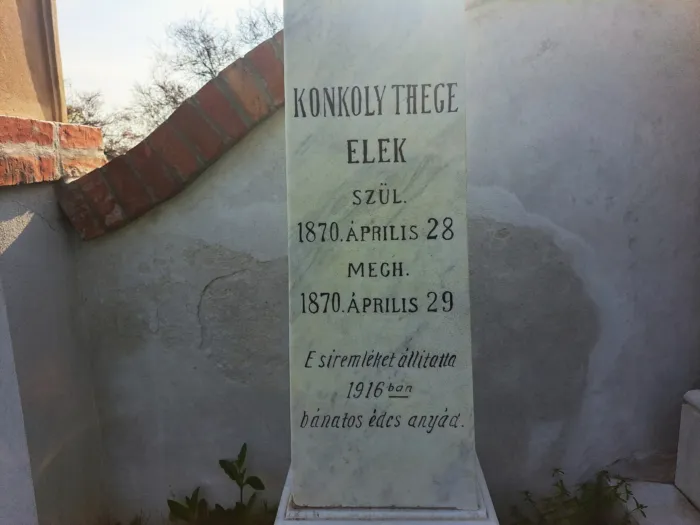
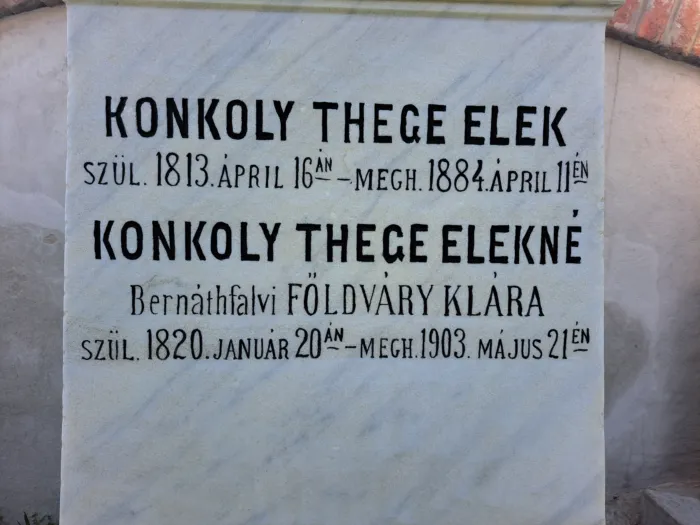
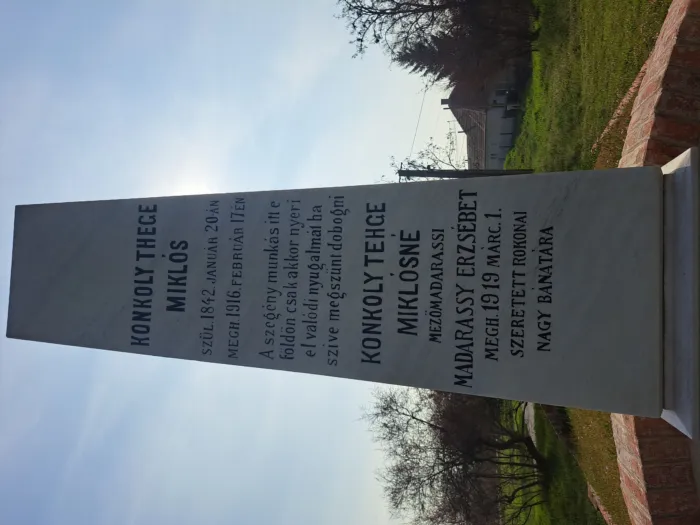
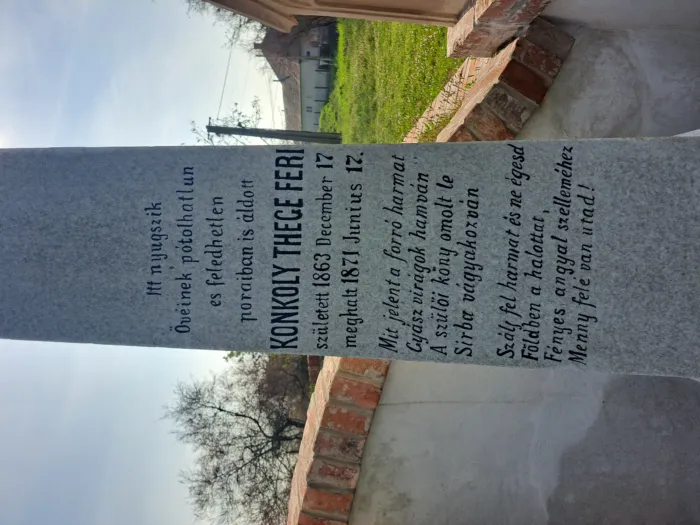
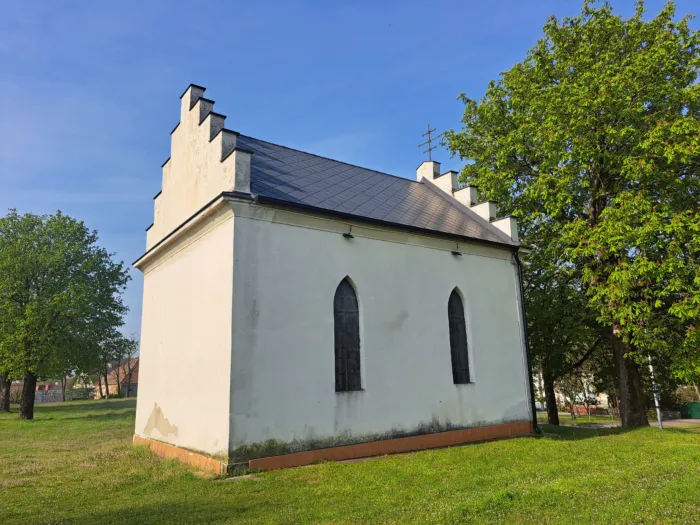
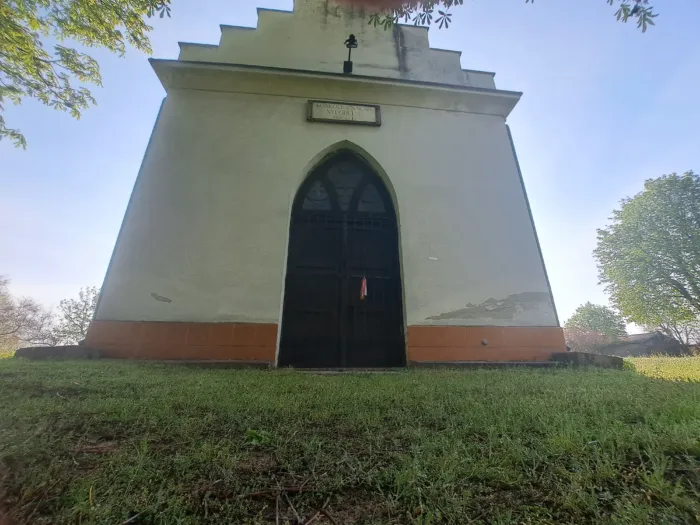
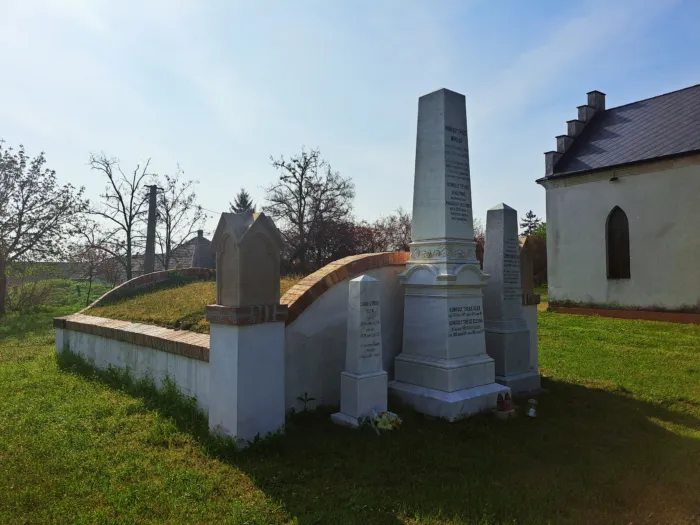
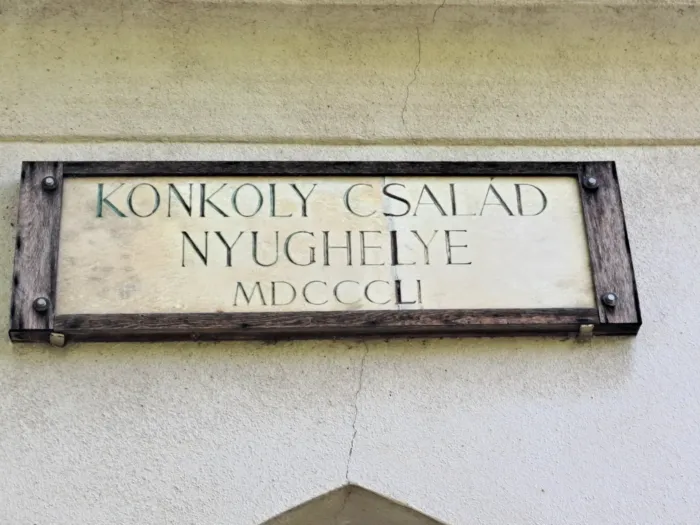
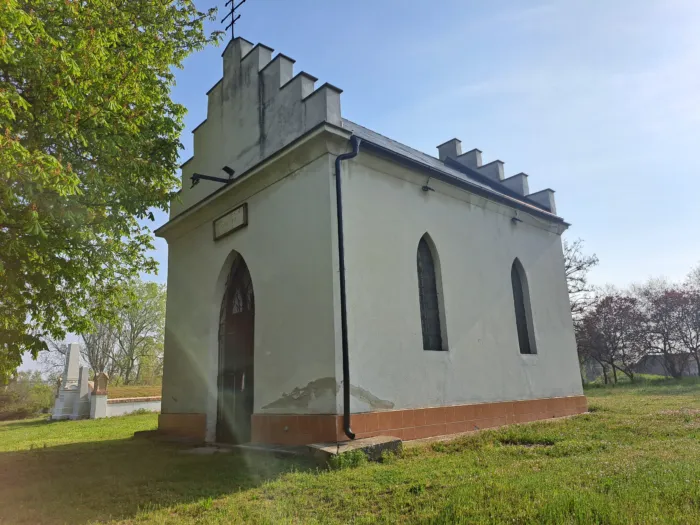
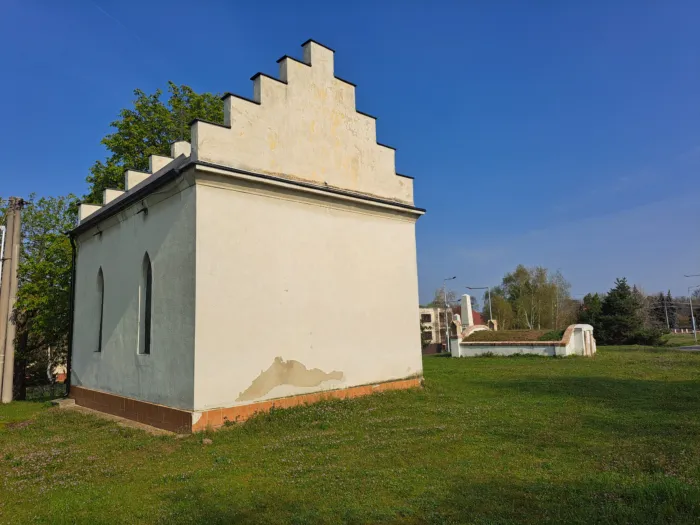
The tomb of the Konkoly Thege family – 10 (chapel, Chapel of the Virgin Mary of Seven Sorrows). It is located on a hill on the edge of the settlement, along the current main road, with the tomb of the Konkoly Thege family in the open air below and next to it. Above the main entrance of the tomb chapel, a marble tablet placed in a wooden frame bears the following inscription: ; KONKOLY FAMILY ; RELAXATION ; MDCCCLI ; The white marble tomb of Miklós Konkoly-Thege, a Hungarian astronomer, meteorologist, member of the Hungarian Academy of Sciences, and member of parliament, is also located next to the tomb chapel. He was born in Budapest in 1842. He was the only son of a wealthy landowner family in the highlands. His father was Elek Konkoli-Thege, a servant judge of Komárom County, and his mother was Klára Földváry. In 1869, he had an observatory built on his estate in Ógyalla, which he expanded into an internationally renowned observatory over the years. The Astronomical Research Institute of the Hungarian Academy of Sciences was named after him for his efforts in Hungarian astronomy. ; Quoting József Chalupeczky: “Konkoly, meanwhile, built a chapel when his mother-in-law died” – I assume that Konkoly was thinking of Miklós Thege’s father, Elek Konkoly Thege. A letter dated 1912 mentions “Zsuzsanna Benkovics’s Virgin Mary Chapel”. We also have at our disposal a copy of a Hungarian and Latin statement by Zsuzsanna Benkovics dated April 11, 1859, authenticated by Jenő Szikora in 1937: ; “Declaration. ; I, the undersigned, hereby solemnly declare and inform all who may be concerned or may be concerned in the future, of my decision that as soon as the chapel I have built on my own property in the border of Ógyalla is consecrated according to the rites of the Roman Catholic Church, from then on only members of my family who follow the Roman Catholic religion may be buried in the tomb below it. For greater validity, I have issued this declaration in three equal copies, signed and sealed by my own hand. ; Dated Ó Gyalla April ; Widow Konkoly Lászlóné Thege sz. Zsuzsána Benkovich s.k. (…)” ; The altar of the chapel was consecrated by János Scitovszky, Prince-Primate of Esztergom, in 1859, in which the relics of Saint Thomas could be placed at that time. The original document was in the tabernacle, glued to a piece of silk, but it was returned in a photocopied form, with notes by József Chalupeczky (Anna Hulkó Chalupeczky Józsefné, born 1923). Around 1934, the nephew of Miklós Konkoly Thege wrote the following: “The small forest next to the Konkoly crypt has been completely cleared out, so the trees around the chapel have also been stolen. The area is desolate. The chapel is unkempt. Lászlóné Konkoly has also established a foundation for its maintenance, but the prince-primate is the patron, and what can he do here when he is based in Hungary” (Konkoly Thege é.n., 18–19). This Lászlóné Konkoly was certainly “the niece of the late József Király, bishop of Pécs, famous for his charity”. So the astronomer, Miklós Konkoly Thege, could have obtained the relic of King József through the wife of his paternal uncle (Magyar Nemzet 17 January 1902, 5). Some people believe: “The Reformed scientist rests in the crypt, his Catholic wife in the chapel building” (Bombek é.n., 21). According to József Chalupeczky, the names of the deceased (two?) were written on a wooden tablet in the tomb chapel, but I did not come across this in 1998 either. ; In 1945, Soviet soldiers broke open the door of the Konkoly family tomb chapel, opened the crypt, and dug up the skeletal remains: “They dug up and searched for gold, didn’t they” (Józsefné Chalupeczky Anna Hulkó, born 1923). During the communist regime, the relics in the ownerless tomb chapel were left unattended and open to anyone's whim. Some local residents stored the pictures, altarpiece, statues, etc. in the attic of a nearby private house, at the home of Katalin Szvitacs, who also took care of the object. A certain Rózsás boy “once came to his father and said, ‘Uncle Pubi, are you interested in the chapel?’” He said that the unemployed husband of the daughter of the lady living at the private house was selling the stored “valuable things.” “Of course he is interested,” he said. “He went to a factory and then took pictures of the chapel,” he said to the mayor at the time. He told him that both Hungarians and Germans visited the tomb chapel (Chalupeczky Józsefné Anna Hulkó, born 1923). I remember that József Chalupeczky mentioned an Austrian television station, where they broadcast the interview with him at the ruined building. It is likely that this may have also been the reason for the renovation work. The benches destroyed by the collapsed roof structure were allegedly used to make an extension at the private house. The parish priest Béla Szőcs had the broken windows of the tomb chapel replaced (I wonder when?). This renovation cost 4,000 crowns, but neither the observatory nor the Catholic Church paid this to the priest. He complained constantly about this, until finally, thanks to József Chalupeczky, he was reimbursed for his expenses on the chapel in the form of compensation from the insurance company for his collapsed (damaged?) tobacco dryer (József Chalupeczky Anna Hulkó, born 1923). After 1989, the Ógyalla council contributed a certain amount of money to the renovation. According to Ladislav Druga, an employee of the Slovak Central Astronomical Observatory, this meant a 60,000 crowns ministerial subsidy from their side, which was presumably used to finance the benches. The various objects were restored free of charge by Ógyalla craftsmen, artists and painters in 1992 (Chalupeczky é.n.a, 1). We can read about the renovation works in the late 1980s in the chronicle of the Ógyalla branch of the Csemadok. The nearby residents still place flowers in mason jars in front of the chapel. “Aunt Rozi, with Aunt Német” kept the chapel in order. “Even when I was a little girl, I know that my mother went there and opened it, cleaned it there” (Szilvia Vrábel, born 1973). ; A rusty triple cross can be seen on the tomb chapel. On the south side of the building, various inscriptions can be seen scratched into the wall, but I will not go into more detail about them now. Inside the object, the altarpiece depicts the Virgin of Sorrows (Seven Sorrows). On the right wall, in a picture cabinet, there is a Madonna statue, and on the left, also in a picture cabinet, is a Sasvár pieta. József Chalupeczky found 19th-century coins (kreizcár, fillér) in the crowns of the latter statue during the repainting and dismantling. The upper panel of the marble altar was broken (due to the roof structure?), and during the renovation work, this was replaced with a wooden panel together with a painted tablecloth. On the altar, there are carved angel statues with candlesticks (a Heart of Jesus candle and a Heart of the Virgin Mary candle were placed in these from donations collected in 1999). In 1999, two candles were placed, but these were later returned to the Chalupeczky family. The crucifix on the altarpiece was donated by Irén Orišekné Kecskés, along with the candles above (they were gifts from an Italian officer at the front). An oil print of Jesus and Mary was placed on the right and left sides of the altarpiece (both from Irén Miskovics). Below them, on a small wooden stand, are plaster statues of the Heart of Jesus and the Virgin Mary (in the former case, a chest of drawers on the floor). In front of the altarpiece is a wooden step covered with a carpet. Benches on the right and left, with three chairs in front of them. A candlestick hanging from the ceiling (the metal chain for this was bought by József Chalupeczky in exchange for strong alcohol). To the left of the entrance is an empty picture cabinet from 1890. The crucified Christ in the corner, an oil print of Ecce homo and Jesus before Pilate between the pointed arched windows. On the right side of the entrance door is a holy water tank on the wall, with a metal cross above it (it is not impossible that it functioned as a grave cross in the past). The door and the window are protected from the outside by wrought iron and welded grilles. The lock on the door and the handle may be original. The donation collected in 1999 covered the painting of the window grilles, the kneeler moved from the church tower, and some window parts were glazed. Two vases were given by the sacristy of Ógyalla, previously carpets (the above part was reconstructed with the help of Chalupeczky Józsefné Anna Hulkó, born 1923). ; “When the main church burned down [in 1911 – B. Á. note], the masses were held here in the chapel” (Szilvia Vrábel, born 1973)46. In 1923, Miklós Pallay, the priest of the diocese of Veszprém, a “deserving camp priest”, performed a litany and sermon in the Slovak language in the building every Sunday in the presence of 20-25 older women. Then, in the thirties, they certainly performed a Hungarian-language apparition of Lourdes, and after 1945. Mostly, women also performed, at the resurrection, on Holy Saturday, “they went early in the morning, around two o’clock and kept vigil there until morning”. The informant heard about this from her mother, and according to her, it was between 1928–38 (Chalupeczky Józsefné Hulkó Anna, born 1923). During the days of the crusade, they also entered the chapel (Mária Bachorecz, Lajosné Dolník, born 1919). During the Lord's Day procession, there was a tent at the entrance to the chapel (Istvánné Feszty Scheffer Piroska, born 1915). At that time, they also entered the building, which was approached from today's main road (Anna Hulkó József Chalupeczky, born 1923). On September 8, when the church was small, a portable statue of the Immaculate Virgin Mary was "brought out" by girls in white clothes from the church and went to the chapel together with volunteer firefighters dressed in ceremonial clothes (Istvánné Feszty Scheffer Piroska, born 1915; Mária Bachorecz, Lajosné Dolník, born 1919). On the feast of the Virgin Mary of the Seven Sorrows, there was a devotion in the chapel, and on All Saints' Day a litany was performed (Chalupeczky Józsefné Anna Hulkó, born 1923). ; In 1998, the writer of these lines asked for the keys to the chapel at one of the offices of the Ógyalla Town Office. Seeing the neglected state of the chapel, he and a colleague decided to clean the chapel. In 1999, there was an open day on the occasion of the 140th anniversary of the chapel's consecration. According to the guest book, in 2001, a class of students from the Ógyalla Secondary School of Architecture visited the chapel. In the same year, “the 150th ‘birthday’ of the Konkoly chapel will be celebrated in a dignified manner” (i.B.Gy. 2001, 5). In 2002–2003, a chapel was open where the seven-pain rosary was prayed. The following were noted in the guest book from the visitors in 2002: “May Our Lady of the Seven Pains hear our prayers”; “May Our Lady of the Seven Pains help us.” In 2004–2005, no litany was held in the building, but it was cleaned by young people. ; There is also information that the area around the chapel was once a cemetery. Following the annexation in 1938, the State Architectural Office modified the alignment of the main road leading to the settlement at that time. At that time, the section leading to the chapel was removed (Istvánné Feszty Scheffer Piroska, born 1915). During the 1937 Harvest Festival, the harvest procession “went back to the chapel hill and marched in front of the Central” (Chalupeczky é.n.b, 11). Roma tents also appeared on the chapel hill (Chalupeczky é.n.c, 2). In the early thirties, children had “hide-and-seek and caves built in the bushes” (Chalupeczky Józsefné Anna Hulkó, born 1923). I know from hearsay that today’s middle-aged people probably used the chapel hill for sledding in the 1960s and 70s, but they could only look into the building through the windows. In April 2000, a youth movement implemented a memorial tree planting combined with garbage collection (i.B.Gy. 2001, 5), and later that year I noticed Roma playing cards at the tomb chapel.