
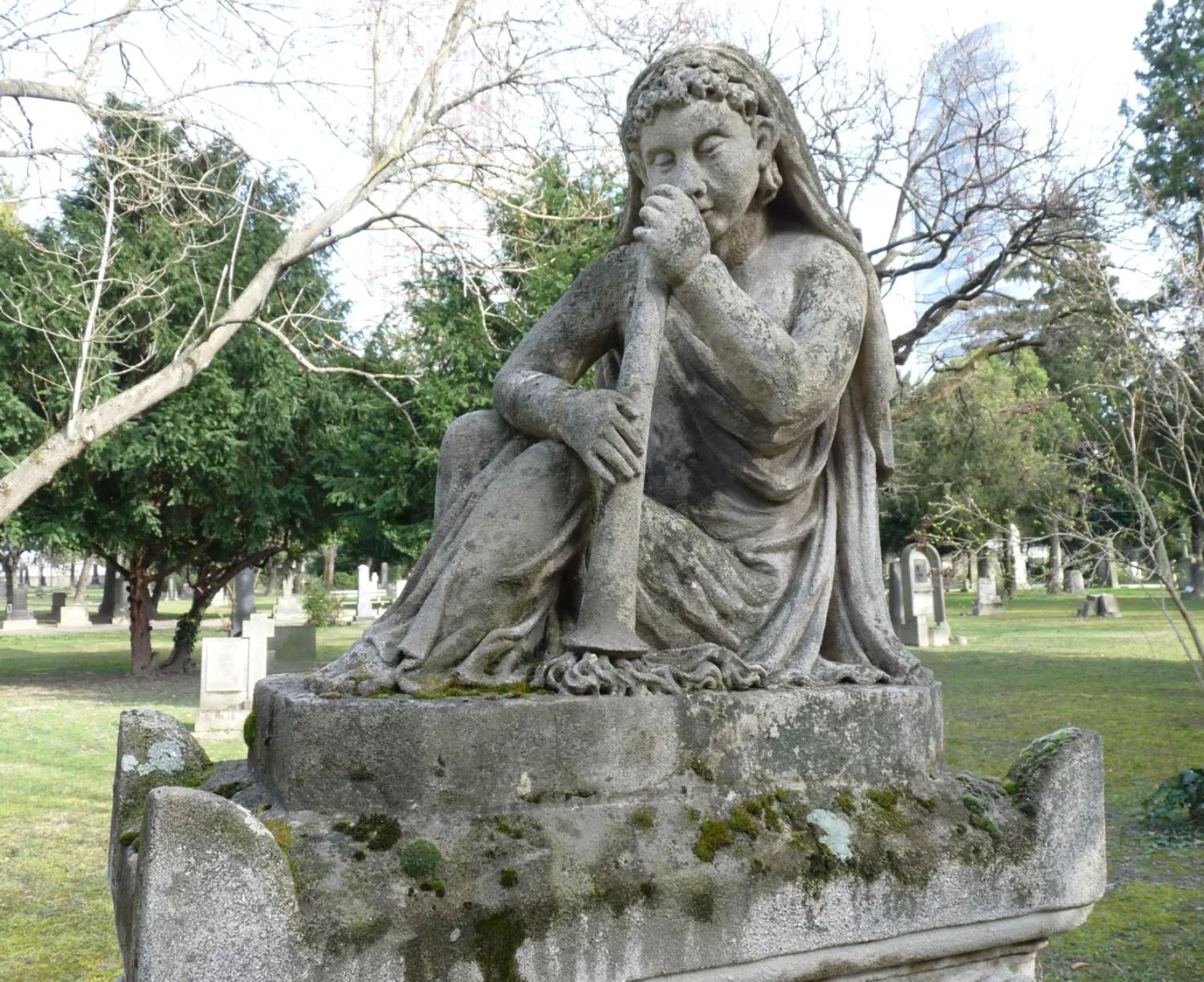
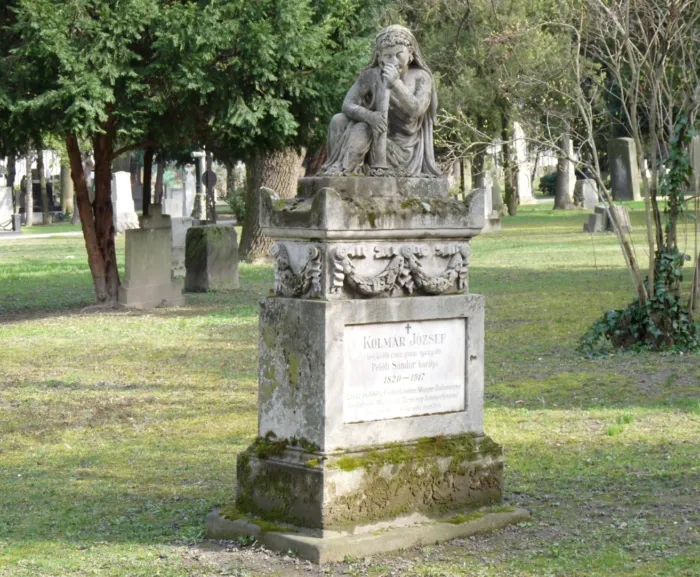
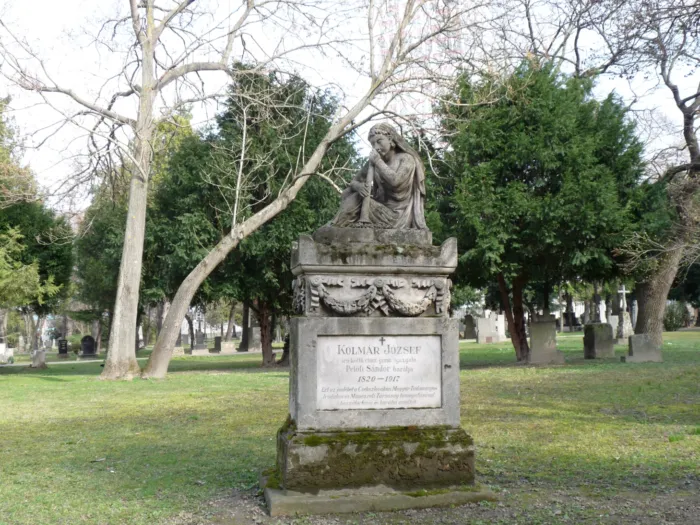
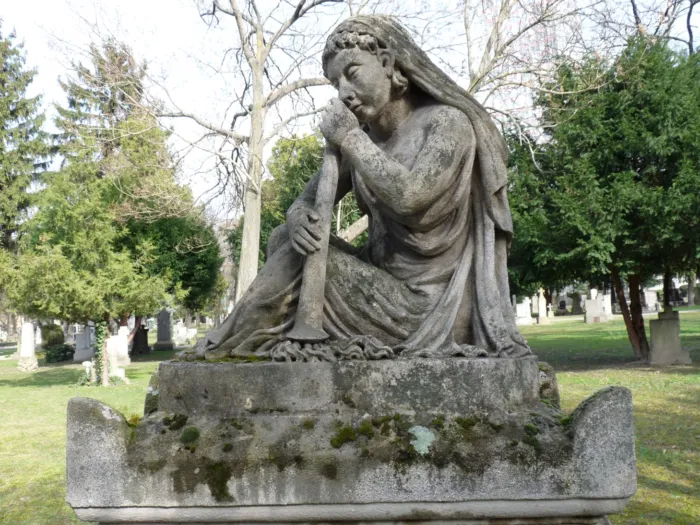
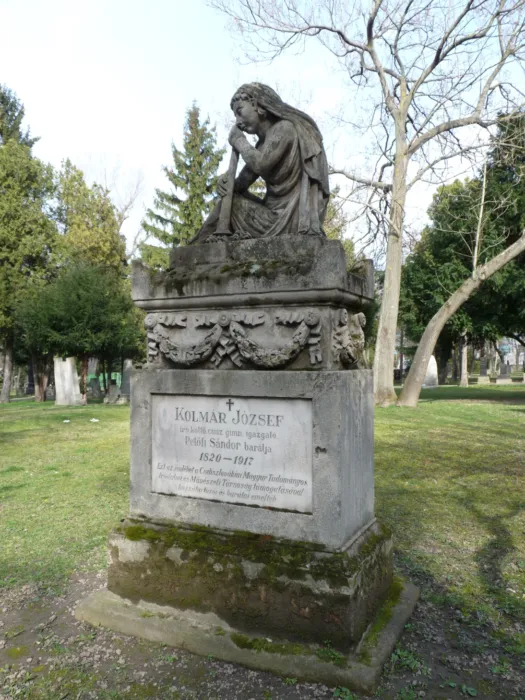
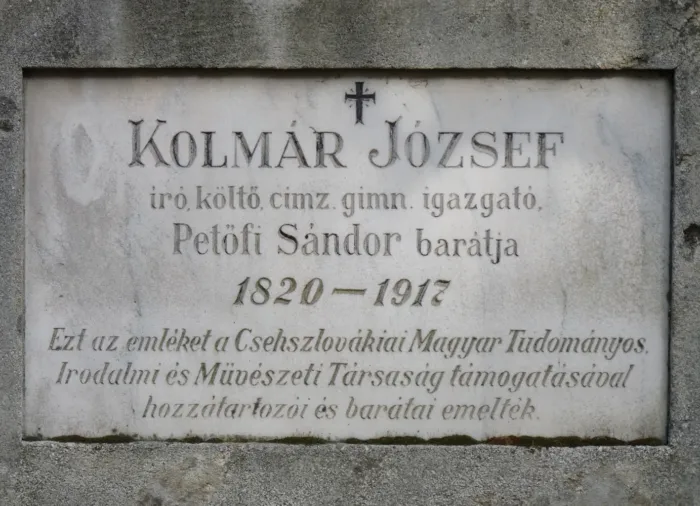
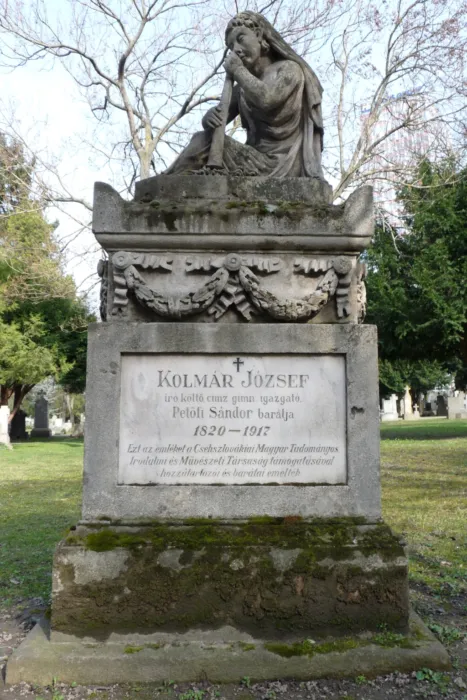
Tomb of József Kolmár
Cemeteries, tombstones, graves
József Kolmár, retired royal Catholic high school teacher, son of K. Mihály ispán and Sára Banay (who was the younger sister of writer István Márton), born on April 3, 1820 in Magyaród Pusztán (Somogym), having lost his mother early, he was educated for one year with his uncle in Visonta (Somogym), then in Csurgó he completed the eighth grade in six years at the ev. ref. gymnasium, in the autumn of 1838 he studied philosophy and law at the ref. college, initially struggling with poverty, then as a protégé of Lajos Tarczy he served as a clerk and was one of the founding members of the college training society, of which Mór Jókai, Sándor Petrovics (Petőfi) and Soma Petrics (Orlai) were also members. He tutored for one year in Baracská (Fehérm). He was a teacher at the Kenessey house. In 1843-44, Ambassador Pál Somsich gave him a free apartment in Bratislava and for a while he copied the handwritten newspaper "Parliamentary Reports" edited by Alajos Záborszky, for 20 and then 25 change garais per page. In this bitter quest for bread, in the second half of June, as a desperate failed actor, he also took Sándor Petőfi, whom he found on the Danube Bank, as a partner in his worn-out bonjour. Then, having met Lajoss Kuthy, the secretary of Count Lajos Batthyány, he became the count's parliamentary clerk for a regular monthly fee. Later, he met the stenographer Károly Hajnik, who entrusted him with the press-proofreading of the Parliamentary Diaries he edited, a position he continued even in Buda, under the chairmanship of Count Gábor Keglevich, the censor, as a reader and finished in early 1845. From April onwards, he became an assistant editor at Imre Vahot's Pesti Divatlapja and helped Petőfin's works translated into the Külföldi Regénytár to be edited for the press. In 1846, he obtained a lawyer's certificate and, as an unemployed lawyer, became assistant editor of Életképek with Adolf Frankenburg. At the end of 1846, he moved to Bratislava and helped lawyer Antal Szalé with the Hungarian extract of the Corpus juris as a proofreader. During the 1847 parliament, he served Count Lajos Batthyány, later prime minister, alongside Lajos Kuthy. At the same time, he worked as a proofreader for the Országőgőszősi Napló (Parliamentary Journal) edited by János Lukács, and worked as a contract writer for Kalivoda, a printer and publisher. In April 1848, he went home to Megyer (Somogy County) for a rest, from where in July, at the invitation of József Bajza, he went to Pest as a proofreader and internal collaborator for his paper, the Kossuth newspaper. After the unfortunate Battle of Mór, as the imperial armies approached, in the first days of January 1849, he followed the fleeing government to Debrecen, where Baron Miklós Jósika made him the corrector of the official Gazette. On January 21, he took telegrams to government commissioner Bertalan Szemere in Tokaj and to General Dembinszky in Török-Szent-Miklós in February. Jun. 4. He returned to Pest with Governor Kossuth and continued his office until mid-July, when, at the invitation of Gáspár Noszlopy (his former schoolmate), he accepted the position of chief notary of Somogy County, but instead of the notary's pen, he spent the whole summer wandering here and there with a rifle and Noszlopy's small army, first through Tolna to Bonyhád, but not being able to unite with the Hungarian army of the Great Plain across the Danube line, he returned towards the Bakony Forest to Veszprém, where, upon news of the disaster in Világos, Noszlopy held a council of war and sent his small army to Klapka in Komárom. K. returned to Somogy with some of his fellow officers and stayed for a few weeks in the vineyards and with his relatives in the area, at the end of Oct. he went to Pápá, where he became a deputy law professor through the mediation of Professor Tarczy, but a year later the Vienna government After abolishing the law academies, he took up teaching at the Papal ev. ref. gymnasium and completed theology with private diligence, and was ordained a priest in 1852, but on Sept. 8, 1853, he converted to the Roman Catholic religion. From the end of 1854 to October 1861, he was a teacher at the Baja Catholic main gymnasium and, despite the Germanizing power in Vojvodina, he educated Hungarian youth, published youth albums and founded the Vörösmarty scholarship from their income and donations, and was the founding editor of the Bajai Közlöny, which is why he suffered a lot of harassment from the Temesvár government until Jan. 5, 1861, when Vojvodina was abolished. Oct. 1861, the Royal Catholic He was appointed a regular teacher at the high school and continued his work as a Hungarian teacher in Baja. In 1869, he edited a booklet called Spring Flowers from the papers of his students and laid the foundation for the Eötvös scholarships, which are now enjoyed by four students. In 1874, with a capital of 700 frt collected by his students and friends celebrating his 25th anniversary as a teacher, he founded the Kolmár József scholarship, and in 1881, with the income from his work entitled Golden Poems and his own money, he founded a religious and moral scholarship with a capital of 1000 frt. He retired at the end of the 80s and lived in Bratislava until his death. ; A reminiscence writes about him: “Many people in Bratislava still remember with gratitude the old teacher, who, despite his advanced age, shuffled through the streets of the city about twenty-five years ago, then knelt down and prayed in deep devotion in the cathedral... Everyone knew him, everyone raised their hats to the old gentleman with special respect: but it is no wonder, since József Kolmár raised generations in the Catholic high school in Bratislava.” ; He wrote a poem on his 89th birthday. He left a will that it would not see the light of day until his hundredth birthday. One of the verses reads: ; "Let it be spring when I die, ; May the angels carry my soul, ; And what I loved so dearly, ; May the night of my grave be lightened: ; Flower scent, bird songs! ; He did not die in spring, on June 21. His tombstone was erected by his relatives and friends with the support of the Czechoslovak Hungarian Literary and Art Society. It is not known when, but it must have been years later, since the CSMIMT, better known as the Masaryk Academy, was only founded in 1931.