
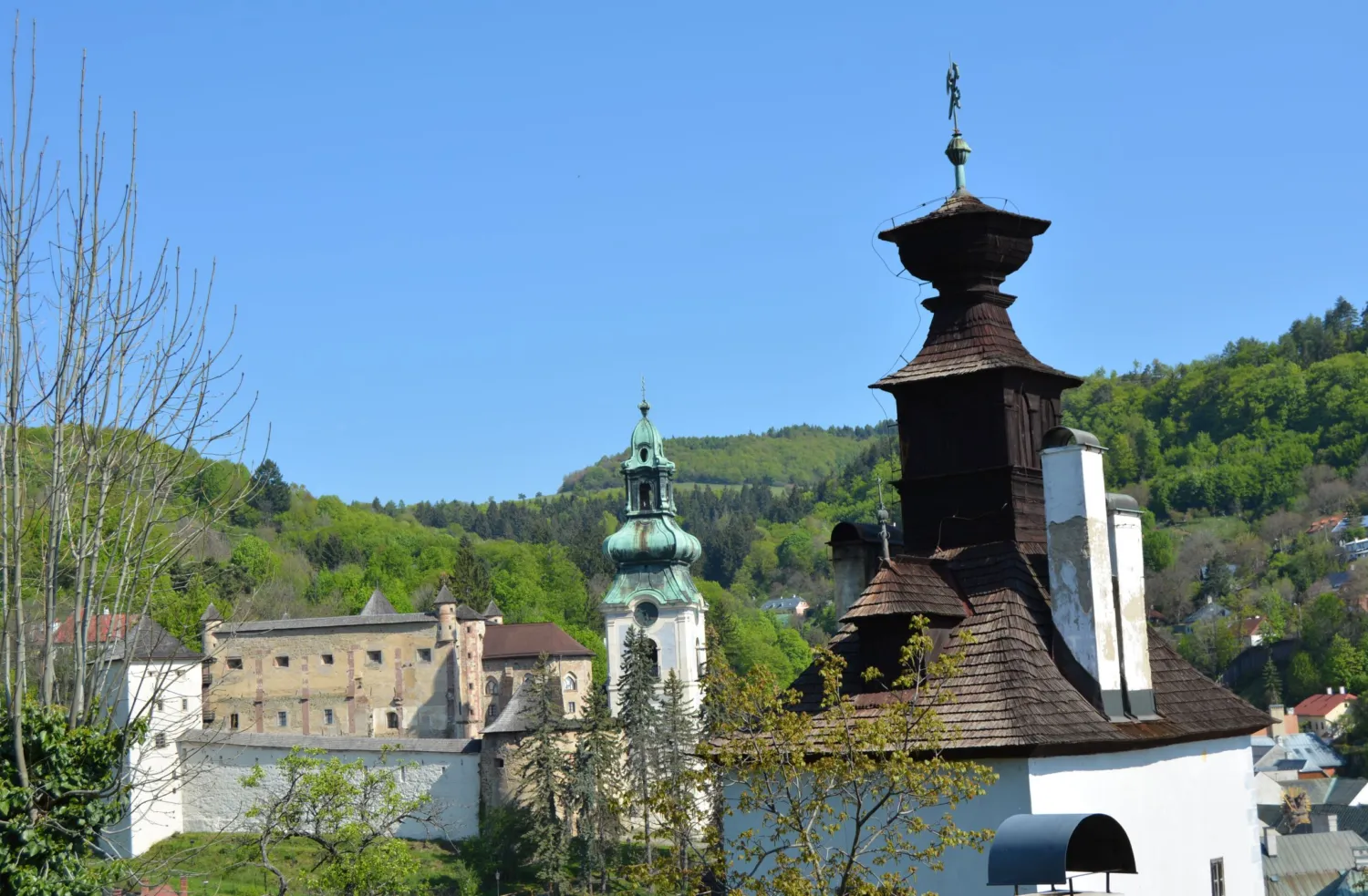
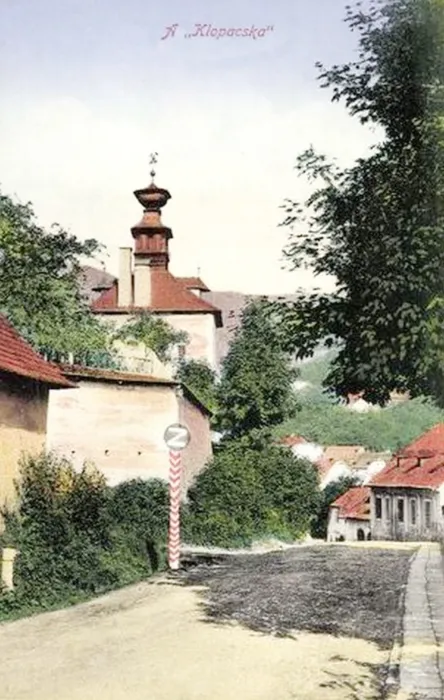
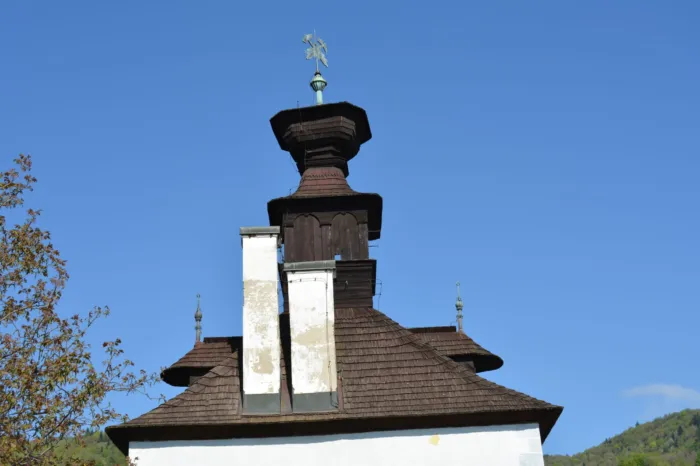
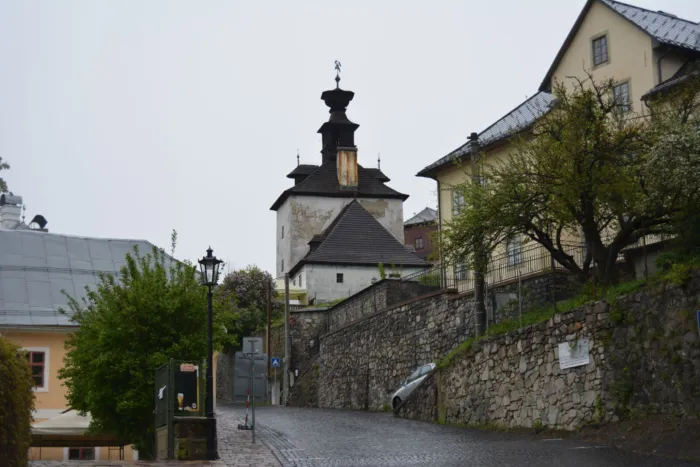
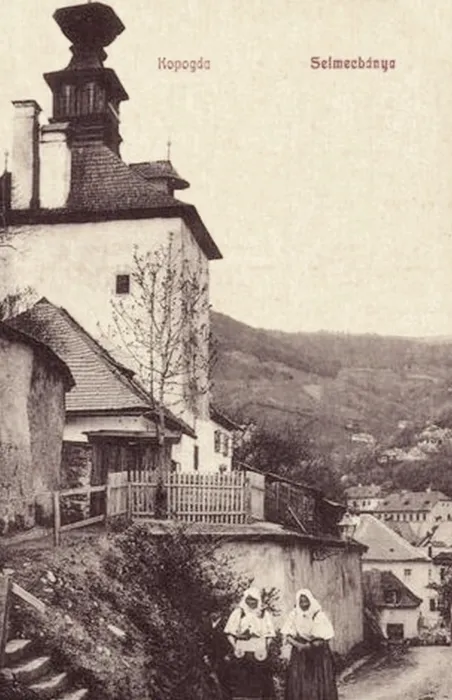
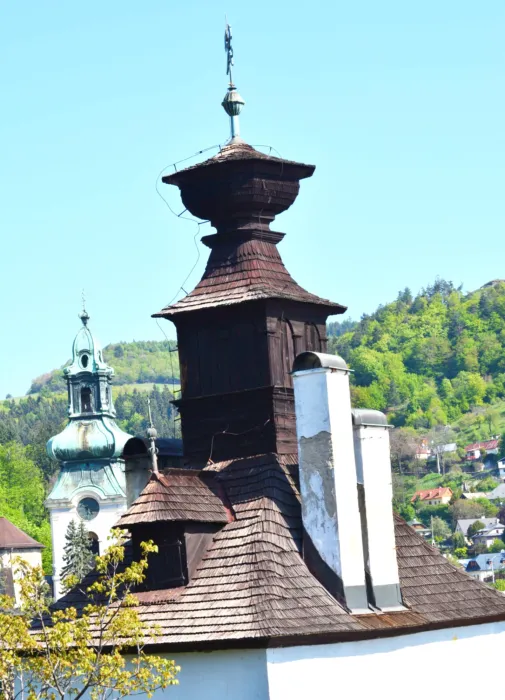
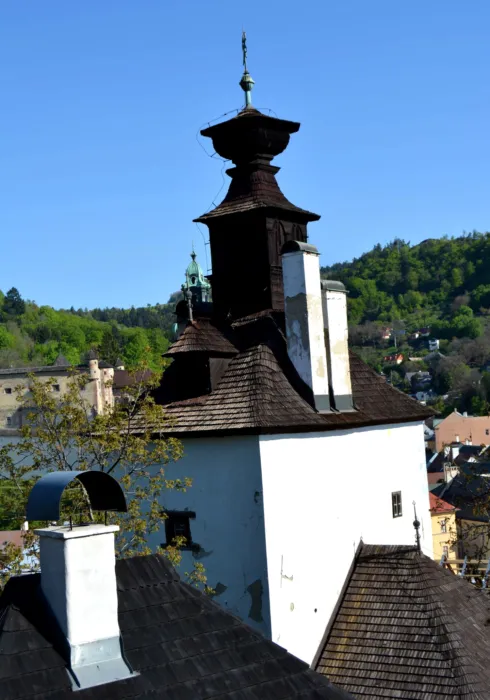
Klopacska (knocker, noisemaker, die Klopf), Banská Bystrica
Building, structure
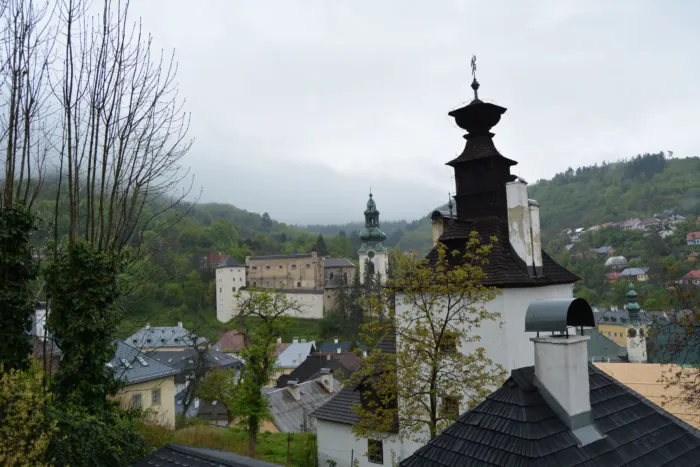
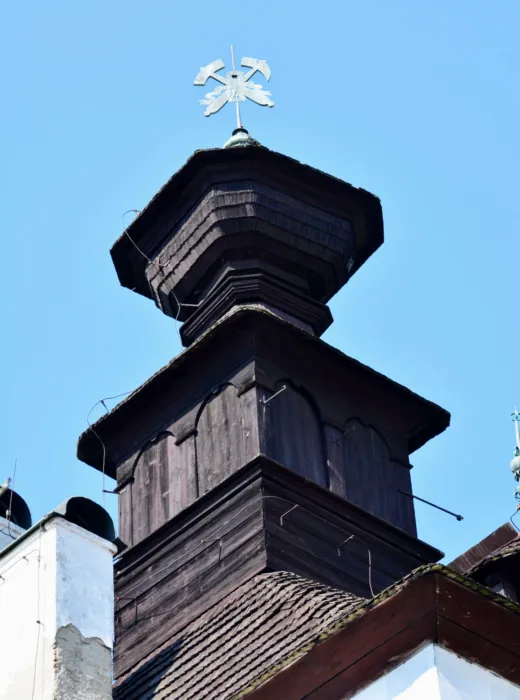
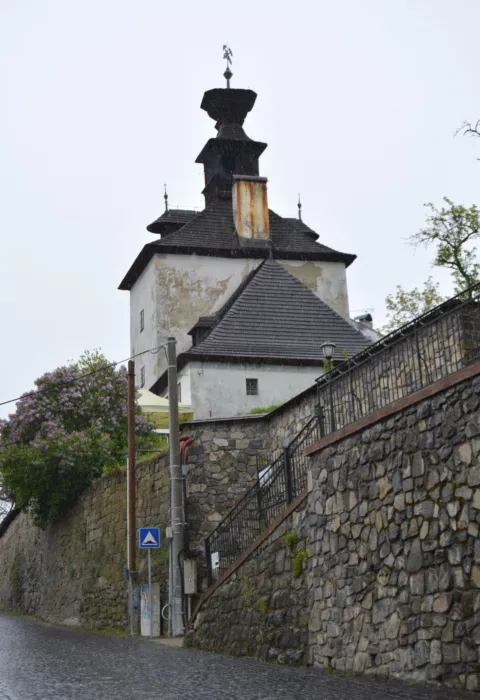
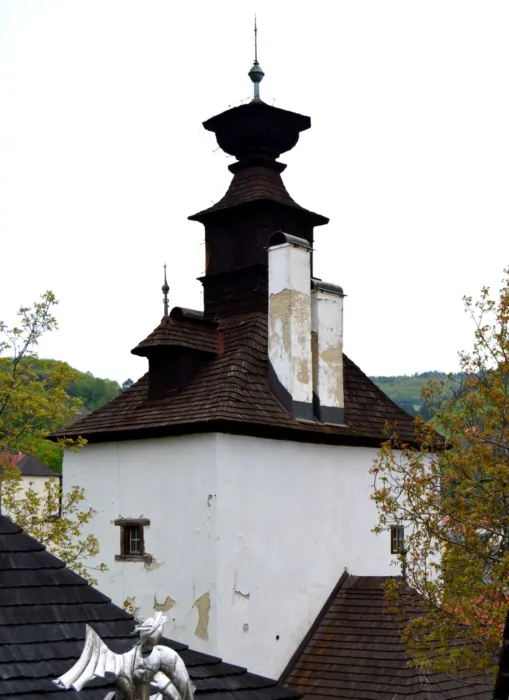
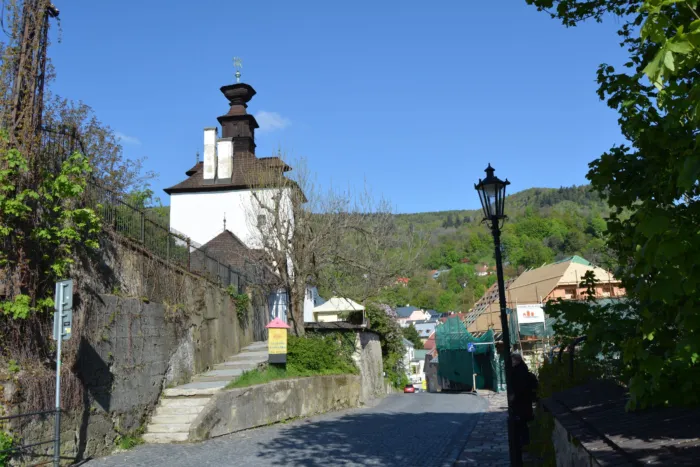
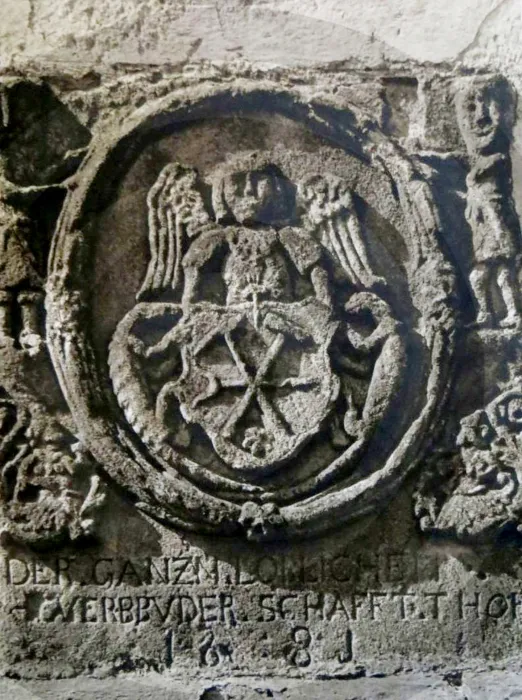
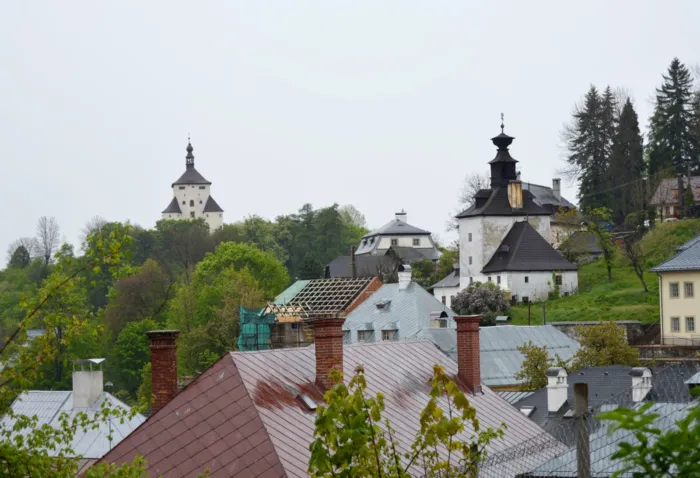
An indispensable accessory of the old Hungarian mining towns was the signaling and alarm device called the noise tree, the knocker or, in Slovak, the klopacská. It was made of a solid maple plank with a finger-sized slit in the middle, suspended by a cord, and struck with a hammer. It hung there at the mouth of each mine. In some mining towns, such as Selmec, it was placed in a tower built specifically for this purpose. The Klopacska in Selmec stands out far from the smaller houses on Hegybányai Road with its heavy oak gate, its wooden-shingled roof and its tower rising from it. The sound of the Klopacska signaled the beginning and end of the shift. At exactly two o'clock in the morning, the man living in the tower sounded the knocker made of maple plank. It knocked for a quarter of an hour in two tones, first slowly, in a mystical rhythm, and then increasingly faster. This wake-up knock was heard in every part of the city. At the sound of the Klopacska, the windows of the small miners' huts on the side of Hybalka (the miners lived on this mountain), lit up, and then the flickering mine lamp started from each of them towards the valley. At miners' funerals and at the funerals of academics, the painful sound of the Klopacska accompanied the deceased on their last journey. According to the oral tradition living in the highlands, the calling voice of the Klopacska was heard during the Hungarian wars of independence as well. When Vak Bottyán came to Selmec to recruit soldiers under the flag of Rákóczi, at an unusual time and with an unusual rhythm, the far-reaching sound of the Klopacska sounded, which was transmitted from the near and far mining settlements towards Körmöcbánya and Besztercebánya. In two days, more than a thousand miners fit to bear arms gathered at the designated camp site, on the field below the Zólyom Castle. When Görgey's army urgently had to reach the Sturec Pass from Vác, unite with Klapka's army, and it would have been a long detour to proceed along the regular route, at the sound of Klopaska's voice, several hundred miners prepared several mine corridors under Szkalka Hill for the march in January 1849, so Görgey could arrive at his destination two days earlier. Military historians rank this march of Görgey's army among the most brilliant acts of military leadership. ; The building was built in 1681, in Renaissance and Baroque style. Currently, it houses a tea house.