
Poor Clares Church
Building, structure
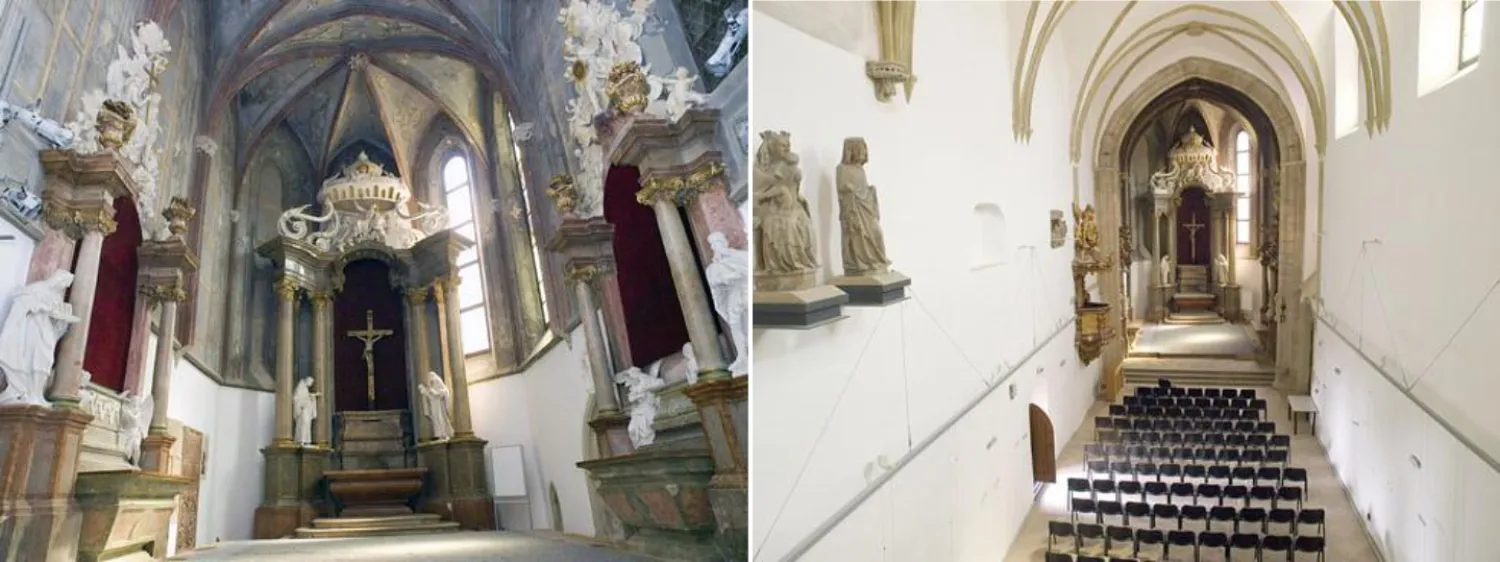
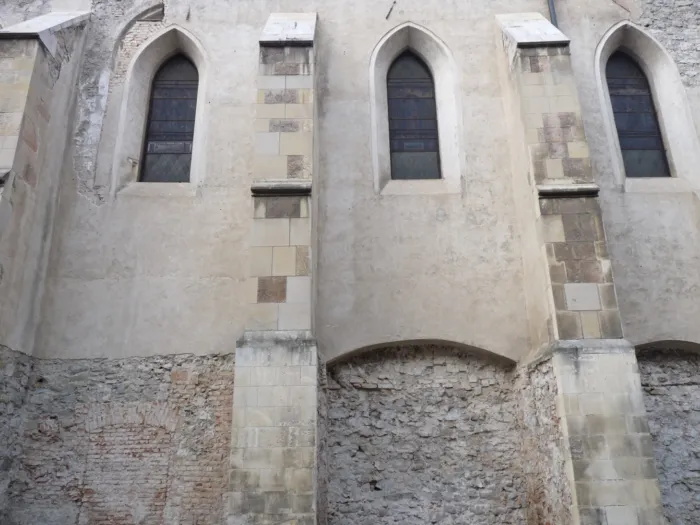
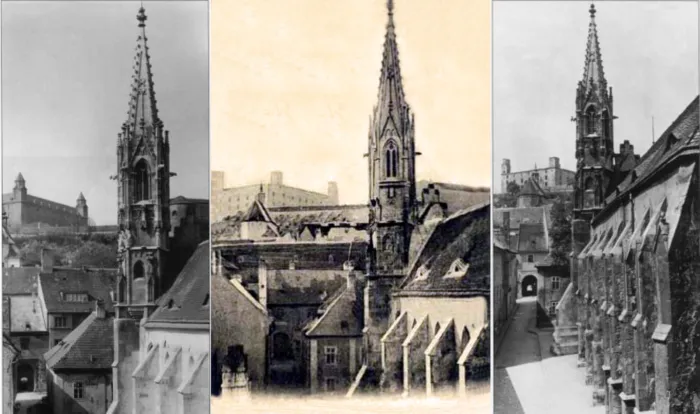
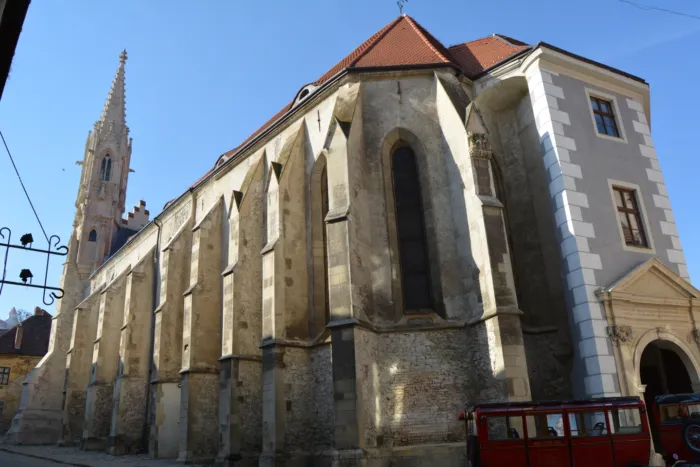
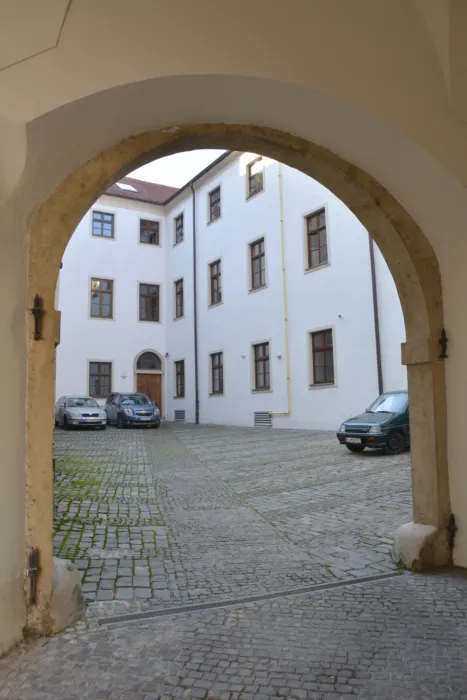
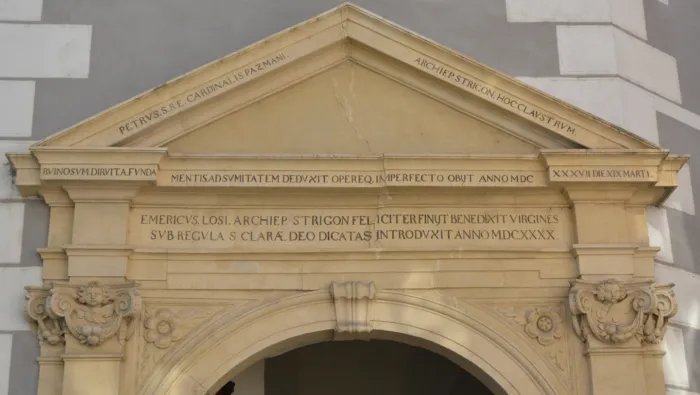
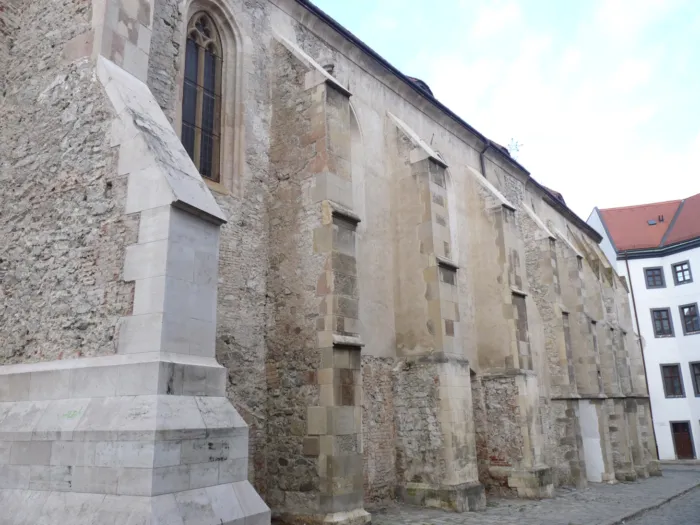
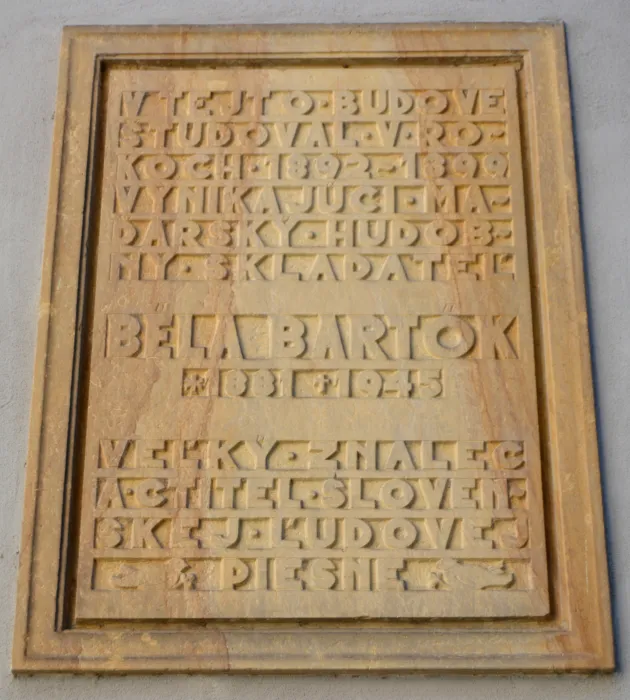
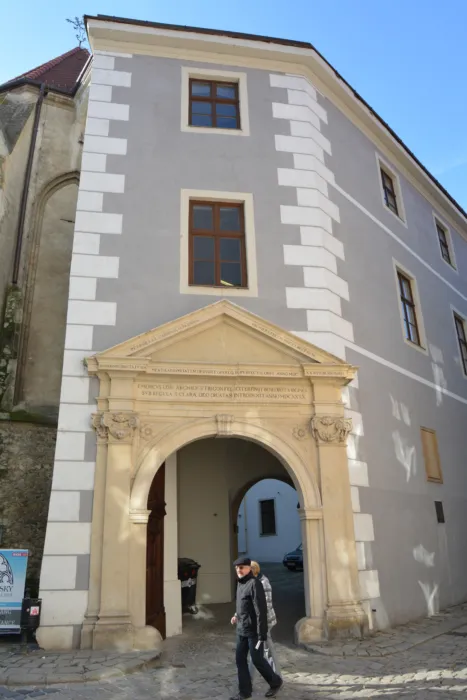
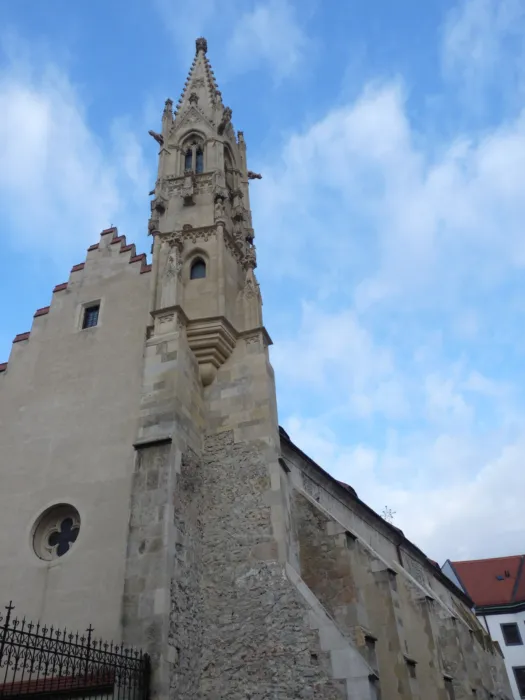
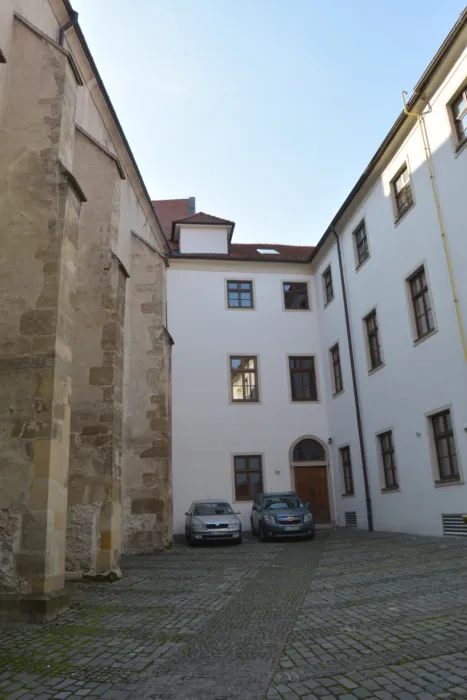
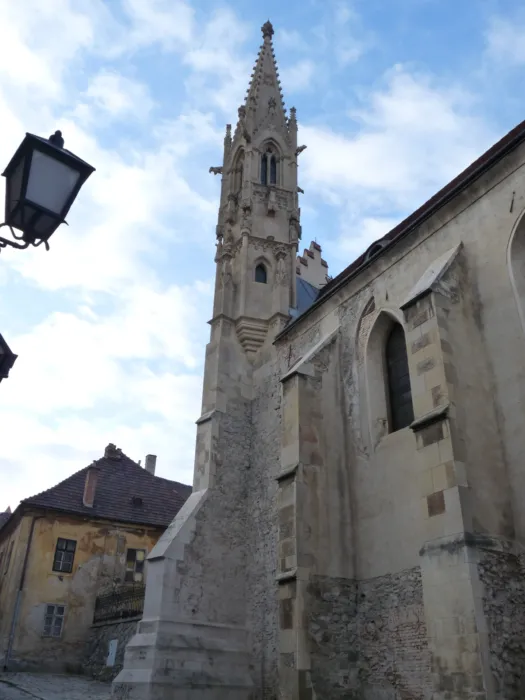
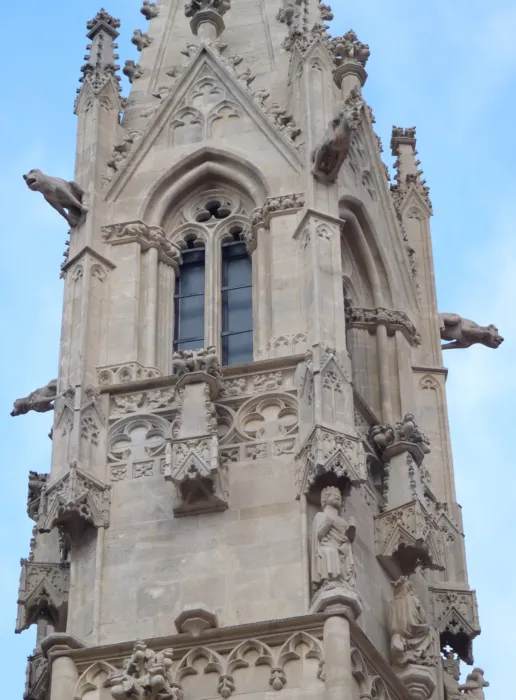
The church is a Gothic, slender, oriental building with a polygonal sanctuary. It was built in the first half of the 14th century on the site of the former Cistercian church (it is disputed how much the former church was destroyed, or perhaps it was partially rebuilt). Its pentagonal tower on buttresses, standing on its southwest corner, was completed in the 15th century. The former monastery is connected to the northern part of the sanctuary in the east. The monastery was rebuilt in the 17th century, as evidenced by the date 1640 on its Renaissance gate with the names of the bishops of Esztergom, Péter Pázmány and Imre Lósy. ; Although the church and convent were owned by the Poor Clares (the "female branch" of the Franciscan order, founded by Saint Clare of Assisi, who initially called themselves Damianites, only taking on the name after the death of their founder), after Mohács the nuns of the Dominican monastery of Margaret Island found refuge here, bringing with them the mortal remains of Margaret of the Árpád family (only canonized in 1943, but beatified in 1276). According to tradition, the relics were walled up in the crypt of the church after the dissolution of the order in 1782, so they are still in the building today. ; In 1700, the tower was damaged by an earthquake, and its restoration (neo-Gothic reconstruction) took place under the direction of Frigyes Schulek in 1888-1889. In the 18th century, the church's furnishings were replaced with late Baroque ones. The former monastery was converted to house the law academy and the Catholic gymnasium, whose most famous students included Béla Bartók (The plaque on the wall of the building announces only in Slovak: "The outstanding Hungarian composer Béla Bartók (1881-1945), a great connoisseur and admirer of Slovak folk songs, studied in this building between 1892 and 1899") and Ernő Dohnányi. ; Since 1913, both the church and the convent have been city property, and no religious activities take place there. The monastery houses a department of the Komensky University library. The church is a gallery and concert hall, and their complete renovation took place a few years ago.