
Cathedral of St. John the Baptist
Building, structure
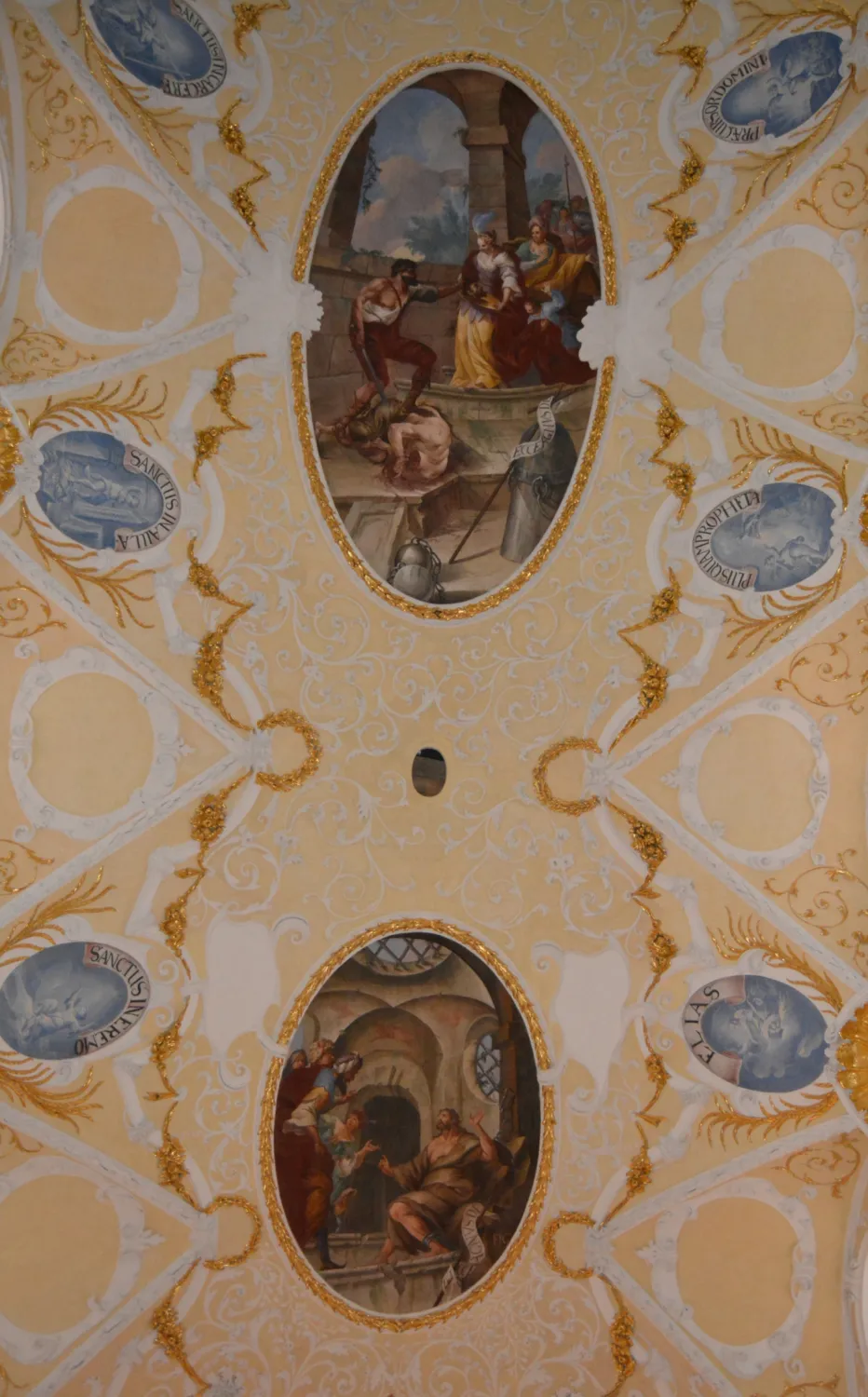
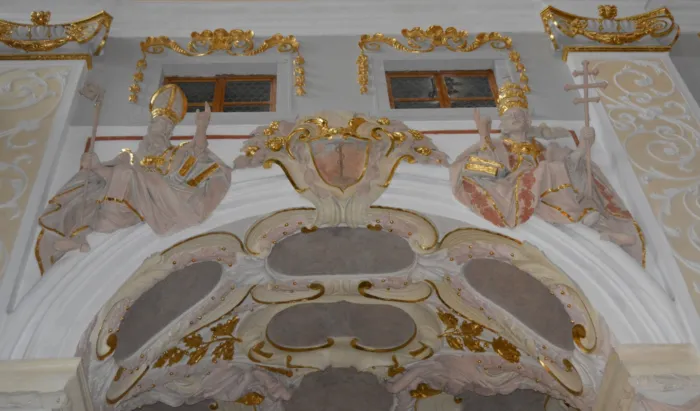
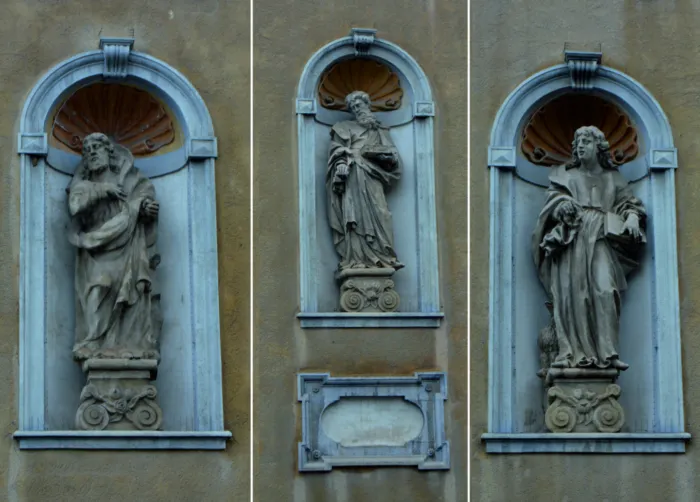
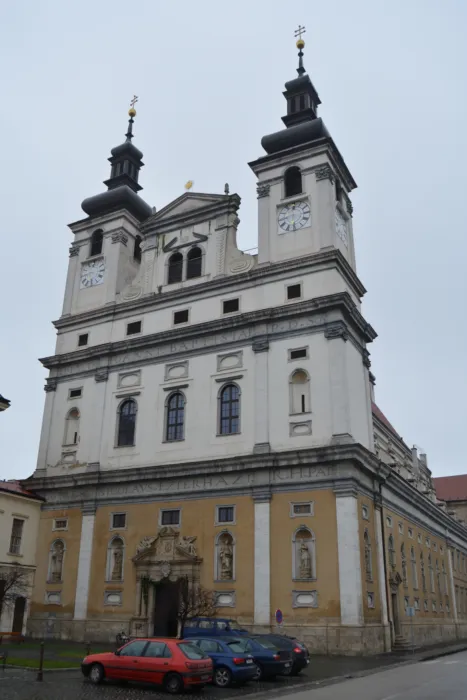
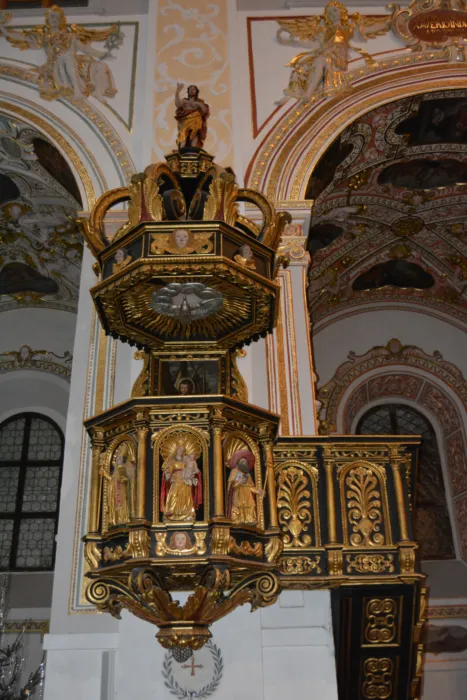
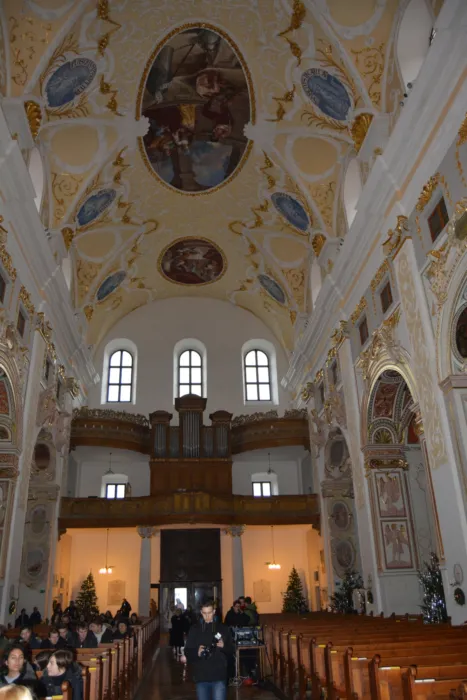
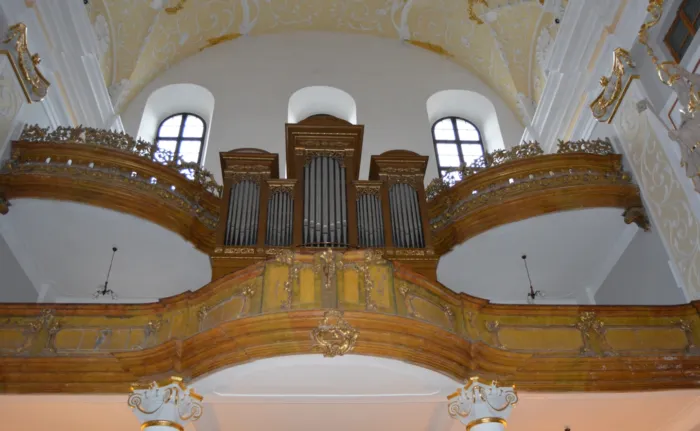
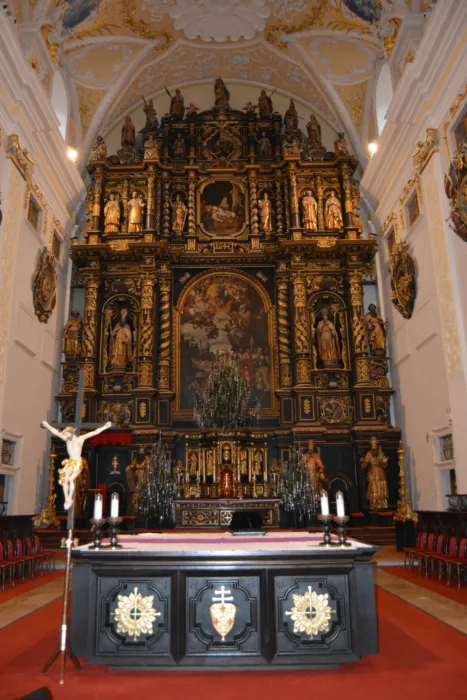
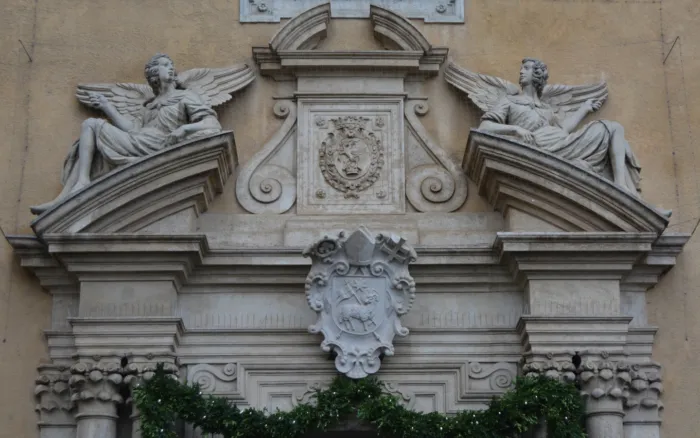
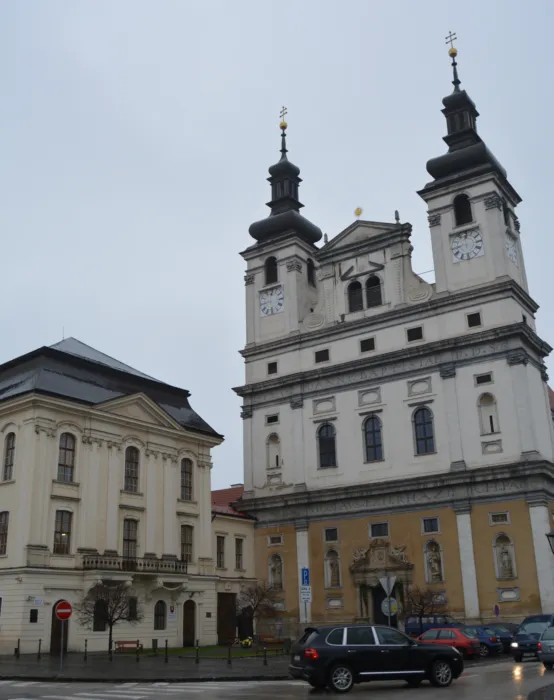
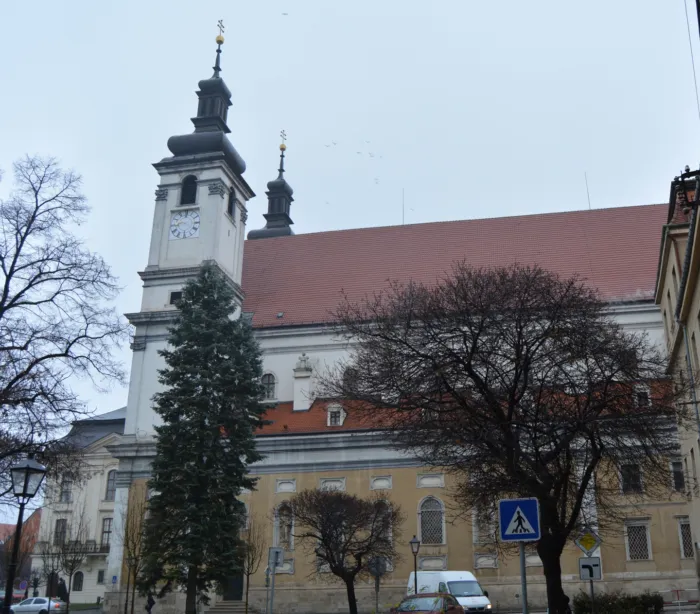
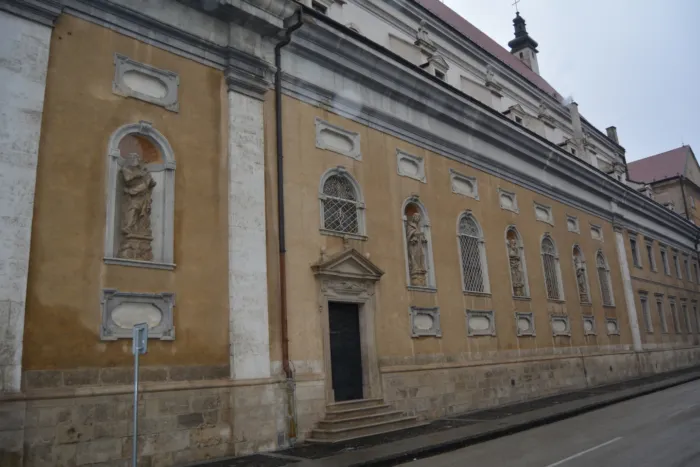
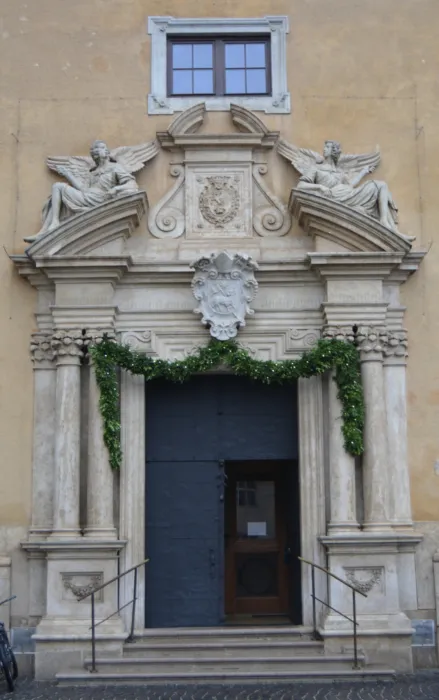
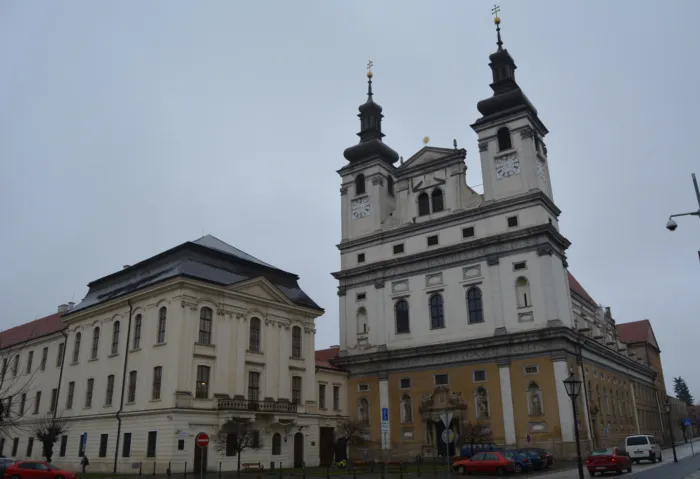
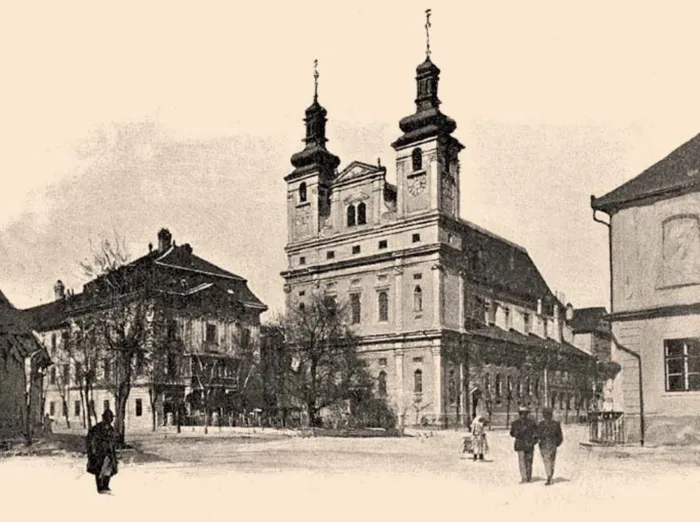
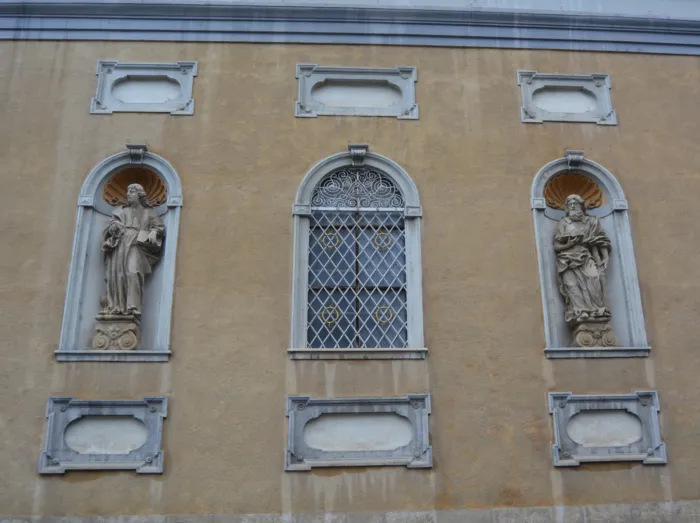
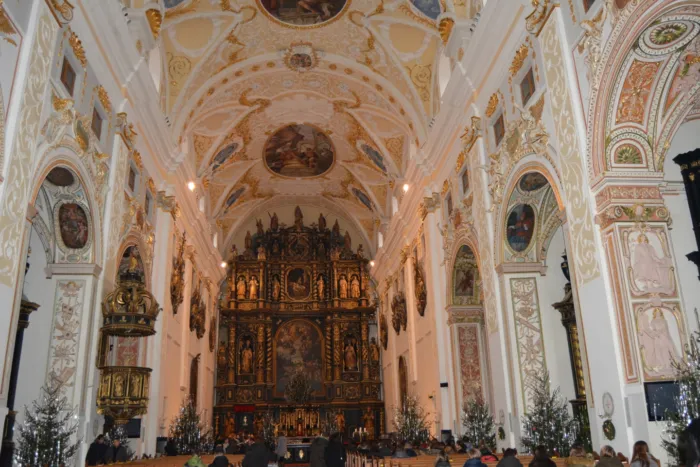
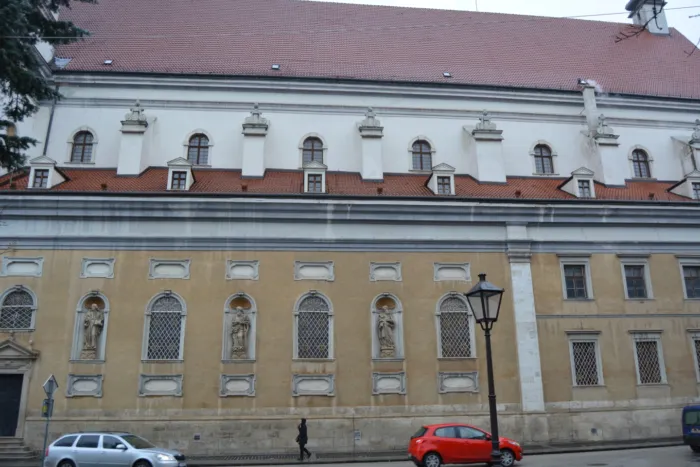
The church was built in the city of Nagyszombat, a city of three nationalities, during the greatest religious wars. First, during the Bocskai Uprising of 1605, then between 1619 and 1622, there were religious riots in the city between the different denominations. The princes gave churches to the Protestants, but when the archbishops returned, they usually took them away from them. ; The cathedral is almost completely in the pure early Baroque style. It was part of the former university buildings. The church was built by Palatine Miklós Esterházy between 1629 and 1637 at the request of the Jesuits and Péter Pázmány. Miklós Esterházy signed a contract with János Keresztelő Leckl and Sebestyén Ressler in Kismarton on March 31, 1629, to carry out stone carving work for the Jesuit church and college. Previously, there had been a Dominican church dedicated to Saint John the Baptist on the territory of the cathedral, but this was demolished by the Jesuits who arrived on May 29, 1629. It is likely that the Jesuits here very quickly managed to get the plan and construction of the church accepted by the provincial in Vienna and the general in Rome, since on June 15, 1630, Miklós Esterházy had already agreed with the architect Antonio Spazzo on the construction of the church for the Jesuit college. The portrait of Antonio Spazzo's brother Giovanni Pietro Spazzo can be found in the sacristy of the church, and based on other documents, it can be assumed that Antonio designed the church, while his brother was the contractor. A legend has survived about the designer, according to which he committed suicide out of fear that the ceiling of the church might collapse. Since we know nothing about Antonio's life, but Pietro is mentioned later in the city documents of Nagyszombat, the legend cannot be refuted, but neither can it be proven. We know little about the further construction of the church. On December 15, 1633, the parish priest György Dobornoki ordered the roofing of both the nave and the towers from the Viennese carpenter Simon Frauenhoffer. In 1635, Péter Pázmány founded the University of Nagyszombat, so the church became the university church, but at that time it was certainly not completely finished. In this year, the Jesuits ordered 56 windows and six doors from the carpenter Ádám Lengenich of Nagyszombat, four of which serve as the entrance to the sacristy, two as side entrances. In the meantime, the Franciscan church was also built, and by 1646, despite all the objections and protests of the archbishop, the Calvinists also managed to build a church here. Pázmány did not live to see the university church completed, but on August 30, 1637, Archbishop Lippay of Eger György consecrated it in honor of Saint John the Baptist. The first mass was celebrated by Archbishop Lósy Imre of Esztergom, and in the evening the bodies of the seven members of the Esterházy family were solemnly transferred to the church and laid to rest there, followed by fireworks. The day after the consecration, a natural science conference was held, in which Lippay and Lósy also participated, on the third day the Jesuits performed a play about the construction of King Solomon's temple, and on the fourth day the promotion of 24 graduates of the university was held. After the construction of the church was completed, on September 3, 1637, the Jesuits of Nagyszombat commissioned the Viennese carpenter and woodcarver Boldizsár Knilling to make the altar, the tabernacle and the pulpit, for which they offered him 4,500 forints. The painting work was entrusted to the Viennese painter Lőrinc Knoth, who was promised 5,500 gold. Alongside Knilling, the sculptor Stadler Vitus from Nagyszombathely worked on the construction of the altar, and alongside Knoth, the Viennese sculptor Krisztián Knerr and the master Ferdinánd Cíferi from Nagyszombathely participated in the painting. The work progressed slowly, Knilling left Nagyszombathely on June 27, 1639, intending to buy a picture, and left the entire work to Stadler. The altar was completed in 1640, for the 100th anniversary of the founding of the Jesuit order. In the meantime, the decoration of the chapels was also underway. The first chapel on the right and left from the entrance to the church remained unconsecrated, probably because the side entrance stairs of the church led here. The second pair of chapels, moving towards the altar, was dedicated to Our Lady of Sorrows and Saint Joseph, the third pair to the holy guardian angels and the holy martyrs, and the fourth pair to the two Jesuit saints, Saint Francis Xavier and Saint Ignatius of Loyola. On April 16, 1639, the parish priest Ádám Holovics entrusted the decoration of the latter two chapels to the master Giovanni Battista Rosso for 290 gold each, money donated by Countess Forgách. The painting of the chapels was done by Krisztián Knerr. In May 1639, the Jesuits commissioned the altar of the Saint Ignatius of Loyola chapel to Stadler Vitus, who collaborated with Ferdinánd Cíferi (who did the polychromy) in the preparation of the altar. The altarpiece was painted by an unknown painter named János Keresztély based on a donation from Erzsébet Bossányi. Before the completion of these chapels, the construction of the chapel dedicated to the holy martyrs began, which was made by Krisztián Knerr. The altarpiece was ordered by Ádám Holovics from Stadler Vitus on July 7, 1640. In February 1641, the wife of the founder of the church, Miklós Esterházy, Krisztina Nyáry, was buried here with great pomp. On February 21, 1641, Stadler entrusted the gilding to the Nagyszombat master Ferdinand, while the altarpiece was ordered by the Viennese painter János Gyula Keller on April 8, 1642. The crypts of the church were completed between 1639 and 1640 based on the plans of Pietro Spazzo. On February 15, 1641, the rector of the college Péter Bellecius ordered the 48 benches of the church from the carpenters János Grysler and Frigyes Schnaster. The tower clock was ordered from a Viennese clockmaker in May 1641. Between 1643 and 1647, the interior work was stopped for short periods several times, primarily due to the campaign of György Rákóczi in the Highlands. In the meantime, on September 11, 1645, the builder of the church, Palatine Miklós Esterházy, passed away, causing his family considerable trouble with his burial, as the most powerful man in Hungary at the time requested that he be buried in modest circumstances. The funeral was organized for a long time to be both modest and worthy of his rank, and so on December 11, 1645, he was buried in the crypt of the Jesuit church in Nagyszombat with the celebration of János Telegdy, Archbishop of Kalocsa. The uninterrupted continuation of the work only resumed in 1648. On July 13, 1648, Dániel Esterházy and Farkas agreed with master stonemason Péter Potz in Galánta to make the three gates of the university church. The contract, which was signed in the presence of István Keresztes, the rector of the college, stipulated that the master could not deviate from the plans. On July 27, the choir gallery and the wooden doors were ordered from the carpenter Ádám Lengenich of Nagyszombat. In this year, György Lippay founded the Rubrorum seminary in Nagyszombat. On August 1, 1649, rector Márton Palkovics ordered stucco decoration for the Chapel of Our Lady of Sorrows from Giovanni Battista Rosso. Its altar was ready by 1655, which was the work of Stadler Vitus. Around 1650, master carpenter Mihály Arnolt of Nagyszombat worked on the roof. On August 27, 1651, the remains of the eight Roman Christian martyrs (Amicetusz, Gyula, Dezső, Priszcilla, Szemidia, Szeverina, Szerontína, Szynézia and an unknown name) were transferred from the St. Nicholas parish church to the university church, which the Jesuit Father György Forró had received in 1634 from the Polish-Lithuanian provincial Miklós Lancicius (Mikołaj Łęczycki). On April 21, 1655, Father Petro Spazzo and Father Ferenc Kopeczky commissioned the master sculptor Jakab Tornini with the stucco decoration of the St. Joseph chapel. From July 13, Tornini also decorated the chapels of St. Francis Xavier and the Guardian Angels. He was promised 250 gold pieces and 3 barrels of wine for each chapel. Tornini also promised to paint a uniform angel image above the vaults of all the chapels. In the same year, Kopeczky commissioned Stadler Vitus to create the altar of the St. Joseph Chapel (the altar features statues of St. Catherine of Alexandria, St. Catherine of Siena, St. John the Baptist, St. John the Evangelist, St. Priscilla, St. Serotina and the Virgin Mary). Due to the similarities in form, it can be assumed that the altar of the Martyrs' Chapel was also created by Stadler. On October 15, 1659, the Jesuits ordered an altar for the St. Francis Xavier Chapel from Ádám Lengenich, who ordered the statues for the altar in Vienna. In 1663, the silver statues of St. Francis Borgia and St. Alagius were placed in the church, alongside the silver statues of St. Ignatius of Loyola and St. Francis Xavier, made in 1624. Due to the Turkish wars, the works were interrupted again between 1663 and 1665, but by 1671 the Catholic community had become so strong that they occupied the Protestant churches on January 16. The Reformed church was given to the Pauline Church, who had settled in the city in 1653. In the meantime, the construction of the university buildings was underway, which was supported by the bishop of Csanád, Ferdinánd Pálffy. On May 21, 1674, the Jesuits of Nagyszombat ordered the altar of the Passion of Christ from the master carpenter of Nagyszombat, Ludvig Mihály, for the chapel of the dead, which was presumably placed in the northern sacristy of the church. The altar was painted in 1676 by the Nagyszombat painter Jakab Rost, who also made the altar paintings. In 1681, the Jesuits had the statue of St. Andrew gilded and silvered. On August 8, 1683, Thököly's troops captured Nagyszombathely, expelled the Jesuits, and burned the city. Fortunately, the university church escaped the attack without damage. After the uprising, the Catholics were given back their churches. From 1685, the Jesuits were busy with the new seminary and dormitory buildings. ; ; The final stage of the decoration of the university church occurred in 1699, when the dormitory found a new patron in the person of Pál Esterházy. On June 19, 1699, the Palatine concluded a contract in Kismarton with the Viennese stucco artist of Lugano origin, Pietro Antonio Conti, who, together with his assistants, undertook to create and paint the stucco decoration of the nave vault for a fee of 3,000 Rhineland forints. The Palatine had already been in contact with Conti, a few years earlier he had commissioned Pál Esterházy to decorate the stucco of the Church of Our Lady of the Assumption. The ceiling paintings were painted by two Viennese masters, Karl Ritsch and Franz Joseph Grafenstein, who finished their work on September 18, 1700. The stucco was finished by October 14. After the rapid completion of the decoration of the church, Rector László Sennyey began to build the northern and eastern wings connecting to the church, where he planned a library. However, the construction was only completed in 1718. In 1773 the Jesuit order was abolished, and in 1777 the university moved from Nagyszombat to Buda. After the university moved, the buildings were given to the military, and in 1783 the soldiers moved in. From then on, the university church was called the Invalides Church. In 1809, Napoleon's soldiers also stayed in the Invalidus House, who damaged the church's furnishings. After the soldiers left, the church was re-whitewashed and new altars were made. In the first half of the 19th century, the roof was repaired, during which the sacristy tower and the attic windows were removed. In 1942, under the leadership of Dr. Vladimír Wagner, a general renovation was carried out on the church with the assistance of the academic painter Kern and the academic sculptor Hučko. ; The church has a single nave with a straight end. The main space is decorated with a cylindrical vault, and the side chapels have a cross vault. The interior is characterized by the wooden altar made in 1640 by Knilling and Stadler. The high altar is 21 m high and decorated with 42 statues. The picturesque stucco decoration is the work of Rosso, Tornini and Conti. The ceiling frescoes were painted by Karl Ritsch and Franz Joseph Graffenstein in 1700. The church was used as a stable by Napoleon's soldiers and therefore the walls were whitewashed. Fortunately, this act preserved the original painting of the church, which was restored during the last renovation. ; The church also hosts promotions and theological debates. Among the interesting features of the church is the system of catacombs under the church.