
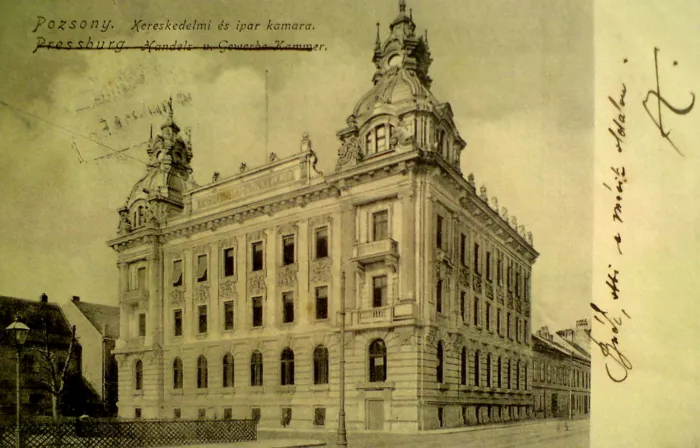
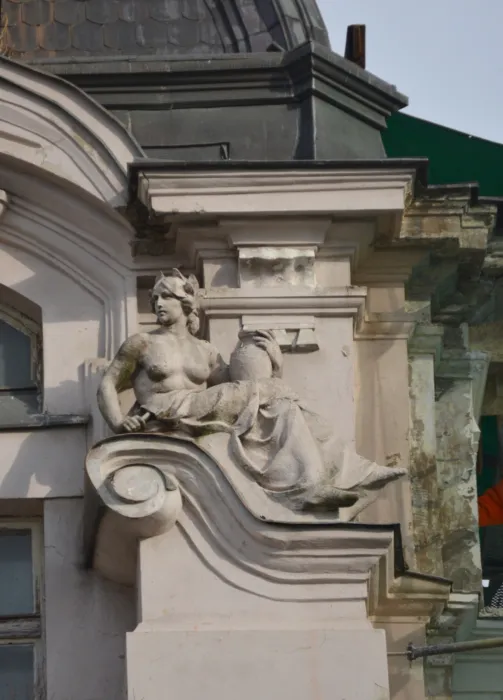
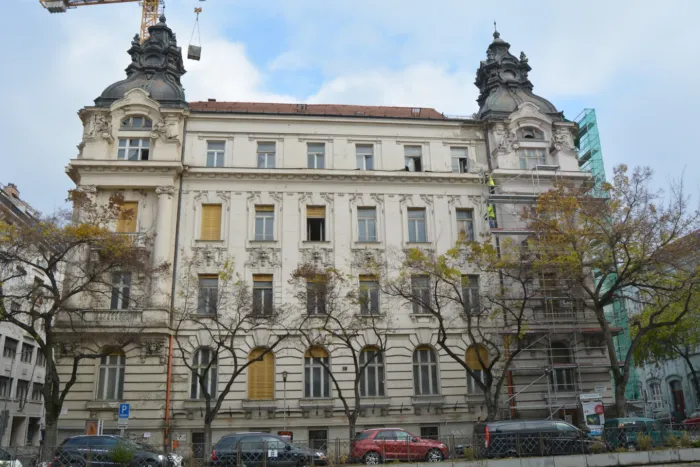
Chamber of Commerce and Industry
Building, structure
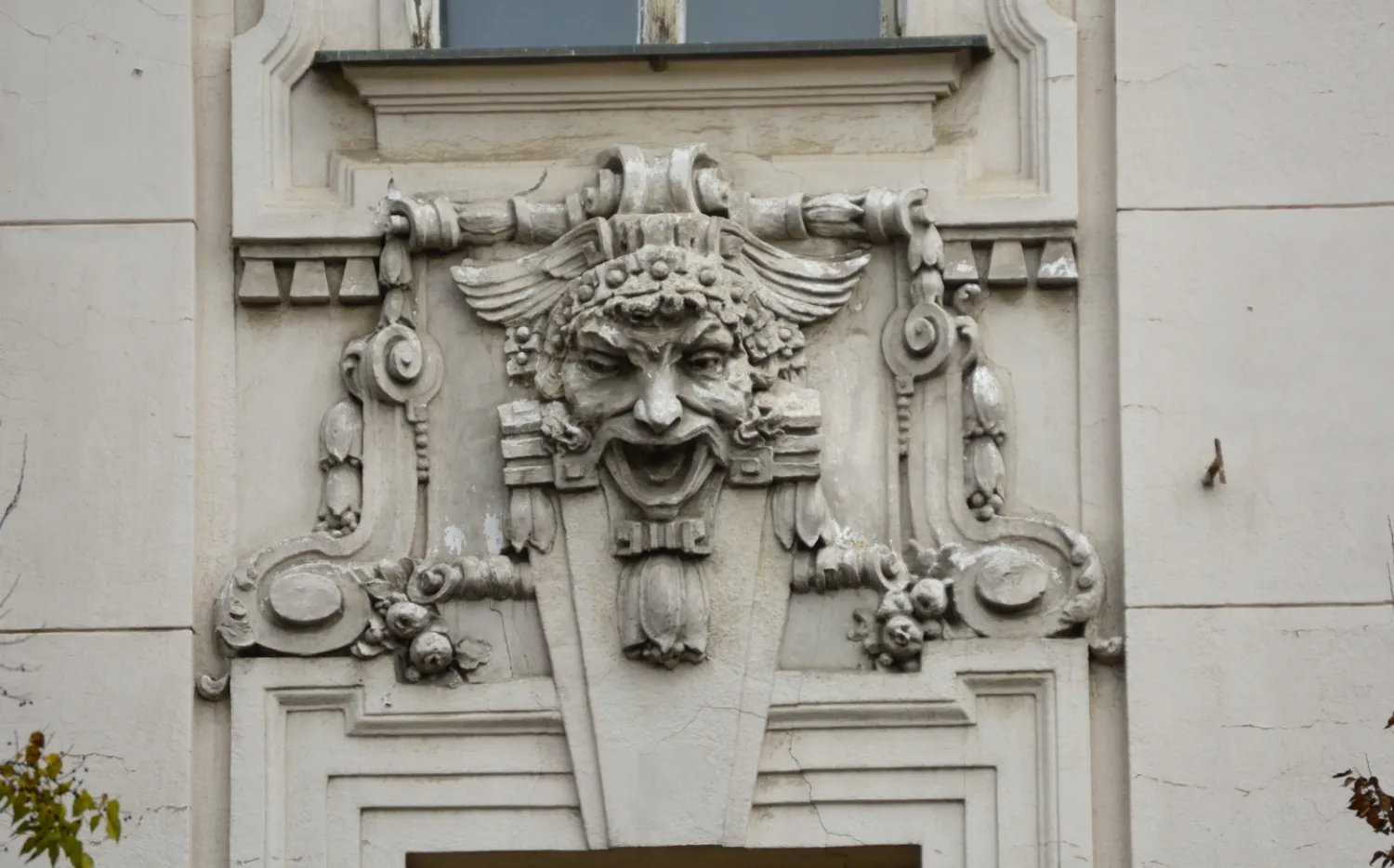
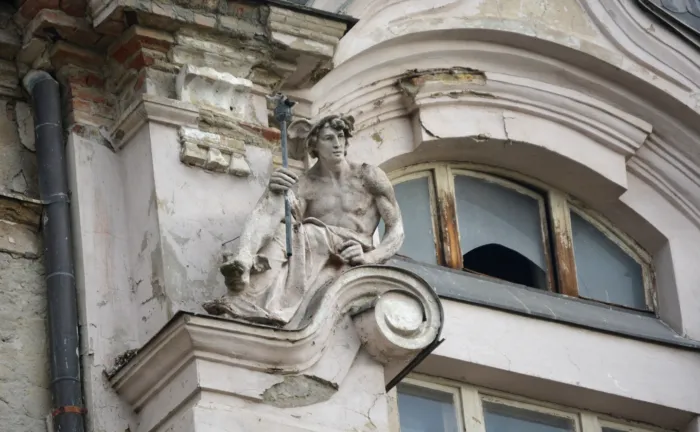
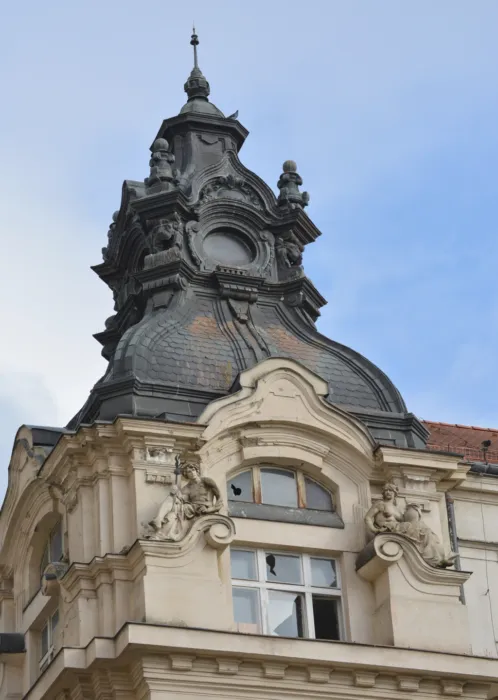
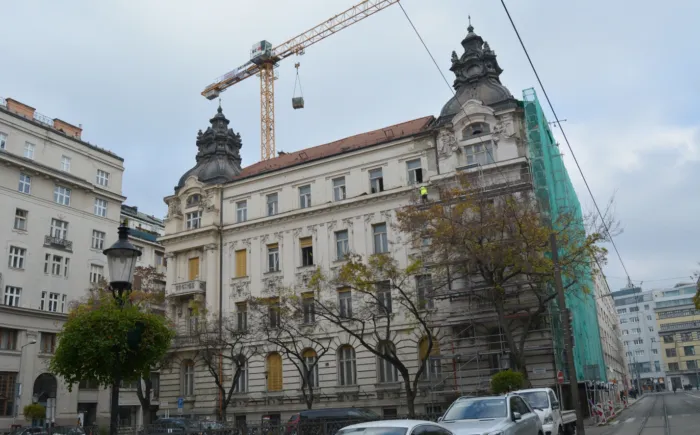
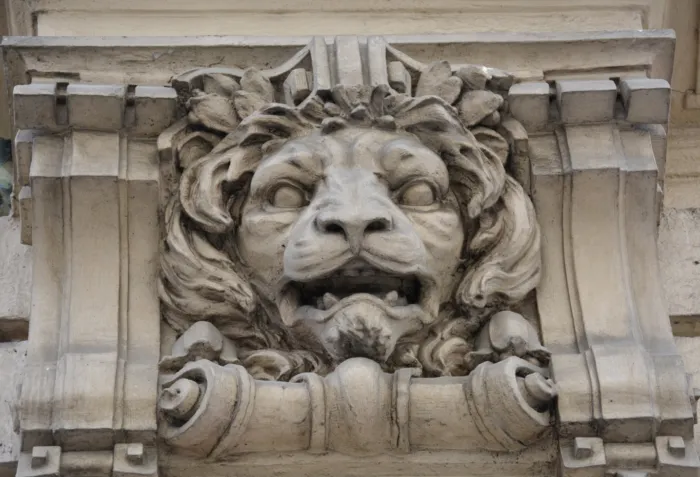
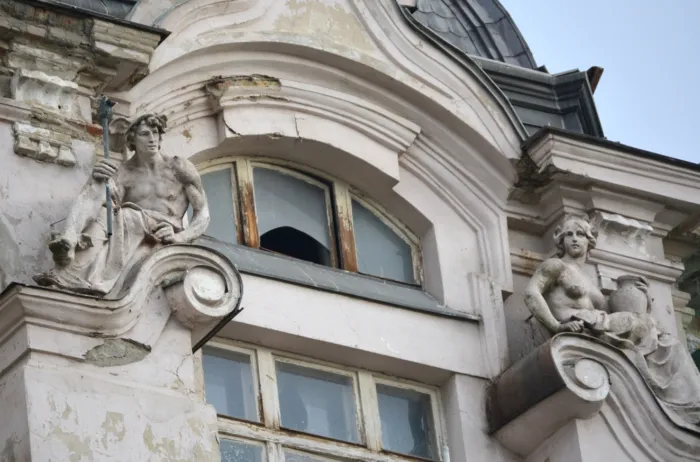
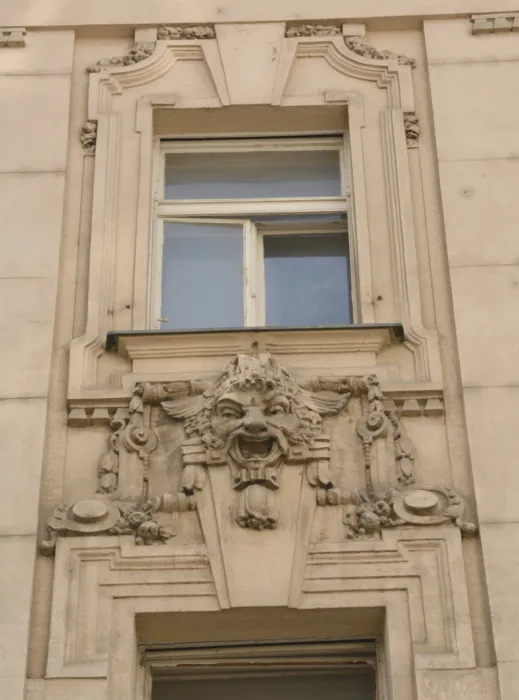
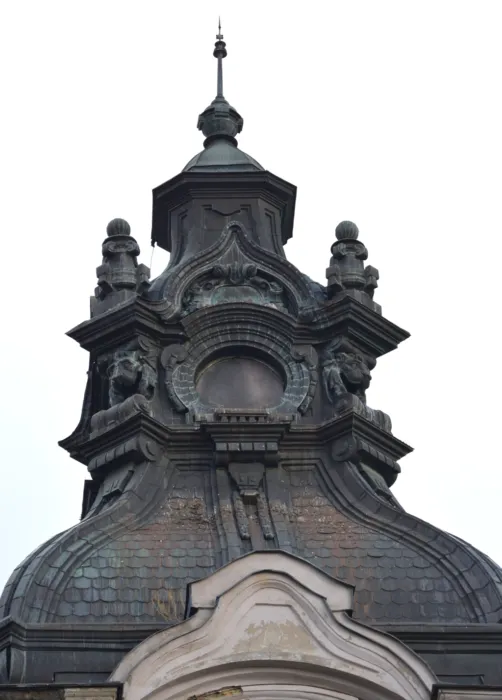
"Behind the theatre is the beautiful two-storey palace of the Bratislava District Chamber of Commerce and Industry on Csáky Square. The chamber occupies 3/5 of the premises of this excellent public building, while 2/5 are private apartments. The chamber of commerce and industry, which had previously been forced to live in relatively cramped quarters on the second floor of the building of the first Bratislava savings bank on Lőrinczkapu Street, decided to build its current headquarters at its plenary session held on 29 April 1902. The works, awarded through a tender, were carried out by Bratislava craftsmen under the supervision of Bratislava master builder Sándor Feigler, according to the plans of the Budapest architect József Hubert. The land cost 90,000 crowns and the building 300,000 crowns, excluding the furnishings. The foundation stone of the building was laid in April 1903." It was opened for its intended purpose in 1904. After the change of empire, the facility underwent an extension and later became the office building of the National Theatre. Today, it is undergoing a major renovation. "As a result of international developments, the French Revolution and the Napoleonic Wars, the chamber organization spread to many countries in Europe. In the territory of the Lands of the Holy Hungarian Crown, the first chamber of commerce and industry was established in Rijeka in November 1811, but it ceased to operate after the departure of the French troops (from October 1814). In the narrower sense of the word, the idea of establishing chambers of commerce arose in 1848: the first constitutional Hungarian ministry established by the peaceful revolution was convinced of the outdatedness of the guild system and the need for modernization in the field of commerce and industry. However, the establishment of the chambers could not take place due to the events of the War of Independence. Finally, the imperial patent, sanctioned on March 18, 1850 and published by decree on March 26 by the Minister of Commerce, Baron Karl Ludwig von Bruck, provided for the establishment of the chambers. According to the justification at the time, this was due to the was necessary in order to promote industry, as well as to create imperial unity and to strengthen relations between the parts of the empire. In fact, the new institution itself was intended to serve the centralization aspirations of neo-absolutism. Thus, chamber membership was mandatory, each chamber could only act within its own legally defined district, and individual chambers could only communicate with each other with a separate ministerial permit. The first to be established was the Sopron chamber (August 13, 1850), then the Bratislava chamber (August 25, 1850), and the Pest-Buda organization was established on September 28, 1850. A total of 11 chambers were established in the territories of the Hungarian Holy Crown: in addition to the above, the chamber centers were Košice, Timișoara, Zagreb, Debrecen, Cluj-Napoca, Brașov, Osijek and Rijeka. "The Bratislava Chamber of Commerce and Industry initially included the counties of Bratislava, Upper Nitra, Lower Nitra, Trenčín, Lipót, Bars, Hont, Nógrád, Zvolen, Árva, Túrócz and Komárom, as well as the cities of Bratislava, Szt.-György, Bazin, Modor, Nagyszombat, Somorja, Szakolcza, Nitra, Érsekújár, Trenčín, Žilina, Rózsahegy, Újbánya, Körmöczbánya, Selmeczbánya, Losoncz, Breznóbánya, Zvolen, Beszterczebánya, Korpona, Libetbánya and Komárom, with a total area of 5,983.296 km² and 1,849.053 inhabitants. As the economic and social conditions of the country made it necessary to increase the number of chambers over time, Liptó and Nógrád County, as well as the towns of Rózsahegy and Losoncz, in 1881 Zólyom County, Breznóbánya, Zólyom, Beszterczebánya, Korpona and Libetbánya with the towns, and in 1891 Árva, Bars, Hont and Komárom Counties, Újbánya, Körmöczbánya, Selmeczbánya and Komárom with the towns, so that the Bratislava Chamber District currently operates on an area of 2,668,412 k. h. The Chamber has 32 internal members, who live in the seat, and the same number of external members, who are elected every five years by the merchants and industrialists in the four counties. The most significant part of the Chamber's activity falls on the period following the Compromise. The importance of this activity is given by the developed economic conditions of the Chamber District, as well as its location adjacent to Austria and the resulting more lively connections. Economic In its activities in this field, the Bratislava Chamber strives with firm consistency to ensure that the competitiveness of our country's economic production is placed on a solid foundation, first and foremost within the country's borders, and that, after being completely liberated from its subordination to Austria, its interests are also protected in international trade by concluding appropriate trade agreements. It has placed emphasis, especially in recent years, on the more vigorous development and flourishing of domestic trade and industry, alongside the harmonious cooperation of production factors. In view of the customs policy transformation that is starting all over Europe, the Chamber raised its voice early on in the interest of the proper sale and protection of Hungary's agricultural and industrial production and put on the agenda the idea of establishing independent Hungarian export trade, and at the same time the development of consular affairs in the interests of our domestic economy. The activities of the Bratislava Chamber in all other fields and in detailed matters are centered around this operational guideline. The warm By embracing it, it strives to ensure that the new generation of industrialists and merchants enters practical life with a higher education that meets the increased demands and that higher-level special courses of study, such as export trade knowledge, are included in the scope of vocational education. Its opinions and positions expressed on issues of means of transport and tariff policy are guided by the same guidelines, and most recently, in the issue of the Bratislava-Vienna tramway, it succeeded in highlighting the interests of the domestic economy. The chamber readily seizes every opportunity to introduce the high-quality industry of its district at exhibitions. The Bratislava chamber was one of the factors in the establishment of the 1902 national agricultural exhibition, which is forever memorable for the city of Bratislava and the whole of Western Hungary, at which it organized a large-scale domestic and agricultural industrial exhibition to demonstrate the relationship between agriculture and industrial industry. It harmoniously fits into this agreement expressed in its outward-facing operation "The regularity of its affairs, one of the most recent and most beautiful monuments of which is the new chamber headquarters, allows it to continue its work in its own home for the prosperity of domestic trade and industry."