
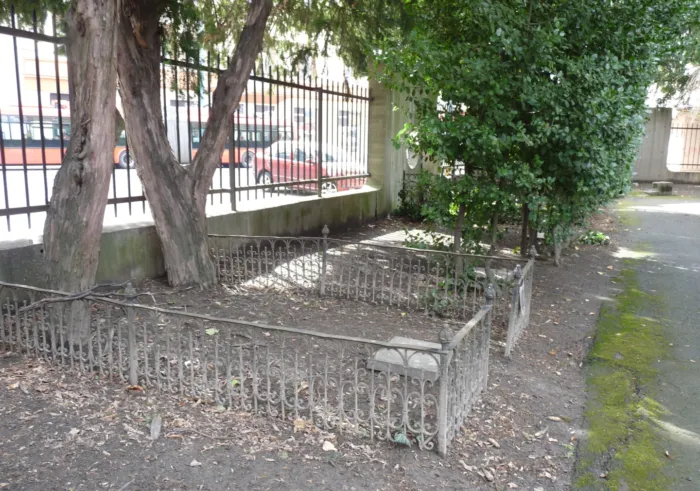
The grave of Henrik Justi
Cemeteries, tombstones, graves
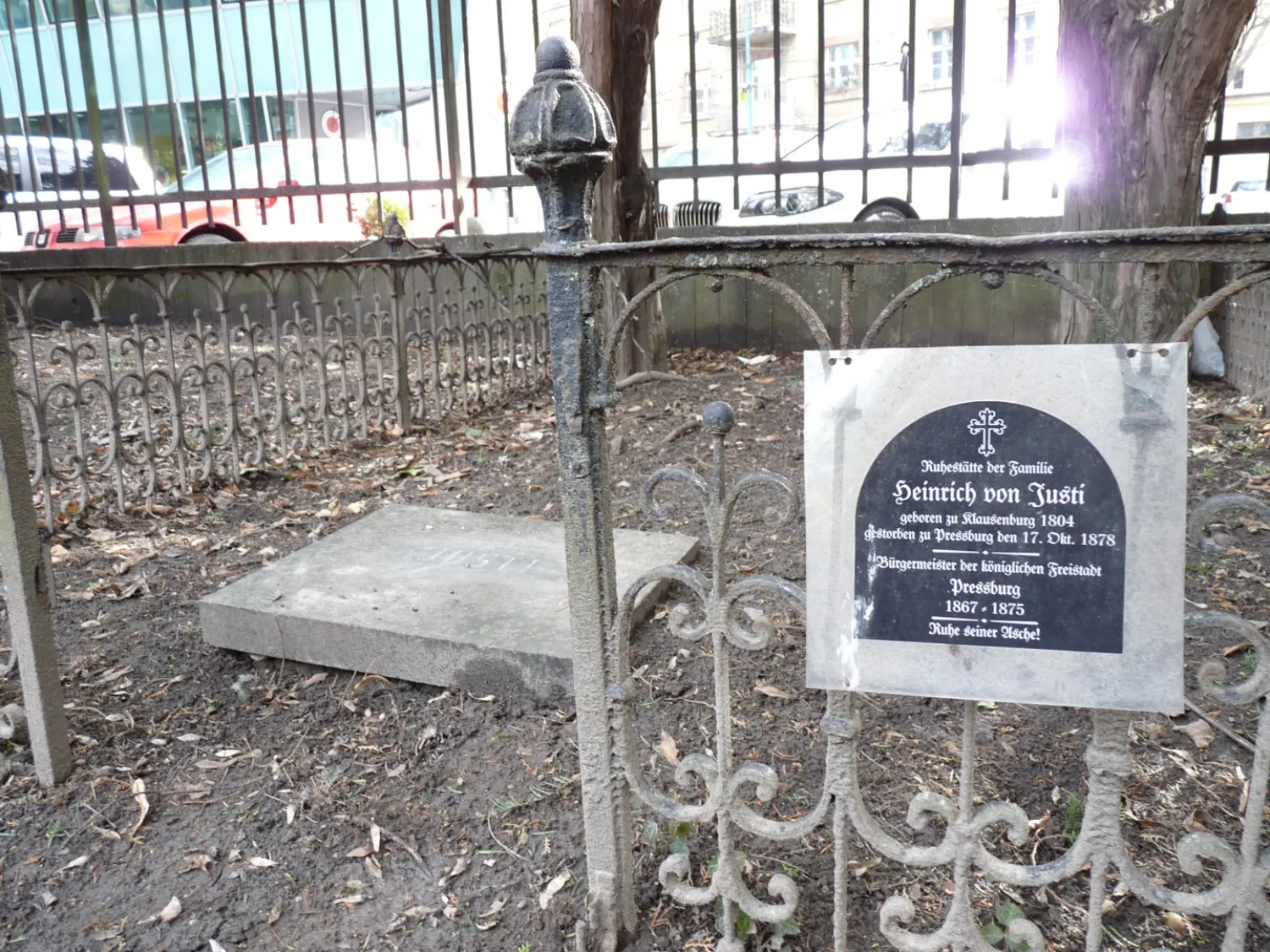
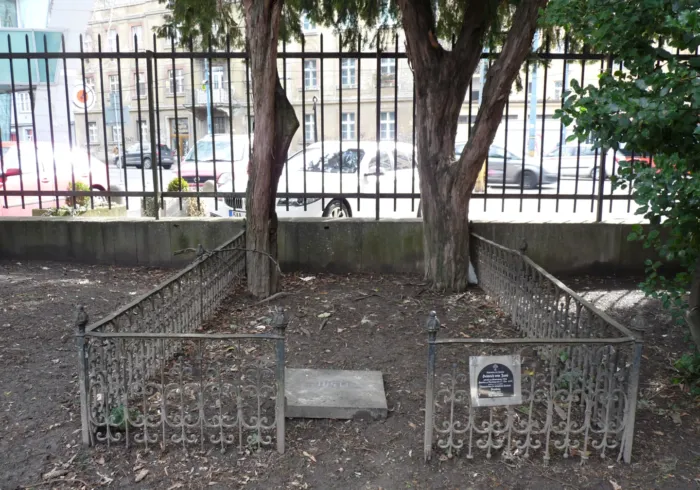
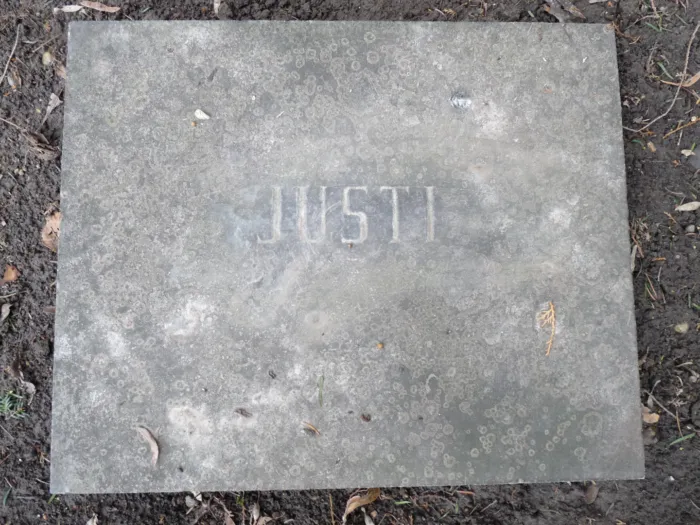
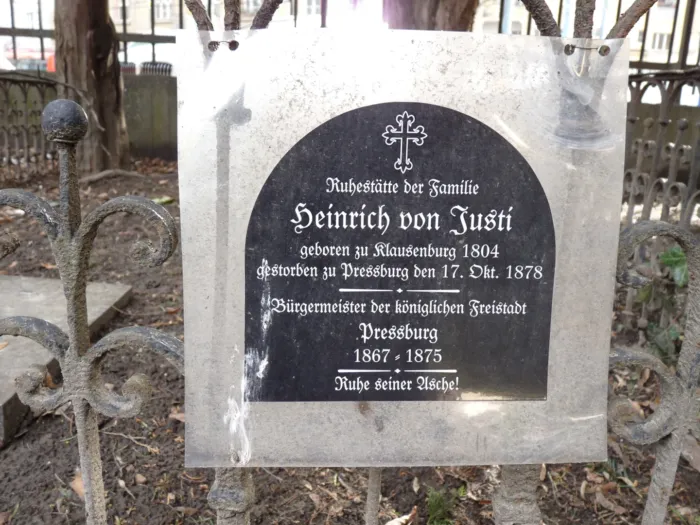
Henrik Justi's tombstone was demolished in 1970 when the adjacent main road was widened, and his grave, protected by a low fence, is located on the right side of the cemetery in sector V./1. The only evidence of the deceased's identity is a name "Justi" engraved on a stone slab placed on the ground, and a photo of the original tombstone attached to the fence of the grave. ; "Justi Henrik was born in 1804 in Transylvania, where his father, Justi Károly, was a state engineer. He completed his secondary education in Cluj-Napoca and Sibiu. In 1815 he joined the military engineering directorate as a draftee. He then served in the 19th Hessen-Homburg Regiment, but having no prospect of becoming a captain in the general staff, he left military service in 1829. ; From then on, he devoted himself to a political and administrative career and came to Bratislava, where he entered the city service and at the same time completed his legal studies. In 1834, he was a city trainee, later an actuary of the city court. At that time, he already developed a proposal for all city services, which was accepted. He became a city councilor for this. In 1848, he led a section of the Bratislava National Guard to Nitra to suppress the Hurban rebellion and At Szenitsa he dispersed the rebel troops to such an extent that he received full recognition from the military. On his return he took over the leadership of the entire local national guard. When the imperial troops entered, he was suspected of being a revolutionary. Count Ferenc Zichy put him to the test and appointed him as a military commissar to the Russian Grabbé corps command. Justi adapted, but his energy was not to the liking of the Russians. Minister Bach offered him a high political position in December 1849, but he did not accept it. In January 1850, he was court-martialed as a revolutionary, but was acquitted. He then retired to private life and became the director of the English air force set up in Bratislava in 1865, where he remained almost until the end of his life. In 1867, when the constitution was restored, he was elected mayor by a majority of votes on May 13. Justi was the largest and most important member of the Bratislava was the most significant mayor of the city in the second half of the 19th century. He was retired on 2 August 1875, but not with his well-deserved full salary, which greatly disappointed the 71-year-old man who had served the city faithfully and energetically. He died on 17 October 1878. His remains rest in the Sz. András Cemetery – forgotten.