
Jonah's House (Szarvas Hotel)
Building, structure
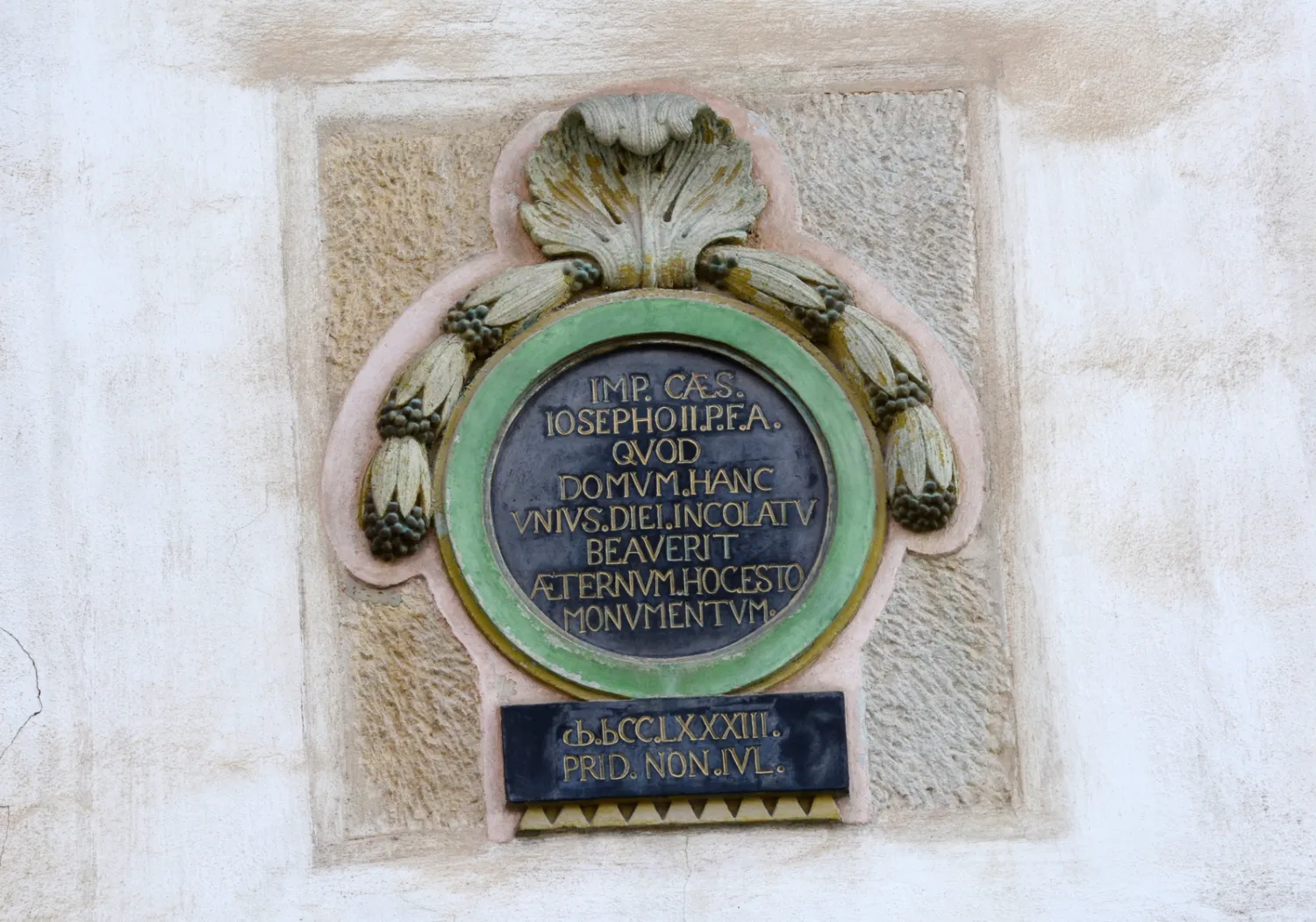
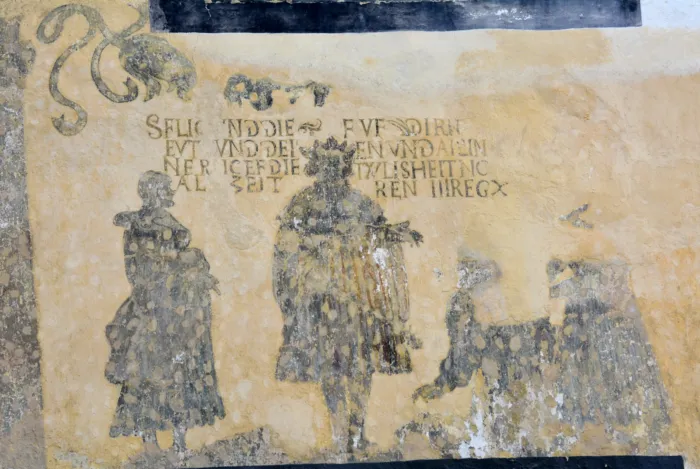
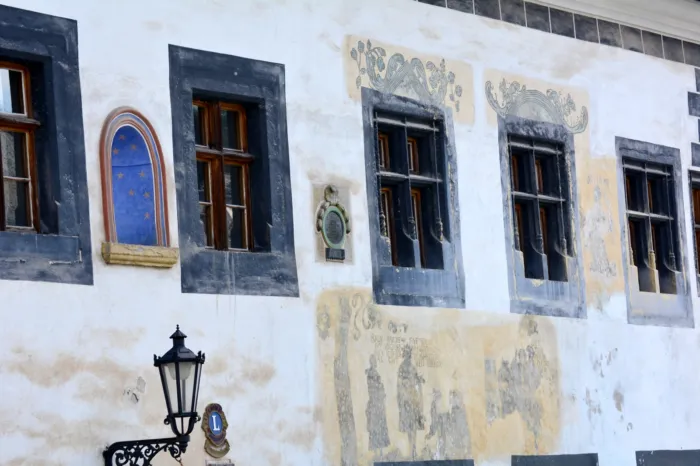
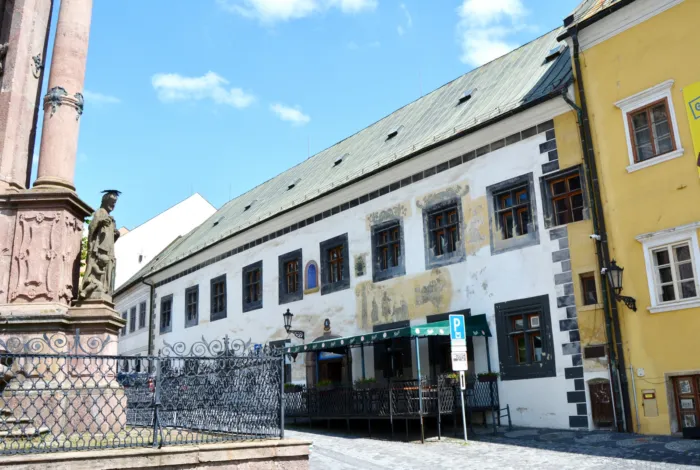
In 1783, Joseph II. stayed in the former inn (an inscription indicates this), but the famous mineralogist József Jónás was also born in this building in 1787. ; Renaissance painting decorative elements were already used on the facade of this Gothic-style building. The most common motifs were biblical scenes with moral inscriptions, which reflected the religious views of the owners. Here, the remains of a fresco with Judith from the Old Testament, holding a sword and the head of Holofernes, can be found. Plant motifs were also popular, as can be seen on the gables painted above the windows. ; However, the sgraffito-decorated house from the 16th century was also notable for the fact that students entering the city's schools began to get to know the city here in September. The restaurant's yard was filled with village carts at this time, as parents brought their children to one of the Selmec high schools for the start of the school year. In the "Szarvasi" already in the 18th century, food and drinks were offered on printed menus. Today, there are restaurants on the ground floor again, while the upper floor houses exhibition rooms. ; ; József Jónás, museum keeper, born on 21 February 1787 in Selmeczbánya (Hontm.), where his father was a butcher and cattle dealer, at the age of 16 he was employed at the Selmecz mine working and from 1805 to 1807 he studied mining at the Royal Mining Academy there under teachers Patzier and Reichetzer and after completing his studies he was employed as an apprentice. In 1811, in the company of Count Gois, he traveled to Beszterczebánya, Szomolnok, Nagy-Bánya, Kapnik and Máramaros County for the purpose of mineralogy studies. With the description of this trip, he attracted the attention of foreign scientists attention. Returning from his trip, he gave lectures on petrology to the students of the Mining Academy, but these lectures and the reading society he planned did not win the approval of the higher authorities. In 1814, Archduke Joseph Palatine appointed him as assistant keeper of the natural history department of the Hungarian National Museum, which office he occupied on May 1, and after Tehel's death in 1817, he was promoted to keeper. In the same year, he worked on the development of the mine in Selmeczbánya for nine months. He was given a visit to the court in October 1820. During his stay in Buda, he made several oral proposals to the Hungarian king in the interests of Hungarian mining and the Mining Academy, and he also submitted his proposals, explained in more detail, in writing. His scientific endeavors were also recognized by the government, so that he received reports and notes for his work from the mining officials, by order of his superiors. During this time he tirelessly increased his mineralogical collection. However, his greatest desire, the chemistry department of the Selmec Mining Academy, to which he had just applied, was not achieved, because after three years of wasting illness he died in Pest on February 1, 1821. Shortly before his death (January 21), he received the honorary membership certificate of the German Mineralogical Society. He was a member of several German scientific societies. ; Czikke in Leonhard's Taschenbuch (VIII. 1814. Beschreibung einer im J. 1811 durch Oberungarn, Schemnitz, Neusohl. Schmölnitz nach Nagybánya und Kapnikunternommenen Reise, X. 1816. Nachricht über das Vorkommen einiger Mineralien in der Gegend von Schemnitz, XII. 1818. Beiträge zur Oriktognosie), in the Schriften der Jenenser mineral. Gesellschaft cz. work (VI. 1825. Über einige ungarische Minerale), in the He was also anonymously a collaborator of the Scientific Collection. ; Work: ; - An Freunde, Beförderer und Kenner der anorganischen Produkte des österreichischen Kaiserstaates, der Technologie und commerzes. Einldung zur literarischen Mitwirkung für das physiotechnographische Magazin über die anorganische Natur des österreichischen Kaiserstaates Pest, 1819. ; - Ungarns Mineralreich, orycto-geognostisch und topographisch dargestellt. U. there, 1820. (Physico-technographisches Magazin über die anorganische Natur des österreichischen Kaiserstaates. I. Jahrgang. His death interrupted this work.) ; Manuscript: ; Jakob. Slanted. Miller Musei Nat. Directori dicatum A. 1816. Three sheets per sheet.