
Birthplace of Johann Nepomuk Hummel
Building, structure
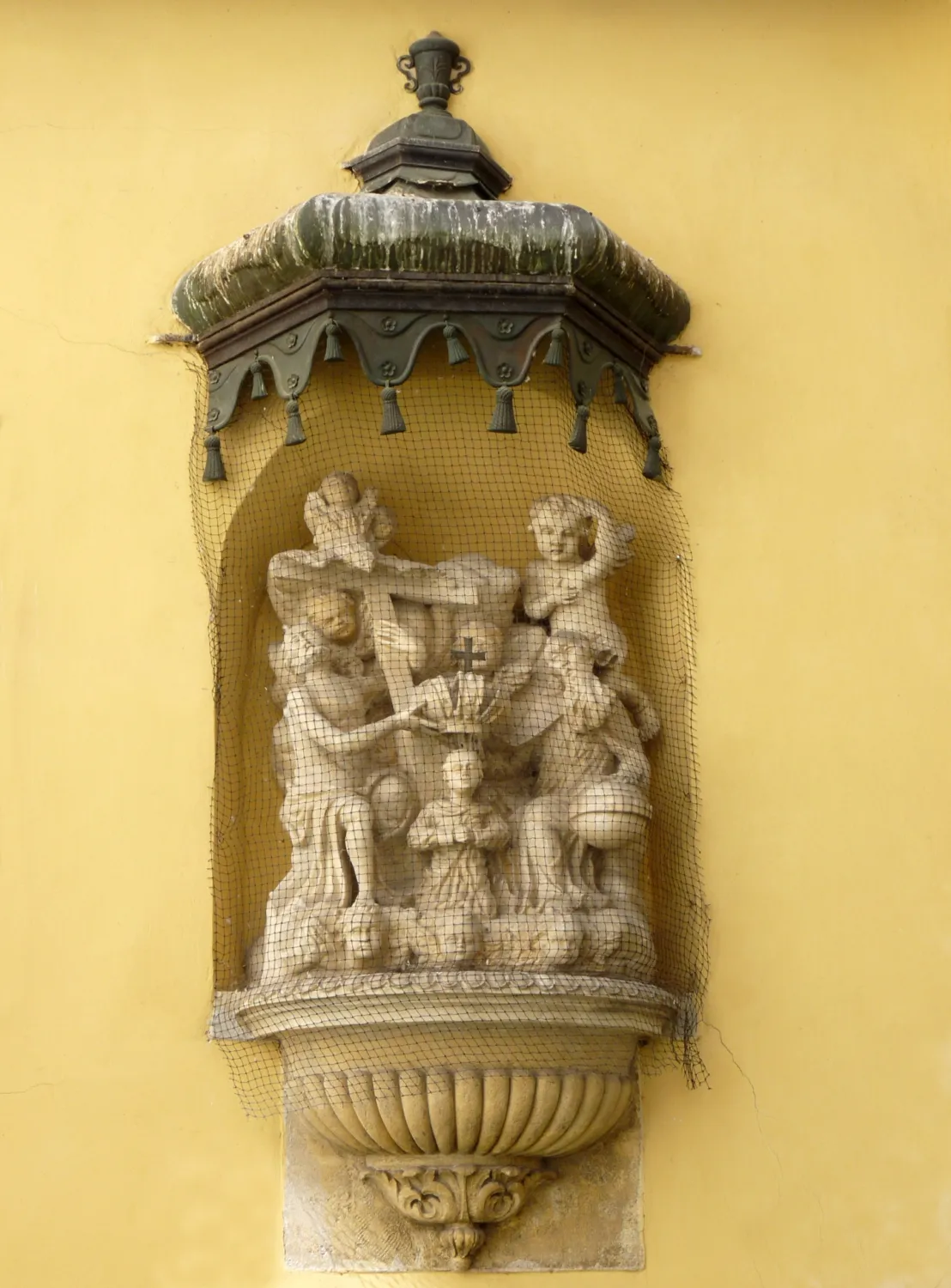
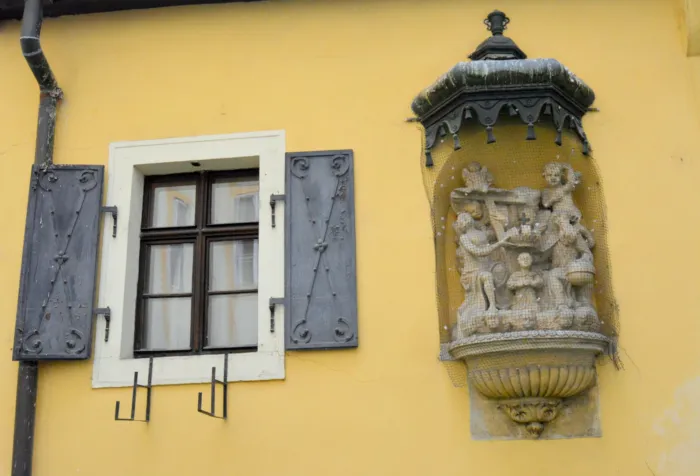
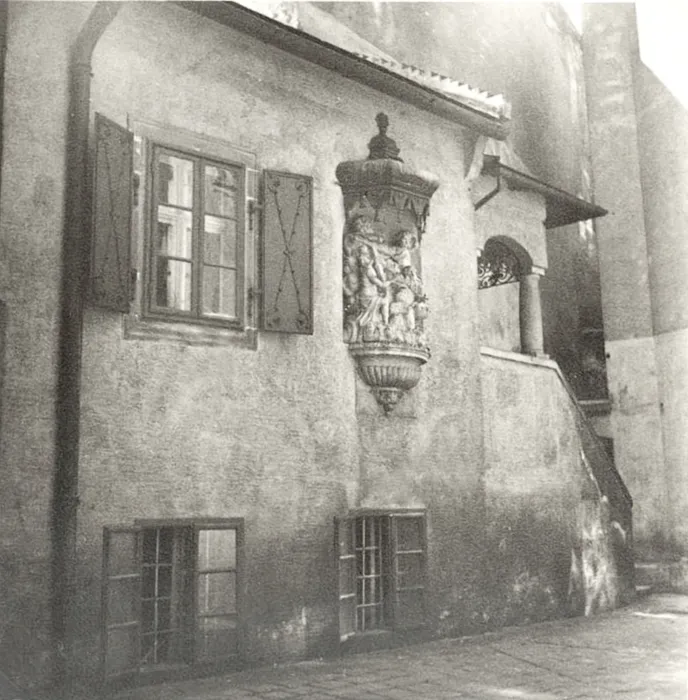
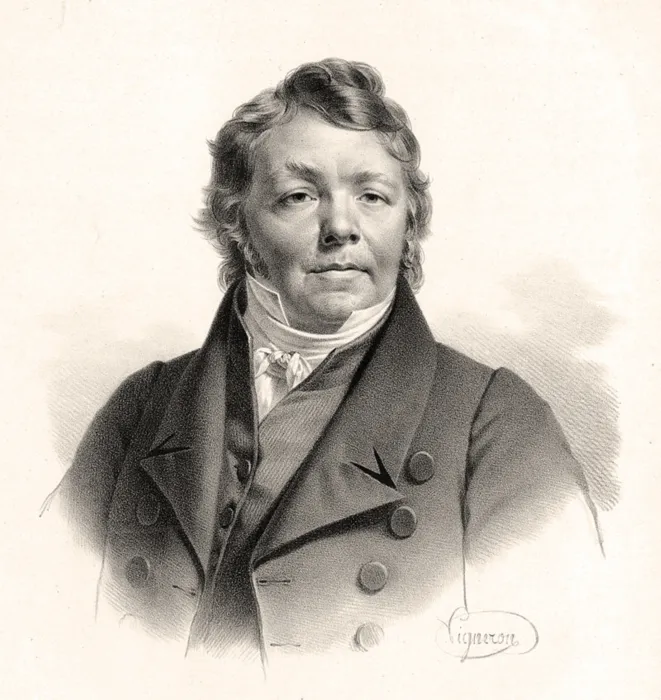
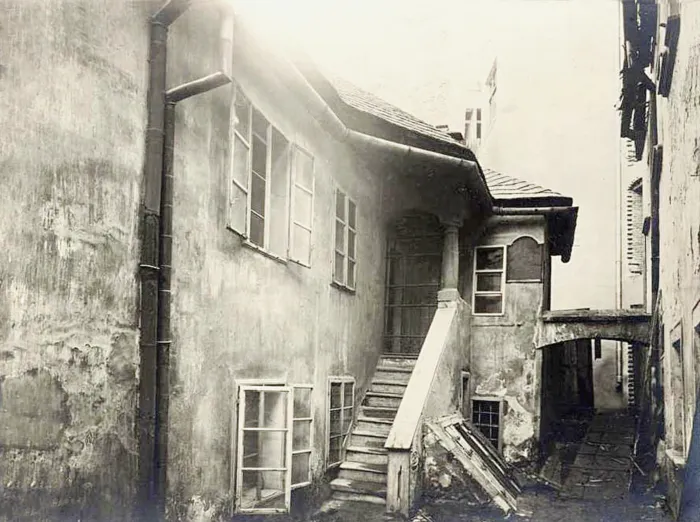
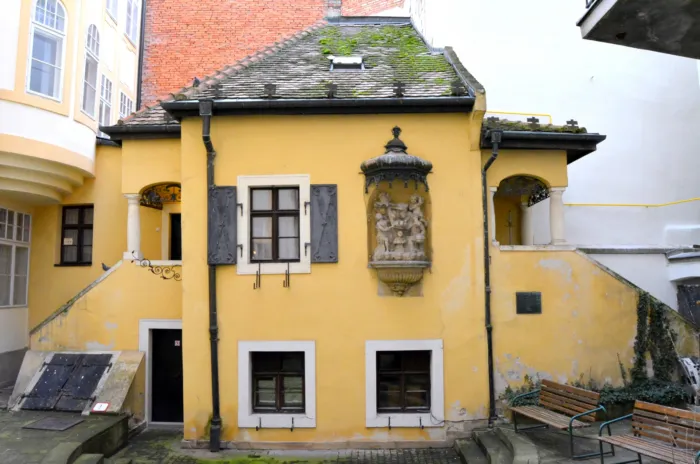
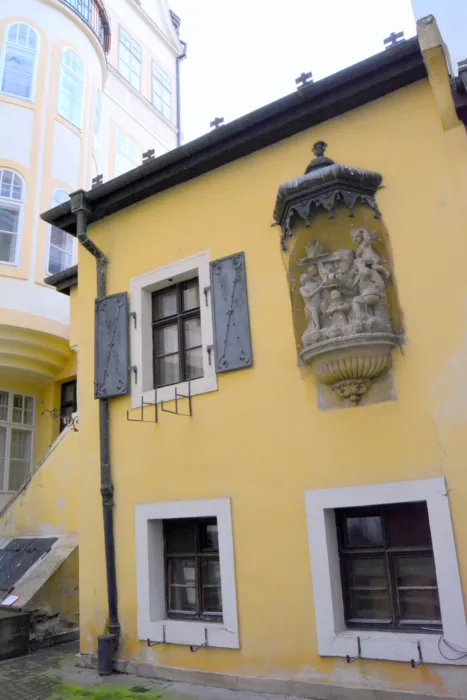
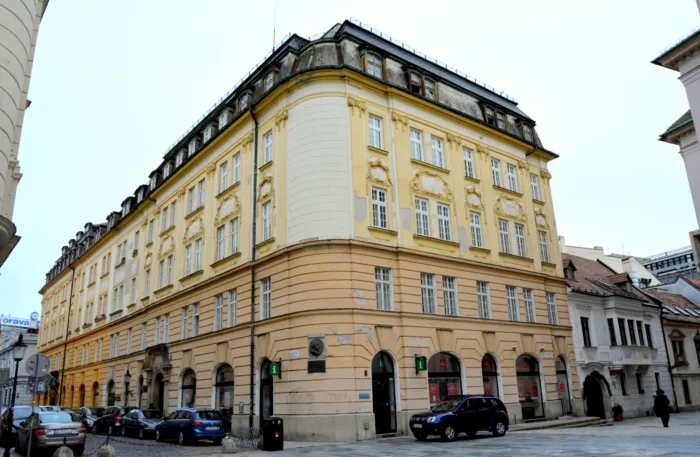
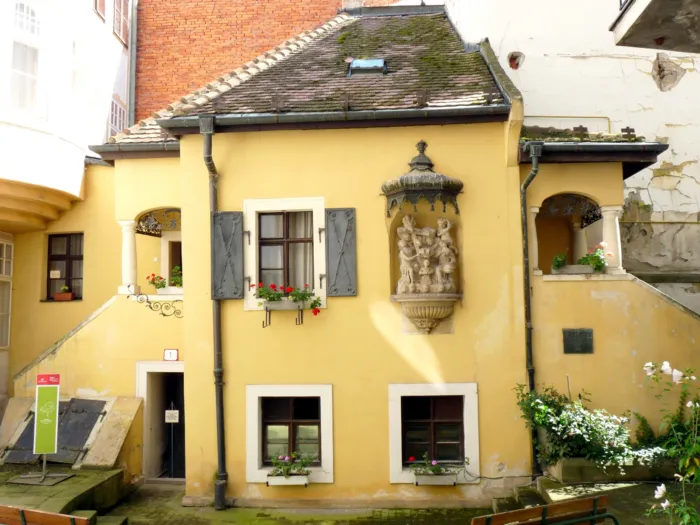
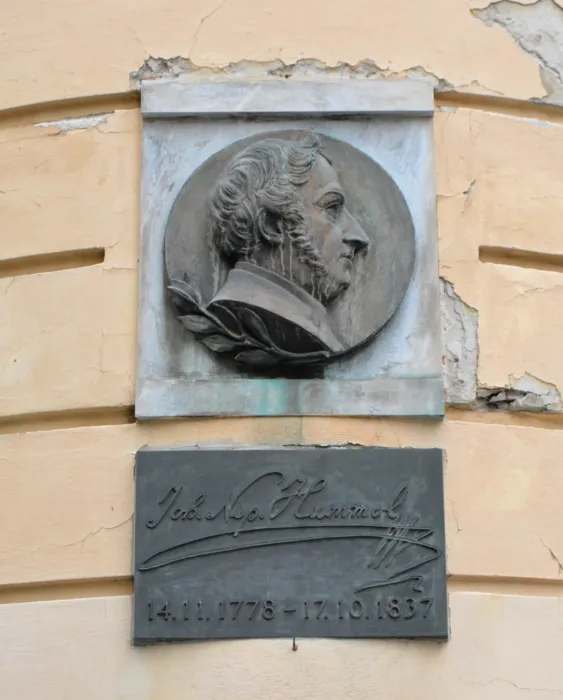
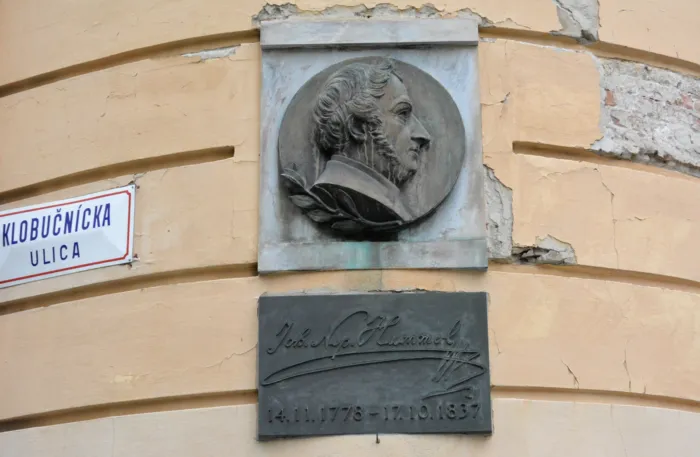
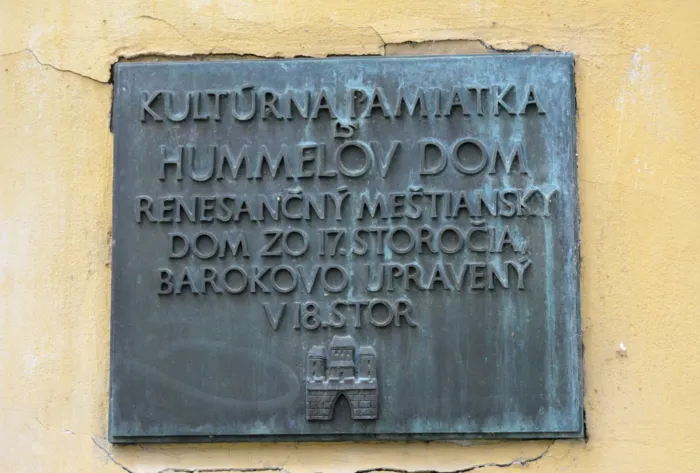
On the corner of Orsolya Street and Kalapos Street, in the courtyard of the apartment building at number 2 on Kalapos Street, stands the birthplace of Johann Nepomuk Hummel. The composer and piano virtuoso, a student of Mozart and a friend of Beethoven and Goethe, was born in this small, baroque building on November 14, 1778. The house is now a memorial museum. In the early 1900s, when the street was being rebuilt, a statue evoking the coronation of Maria Theresa (by the Holy Trinity) was added to the building. A relief plaque commemorating Hummel can be seen on the corner of the apartment building. ; "Hummel Nep. János was born in Bratislava on November 14, 1778, in the house at number 8 of the street named after him. His father, János Hummel, was the conductor of the Bratislava theater under the directorship of Seipp, from where a few years later he was transferred to the military school established by Maria Theresa in Székesfehérvár as a music teacher, where his son learned the Hungarian language, which he spoke until the end of his life. He played the violin when he was three years old, and the piano when he was five. When the Székesfehérvár school was dissolved in 1785, the family moved to Bratislava and from there to Vienna. Here his father became a conductor again at the Vienna theater under Schikaneder, the librettist of The Magic Flute, and it was then that the 7-year-old boy met W. A. Mozart. Mozart took the talented child into his own house to train him better in music, where he stayed for two years. During this time, young Hummel always had the latest he had to play piano compositions. At the age of nine, he played four hands with Mozart in a public concert, and Mozart declared that this child would certainly take the piano laurel from him. In 1788, Hummel's father set off on a musical tour with his son to Germany, Paris, England and Scotland. Hummel's first musical compositions were also published in Edinburgh: the Piano Variations. At the Berlin concert, Hummel saw the great master he admired, Mozart, in the audience. After the piece was played, he immediately jumped up and shouted to his father: "Father, come here quickly, our master, my teacher, Mr. Mozart is here." In London, he performed as a pianist with Joseph Haydn, who had written a difficult piano sonata for four hands. Hummel played so well that Haydn lifted him up in front of the audience and kissed him. Six years later, Hummel came to Vienna again and He studied counterpoint with Albrechtsberger. At Haydn's suggestion, he then came to Kis-Marton as conductor of the court orchestra of Duke Esterházy and wrote his masses here, which the Bratislava church music society has had in its repertoire since 1833. In 1811, his piano sonatas in E flat, F minor and his concerto in C major were published, which established Hummel's reputation as a composer. From then on, Hummel privatized in Vienna, wrote dance pieces for his father, who conducted the dance music in the Apollo Hall, and thus became the founder of Viennese dance music in this direction. Many people visited the Apollo Hall because of the pleasant melodious and original choral accompaniment. In 1812, he met his future wife, Elisabeth Röckel, the celebrated singer, for whose courtship Beethoven also competed. Hummel married her on May 16, 1813, (She died in Weimar on March 3, 1883.) Hummel was closely friends with Beethoven, who once wrote to him: "My dearest Hummel! Please conduct the Battle of Vittorra with your excellent conductor's and commander's baton" (Beethoven's occasional composition). Hummel was a great improviser on the piano and with this gift he created joy and delight everywhere. He then went on a musical tour and also came to his hometown. In 1816 he was invited to be the court conductor in Stuttgart. At this time Hummel's greatest instrumental composition, the D minor septet performed on the piano by the greatest artists in Bratislava, appeared. After the queen's death, he accepted an invitation to the court of the composer Charles Augustus in Weimar, where he came into the most intimate contact with Goethe and where he became the music teacher of the later German Empress Augusta. In 1822 he made a musical tour to Russia and in 1826 to Paris, for which he wrote the L minor concerto. In Paris he became a knight of the Order of Honor and the most famous sculptor of France, d'Angers David modeled after him. After the death of Charles Maria Weber, he was offered the position of court conductor in Dresden, but out of gratitude he remained in Weimar, where Liszt later succeeded him. In 1827 he came to Vienna, where he found his friend Beethoven dying and at his funeral he carried one of the nails of the coffin's shroud. In 1833, as a precursor to Hans Richter, he conducted the German opera in London. In 1834, accompanied by his wife and two sons (Ede was born in 1814. He has since died. The other, Károly, was born in 1821 and is now a famous landscape painter in Weimar), he came to Vienna, where he gave his so-called "Golden Concerts" (Dukaten-Koncerte, because the highest admission fee was 1 gold.) to a packed house. At that time he also visited his hometown. He visited his birthplace with the then church music society conductor, József Kumlik, and the later city councilor, Schariczer. Returning to Weimar, he died on October 17, 1837. Hummel Nep. János managed to maintain and further develop the Mozart tradition in the 19th century. He was its most characteristic representative. On May 16, 1858, the church music society decorated Hummel's birthplace with an inscription that still exists today, for which his widow voted grateful thanks. The "Silence" freemason lodge celebrated the centenary of his birth with a public memorial celebration and decided, at the initiative of one of its members, József Kőnyöki, a real school teacher, to erect a memorial statue of the master, for which the city archivist János Batka undertook to raise the costs through concerts. For the benefit of the memorial fund, Ferenc Liszt, Gr. Géza Zichy, Antal Rubinstein, János Bülow, Madam de Sevres played for free, and free performances were held for this purpose by Hummel's autumn student Hiller Ferdinand and Ambros A.W. The master's first bust, which was modeled and cast by Pönninger in Vienna for a thousand forints, was taken to Weimar, where it stands near the theater, for which Hummel wrote several operas and ballets. The Hummel bust in Bratislava was unveiled on October 17, 1887, with a Hummel concert and in the presence of the celebrated one's son Károly. The work was modeled and produced by Viktor Tilgner for 8,000 francs. At the moment, it stands opposite the theater, at the entrance to the Kossúth Lajos-tér promenade, but its transfer to the so-called Kis-sétány is planned, where its effect will undoubtedly be greater in the shade of the trees and in a more suitable environment. ; During his Weimar period, he made the city the musical capital of Europe, inviting the most famous musicians to perform and practice their art there. Here he implemented one of the first retirement systems for musicians, which he himself gave charity concerts to finance. Between 1825 and 1827, he fought resolutely for the creation of a uniform copyright law in the states of the German Confederation. ; Towards the end of his life, Hummel experienced the rise of a new school of composers and virtuoso performers and the gradual fall of his music from fashion. His disciplined and pure Clementi-style technique and balanced classicism set him against the wild bravura playing of the likes of Liszt. He composed less and less, but he continued to be recognized and admired. He died peacefully in his Weimar home in 1837. He was a Freemason, like Mozart, and thus bequeathed a significant part of his famous garden to the Weimar Amalia lodge, to which he and Goethe belonged. ; Although his reputation waned towards the end of his life, he was one of the first composers to die a wealthy man.