
Tomb of Charles Jetting
Cemeteries, tombstones, graves
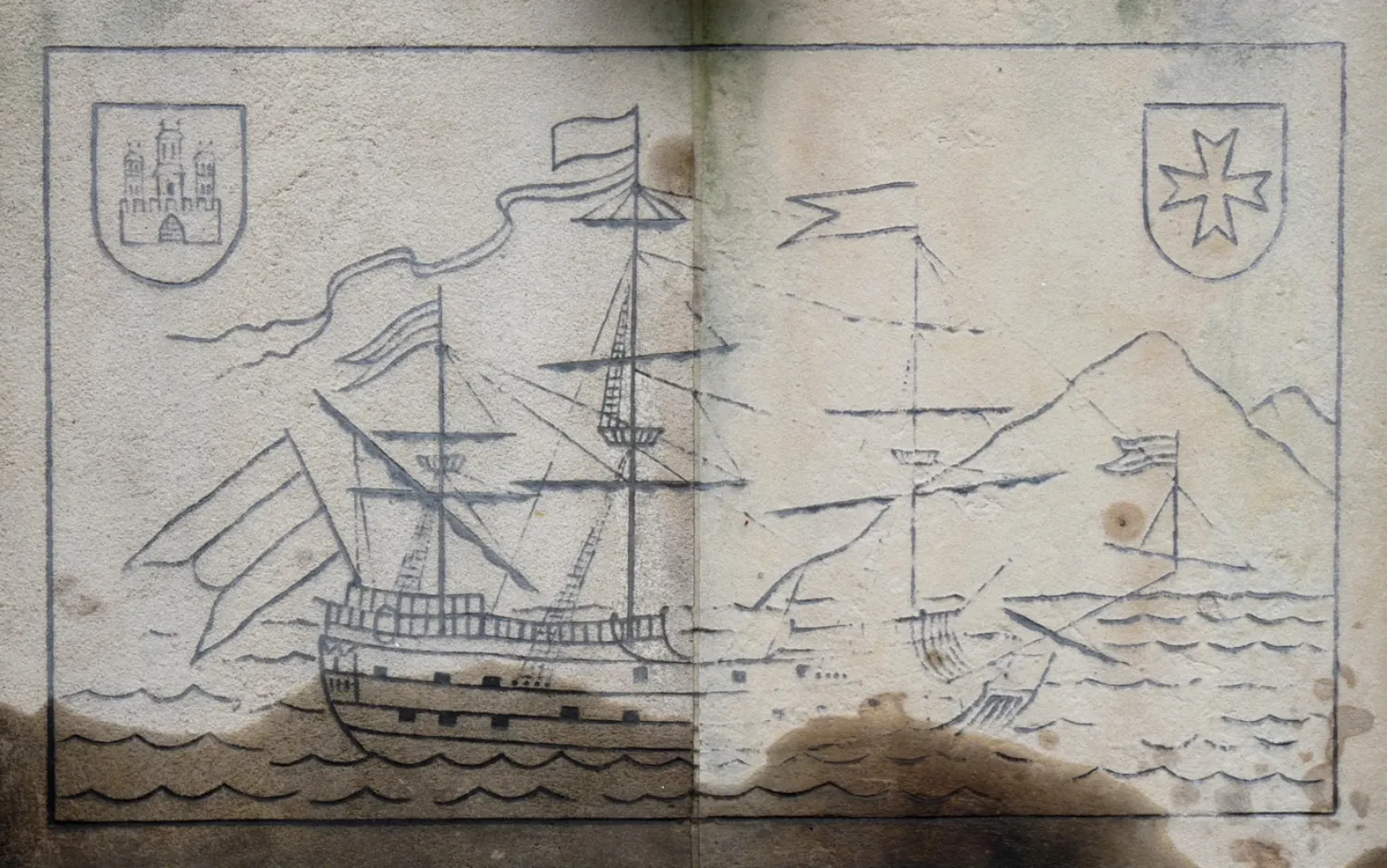
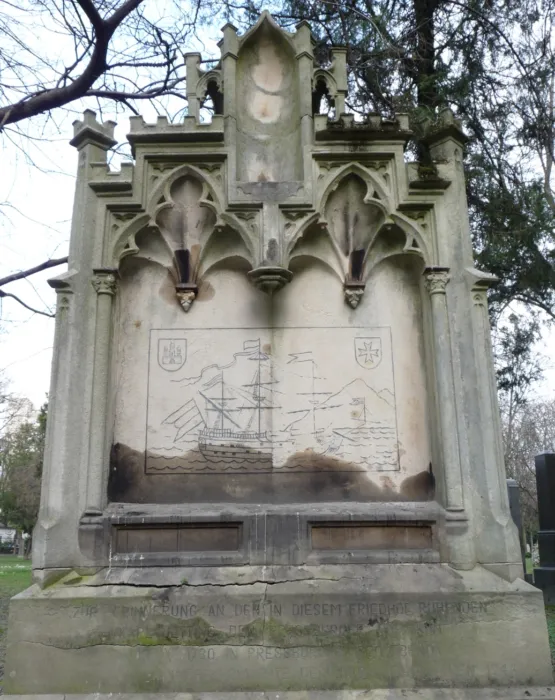
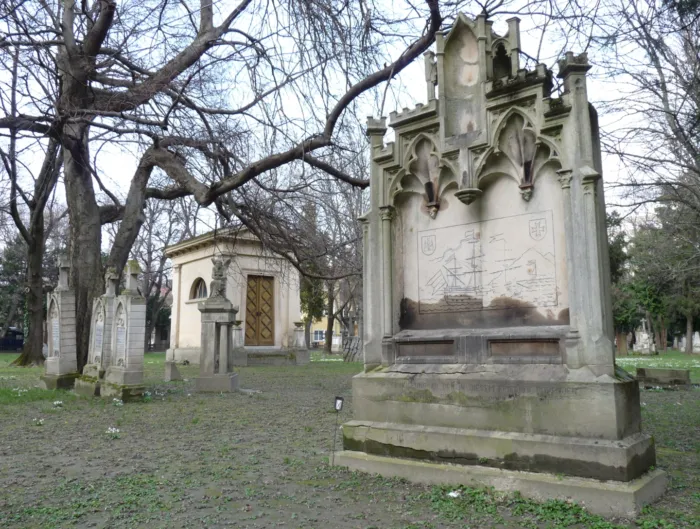
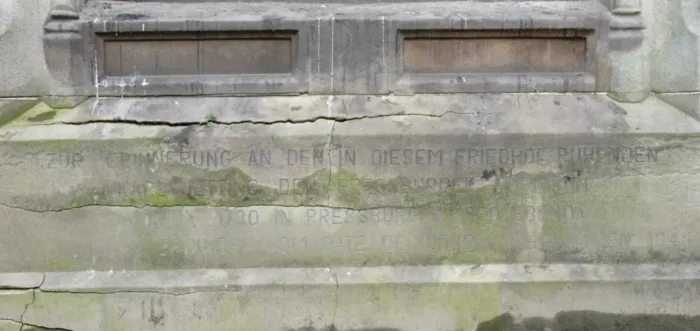
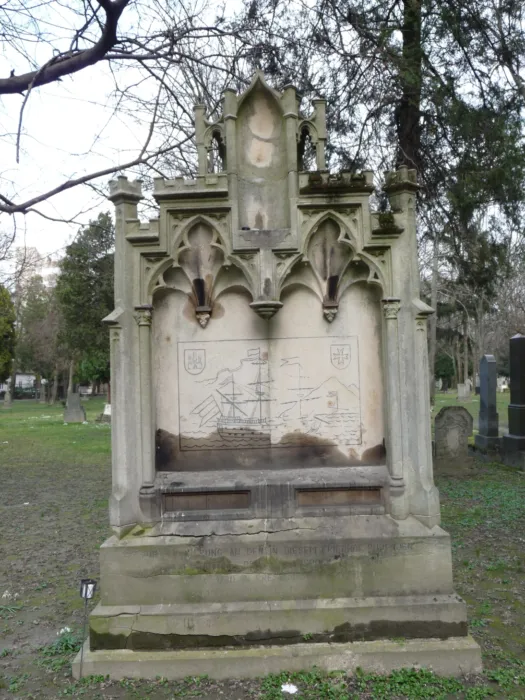
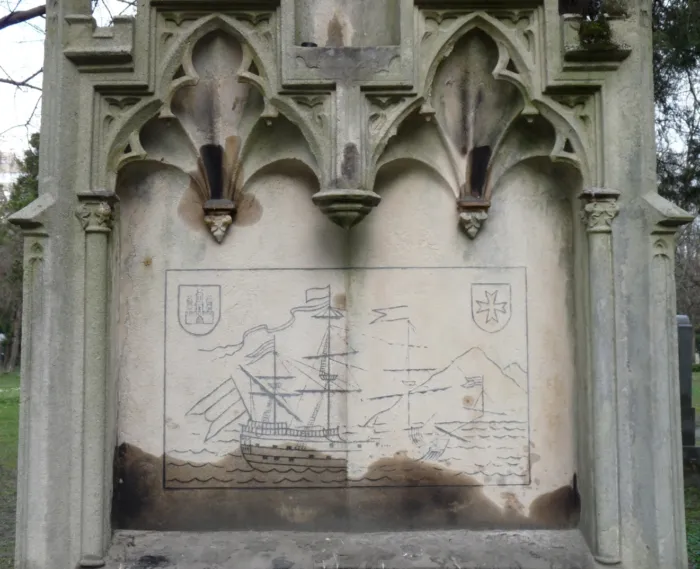
Jetting Károly's name is known as the Hungarian Robinson. He was born on September 13, 1730 in Bratislava, where his father was a locksmith. He was 15 years old when his parents sent him to the gymnasium, where he finished the 5th grade. When his father died, his mother moved to Vienna to live with relatives, where Jetting worked as a clerk in a law firm. Having damaged his master and because of the crimes he committed against him, he was forced to leave Vienna. At that time, he was heading towards Bratislava, but on the way, a rich traveler took him in and took him as a butler in Vienna and his mother as a locksmith. So they traveled to London, where his master had a banking business. After two years of service, his master arranged for him an office with the English government in Senegal, which he readily accepted and left on October 26, 1772. On the way, after a storm lasting several days, they were shipwrecked near an island on Jan. 17, 1773, and the landing was made difficult by the wild people there. However, a native who came to their wrecked ship made them understand that they were subjects of the Moroccan emperor. Although they captured their companions, they did not kill them and only intended to rob them. The natives soon overran the ship in large numbers, which they robbed. Jetting escaped with a raft with some companions, but the wave swept him off and threw him against a rock, where the Moors captured him. His other companions, including the captain, numbering twenty, fell into the power of the wild Moors. They were dragged to their place of residence and treated as slaves. Later his master released him, and after many hardships he entered the service of another Moor, who had a large farm, sheep, oxen, horses and 17 camels. On February 14th he set out on a long journey with his master, who was also a merchant, and after many hardships and sufferings they reached their destination, where his master sold him to a Jew named Aaron. The English consul in Morocco, having fallen into the trap of the shipwrecked, through the intercession and persuasion of a wealthy Arab, who considered the redemption of slaves to be the main task of his life, redeemed him from captivity and transported him to Mogador. The Moorish emperor was furious that the redemption was not carried out by his men, so he ordered the culprit to be killed, but he escaped in the meantime. On May 15th it was reported that hostilities had broken out between the Moors and the English, and at that time the emperor also redeemed the rest of his companions. Having regained their freedom, they were sent on their journey with a military escort and after twenty days' journey they arrived at Robato, where they were presented to the English consul, in whose hospitable house they spent four days. On 25 August they continued their journey and seven days later on 3 September they arrived at Tangier. The Spanish consul conveyed them to Cadiz, from where they finally sailed for England and Jetting arrived in London on 11 December. When they were presented to the English king, recounting his experiences, he heaped him with his benefactions and appointed him consul of Marseilles. His benefactor, the banker, presented him with a thousand pounds sterling. Sailing towards Marseilles, a storm drove their ship far away, which was then attacked by pirates, and they were again taken prisoner and chained to the bottom of the ship. They were transported to Tunis and here, along with the others, he was sold in the market to a Turk named Selim. He saved his master during a boat trip when he fell into the sea, whereupon he was gratefully accepted as a companion and friend, and after his persuasion to convert to the Turkish religion was in vain, he restored his freedom and also presented him with a thousand zechinos. When he was traveling towards his homeland, Selim's son, who envied the favors and money he had received from his father, captured him with the help of six Turks and took him to a distant residence, where he was chained and assigned to servile duties, later he was taken to a patrol ship, which was under the command of Selim's son, and here he found his companions, all of whom were treated like galley slaves and chained to the oar bench. On the way, their ship was attacked and captured by Algerian barbarians, where they were forced to fight a Maltese ship. However, they turned their weapons against their conquerors, the Maltese meanwhile burned their ships and he fled to a nearby island, where he lived like Robinson for nine months, until later he found companions and with their help they captured a ship, which had first abandoned his companions on the uninhabited island, and with it they escaped. Then a ship traveling to Saint-Domingue picked them up and Jetting traveled to London on it. In the meantime, the banker died, who left Jetting's mother 5,000 francs, with which he traveled to Bratislava with the woman's son's fiancée. Here Jetting met them and married his London fiancée. He died after 1790. ; ; The description of this adventurous life was given by his son to an anonymous acquaintance, who published it under the title: Der ungarische Robinson, oder Schicksale und wünderbare Abentheuer Karls Jetting, eines gebohrnen Ungars. A contribution to the knowledge of countries and people. Vienna, 1797. ; After the copy in the library of the m. n. museum. ; The neo-Gothic tombstone of Károly Jetting, erected in 1844, is located on plot I/1 of the cemetery.