
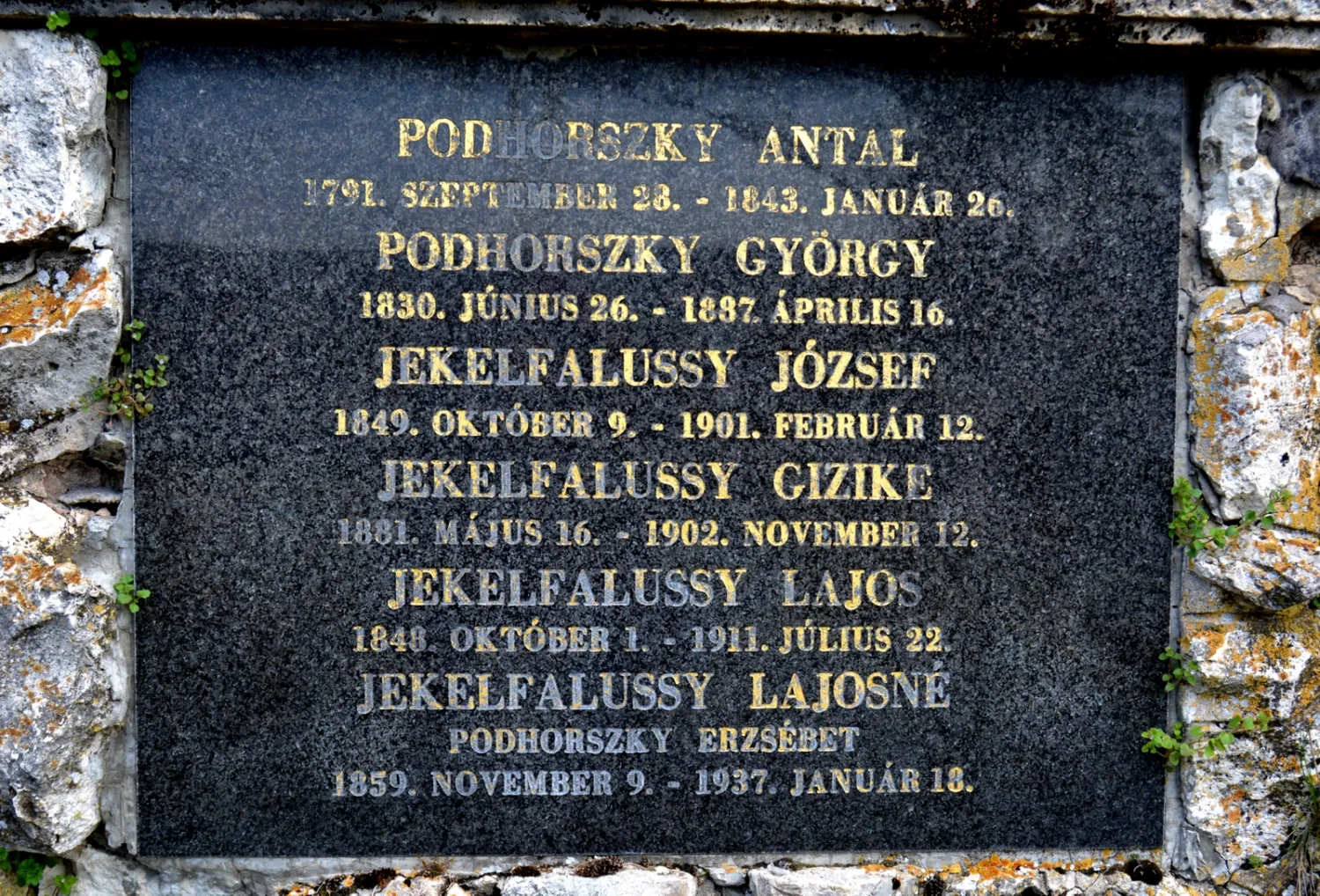
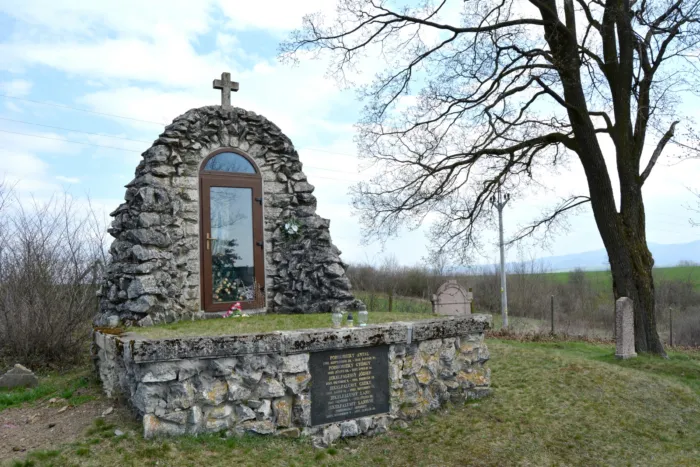
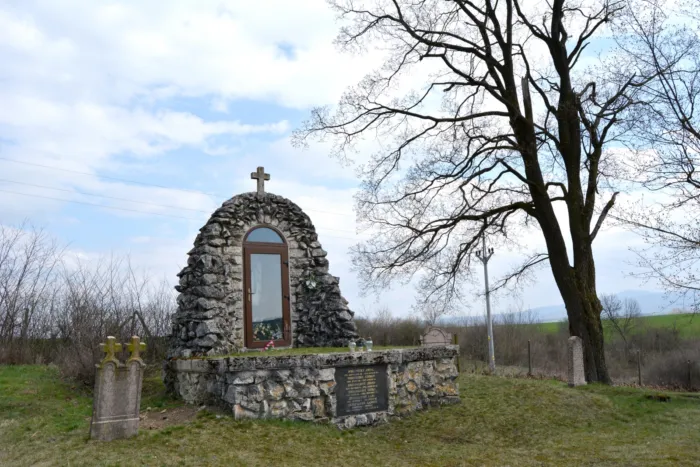
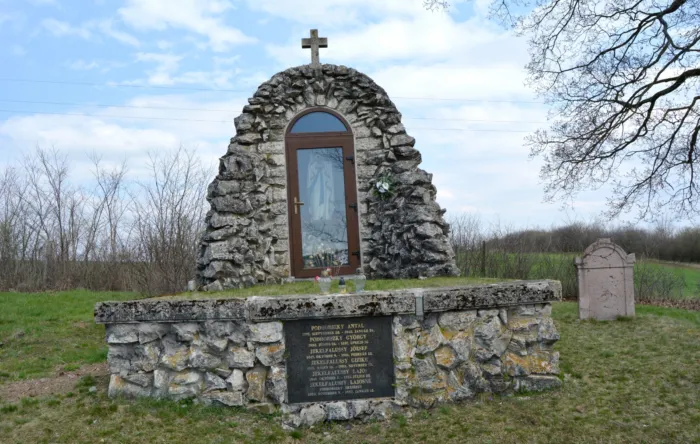
Tomb of József Jekelfalussy
Cemeteries, tombstones, graves
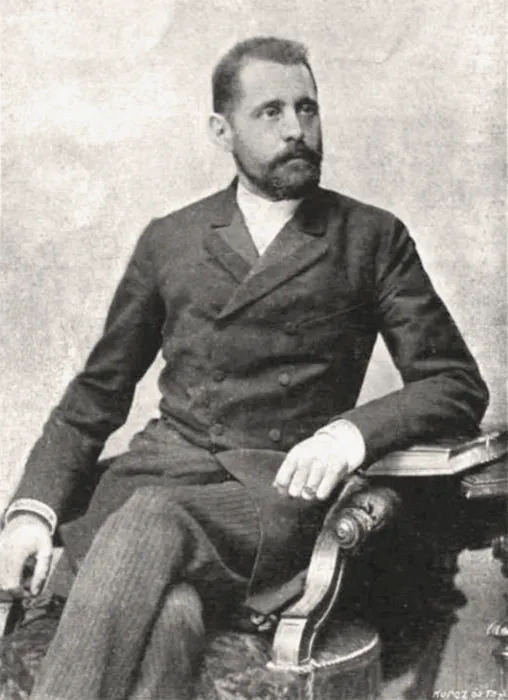
József Jekelfalussy of Jekelfalus and Margitfalvi (Rimaszombat, October 9, 1849 – Lontó, February 12, 1901) was a statistician, economist, corresponding member (1888) and then full member (1893) of the Hungarian Academy of Sciences. Between 1892 and 1901, he was the director of the National Royal Hungarian Statistical Office, modernized the methodology of statistical data collection and processing in many aspects, and laid the foundations of Hungarian social and economic statistics. ; In addition to his birthplace, he had close ties to several settlements in the Highlands. One of his ancestors, Ladislaus Kun, the Jakul comes, had already received as a donation in 1282 “the uninhabited wild forests extending from Gölnicbánya to Hernád and bordering the road leading from Spisség to Krompach, where he founded Jekelfalva, Szentmargitfalva and Koysfalva”. (Gy. Vargha, 1904. p. 282) His father had also inherited the Jekelfalva estate, and then became a landowner in Feled, Gömör County. ; From Feled, the Jekelfalussy family moved to Levoča, and József completed elementary school and the sixth grade of high school here. After his father “got a job” at the Ministry of Finance in Budapest, the child József was taken in by relatives in Prešov, where he completed the seventh grade of high school. He graduated from the Archbishop's High School in Nagyszombat, then continued his studies at the Faculty of Law of the University of Budapest. He also completed statistical courses at the university, and had such renowned teachers as Károly Keleti, János Hunfalvy and Leó Beöthy. ; In 1871, he joined the then-organized National Statistical Office, where he worked as an intern for a while. In 1878, he became a draftsman, and in 1883, he was given the title of secretary. The first director, Károly Keleti, “entrusted him with organizing more and more tasks, because he recognized Jekelfalussy's administrative talent and diligence early on.” (Körmendy G. – Papi B., 1989. 8. p.) ; His literary work began with the scientific processing of the 1880 census: in the Budapesti Szemle he examined the educational status of Hungary, the professions and occupations of citizens, and the main results of the finances of the municipalities in their broader context. Around this time, he also published a few independent volumes, such as Hazánk búnügyi statisztikája 1873–1880 /Budapest, 1883./, A községi pénzügy föbé verényei hazánakban (Budapest, 1883.), Magyarország háziipara az 1884. év kölen (Budapest, 1885.), Magyarország háparstatisztikája (Budapest, 1886.), Fogházaink áltatóbórób (Budapest, 1887.). He gained real fame with the work he wrote together with Lajos Láng and Károly Keleti, the book entitled Statisztikája Magyarország. He wrote the thirteen chapters of the first volume, in which he analyses the census data from the perspective of nationalities. (Budapest, 1884.) ; Between 1887 and 1896 he edited the Economic and Statistical Yearbook. With this he “provided a work that is rare even in foreign literature”. The studies published here encompass the entire field of statistics: they deal with “the elucidation and solution of population, cultural, moralistic, and economic questions and problems”. ; From 1889 he was also the editor of the National Economic Review. He “expanded its profile by discussing the most pressing economic problems of the day”, preserving an objective stance that transcends party considerations, which “is demanded by both the dignity of science and the well-understood public interest”. (Körmendi G. – Papi B., 1989. 9. p.) ; In 1892, after the death of Károly Keleti, he became the director of the National Statistical Office. He launched a new series of Statistical Bulletins and urged that statistics be brought into closer contact with practical life. He managed to achieve such results that the name of his office was “made prestigious and respected abroad”. At his instigation, the central office received a new ornate palace. ; His aim was that “instead of the well-or-badly edited data of state administrative institutions, the original raw material itself should be processed and edited in the Statistical Office”. (Körmendi S. – Papi B., 1989. 10. l.) ; He compiled the excellent volume entitled A Magyar Korona országainaik télynémtára (Toponymy of the Countries of the Kingdom of the Magyar Korona) based on the data of the 1890 census and published by the Statistical Office (Budapest, 1892.). Even Károly Keleti wrote the Preface, highlighting Jekelfalussy's merits and scholarly precision. ; In 1896, Jekelfalussy was the editor of the country-map entitled The Millenarian Hungarian State and People, which gave a comprehensive picture of the country's economic condition and cultural life. It was published in several languages. ; Jekelfalussy was a modernizer of Hungarian statistics and an internationally renowned practitioner. He reformed its methods: instead of registration, he introduced data sheet collection. He treated statistics not as a discipline and service in itself. By processing the huge data sets, he served the rise of the nation. He held the data up to the nation as a mirror, while teaching them to see behind them, discovering their practical use and the many possibilities for their validation. ; He came to Hont County through Jekelfalussy's wife, who was the daughter of Viceroy György Podhorszky. After the death of his “father-in-law”, the Lonto estate passed to Jekelfalussy’s wife. “The old noble mansion was converted into a modern mansion”, and the renowned scientist also ran a professional farm in Lonto in addition to his work in Budapest. As we read in Gyula Vargha’s writing: “He felt happiest in Lonto, surrounded by his loving and beloved family. He sat contentedly on the wide terrace of the ornate mansion, from which there was a majestic view of the gently undulating, hilly and valley-filled countryside…” (Gy. Vargha, 1904. p. 298). The scientist, who died young, was laid to rest in the family tomb of the Lonto cemetery on 15 February 1901. ; It seems that he was also rediscovered. On the 150th anniversary of his birth, the local government held celebrations in London, the final stop on his life's journey, on October 9, 1999. Dr. Dezső Dányi, retired director of the Statistical Office, remembered his great predecessor. A memorial exhibition was also held in the village, a memorial mass was celebrated in the church, and the renovated family tomb was rededicated.