
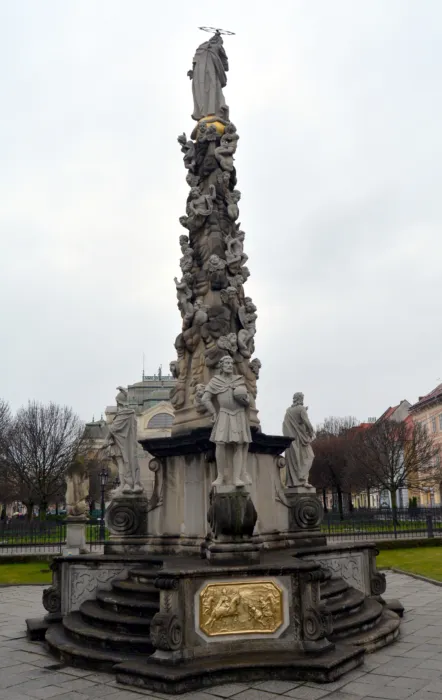
Immaculata Column and Sculpture Group
Sacral small monument
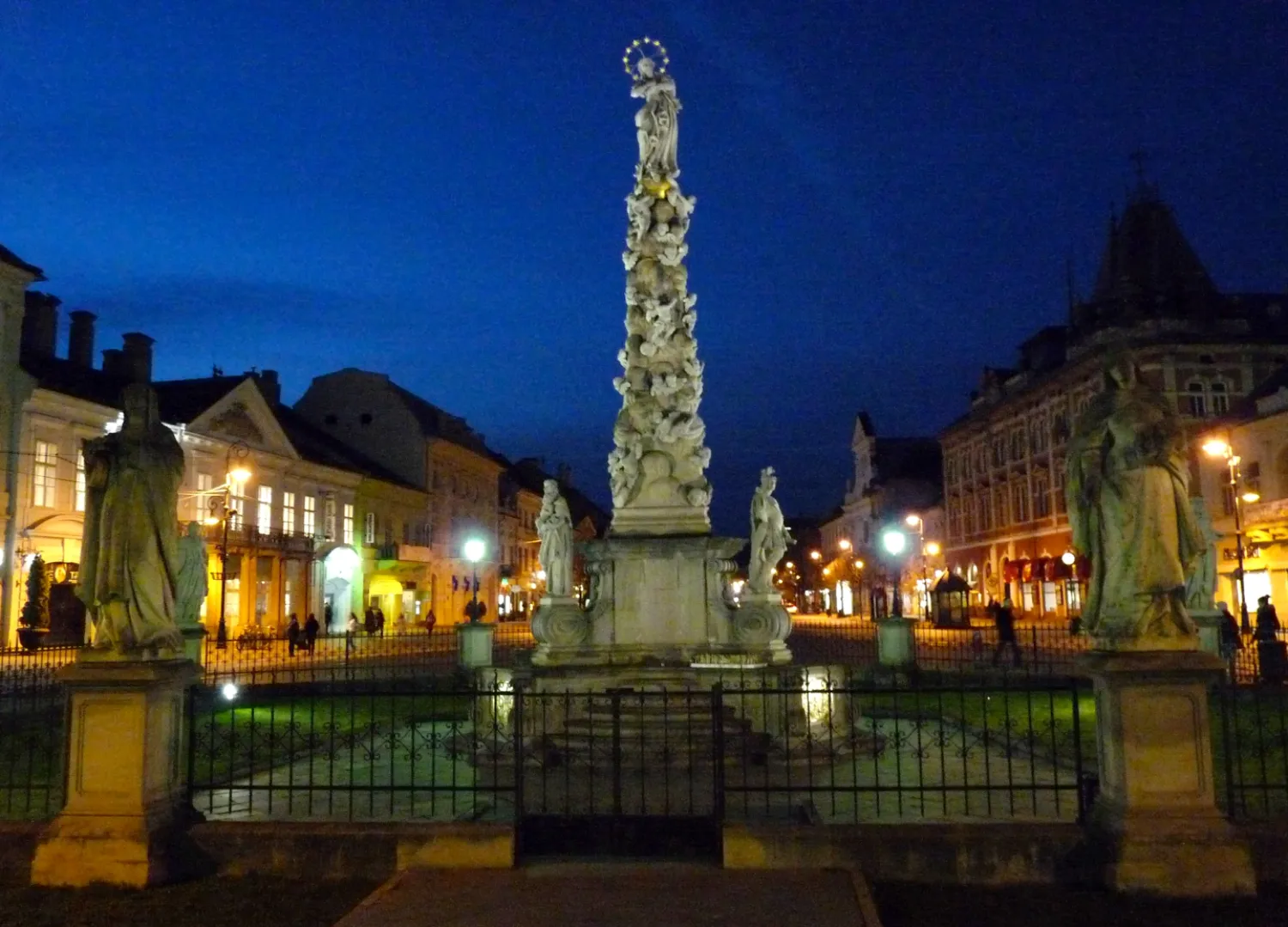
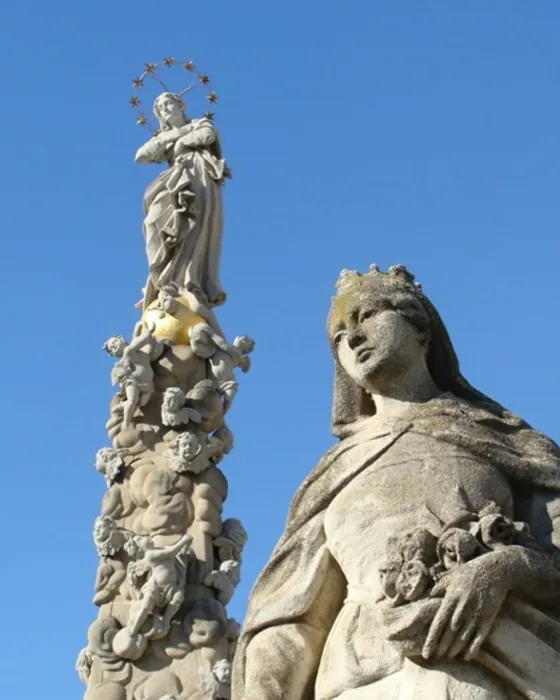
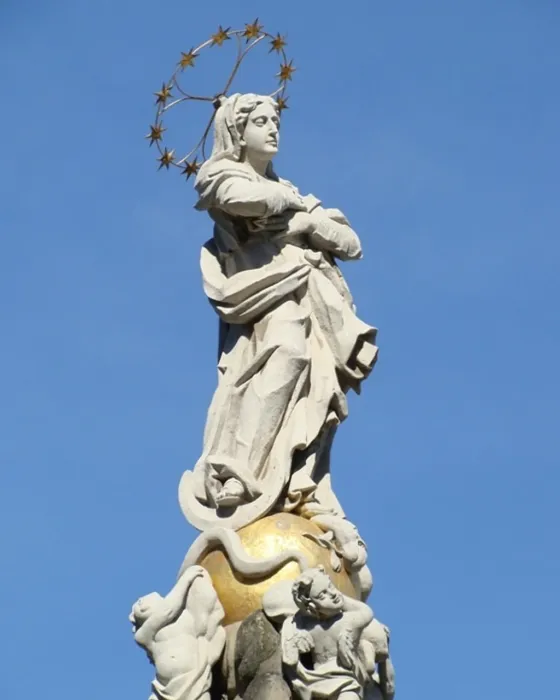
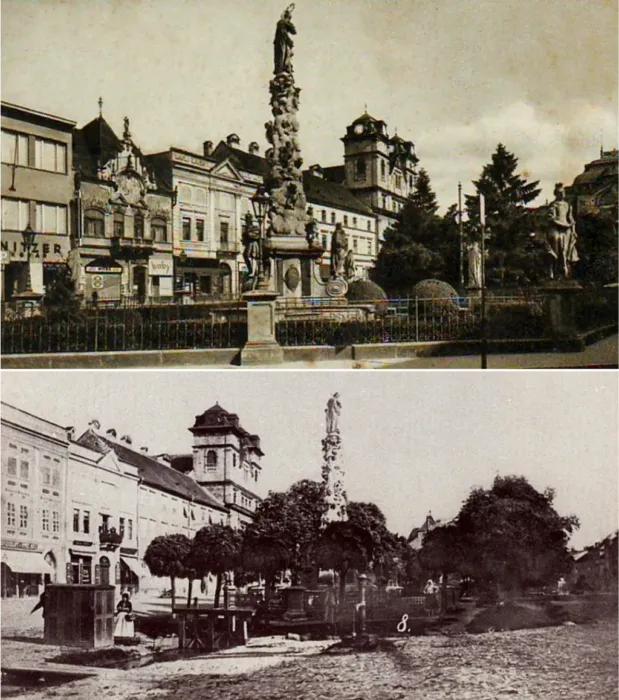
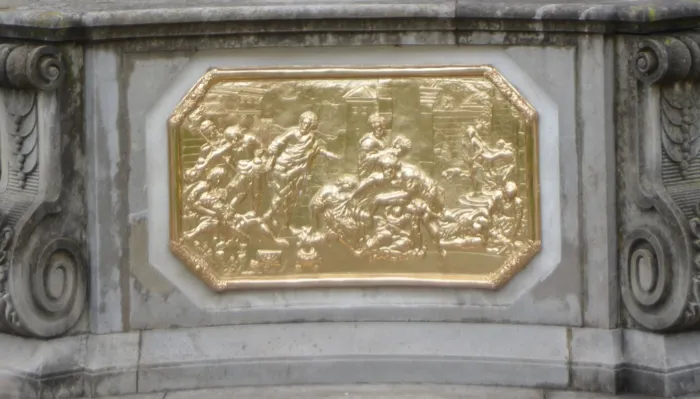
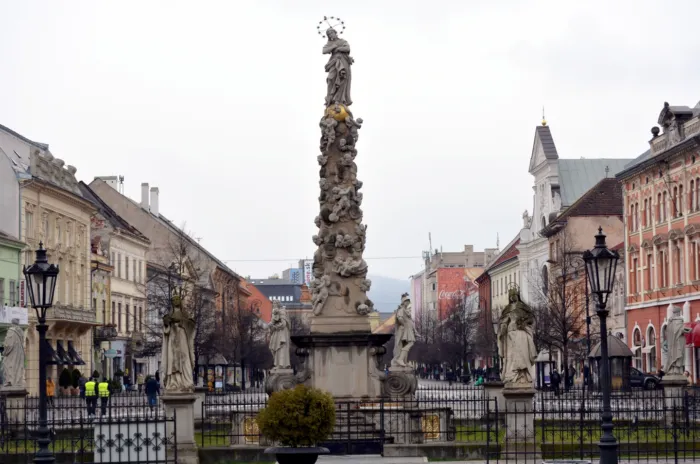
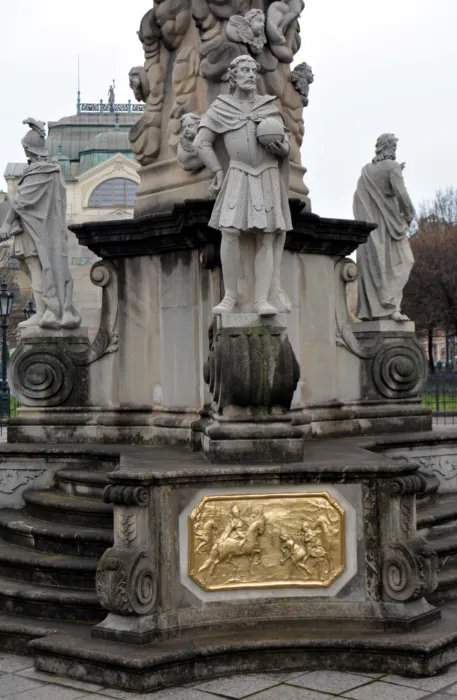
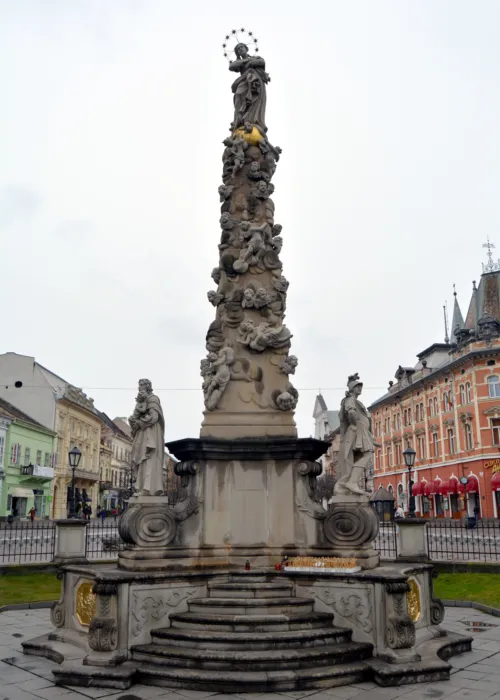
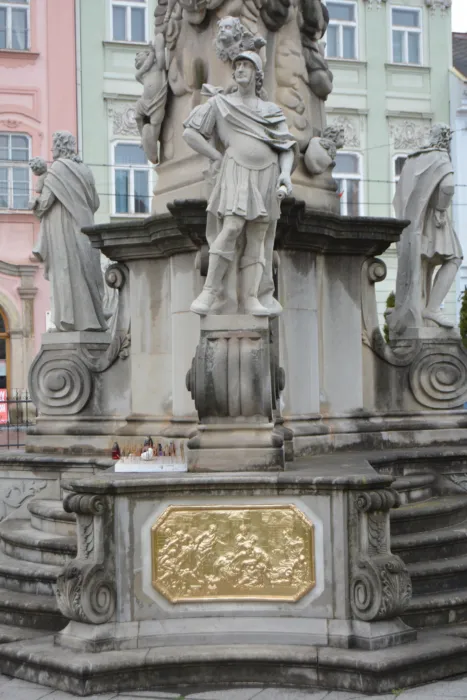
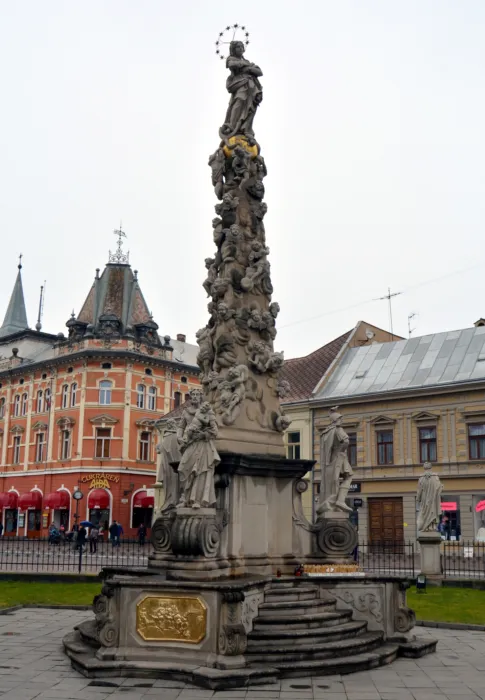
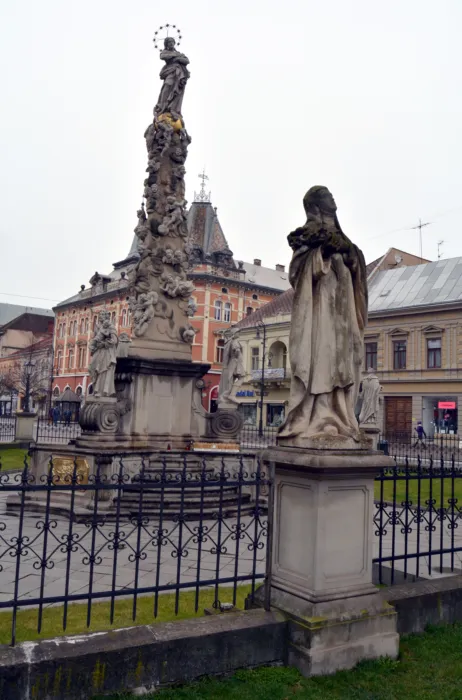
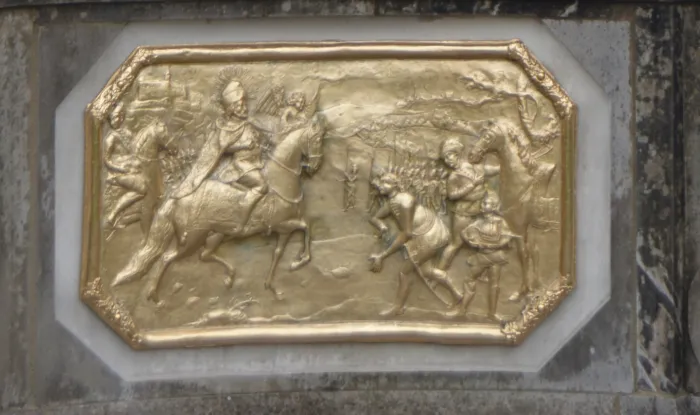
It is well known that the plague epidemic of 1709-10 devastated Hungary. As a result, votive plague columns were erected throughout the country. This was also the case in Košice. The terrible "guga-death" arrived in the city of five thousand inhabitants in the summer of 1709, despite all precautions and precautions. In the winter, the cold reduced the number of victims, but from the spring of the following year the epidemic gained new strength, so that a third of the city fell victim to it. Rákóczi's talented commander, Tamás Esze, also died as a result. ; In Košice, the survivors, as a sign of their gratitude for their escape, at the initiative and expense of postmaster Viktorín Flachenfeld, built their huge, Baroque-style Immaculate Virgin Column between 1720-23. Its builder was the guild master Tamás Tornyossy, the statues were made by Grimming Simon and the later ones by Hild Lipót, a stone carver from Sopron. ; The 14-meter-high plague column, placed on a stone pedestal, was inaugurated on October 3, 1723, in the middle of the northern part of Fő Street, on the site of the former military execution ground, where many hajdús and kurucs were impaled. The main figure of the monument is the Madonna standing on top of the obelisk - with a wreath of stars around her head, with the globe and the snake under her feet. The statues of Saint Joseph, Saint Sebastian and Saint Ladislaus can be seen on the corners of the stepped pedestal. On the pillars of the iron fence around the monument, we see the statues of Saint Elizabeth and Saint Barbara, and on the facade, the statues of Saint Michael the Archangel, Saint Margaret, Saint Elizabeth and Archangel Gábor, which were made by Hild Lipót in 1908. ; At the time of the unveiling, it was decorated with ten inscribed and three uninscribed plaques. The inscribed plaques disappeared over time, although they were still in place until 1954. The uninscribed gilded copper plaques were created by goldsmith Georg Immermohl. They were placed in the city archives in 1881 and later transferred to the museum. Today, they are still kept by the Museum of Eastern Slovakia. ; Between 1996 and 1998, the sculpture group was restored, which meant that an authentic copy was made of it. The original was put in storage. However, the metal parts of the sculptures were not returned and St. George's broken arm is also awaiting restoration. ; On May 7, 2015, as a result of the financial support of the General Credit Bank Foundation and the work of the academic sculptor Stanislav Kožela, three gilded copper plaques were re-inaugurated. The copies cost 19,000 euros to make. The foundation provided a grant of 16,620 euros, the rest was paid for by the city. ; The copies depict allegories of plague, war and famine. The plague is described by Publius Ovidius Naso in his Metamorphoses in connection with the city of Aegina. It was immortalized by the French painter Pierre Mignard (1612-1695). Its mirror image was used by the Dutch graphic artist Mathijs Pool (1696-1727). Immermohl applied this to the smallest detail. The emotional fight against the plague is shown in the groups of people dressed in antique clothing. People infected by the plague fall on the paving stones of the square, bearded doctors gesticulate above them, wanting to help them. In the background, an already dead patient collapses. People helping each other symbolize mercy and solidarity. ; The allegory of war probably refers to the oldest event in Hungarian history. In the background, among the hills, we can see Moson Castle, where a decisive battle for the Hungarian crown took place. The city opposite it is obviously Győr, under which a military camp can be seen. In the middle, groups of soldiers confront each other, with battle spears in their hands. In the foreground, on the left, a horseman with a halo sitting on a horse is obviously Saint Ladislaus. He is accompanied by a winged angel. The ruler receives the homage of the defeated King Solomon. Behind him stands another figure, who holds the crown of Saint Stephen on a cushion and offers it to the victor. ; The allegory of the famine depicts an Old Testament story. Pharaoh gives Joseph great power and stores grain during the seven years of plenty. This is followed by the seven years of famine, the famine, when he opens the storehouses and saves the Egyptians. In the depiction we see the interior of a palace, on the left are sacks filled with grain. Slightly to the right is a group of people, from which the figure of Joseph stands out. He calmly accepts the homage of the kneeling figures and sells them the grain. On the far right, a figure leaves with the money.