
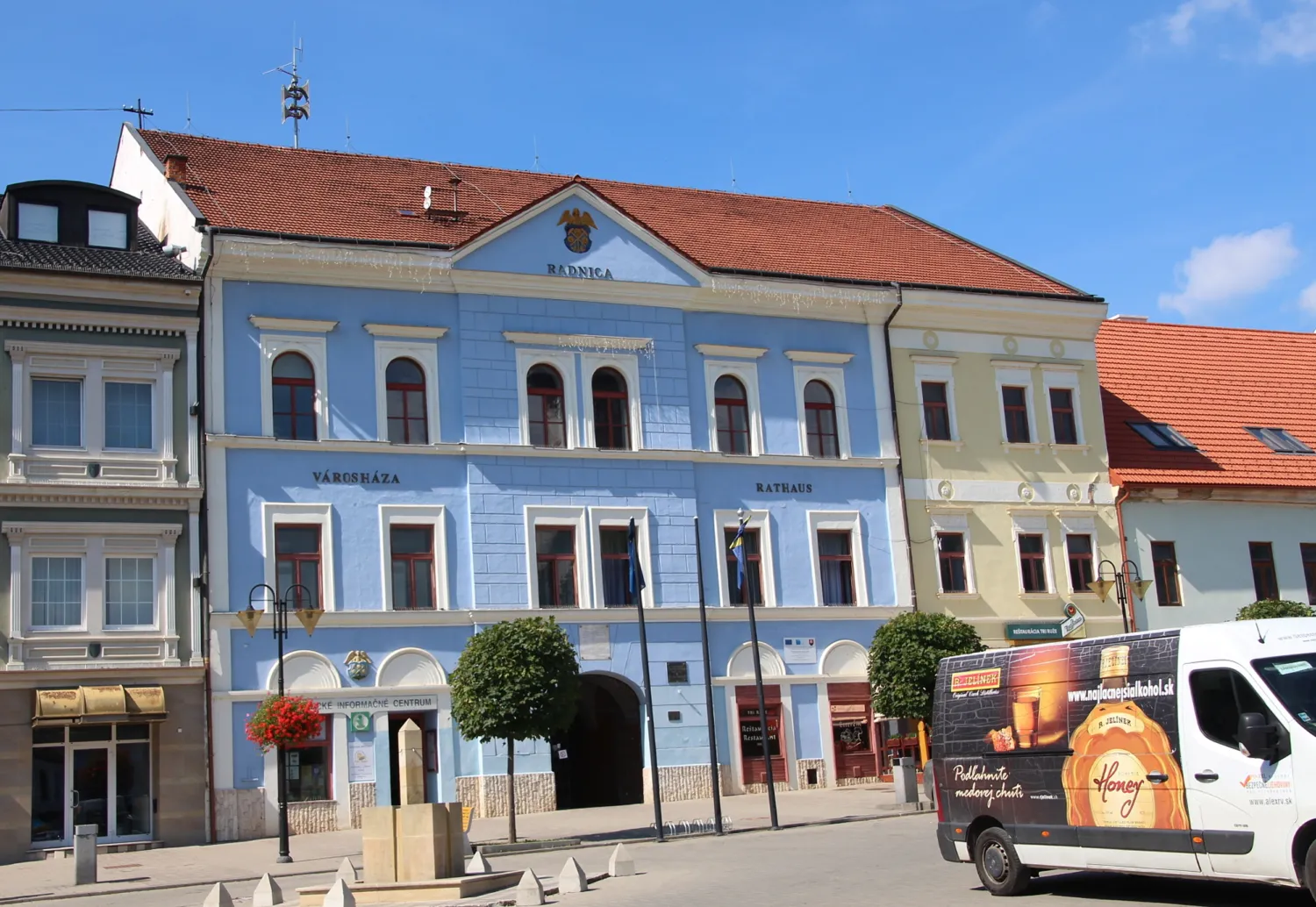
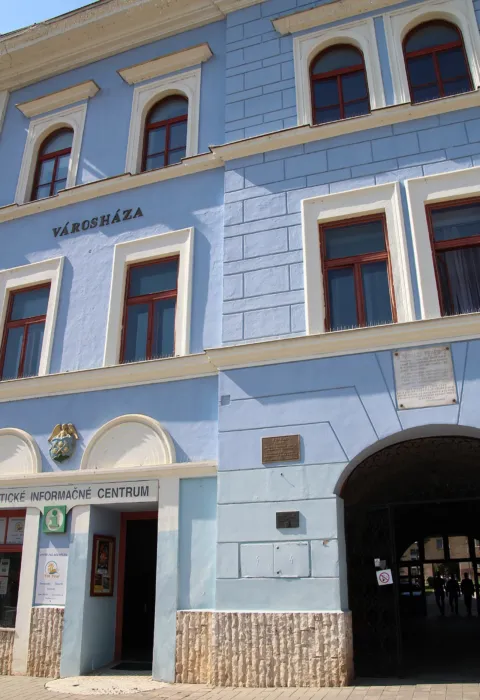
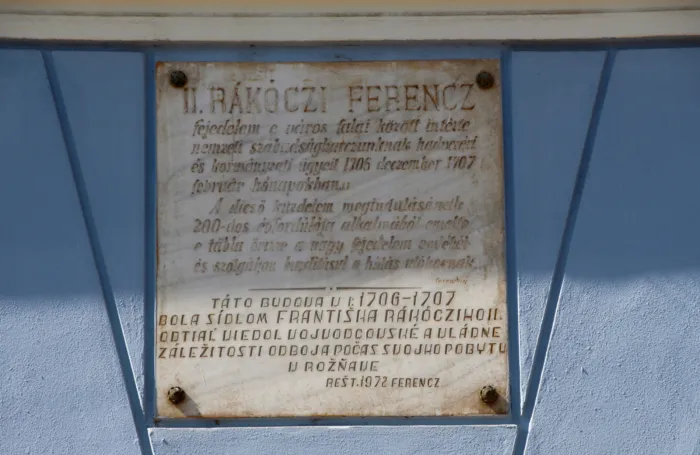
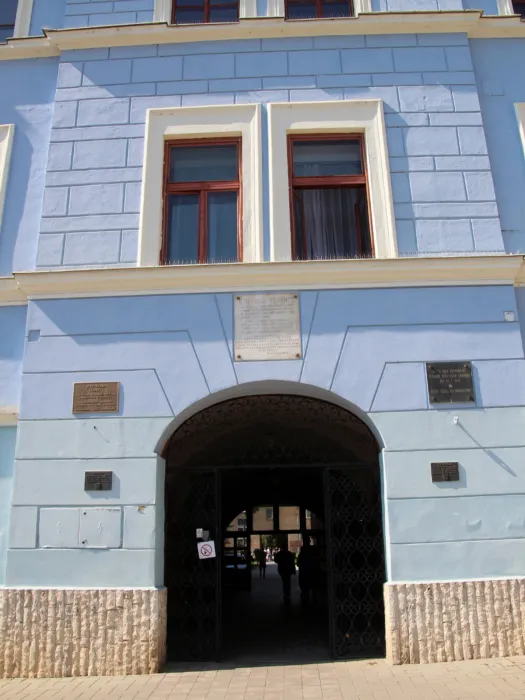
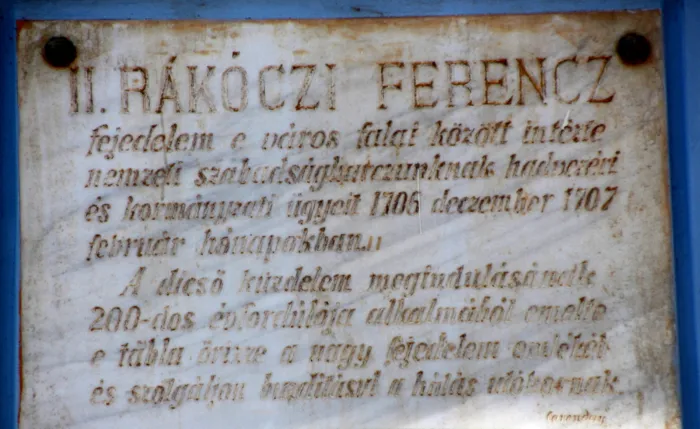
Memorial plaque of Ferenc Rákóczi II in Rozsnyó
Statue, monument, memorial plaque
In the war of independence of Ferenc Rákóczi II, the citizens of Rozsnyó also lined up under the prince's banner. On July 20, 1703, the city council decided to collect aid money for "the standing armies of our current dignified prince, our lord Ferenc Rákóczi of Upper Vadasz". This, together with the rich gifts of the city, was presented by Márton Mészáros and Mihály Süveges on December 22 in the Tokaj camp. On November 26, 1706, the brightest day in the history of Rozsnyó dawned: Rákóczi arrived in the city. He came with a splendid court to administer the affairs of the uprising and conduct negotiations with foreign envoys. He chose Rozsnyor because this city was the most suitable geographical location to be the center of military operations under the protection of Krasznahorka Castle. ; Rákóczi set up his quarters in the present-day Nehrer-style house, along with his minting workshop. From there he wrote his letters to Bercsényi, Sándor Károlyi, Pál Orosz and Jakab Kray, the chief judge of Keszmárk. From there he sent his envoys to King Charles XII of Sweden and King Szaniszló of Poland. He had great difficulty in concluding peace. The poverty of the cities recently liberated from Turkish rule also contributed to his inability to achieve a decisive victory on the battlefields. He therefore decided to convene the governing council in Rozsnyor on December 13. The purpose of the meeting was to discuss the formal treaty to be concluded with Louis XIV and its essential condition, the separation from the House of Habsburg. Only 7 of the 24 council members showed up. The others did not come "due to the difficulty of the journey, but especially because the convocations were either taken for granted or not taken at all." Thus, the important meeting could not be held and Rákóczi left for Košice on December 23 and from there to his beloved family. However, in January of the following year, the city would again be the scene of an important meeting. The prince arrived on the 16th, but he only found the 7 council members who had been here since December in the city. Due to the bad roads, Bercsényi and five other council members did not arrive until the 21st. The most important meeting took place the next day, at which the Habsburg house was stripped of the throne and it was declared that Hungary, declared independent after the complete break, would start its struggle for freedom with renewed force on the side of its French allies. The question arose as to how the dethronement should take place. Just as the alliance of the estates had to be declared, so too should this be declared in the framework of a national assembly, was the answer. The council of governors designated Rozsnyó as the venue for the national assembly, and the date was February 24, 1707. Later, however, they realized that the time available for preparing the assembly was short, so it was postponed to May 1. Considering that by then they could expect more participants, the plain near Ónod was determined as the venue. The council of governors met in Rozsnyó until February 5, and it was from here that Rákóczi issued his open letter to the nation on February 3, in which he explained the legitimacy of the war of independence and called on his compatriots who had not yet joined it to hurry under the banner of freedom. ; The two months that the prince spent in the city brought about a great change in the life of the bourgeoisie. His presence calmed down the ethnic and religious conflicts for a long time. This was the final end to the rivalry that had existed between the mainly industrial Hungarians and the German mining bourgeoisie since the second half of the 17th century. Around 1650, the Hungarian part of the population began to confront the Saxon miners who had settled and gained power in the meantime. Emotionally, the latter also declared themselves Hungarians, but they insisted on their folk customs and language, which resembled the regional dialect of Dobsina. However, the Hungarians wanted them to shed their distinctive national characteristics. The rivalry, which may have begun around 1630, was condemned and strictly prohibited by Péter Pázmány in a letter from Sellye dated June 20, 1635. In 1655, the Germans indignantly noted that since time immemorial, the Germans had had priority in Rozsnyó and that the Hungarians now wanted to be equal to them. In 1669, on page 615 of the Schrőtér-style protocol kept in the archives of the Gömör branch of the diocese in Csettnek, the notary of the diocese wrote these characteristic Latin rhymes about the national struggle in the margin of the page: ; Hungaricanatio ; Semper ernt odio ; Apud Roseavienses ; Teutones esne volentes ; Primiim desiderantes ; Locum et obtinentes. ; At facta inversio ; Atque permutatio ; Deus nos miseros ; Elevavit hungaros. ; The Hungarians won. ... The national division also felt its effect within the bosom of the Lutheran church. In 1709, unity was finally established between the Hungarian and German churches and nationalities. According to this, the two churches remained separate, but everyone could choose which one they wanted to join, so the partitions fell down for good, and around 1750 it would have been difficult to determine which citizen came from a Hungarian and which from a German family. The transforming power of the Hungarian race turned Rozsny, which was largely German-speaking around 1630, into a Hungarian city. ; The prince and the lords' stay in Rozsny certainly boosted the turnover of industry and trade, although we have only scattered data on this. A short letter from Rákóczi has survived, in which he instructs a certain György Körösi to "send us your panther skins in Rozsny, which have already been prepared". This letter was written by Munkács before the ceremonial inauguration into the Principality of Transylvania. At that time, the prince was resplendent in a cassock made by the furriers of Rozsny. There is also little information about how the city's officials and citizens behaved towards the great prince. The reason for this is probably that the events of the notable days were recorded in a separate protocol, which has been lost. Thus, only the ancient stones of the Rákóczi house announce the notable days of Rozsnyó to the remembering posterity. ... ; In 1906, the city placed a memorial plaque on the wall of the city hall with the following text: "Prince Ferencz Rákóczi II. conducted the military and governmental affairs of our said war of independence within the walls of this city in the months of December 1706 and February 1707. This plaque was erected on the occasion of the 200th anniversary of the start of the glorious struggle, to preserve the memory of the great prince and to serve as an encouragement to grateful posterity."