
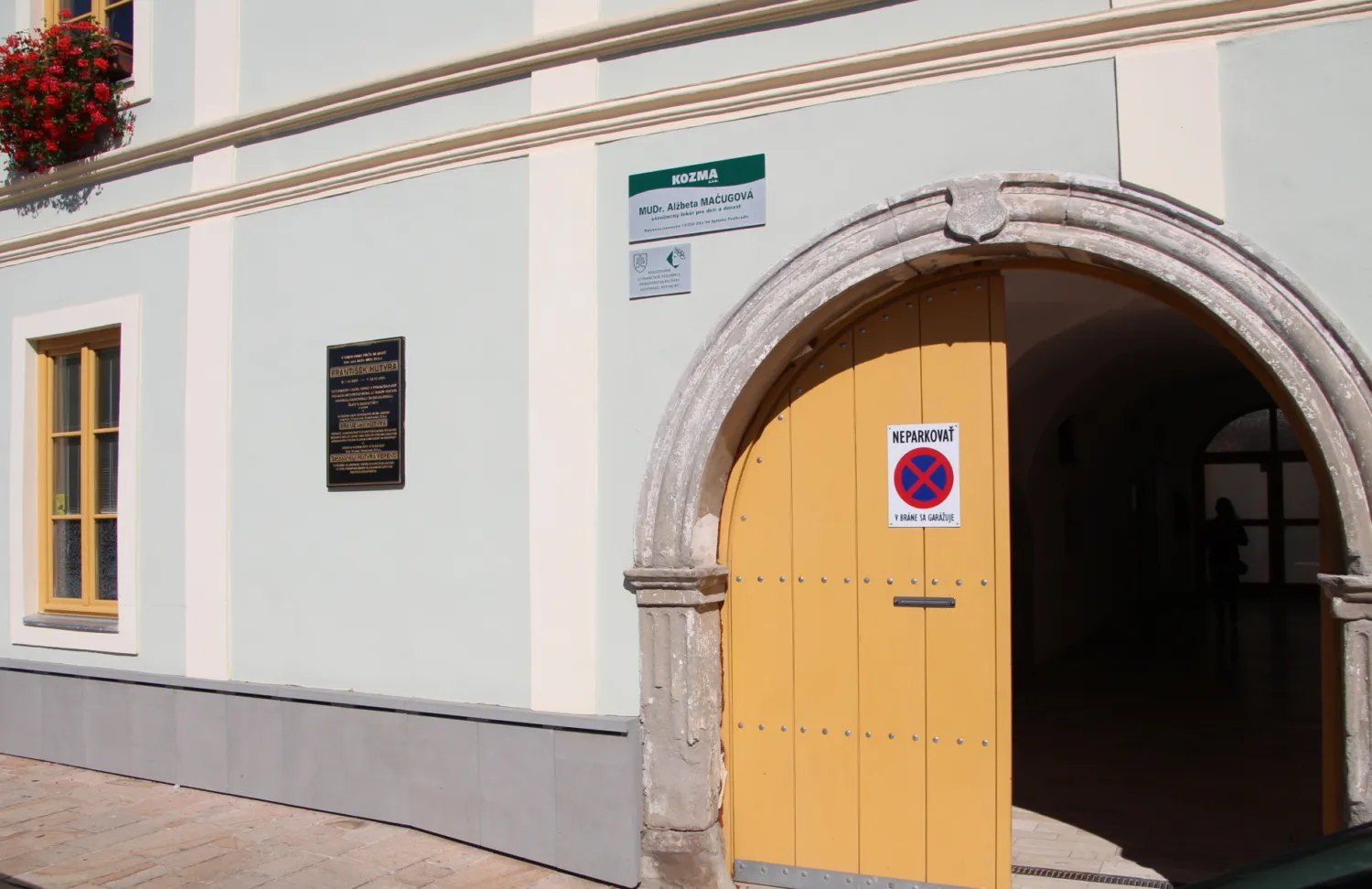
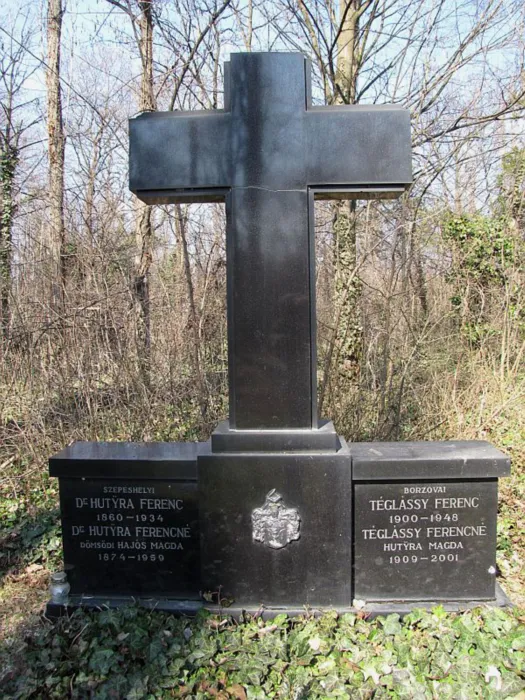
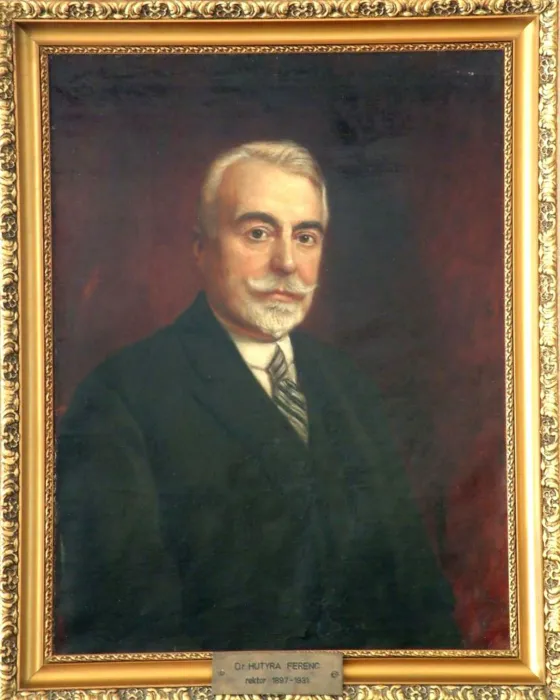
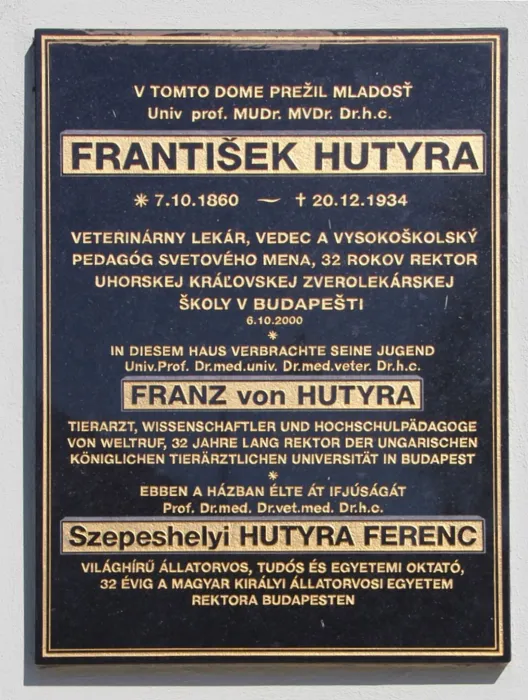
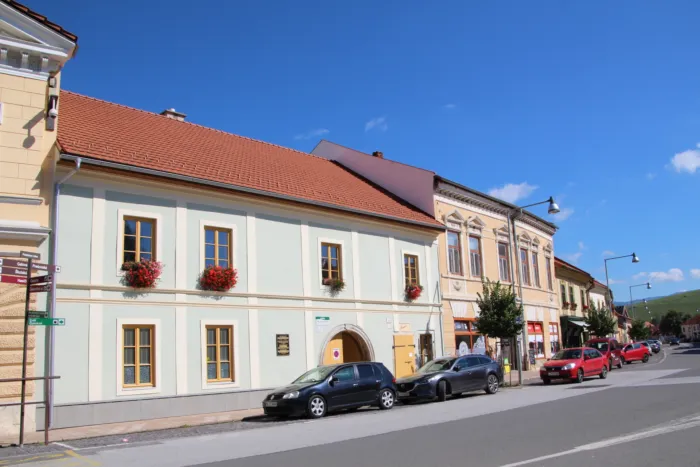
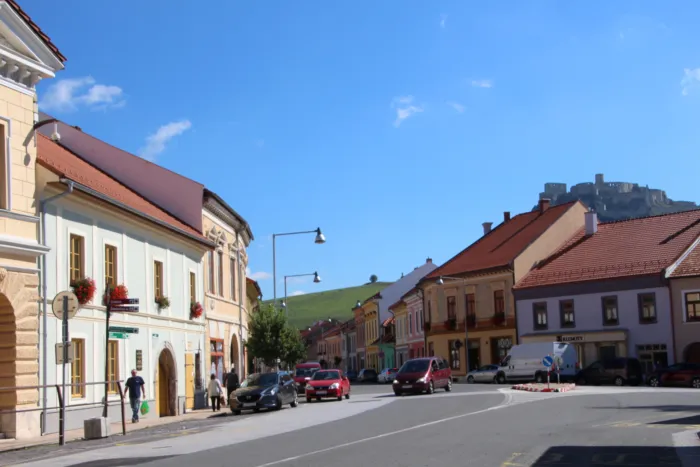
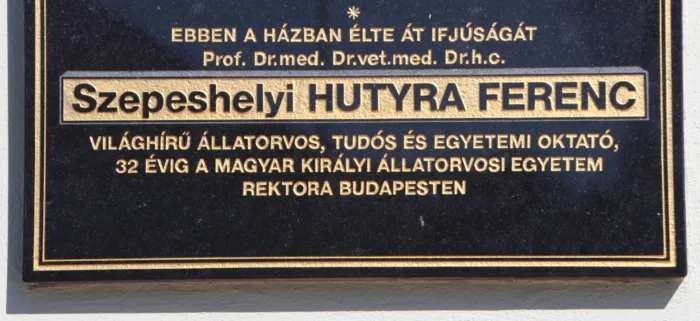
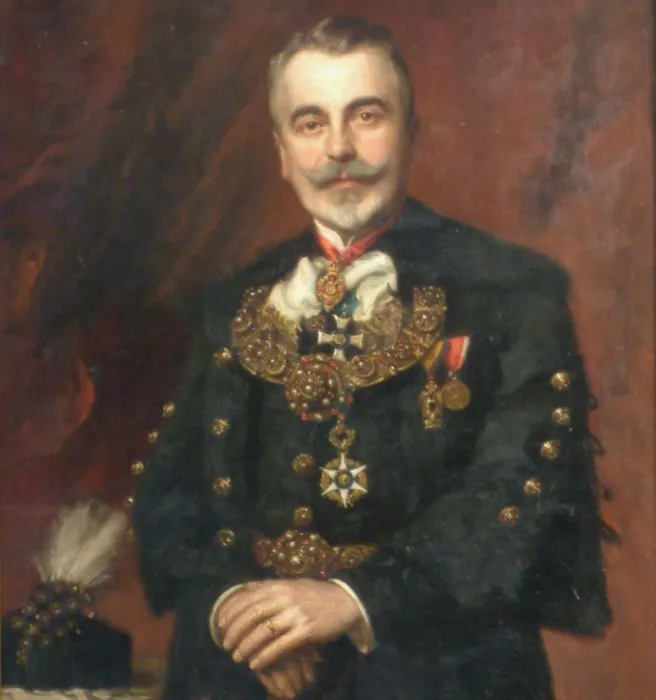
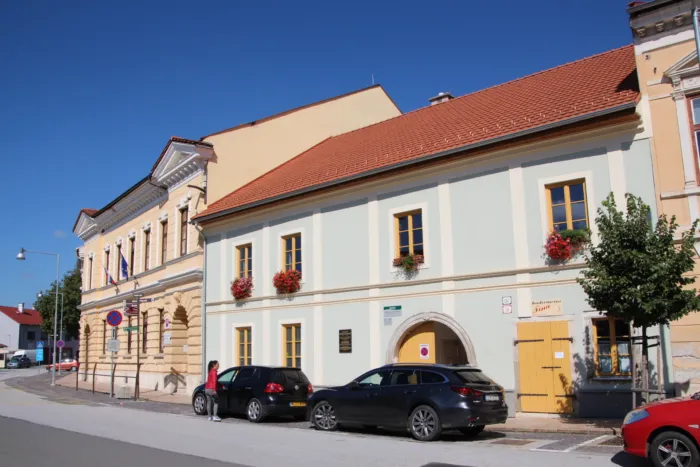
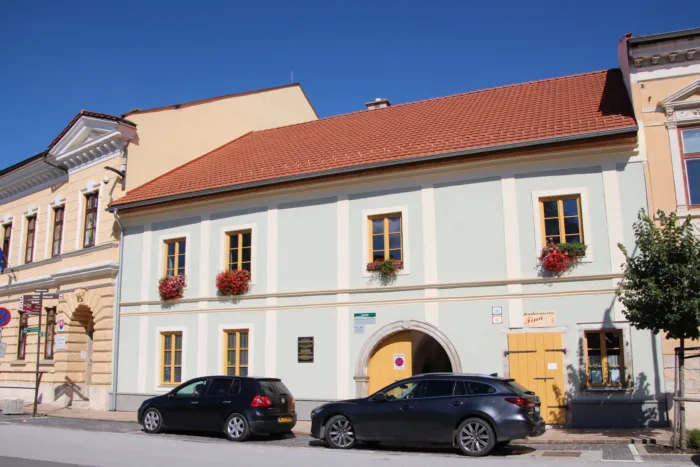
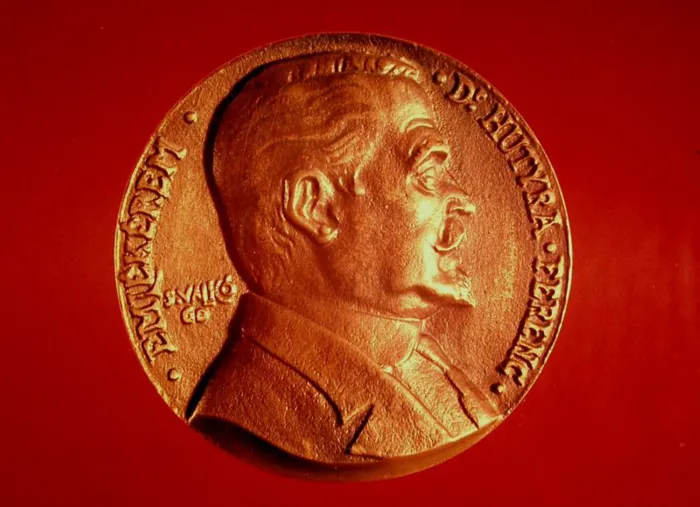
Ferenc Hutÿra's memorial plaque
Statue, monument, memorial plaque
On October 6, 2000, a symposium was held in Szepesváralján on the 140th anniversary of the birth of Professor Hutÿra, with the participation of numerous veterinarians from eastern Slovakia. The Hungarian text of the trilingual (Slovak, German and Hungarian) commemorative plaque placed on the wall of the birth house: HE SPENT HIS YOUTH IN THIS HOUSE / Prof. Dr. med., Dr. vet. med., Dr. h. c.) FERENC HUTYRA SZEPESHELYI / WORLD-FAMOUS VETERINARY DOCTOR, SCIENTIST AND UNIVERSITY TEACHER / RECTOR OF THE ROYAL HUNGARIAN VETERINARY UNIVERSITY FOR 32 YEARS / IN BUDAPEST. ; At the symposium, dr. J. Jantošovič, associate professor of the University of Veterinary Medicine in Košice, presented the life and work of Professor Hutÿra. The commemorative plaque was presented by prof. Dr. R. Cabadaj, Rector of the University of Veterinary Medicine in Košice and Dr. D. Magic dr. h. c., Director of the Central State Veterinary Authority. (MMJ) ; ; Szepeshelyi Hutÿra Ferenc (pronounced: hutira), Hutyra Ferenc is a Hungarian veterinarian, physician, pathologist, and member of the Hungarian Academy of Sciences. He is a prominent and globally recognized figure in Hungarian veterinary science, and his work in the fields of veterinary pathology, epidemiology, internal medicine, immunology, serology and virology, as well as forensic veterinary medicine, is equally outstanding. He is credited with establishing a modern human medical approach and way of thinking in veterinary science. He was the organizer of the Hungarian Royal Veterinary College in Budapest and its rector for three decades. ; Ferenc Hutÿra was born in Szepeshely-Zsibra on October 7, 1860, the son of András Hutÿra and Zsuzsanna Kossik. He completed his elementary school education in Igló and Késmárk, then attended high school in Znióváraljá, Eger and Lőcse. After graduating from high school, he applied to the medical faculty of the University of Budapest in 1878, where he obtained his medical doctorate in 1883. Already as a medical student, he gathered knowledge and experience as an intern at the university's pathology institute. ; In 1886, a position became vacant in the pathology department of the Hungarian Royal Veterinary Institute, which he was offered and he took the opportunity. He thought the task was only temporary, hoping that he would be able to use the experience he gained here in his medical career in some way later. However, fate had other plans, Hutÿra liked this job, so he went on a study trip to Vienna and then to Saxony, where he had the opportunity to work with many excellent teachers. ; After returning home, he also obtained his veterinary diploma in 1887. He became the head of the veterinary pathology department, and after a short time he also took on the teaching of forensic veterinary medicine and the practical subject called meat examination. He wrote the first Hungarian pathology textbook, while also becoming the head of the internal medicine clinic and gradually becoming interested in epidemiology. He also published a small book entitled The Octet of Infectious Diseases of Domestic Animals. For years, he worked in a dual capacity: he dealt with human diseases and epidemics affecting animals at the same time. ; He considered it his task to solve not only theoretical but also practical problems. In the early 1900s, swine fever also appeared in Hungary, and he identified its pathogen: contrary to popular belief, he considered it not a bacterial disease, but a viral infection, and in order to prevent it, he established the epidemiological laboratory in Kőbánya in 1907, where serum against swine fever was produced. In 1912, the Phylaxia Szérumtermelő Rt. was established from this modest laboratory; in addition to writing numerous textbooks, Ferenc Hutÿra also drafted bills that regulated animal health. He also felt it was important to raise the standard of professional training, which is why he initiated the establishment of the Hungarian Royal Veterinary Academy, where the four-year veterinary training finally started in September 1890. This was necessary because Hungarian animal husbandry was becoming increasingly important in the country's economy, and experts guaranteed that animals intended for export were healthy and their meat met strict quality criteria. His three-volume textbook Veterinary Internal Medicine was translated into German, then into English, Spanish, Russian and Italian and published several times. Even in the 1960s, its revised version was considered worthy of being translated into Serbian, Polish and Chinese. Ferenc Hutÿra also organized further training courses for veterinarians. ; In recognition of his scientific achievements, the Hungarian Academy of Sciences elected him a corresponding member on April 28, 1910, a full member on May 8, 1921, and an honorary member on May 11, 1934, and in 1932 he became the vice-president of the IV. (Medicine) Department. He was also a full (1918) and honorary (1928) member, and from 1933 he was vice-president of the Academy of St. Stephen. In 1902 he was elected a corresponding member of the Royal Belgian Academy of Medicine (Académie royale de médecine de Belgique), in 1904 the Academy of Agriculture of Turin (Accademia di Agricoltura di Torino), in 1929 the French Academy of Veterinary Medicine (Académie vétérinaire de France), in 1933 the French Biological Society (Société biologique de France) and the Finnish Veterinary Association (Suomen Eläinlääkäriliitto). The Swedish Veterinary Association (Sveriges Veterinärförbund) invited him to its honorary membership in 1906, and the Royal College of Veterinary Surgeons of London (Royal College of Veterinary Surgeons) in 1914. From 1900 until his death, he was vice-president of the National Veterinary Council, and from 1920 of the Royal Medical Society of Budapest and the Hungarian Natural History Society. From 1921, he was a founding member and chairman of the board of directors of the International Office of Epidemiology (Office international des épizooties) based in Paris. He was elected honorary doctor by several higher education institutions: in 1909, he was an honorary doctor of the Vienna College of Veterinary Medicine, in 1911, of the Berlin College of Veterinary Medicine, and in 1922, he became an honorary public full professor of the Elisabeth University of Pécs. ; in 1898, he received the 3rd class decoration of the Order of the Iron Crown, in 1890, the Knight's Cross of the Franz Joseph Order, and in 1908, its middle cross, for his efforts in veterinary medicine. For his scientific work, he was awarded the János Balassa Memorial Medal in 1915 and the Corvin Wreath in 1930, and for his life's work, he received the Grand Cross of the Hungarian Cross of Merit in 1929 and the Star of the Hungarian Cross of Merit in 1933. In addition to the above, he received numerous state awards - German, Romanian, Danish, French, etc. ; He died in Budapest on December 20, 1934, at the age of 74. He was laid to rest in the Kerepesi Cemetery. ; In honor of his pioneering and extensive work and life's work, the Hungarian Agricultural Sciences Association Veterinary Society established the Ferenc Hutÿra Memorial Medal in 1961. A bust of Hutÿra, erected in 1937 and created by Gyula Maugsch, stands in the park of the University of Veterinary Medicine in the capital. A street was named after him near the University of Veterinary Medicine, in Erzsébetváros. ; ; His main works: ; ; On the seepage of fats, notably under the influence of bile, Budapest, 1881. ; Octave of infectious diseases of domestic animals, Budapest, 1888. ; Pathological diagnostics, with instructions for the dissection of domestic animals, Budapest, 1889. ; Instructions for conducting a cattle and slaughterhouse inspection: For slaughterhouse commissioners, Budapest, 1889. ; Experiments with tuberculin on cattle, Budapest, 1891. ; Vaccination against anthrax and pig pox, Budapest, 1893. ; Animal insurance, Budapest, 1893. ; Veterinary internal medicine, vols. I–III., Budapest, 1894–1898. ; Warranty in the animal trade, with regard to domestic legal practice, Budapest, 1895. ; Instructions for the protection against foot-and-mouth disease and the treatment of this disease, Budapest, 1897. ; Draft regulation on the eradication of tuberculosis and the protection against it, Budapest, 1898. ; Meat steamers and disinfectors, Budapest, 1900. ; Animal warranty, Budapest, 1902. ; Animal warranty in the draft of the Hungarian Civil Code, Budapest, 1903. ; Veterinary internal medicine, Budapest, 1904. (with József Marek). ; Spezielle Pathologie und Therapie der Haustiere, vol. I–II., Jena, 1905–1906. (with József Marek). ; Forensic veterinary medicine, Budapest, 1908. ; Experimental basis for immunization against swine fever, Budapest, 1912. ; Tuberculosis of man and animals, Budapest, 1913. ; Oriental cattle plague, Budapest, 1915. ; Die orientalische Rinderpest, Jena, 1916 (with József Marek). ; The role of animal tuberculosis in the spread of tuberculosis in man, with special regard to children, Budapest, 1917. ; Infectious diseases of domestic animals, Budapest, 1920. ; Veterinary internal medicine, Budapest, 1923. ; Information about animal trade guarantees, Budapest, 1923. ; Veterinary internal medicine, Budapest, 1924 (with József Marek). ; The past and future of the Veterinary College, Budapest, 1925.