
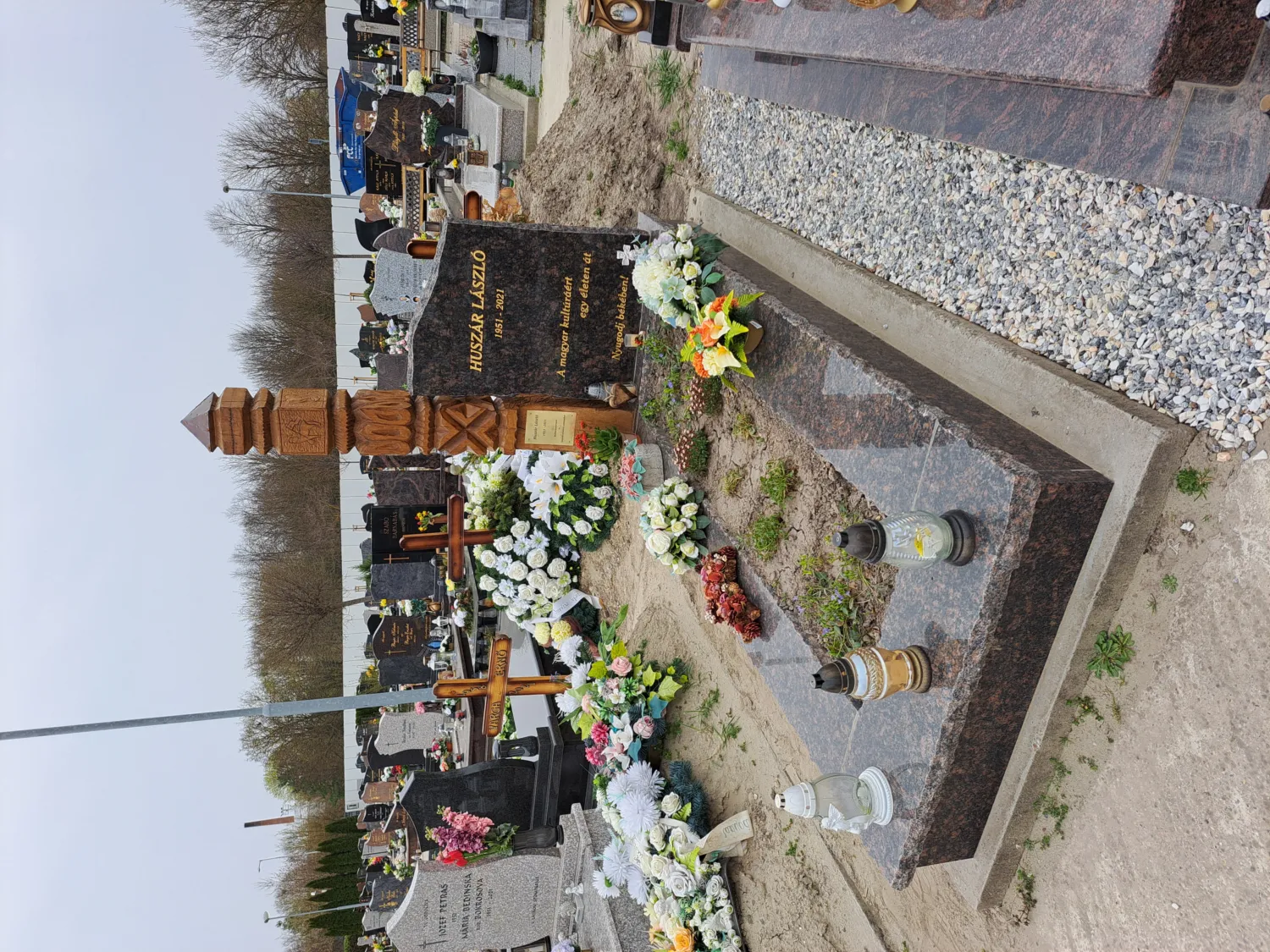
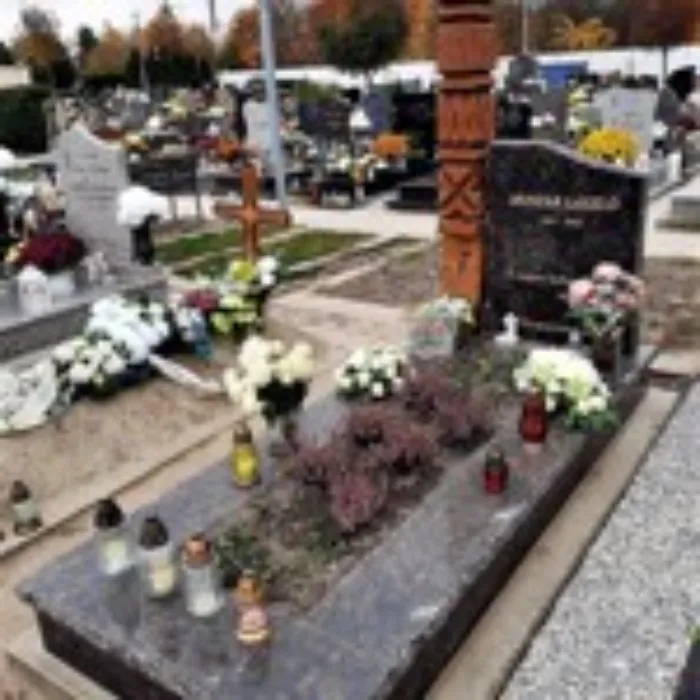
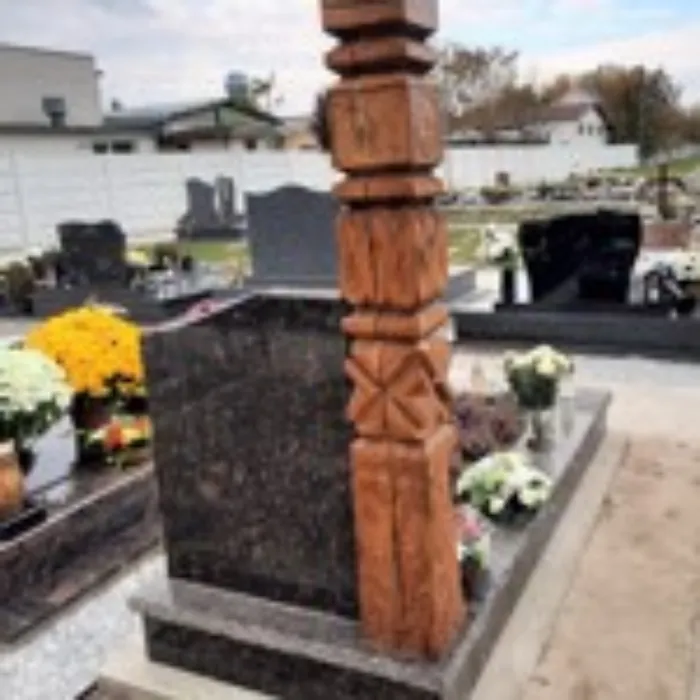
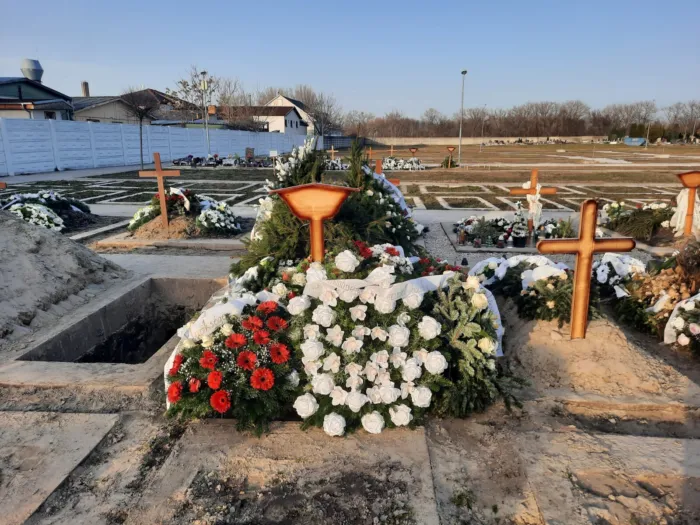
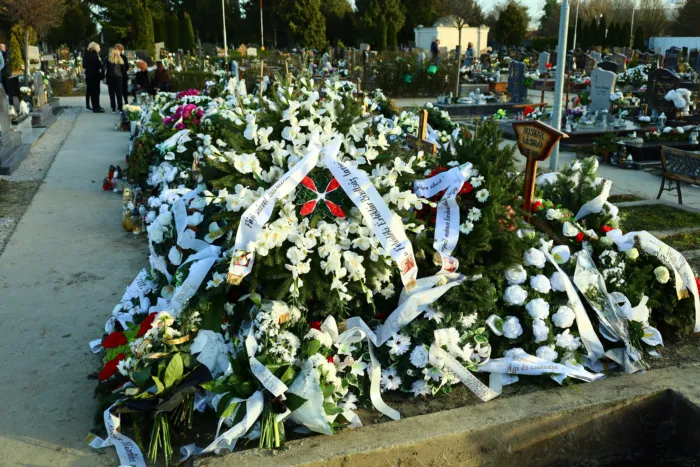
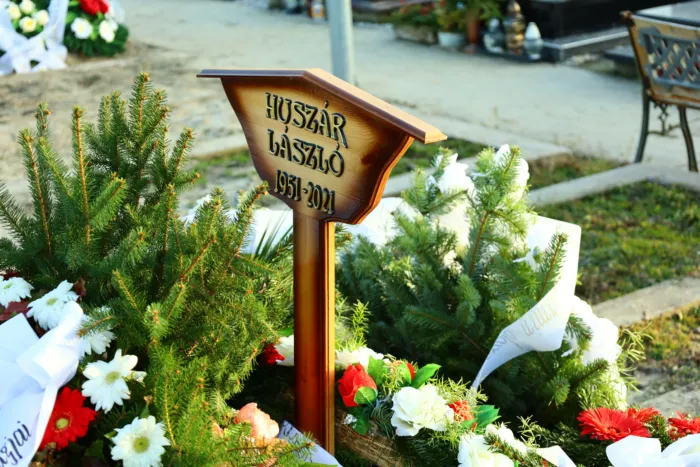
The tomb of László Huszár
Cemeteries, tombstones, grave sites
László Huszár (Réte, October 31, 1951 – February 8, 2021) is a Slovak ; Hungarian cultural organizer, one of the most prominent figures of Hungarian cultural organization in the Highlands.
Life:
He graduated from the Hungarian Language High School in Szent in 1970, in 1989 ; as a teacher at the Faculty of Humanities of Comenius University, ; then in 2008 as a cultural mediator at the Faculty of Pedagogy and ; Psychology of ELTE, Budapest. He once played bass guitar in the beat band Bolygó Hollandik,
László Huszár worked in the Csemadok staff from 1977: between 1977-1979 ; in the organizational department of the Csemadok Central Committee ; instructor, while from November 1979 to the summer of 1986 he was the organizer of the Dunaszerdahely Regional Committee of the Csemads. Between 1986 and 1989 he became the head of the art department of the Dunaszerdahely City Cultural Center, and from 1989 he again worked for the Csemads, where he served as the secretary of the regional committee between 1991 and 2007.
; Between 2003 and 2004, László Huszár initiated the establishment of the Csemads Cultural Institute, of which he was the director from 2007 to 2012. The Slovak Hungarian Cultural Institute was established on 1 January 2013; He managed it from its establishment until his death.
His work:
; In the 1990s, László Huszár initiated the idea that in order to strengthen professionalism, the available financial resources should be coordinated and a circle of professionals should be formed who would, on the one hand, help prepare amateur ensembles and groups, and, on the other hand, conduct ethnographic collection work and local history research within the gradually developing institutional framework, and contribute to the establishment of a Hungarian folk art and folk music archive in the Upper Hungary.
He gradually established the Csemadok Cultural Institute, for which he created not only the financial conditions but also the legal foundations within Csemadok. The Hungarians from the ; Mura region (Slovenia) provided the example for the development of the structural form of the institution, who in Lendva ; The Cultural Institute had already been established earlier, and its colleagues ; also contacted the representatives of the Csemads.
Many people were skeptical about this initiative, fearing that it would lead to fragmentation. Finally, after considerable convincing efforts ; and lobbying, in 2003 it was included in the statutes of the Csemads that the ; Cultural Institute would operate under the auspices of the social and public cultural association ; and that its founder would be the national presidency of the Csemads, ; from among whose members the board of directors of the institute would be drawn.
From 2013, the Csemads Cultural Institute changed its name to the Slovak Hungarian Cultural ; Institute, which was made necessary by certain amendments to the law. The institute will of course continue to operate under the auspices of the Csemads ; but it can apply for certain grants more easily ; for winning, which of course does not automatically mean that you will receive the approved amount on time following a successful ; application. This arrives almost ; every year with a delay of several months, and it is only thanks to the patience and understanding of the organizers and ; contributors that the events are realized despite this.
; The Gyurcsó ; István Foundation has been operating within the framework of the Cultural Institute since the 1990s, and has published a series of local history and ethnographic publications. The number of these is now approaching 100.
; The Institute has also provided several national folk art, ; the professional background of stage arts and music events (e.g. the ; Danube Spring competition for children's actors and puppeteers, since 1997 the ; national event known as the ; Purple Rose for folk singers and groups, the Tompa Mihály Poetry and Prose Storytelling Competition, the Ipolyi ; Arnold Slovak Hungarian Folktale Telling Competition, etc.). He himself organized ; various gatherings (e.g. the National ; Meeting of Cither Bands), or summer professional camps, where, for example, ; folk singers, zither players, child actors or puppeteers can acquire not only theoretical but also practical knowledge ; under the guidance of distinguished ; professionals.
; Many people helped the activities of the Cultural Institute as external collaborators and ; free of charge (!). They are mostly teachers, museum ; employees, local historians, ethnographers, musicians, journalists, ; editors, actors, etc. The internal staff were primarily the ; managers of the various collections and databases of the Slovak ; Hungarian Cultural Institute.
; The Institute continuously collects documents of authentic Slovak Hungarian folklore ; (folk music, folk dance, folk tales) recorded on audio and video media, and at the same time digitizes the recordings made in the traditional way ; from that time, which are now also available on the Internet.
; The institute, based in Dunaszerdahely, also became a member of the Carpathian Basin ; Public Culture Roundtable, which is the institutional background of the public culture activities of Hungarian communities across the border. The roundtable ; was chaired by László Huszár.
László Huszár launched the Felvidéki Értéktár (Highland Value Archive) a few years ago; movement, which aimed to take stock of the intellectual and material values and architectural heritage of individual settlements and regions inhabited by Hungarians. He tried to involve as many people as possible in this activity, from the youngest to the oldest. As a result of the exploratory work, many old customs that had almost been forgotten were brought back to public consciousness, but the research also revealed many interesting and new data, for example, about former sports life and former crafts that had been ousted by technological progress.
; László Huszár sadly noted, among other things, that minority Hungarian politics was proceeding along antagonistic lines, and the political division of the Hungarians in the Uplands made it very difficult to build institutions. The support for culture was “ad hoc” and largely dependent on politicians, while they were not at all interested in how it all actually worked. Currently, there are about 1,500 ; there is a civil organization (half of which does not operate within the framework of Csemadok) and ; of course compete for grant applications, so individual and ; community interests necessarily clash. The solution would be cultural self-administration, i.e. ; autonomy, but there is currently little chance of this.
In order for the Hungarians of the Uplands to survive, the strengthening of the background institutions, ; organization, development plan, and coordination are necessary, so that ; the direction is given and it works in all systems – said ; Nagymegyer on September 16, 2020.
“Over time, tools change, new systems are built. The future speaks of artificial intelligence, electronics, data ; saving, thanks to which society and ; culture will be transformed. Digitalization is an internet challenge, and without it ; today organizations cannot even live. We also provide information about ourselves via the internet, we can include ; our values in a national register. Thanks to this recording, there is hope that these values can live on. With the internet world, we can now ; more easily approach, we can more easily bring into our souls ; the knowledge that is only spread in this form in the world. With the ; value store, we will continue to create value in the future, and in order to strengthen our values ; their further existence, we must bring them into this value store world, into the ; public consciousness. Researching values During the event, many interesting things come to light, which are valuable not only to locals, but also to those living far away. For example, if we say that a photo speaks, then we are right there with the truth,” said László Huszár, the former director of the Hungarian Cultural Institute in Slovakia.
We can take his last words to consider when he explained that cultural work must be carried out in professional workshops, classes, and rehearsals. A further training program must be created. The leaders of the groups must participate in training courses to be adequately prepared. ; Today, the tradition is not passed on in everyday life, but on festive occasions, in preparation for them, and during events. This must become a public and political background, because this strengthens the ; identity as well.
;
His recognitions:
In 2008, he was awarded the KÓTA (Hungarian Choirs and Orchestras Association) Award – patron category, in 2015, he was the recipient of the Csallóköz Culture Award,
In 2018, he received the Gyurcsó István Award and the Hungarian Golden Cross of Merit.
2020 – Illyés Gyula Award
László Huszár was known to everyone who had participated in at least one national ; Csemadok event or professional training. He was known by ; teachers working with talented children, group leaders, ; folk musicians, dancers, puppeteers, actors, storytellers, and even ; rock musicians, as even the Slovak Hungarian Light Music Review ; He was also a member of the jury.
He enthusiastically and tirelessly did the work of at least three or four people, until the last moment, with a passion that would put twenty-year-olds to shame.
Source: csemadok.sk
The wooden headstone on the grave was made and donated by: Nagy Gáza, a woodcarver from Csísz