
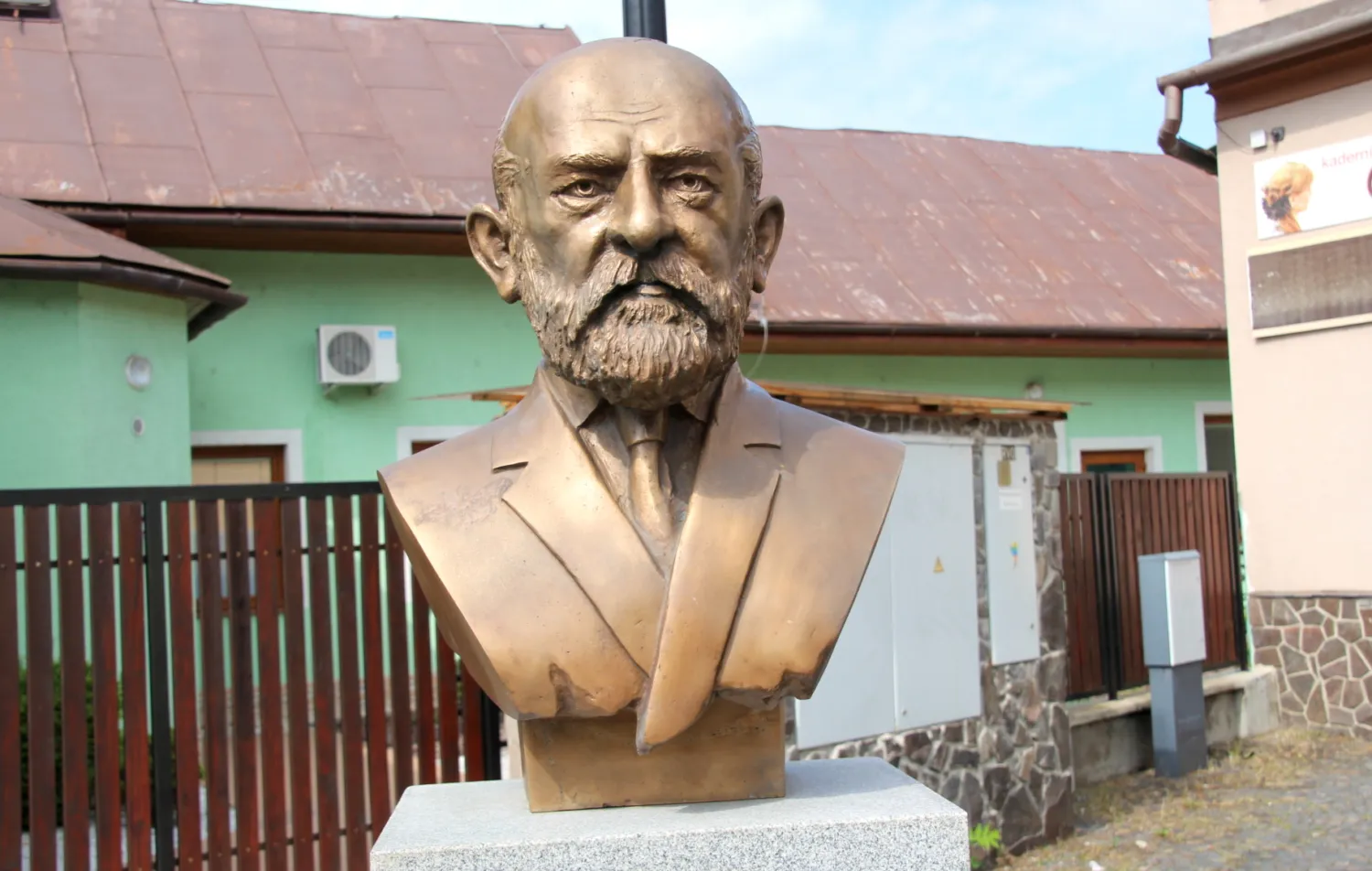
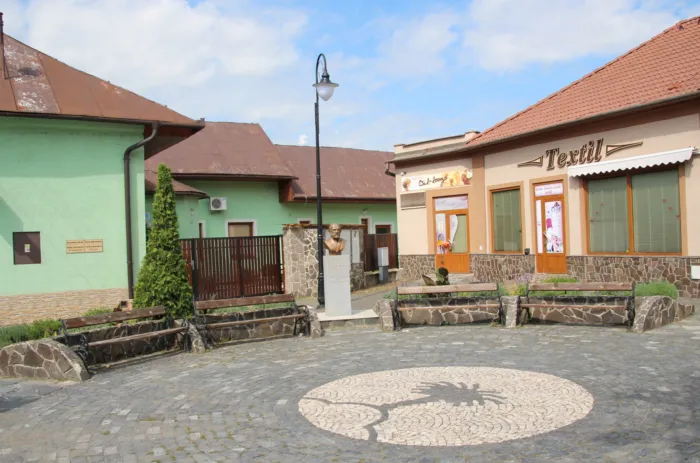
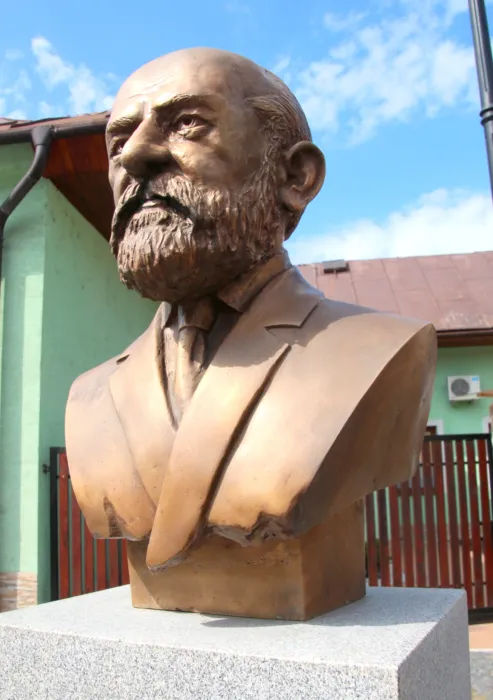
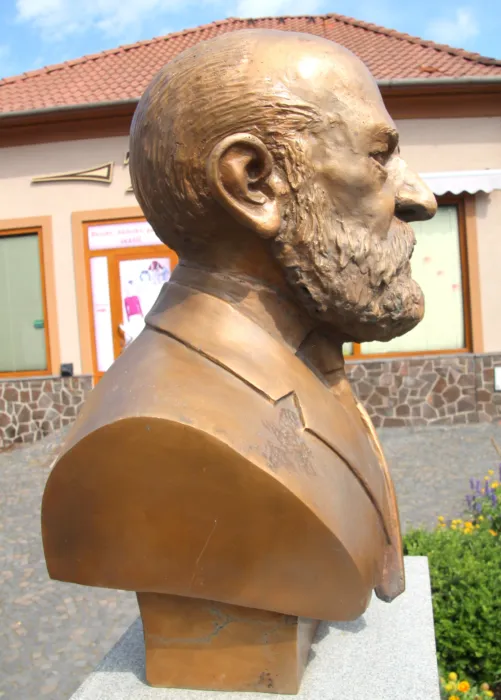
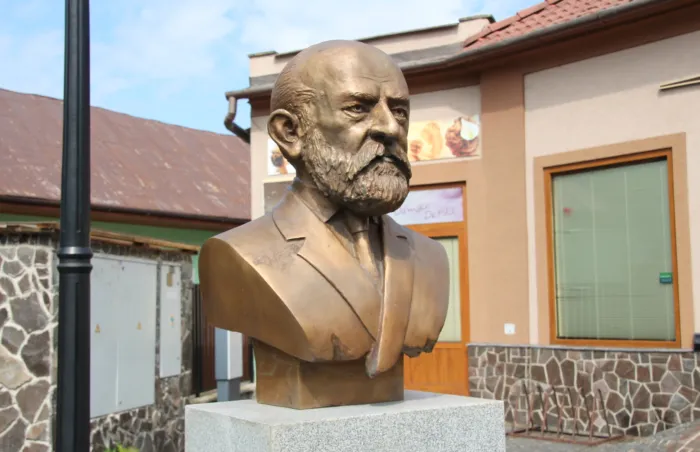
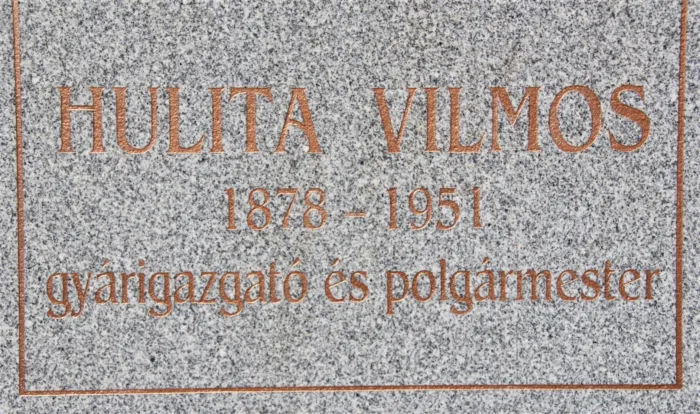
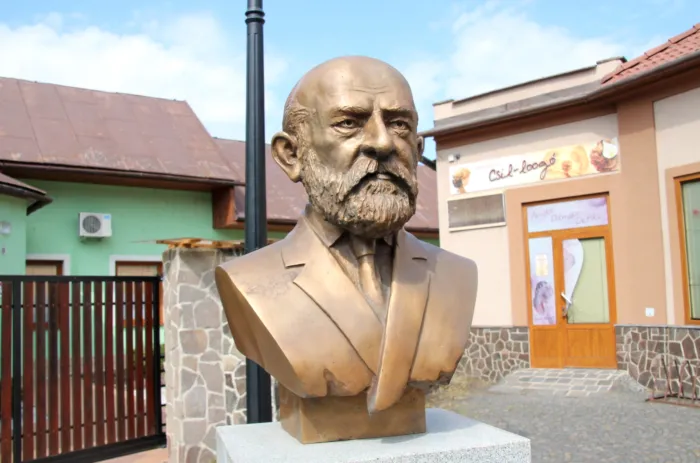
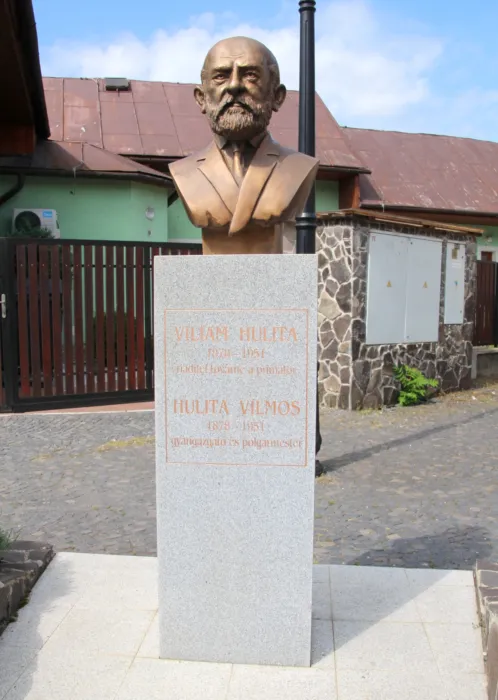
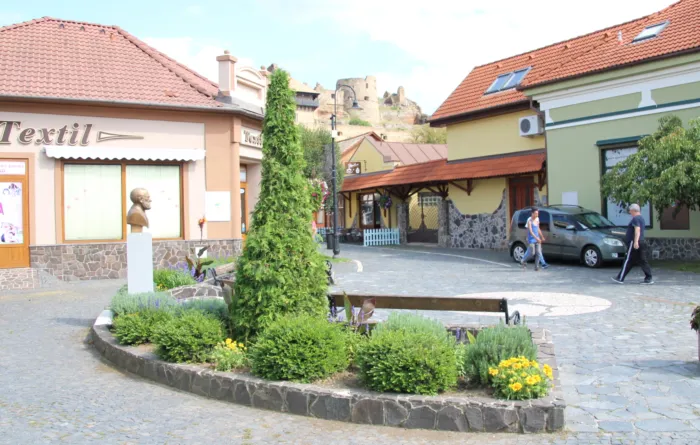
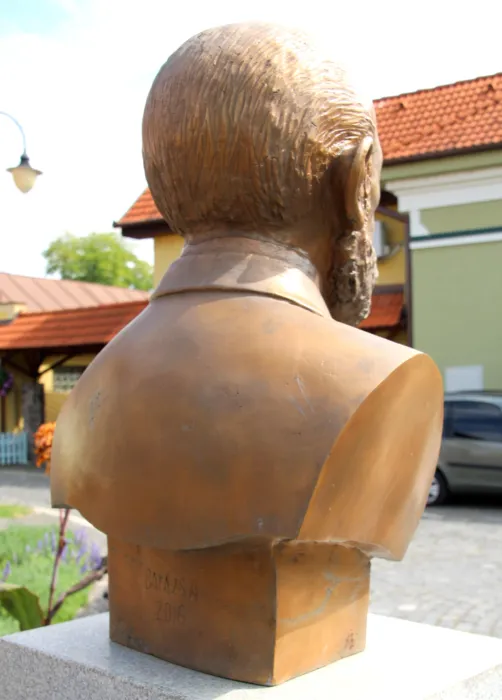
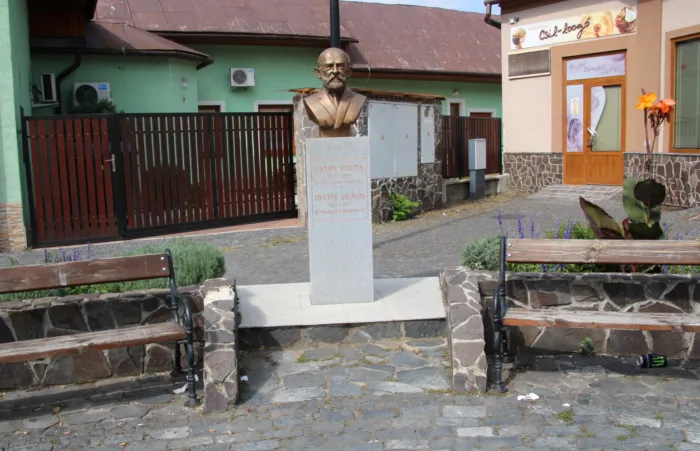
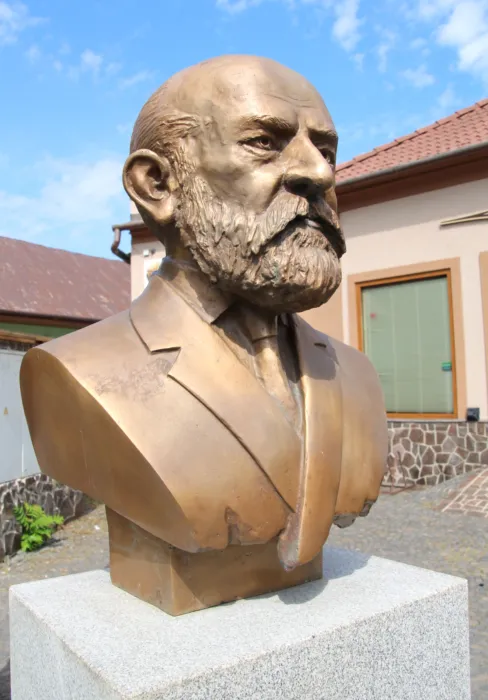
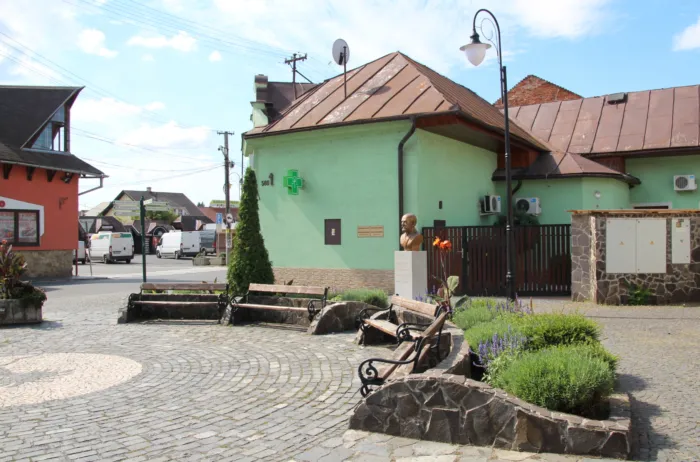
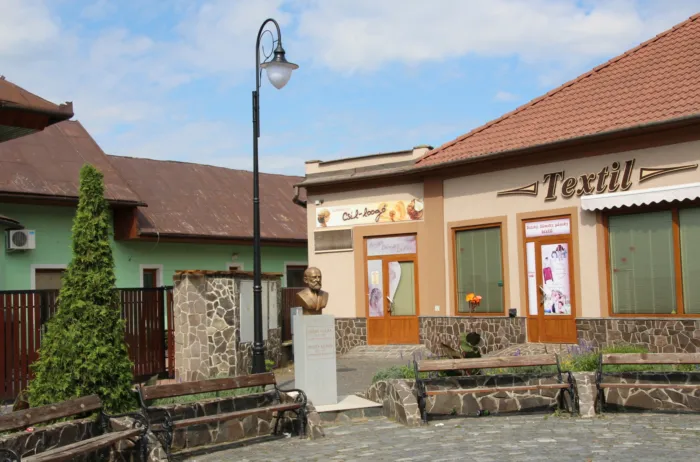
Statue of Vilmos Hulita, factory director and mayor
Statue, monument, memorial plaque
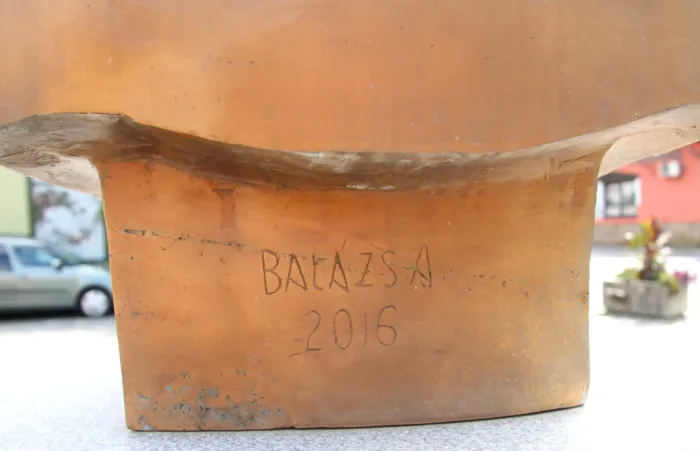
The statue of Vilmos Hulita was unveiled on August 1, 2016, during the Palóc Days and the Fülek City Days. The statue was created by Alfréd Balázs. ; Vilmos Hulita (June 6, 1878 – Budapest, June 1951?) was the former director of the Fülek Zománcz Factory and the former mayor of the city of Fülek. ; He was born on June 6, 1878 in Karánsebes (now a Romanian city) under the name Vilmos Holotay. He moved to Fülek in 1915, and two years later became the director of the factory. ; After the founders, Vilmos Hulita played the most important role in the life of the Fülek factory. Director Hulita, who was known to the people of Fülek as “Old Man” from the mid-1930s onwards, had held his position during the Austro-Hungarian Empire, which he successfully held until the factory was taken over by the Red Army. During the 27 years he spent at the helm of the factory, he had the opportunity to interact with the highest leaders of two states (the Czechoslovak Republic and the Kingdom of Hungary) after the dissolution of the Monarchy as the director of the Fülek factory. Hulita took over the factory with approximately 400 employees, during liquidation, and as the only factory in southern Slovakia to survive the great global economic crisis, he handed it over at the end of 1944 as an industrial giant employing 4,400 employees. Despite the fact that his economic successes were indisputable, his contemporaries gave him contradictory assessments in the wake of the changes in empire and course, and his activities were criticized based on the ideologies of different political forces. Hulita, a Banat Armenian who professed bourgeois ideals and spoke Hungarian and German with his masters, was criticized by both the political right and the left, his pro-Czech attitude was criticized, as was the fact that, as a Czechoslovak citizen, he had not even learned to say hello in Slovak during the 20 years of the existence of the Czechoslovak Republic (1918-1938). On the one hand, his almost American-style production system was praised, and on the other, his “worker-scattering” tendencies were criticized. It is characteristic that in the anniversary volume published on the occasion of the 75th anniversary of the founding of the plant, he appears only as a capitalist enemy of local labor. It is also regrettable that Vilmos Hulita was omitted from the chapter introducing local personalities in the bilingual monograph of the city. ; He joined the factory on February 18, 1915, and was put in charge of the galvanizing workshop, where military jackets were manufactured. A year later, he became the plant's managing engineer. He gathered around him a new management team of foremen and foremen, and he trained the officials himself. The director demanded honest work from all his employees and expected individual responsibility from his workers. When the Hungarian Soviet Republic was established, he had to flee with his family, and upon his return, he entered the factory gate with these words: "Revenge is sweet, but let's leave it to God." By the beginning of 1920, the number of workers had increased to 1,200. The construction of the colony (factory housing estate) began on the left bank of the Bénapatak River, the factory purchased the Brüll restaurant (Dokupel restaurant), re-leased the Vigadó from the village, and founded the so-called he rented a store (factory shop), cellars. The factory was bought by the Prague Commercial and Industrial Bank at the end of 1927 and attached to the Sfinx concern. Sfinx had 6 factories throughout Czechoslovakia. “Hulita’s business sense was proven not only by the revival of stove production, but also by the fact that he did not only pursue enamel production, but also planned the production of household goods, and wanted to maintain the number of workers by producing iron barrels, agricultural machinery, and military items. “By the beginning of the 1930s, the factory alone achieved production results that were as high as those of the other Sfinx interests combined. He bought and put the machines of the shut-down factories (e.g. the Losonc machine factory, the Galgóc carriage factory) back into operation in Fülek. In 1932, he started the woodworking factory, which developed from the crate factory. In recognition of his success, the National Association of Industrialists elected Hulita its president in 1934. In 1935, he celebrated the twentieth anniversary of his arrival in Fülek. The article writer of the Magyar Híradó praised the jubilarian with the following words: “Vitality, flexibility, adaptation to changing life opportunities and needs, a modern, almost American-style production system – these made it possible for the Fülek enamel factory to maintain and even strengthen its position in the economic life of the republic.” During World War II, the production of civilian items in the Fülek Industrial Works was gradually pushed into the background by war production. Hulita employed 4,400 people at the time. ; After 1920, Vilmos Hulita became a decisive figure in Fülek public life. He personally supported the founding of the Fülek Torna Club (FTC) in January 1920, and became its perpetual honorary president. Then in 1927 he was elected president of the local YMCA (Young Men's Christian Association). He also supported the local brass band, for which he had modern instruments brought from Brno in the spring of 1928. In 1929, Hulita was already on the list of former firefighter association presidents, and in 1933 he had a training tower built for firefighters near the factory for 8,000 crowns. In 1936, the Ady Youth Circle was founded under his patronage. The best football team in southern Slovakia in the second half of the thirties was undoubtedly the FTC from Fülek, which reached the national final four times between 1935 and 1938, but managed to win the Slovak championship only once, in 1937. ; In 1918, after the victory of the “Autumn Rose Revolution” – when Hulita had been the factory director for a good year and a half – he was elected chairman of the Fülek Local Committee of the Hungarian National Council, a position he held until the proclamation of the Soviet Republic. By 1931, the population of Fülek had had enough of the communist trend prevailing in the village hall and turned towards a bourgeois course. During the local elections, the locals elected Vilmos Hulita, who ran for the Agrarian Party, as starost (judge). In his speech at the time, the district head Čičmanec stated that Fülek had thus “succeeded in finding the way for our minority and the Hungarians to come closer together”. Responding to his words, Hulita noted that the idea of the need for cooperation had been formulated in him in connection with the visit of the President of the Republic Tomáš Garrigue Masaryk to Fülek in 1930, when the president spoke to the people of Fülek in Hungarian. His political creed was: “We will not sell our Hungarianness, but we want to be loyal citizens of the Czechoslovak state... In this village, the consciousness of freedom binds its inhabitants to each other in love, regardless of nationality.... We pray to God to enable us to live side by side in understanding, love and respect in the future.” Hulitá was captured and taken away by the German Gestapo on November 23, 1944, and only returned on December 17. At that time, he issued the slogan: “The dismantling of the factory must be sabotaged!” The machines were dismantled and hidden by reliable workers. The former director was later tipped off and the Gestapo took him away again, only reappearing in Fülek at the end of April 1945. But the new management appointed to head the factory, which had been occupied by the Red Army at the end of December 1944, did not want to let him back into the factory. After that, he left for Hungary with his family and settled in Budapest. For a while, he served the Ministry of Industry in the case of Fülek Iparművek, which had again gone abroad, and then he was retired. He died in June 1951. “He didn’t even have a separate office. His desk was in a corner of the shared office, where all office work was done. The door to his office was open to everyone. Everyone could come to him at any time. He listened to everyone’s complaints, and if necessary, he intervened with the authorities. People turned to him even in the most intimate matters... he created peace between husband and wife. He gave every worker who got married a 5-30 kg enamel pot as a gift.”