
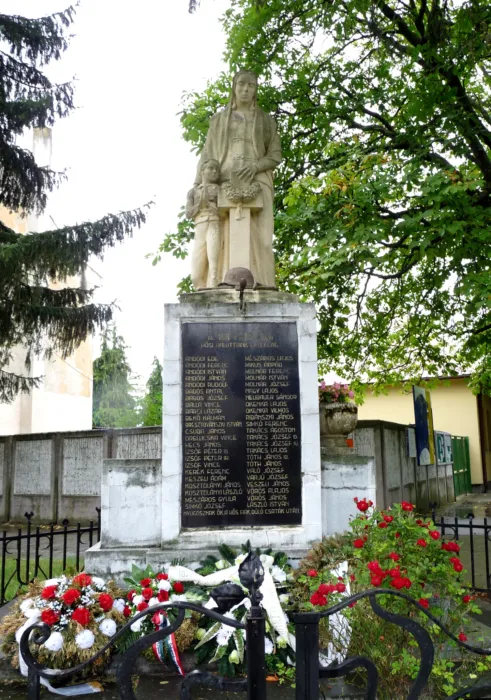
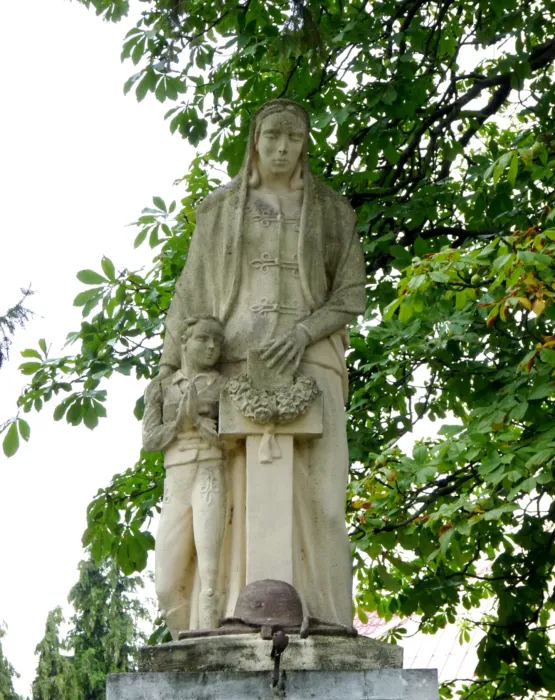
Heroic monument
Statue, monument, memorial plaque
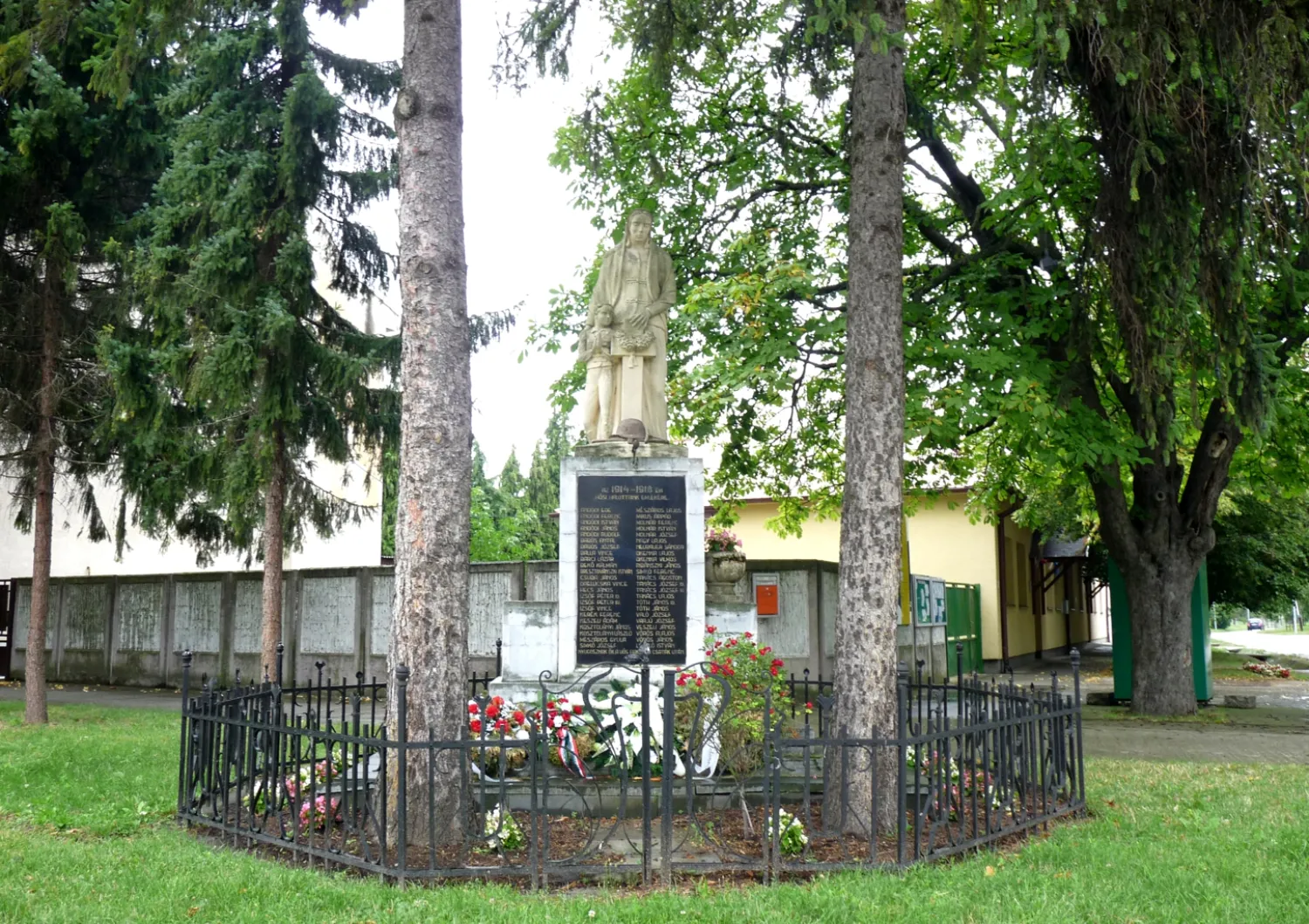
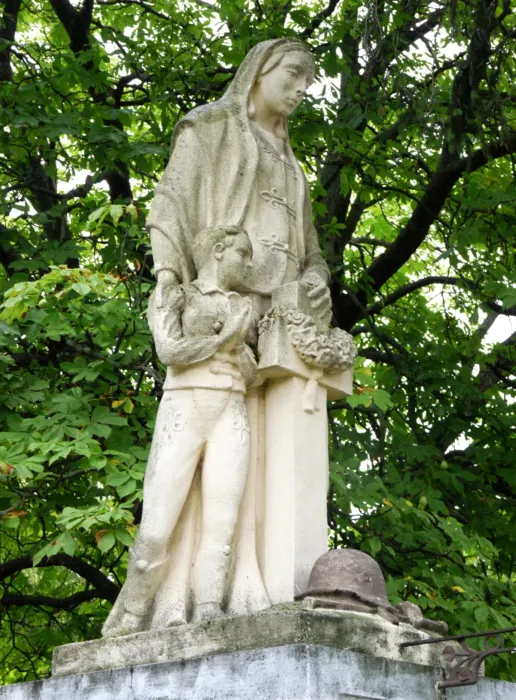
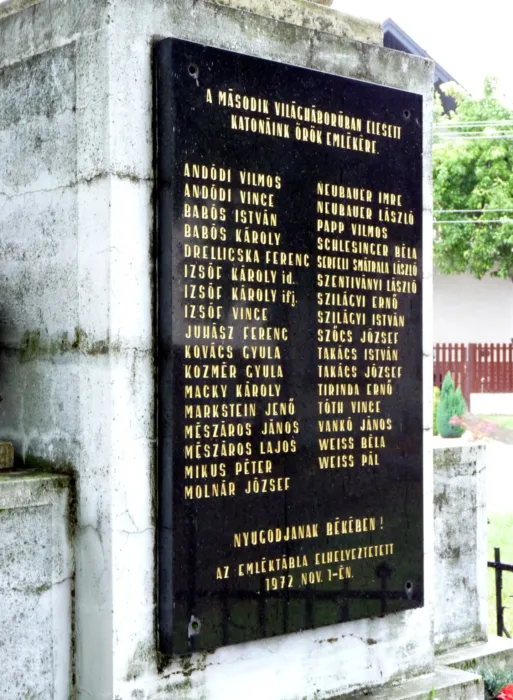
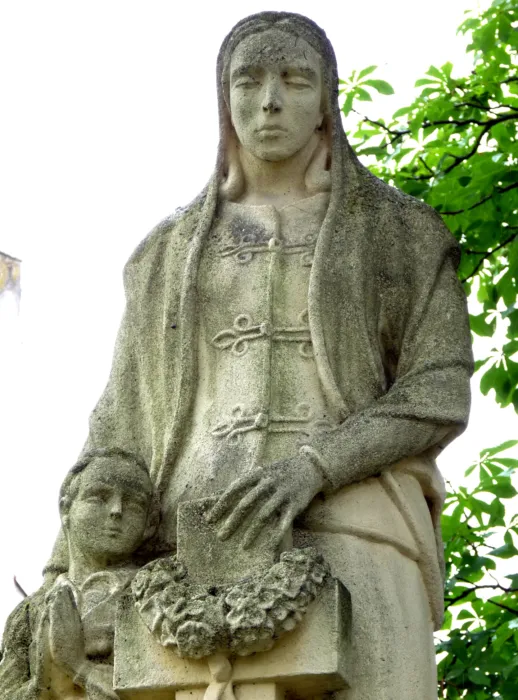
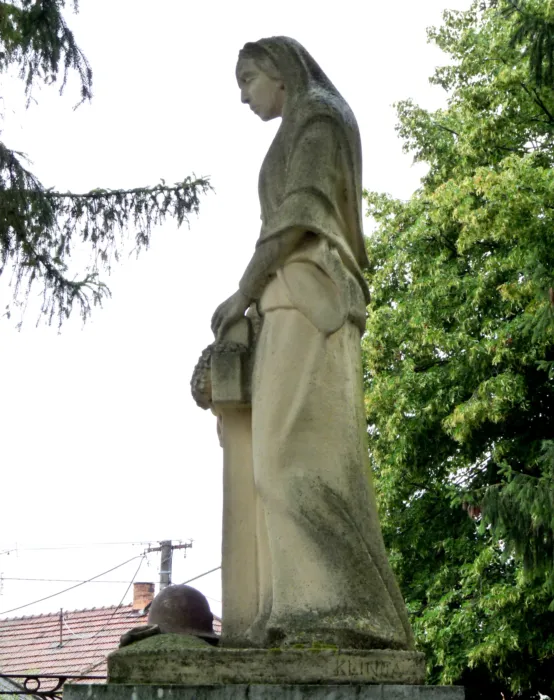
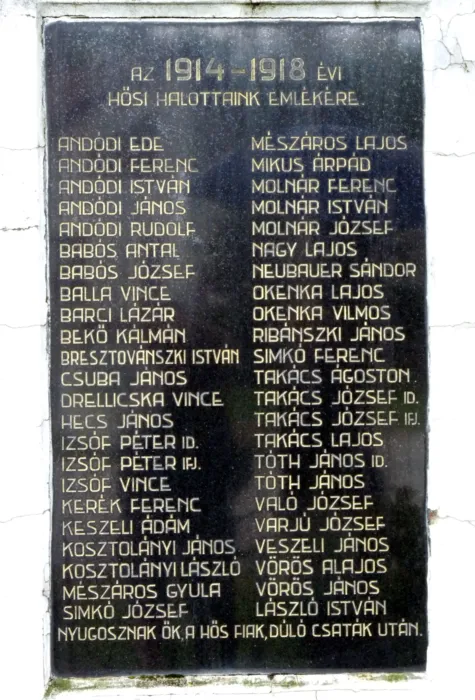
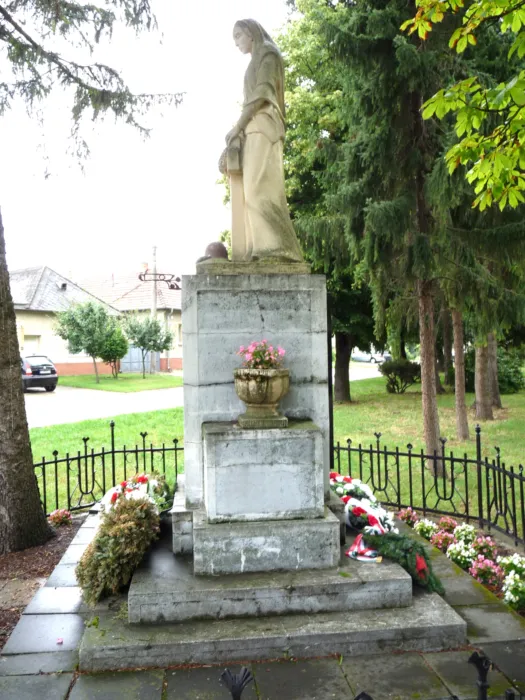
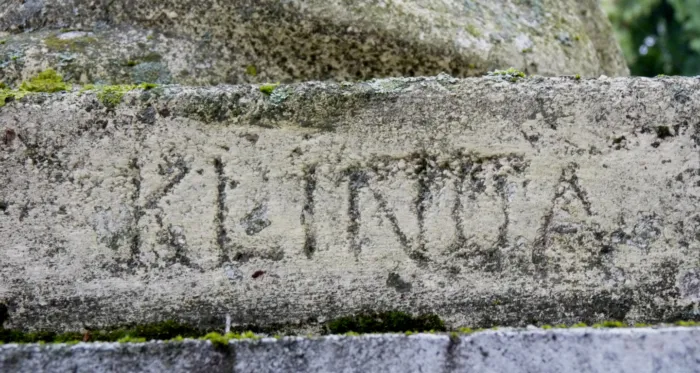
The First World War left a sad memory in the souls of many locals. A memorial statue was erected in 1938 to 46 soldiers who died on the battlefields. A plaque commemorating the 33 victims of the Second World War was added to the monument on November 1, 1972. The newspaper Érsekújvár és Vidéke published an interview with a now-forgotten sculptor from Érsekújvár, Kálmán Klinda, during the first Czechoslovak Republic, who was working on the World War II memorial in Vághosszúfalu at the time, among other things: ...For example, he is currently working on the monumental monument to the heroic memory of Vághosszúfalu. The idea is interesting and subtle. A mother in Hungarian dress and a little boy stand with their heads bowed, their faces filled with emotion as they remember the heroically dead father and husband, symbolized by a helmet and a sword. There is a strange deep devotion on the little child's face, his hands folded, as if his lips were multiplying a prayer for his father who died in the war... I stand for minutes deeply moved in front of the impressive statue design and I know that the people of Vághosszúfalu will also be deeply moved by the dramatic spirituality of this statue... ; Érsekújvár és Vidéke reports in its issue of May 29, 1938: On May 15, 1938, the monument to the heroes of Vághosszúfalu was inaugurated with a respectful commemoration and a worthy ceremony, which is intended to preserve the memory and names of the forty-six sons of this small village, who lie in unmarked graves, for posterity. The statue is an excellent creation of the sculptor Kálmán Klinda from Érsekújvár. It depicts a war widow and a war orphan grieving over a wreathed military grave, a broken sword and a battle helmet can be seen in front of the grave cross. The foundation designed by the aforementioned sculptor was made by the stonemason Antal Szász from Deáki. The ceremony took place in the afternoon, in the presence of a large audience. As far as it could be determined, the following villages were represented: Vágsellye, Vágvecse, Tornóc, Deáki, Vágkirályfa and Kajal. The ceremony began with the song “Give Us Eternal Rest, O Lord”, which was performed by the church choir. Then József Izsó, the oldest but most agile member of the sculpture committee, remembered his fallen comrades with pious words and opened the ceremony with the unveiling of the statue. After the opening, the main. The parish priest of Vicsapapat, Rezső Zachár, consecrated the monument, and as a former camp chaplain and former pastor of Vághosszú village, he praised the significance of the monument with a speech that moved him to tears. The ceremonial speech was given by Ernő Biskoroványi, a bank director from Vághsellye and a former comrade. In his high-winged speech, he recalled the hardships of the warriors and the terrible suffering of the fallen. The program was supplemented with very beautiful recitations. On behalf of the statue committee, István Szilágyi handed over the monument to the village judge Péter Molnár, who thanked the statue committee and the youth with warm words for raising and creating this beautiful idea. He took the monument under the care of the village. The history of the statue was explained by V. Molnár Jr. Several schoolchildren placed fresh flowers accompanied by poems. After all this, bouquets were laid with words of gratitude: chief. Rezső Zachár, Andor Jaross and Kálmán Füssy. Wreaths were also laid by: the village, the widows, the orphans, the grandchildren, two wreaths by the comrades, the firefighters, the cooperative, the SzKIE, the SzMKE, the school, the Kövecses manor and the Mészáros family. The church choir also performed the songs “Silent Autumn Sorrow” and “At the Column of Heroes”. The closing speech was given by István Szilágyi. As part of the same ceremony, starting at 7 pm, the war play “The Exchanged Man” by Adorján Bónyi was performed, organized by the Public Culture Committee.