
Honvéd statue
Statue, monument, memorial plaque
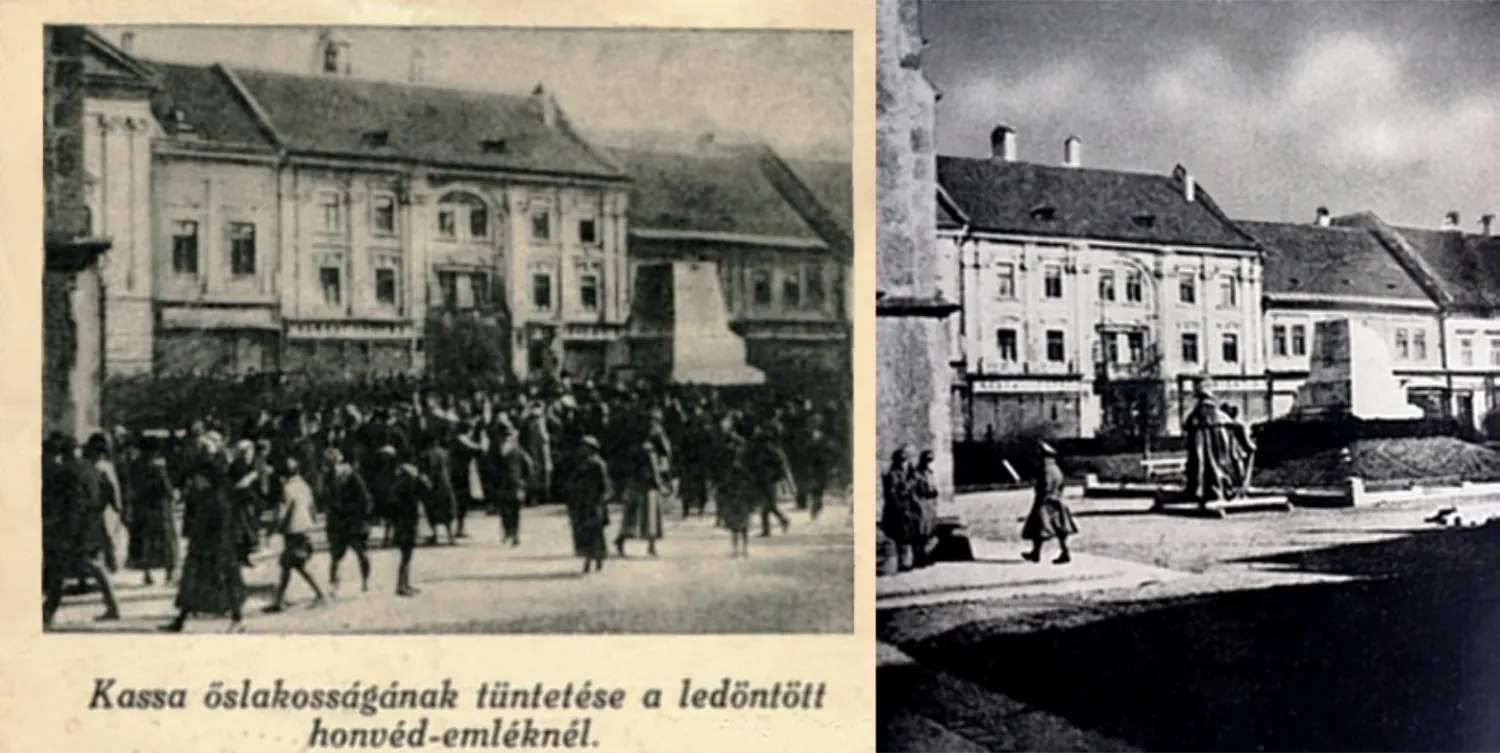
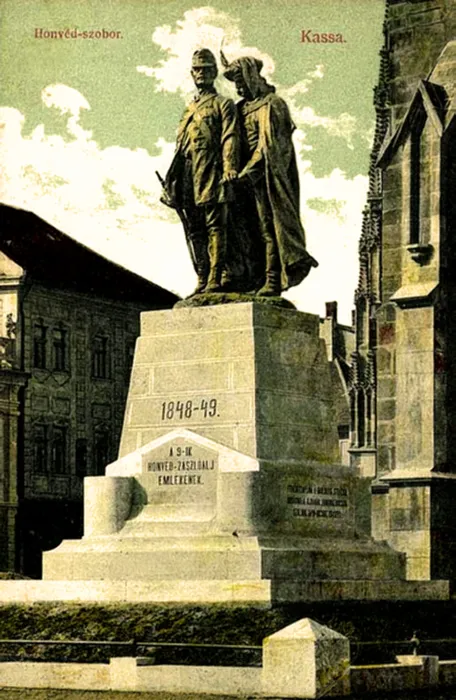
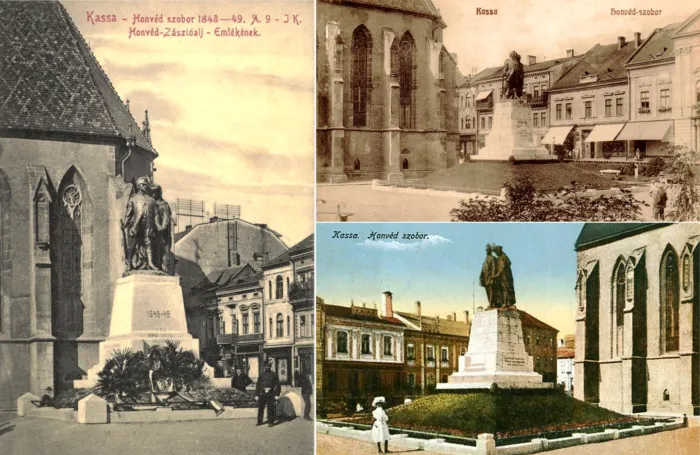
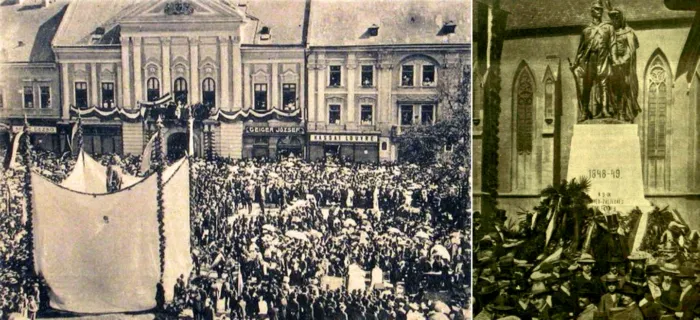
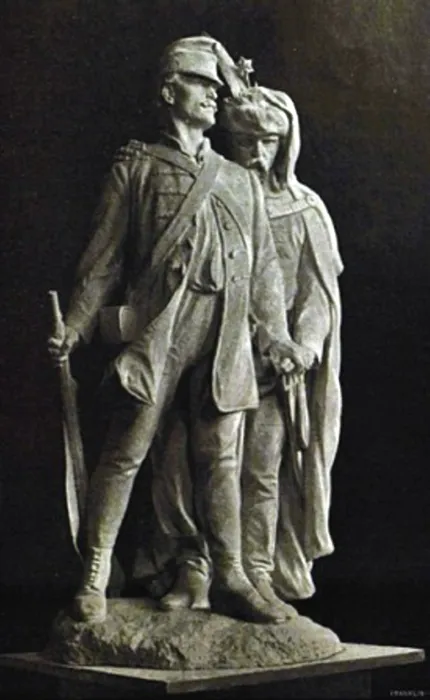
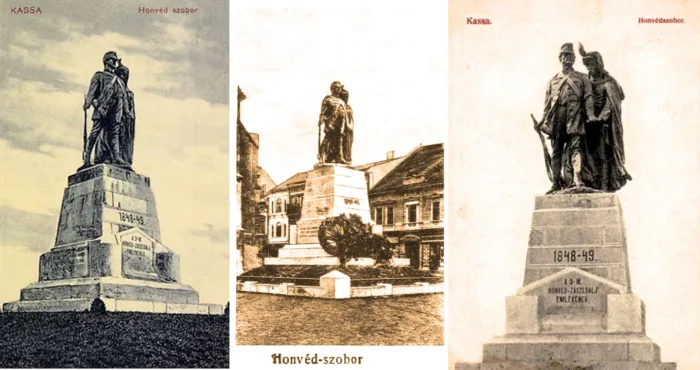
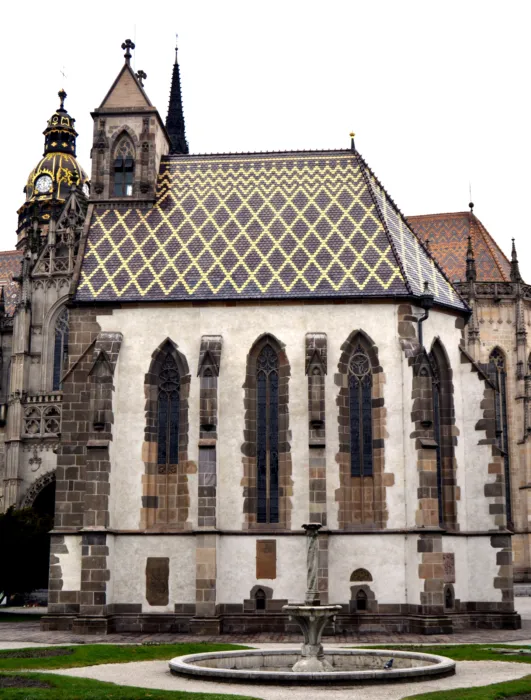
The statue was erected on September 9, 1906, next to the Michael Chapel, in memory of the red-capped soldiers of the 9th Košice Home Guard Battalion, who fought gloriously in the 1848-49 War of Independence. The work commemorated those heroes who set an example of patriotism and self-sacrifice in the difficult battles in the South and then in the glorious Spring Campaign of 1849. ; The 15th issue of the Vasárnapi Újság in 1906 wrote: "The city of Košice paid homage to the old Kurucz traditions when it decided to immortalize the heroism of its sons, the famous Red Caps of the War of Independence, with a statue. The commission to create the statue was won by a tender, out of 21 applicants, by sculptors János Horvai and Ödön Szamovolszky, who have now completely completed their work. The characteristic, painstakingly modeled statue beautifully expresses the past of Košice, the ancient Kurucz city, in which the memories of the Rákóczi era and the War of Independence are intertwined. A young, muscular soldier stands on it, holding hands with an old Kurucz knight. The statue committee, chaired by the Premontre provost of Jászó, Menyhért Takács, and its members György Zala, Gyula Benczúr, Gyula Bezerédi and László Hegedűs, is an excellent our artists, — has already accepted the statue." ; Also in the Vasárnapi Újság (No. 53, 1906) we read: "Kassa, the famous Kurucz city, erected a memorial column to the valiant 19th battalion of the Hungarian National Guard, which distinguished itself in the 1848-49 war of independence as many times as the opportunity presented itself. This battalion was recruited in Kassa, and mostly from the sons of the Abaúj county, which always served the national cause whenever it came into conflict with the foreigner. Not only when the brave sons of Omode did not accept King Robert Charles, but much earlier, when Aba Sámuel was placed in the succession of Saint Stephen instead of the foreigner Peter. Kassa remained true to itself when it erected the statue. And the statue itself is a worthy and praiseworthy work from an artistic point of view. But with the statue, too, the The fact of the unveiling and its circumstances were even more notable than the ceremony of erecting the statue. One of the king's ministers appeared at the ceremony and laid a wreath on the memorial column of those heroes who had defeated the king's Austrian troops in so many battles fifty-seven years ago. And the officers of the joint army, which still claims to be the custodians of the traditions of the Austrian armada, also appeared to pay their respects. These officers did not appear by their own decision; they received permission and instructions from above. And from this point of view, their appearance is of greater importance than the erection of the statue itself. For it means that the administrators of the joint army, even if perhaps reluctantly, — bow their flag before the independence aspirations of the Hungarian nation." ; ; After the lost World War I, the Czech and Slovak infantry and cavalry troops were able to enter Košice, which had been militarily evacuated and left undefended, between 4 and 5 pm on December 29, 1918, without a single blow from the sword. ; From that moment on, a veritable campaign of extermination began against the Hungarian language and Hungarians. In the days of terror, the holiday of freedom came in 1919: the fifteenth of March. On this day, the people of Košice lit a snowdrop tied with red thread as a symbol of the Hungarian tricolor and made a pilgrimage with great heartache to the Honvéd statue, erected in 1906 on the south side of the St. Michael's Chapel, symbolizing the Hungarianness of Košice. They decorated its pedestal with snowdrops and wreaths, and sang the National Anthem, the Prayer of the Nation, and the Kossuth Song. ; ; This patriotic expression of the indigenous population was retaliated by Czechoslovak anti-Hungarianism, with armed patrols tearing down and breaking Hungarian signboards on the street the next night and shooting at anyone who dared to look out the window at the noise, and on the third day, at dawn on March 17, Czechoslovak soldiers of the 74th Infantry Regiment in Trenčín and members of the Sokol association toppled the 15-ton bronze Honvéd statue. The sculptor's head had been sawed off beforehand. Then they left singing the song "We are the brave falcons" (My sme smelí sokolíci). Upon hearing the news of this latter barbaric act, a large crowd gathered around the demolished monument in the morning and sang the National Anthem and the Kossuth song. At this, one of the soldiers standing guard at the pedestal of the statue fired his weapon at the crowd standing in front of the parish, shooting Ilona Ördög, a 37-year-old housewife, and Aranka Hervacsics, a 13-year-old newspaper vendor. The former was hit in the forehead by the fatal bullet, and the latter in the neck. The Italian generals and military officers Rossi and Zincone, who were in Košice at the time as inspectors, condemned the gallant attacks with great shock, and took photographs and sent a report of what had happened to Rome. Nothing came of the reparation and the restoration of the Honvéd statue. The damaged The monument was placed in the museum's lobby, from where it was secretly transported at night in the summer of 1936 to the foundry of the nearby industrial school, broken into pieces with a steam hammer, and then the bronze material was cast into cube-shaped pieces.