
Roman Catholic Church dedicated to Saint Augustine of Hippo
Building, structure
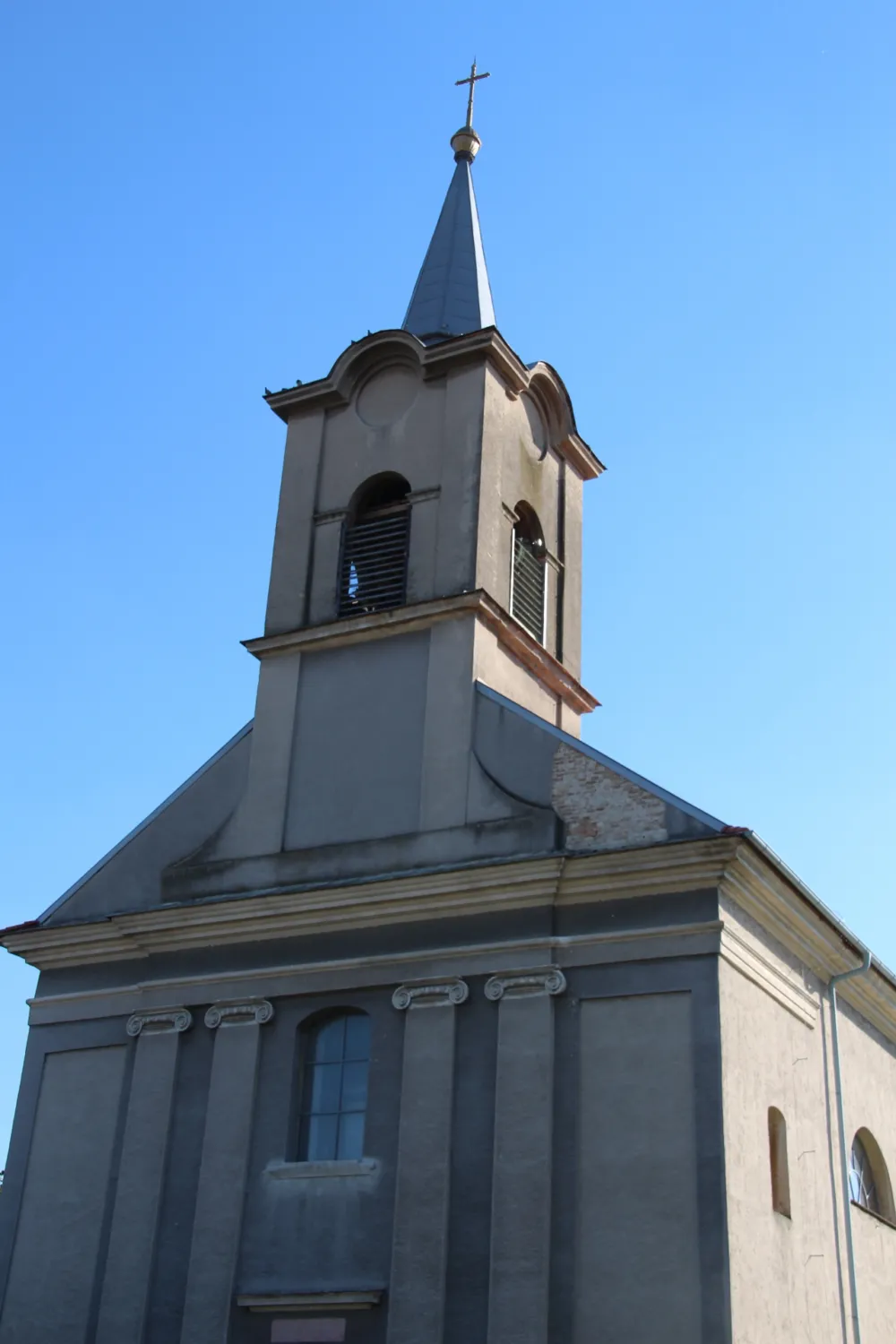
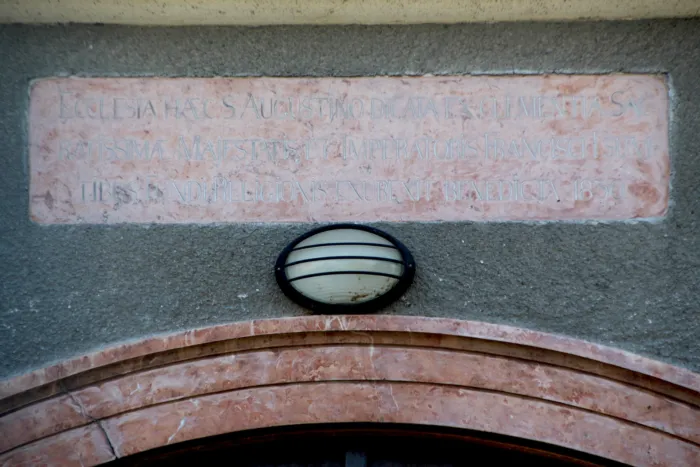
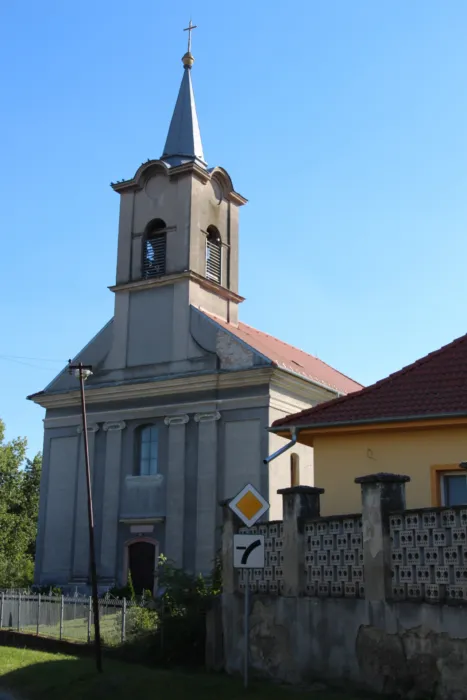
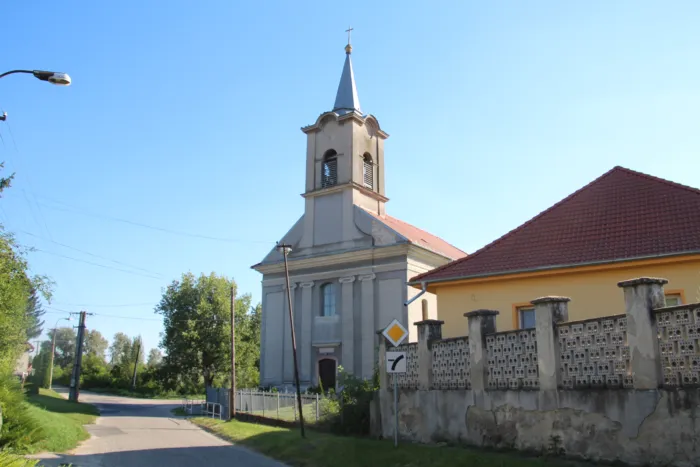
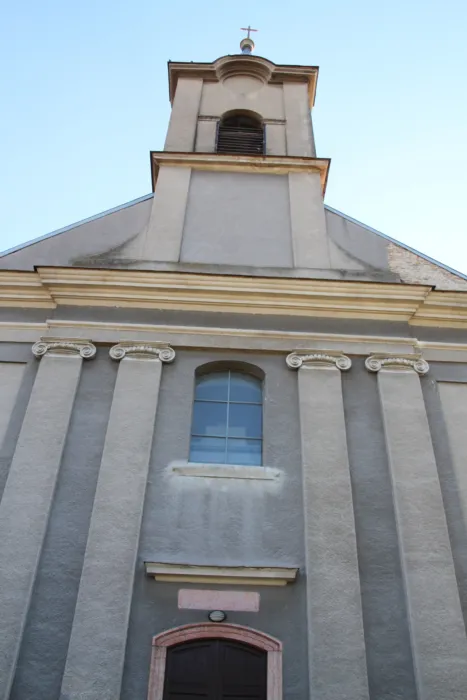
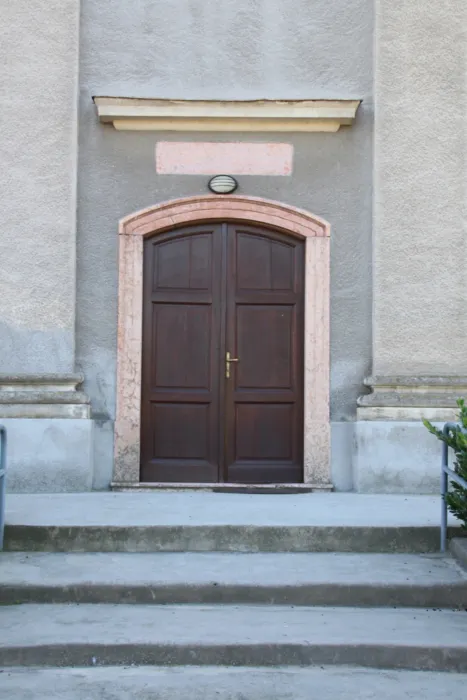
The Roman Catholic church named after Bishop St. Augustine was built in 1816 on the site of an old, perhaps Romanesque, church in the Classicist style. It was expanded in 1830. The church is a single-nave building with a square sanctuary, a tower built into the pointed front and a sacristy connected to the church building. Its facades are smooth, and these are divided by semicircular windows, wall frames and the main facades by Ionic pillar-headed pillars. A plaque above the entrance shows the year 1830. The cornice-headed pillars, on which the Baroque arch, which no longer exists, rested, have survived in the nave. A triumphal arch separates the nave from the sanctuary. The gallery on the east side, which holds the organ, is made of masonry. There is a wooden cross with a corpus above the high altar, and a fresco of Jesus Christ can be seen on the vault of the sanctuary. On the altar itself stands a statue of Kings Saint Ladislaus and Saint Stephen, made by a Budapest company. The wall of the nave is decorated with a dove-shaped sculpture of the Holy Spirit, a mural of Bishop Augustine, and gilded angel sculptures. All of these are from the now-defunct Classicist altar, which was removed during the renovation of the church around 1970. The pulpit from the time the church was built was also demolished at that time. The side altar of the Virgin of the Seven Sorrows - with the central image of the donor - is a Classicist-style work from the time the church was built. Below are the statues of Saint Teresa, the crucified Christ, and Saint Joseph. The marble baptismal font - with its Baroque-Classicist cover made of red copper and decorated with beating - dates from the 1930s. The church also houses a memorial plaque for Catholics who died in World War I. The church also features a statue of the Virgin Mary, the Heart of Jesus and Saint Anthony. ; The following years are inscribed on the wooden missionary cross: 1902, 1904, 1927, 1944 and 1994. There is a wooden cross with a corpus in the sacristy. The walls of the nave are decorated with plaster casts of the 14 Stations of the Cross. These probably date from the beginning of the 20th century. The three flags - with old pictures sewn on them - are more recent. The organ in the gallery is from the Bratislava company of Viktor Moszny from the second half of the 19th century. There are three bells in the tower. The two bells of the demolished church in Úrsekléli are housed in a small room next to the vestibule. The church building complex also includes the parish, which was built at the same time as the church. It is an elongated one-story building, its facades are divided by wall frames. It has been remodeled several times. In its courtyard there is a well and an outbuilding.