
Harang Street Orthodox Synagogue
Building, structure
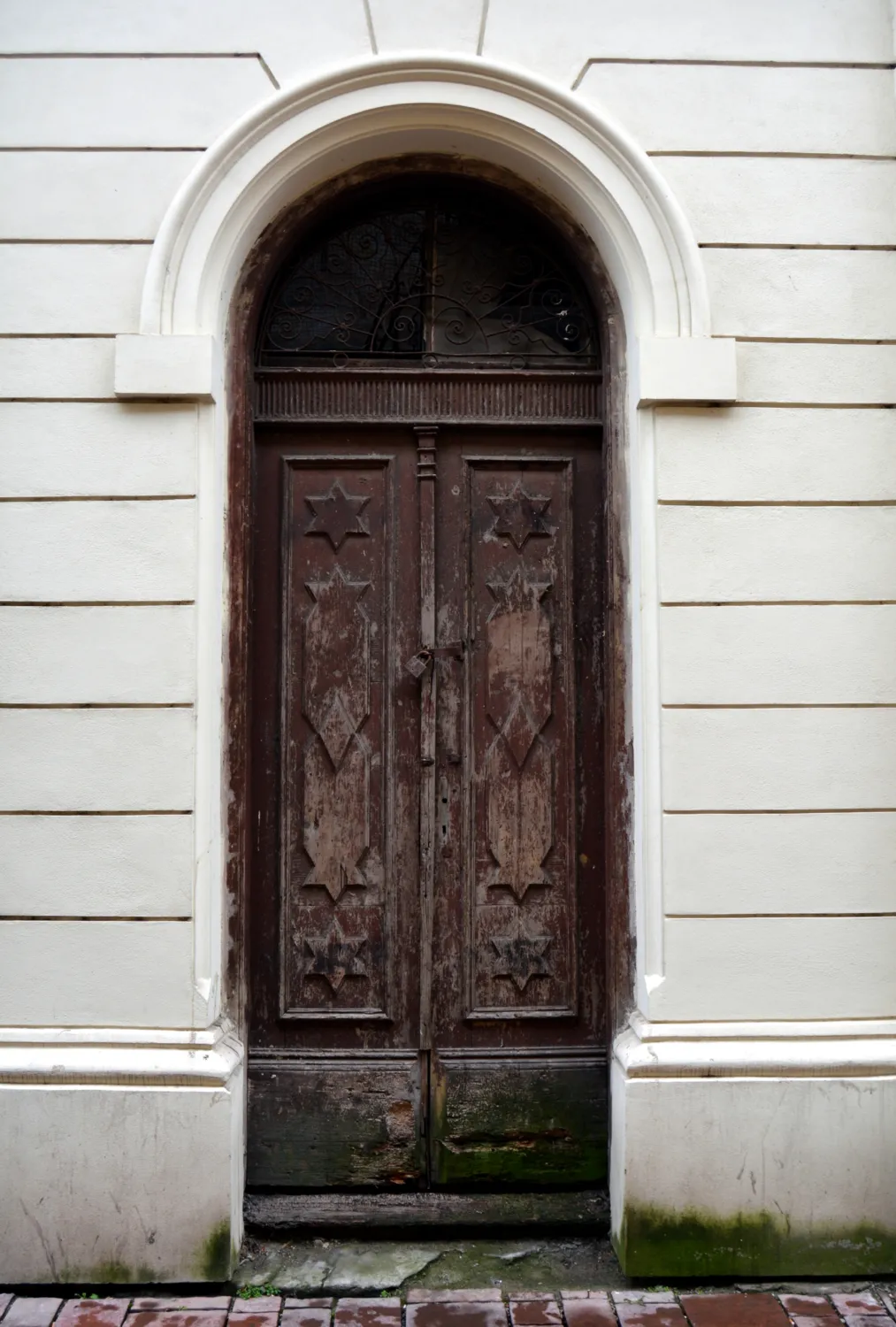
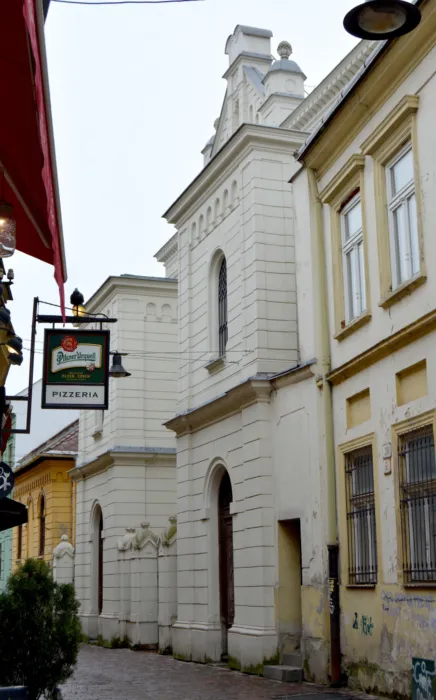
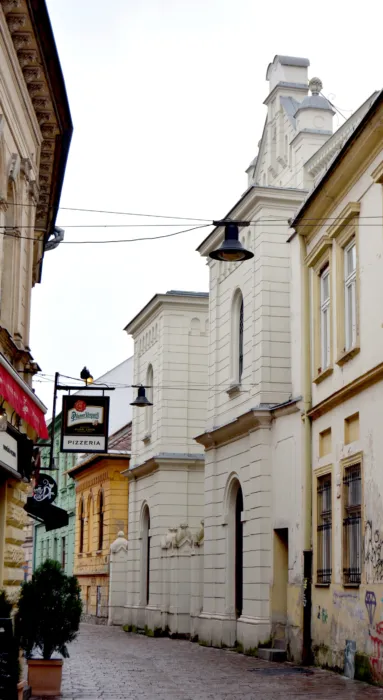
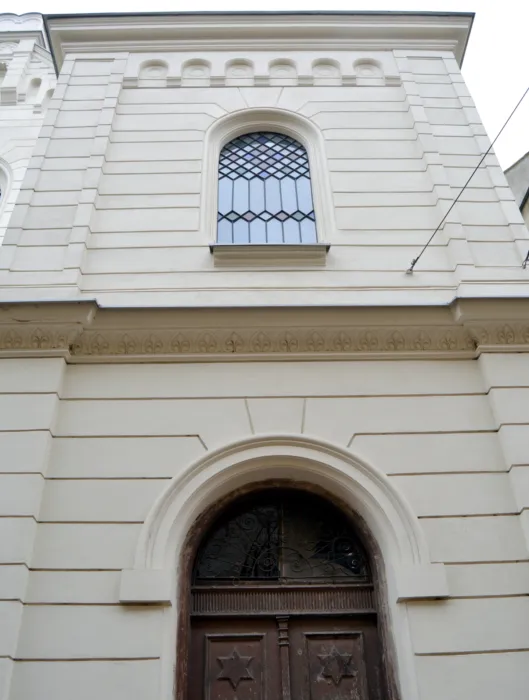
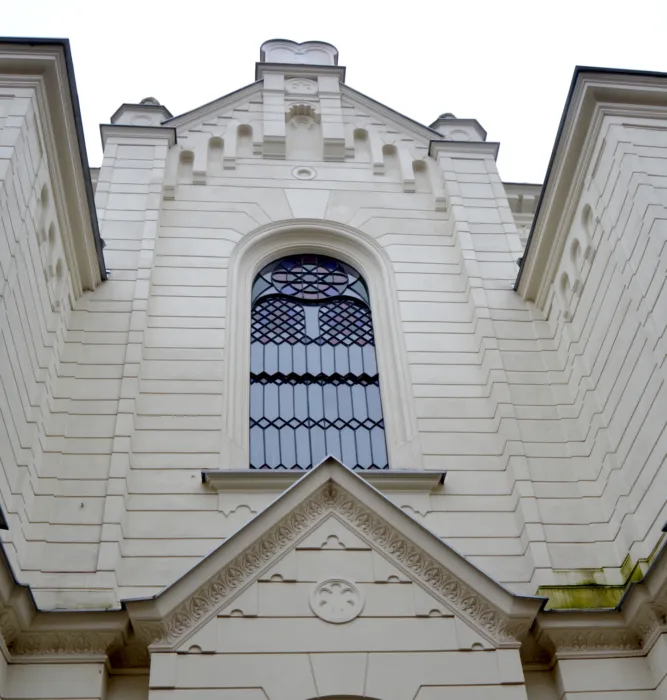
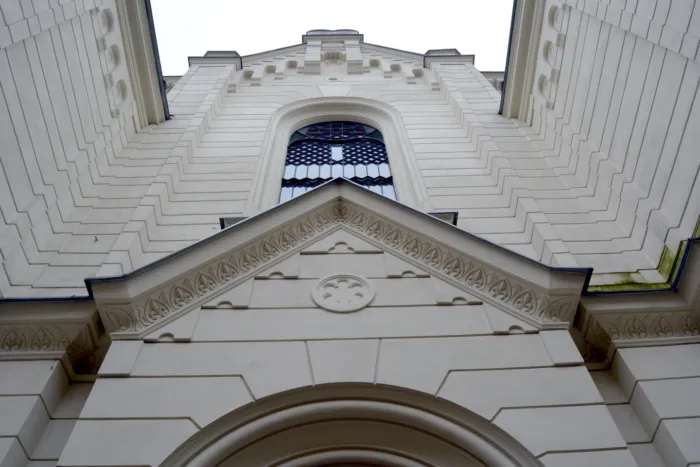
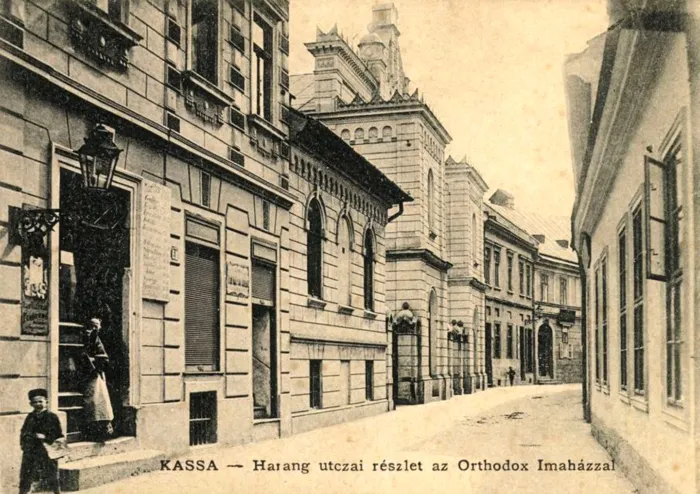
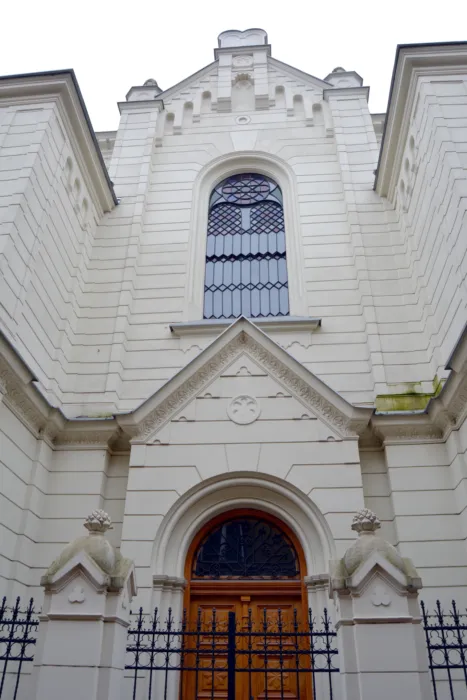
Jews were not allowed to settle in Košice, one of the Jewish centers of Upper Hungary, until 1841. Despite this, by the middle of the 20th century, a community of over 11,000 lived here, maintaining several large and small synagogues. One of these is the older synagogue maintained by the Orthodox community and the associated building complex on Harangöntő Street, which follows the curve of the former - now demolished - city wall of Košice. The synagogue was built in 1899 according to the plans of architect János Balogh. The main entrance of the synagogue, built in a closed row on the street, was on the western, street facade. The main facade of the turn-of-the-century synagogue, enriched with eclectic plaster decorations and featuring oriental elements, can be said to be typical of the region, is closed by a tympanum with the Tablets of Moses at its peak. Through the gate located in the middle between the parts protruding forward on the right and left sides of the recently renovated facade, we enter the rectangular central space, 3 of which – the 2 longer and 1 shorter – are occupied by galleries resting on cast iron columns reserved for women. The inner walls of the building are now filled with geometric frescoes in a dilapidated state. The floor of the unused building has been removed, and traces of archaeological excavation are visible on the surface. The offices of the Jewish institutions of Košice operate in the buildings of the courtyard belonging to the synagogue, and a small prayer room has also been created here. In the courtyard, the thoroughly dilapidated buildings of the Jewish ritual bath and a “tent” building with an opening roof can be found – in ruins. The synagogue was destroyed by the destruction of the Jews of Košice during World War II and It lost its community due to the emigration of the survivors, and the Czechoslovak state took ownership of it and used it as a book warehouse until its reprivatization in 1990. In the time that has passed since then, it has only deteriorated, and its renovation is progressing slowly.