
Gútai watermill and covered wooden bridge
Building, structure
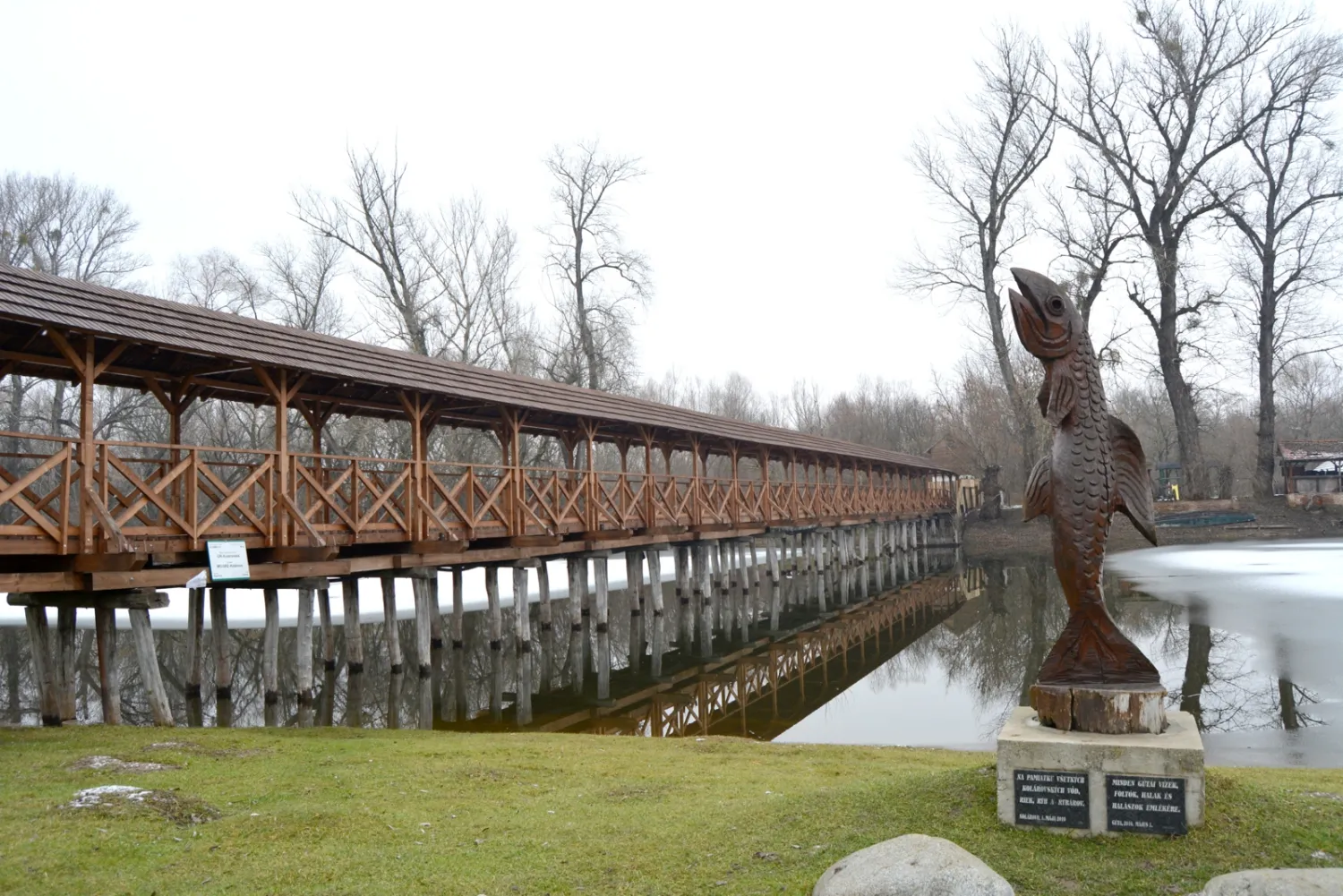
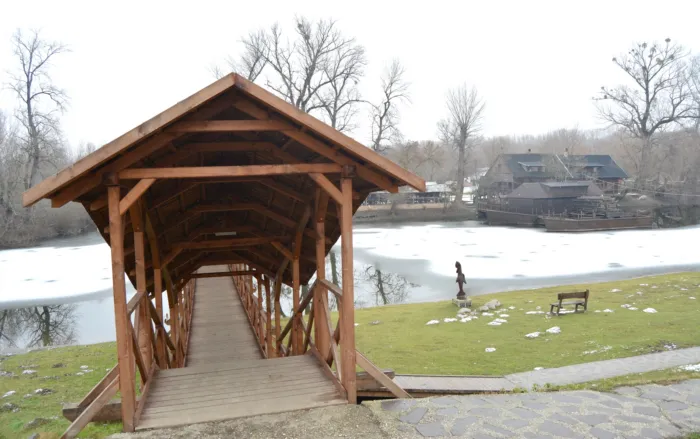
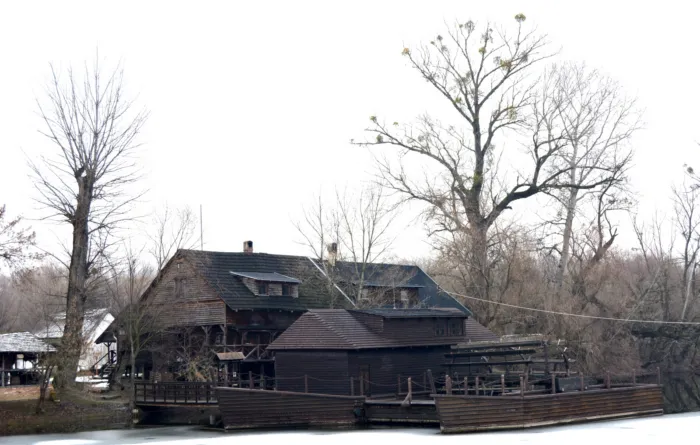
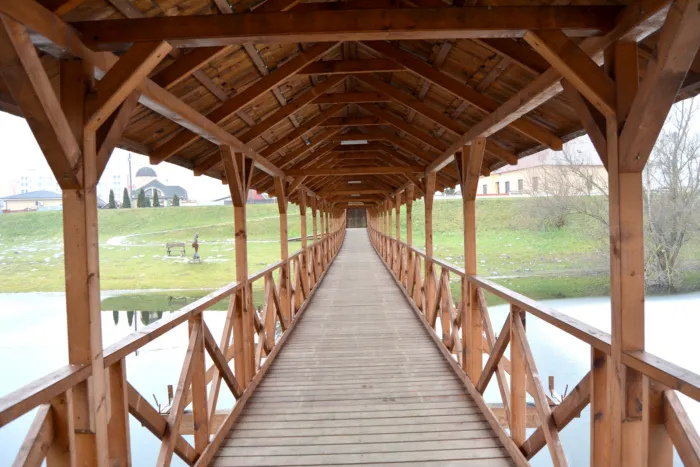
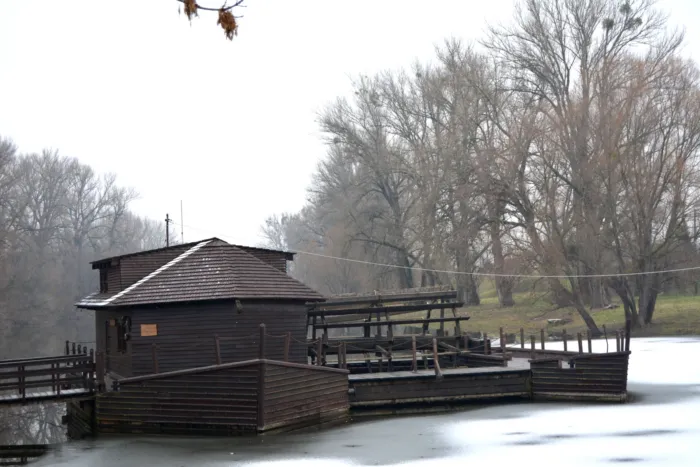
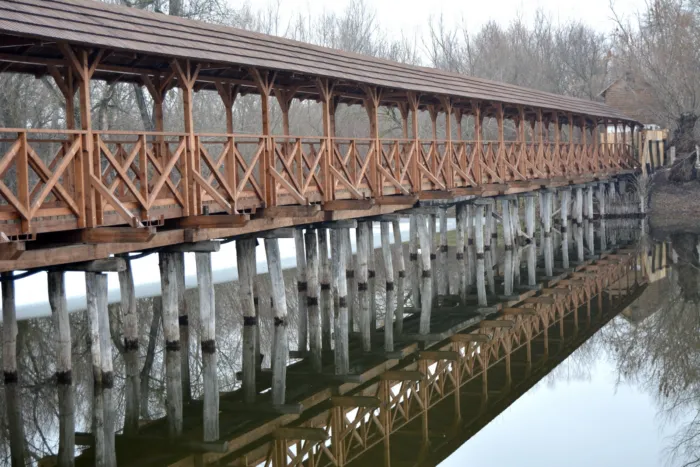
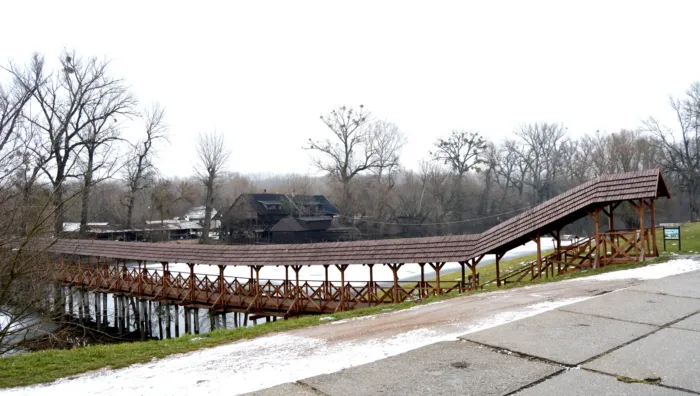
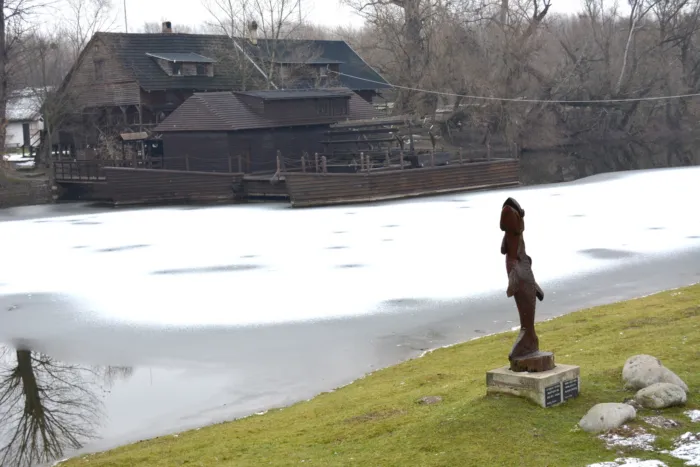
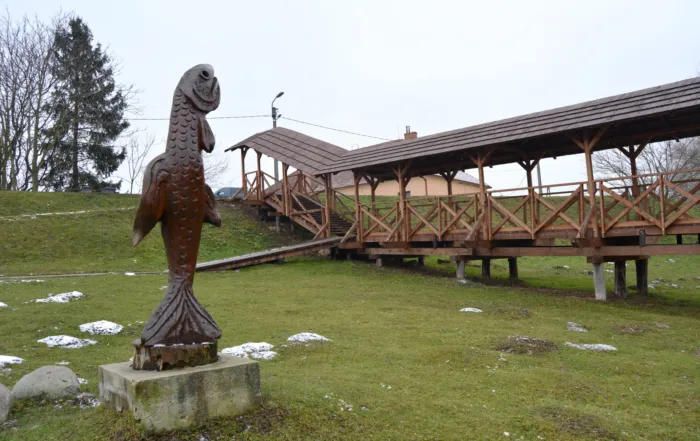
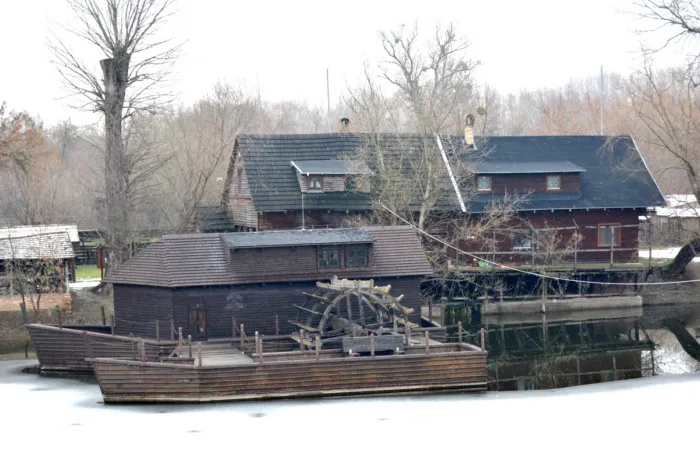
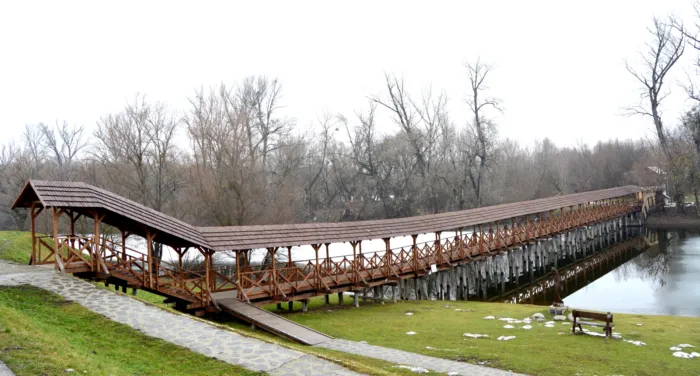
The Lesser Plain has always been considered one of the country's breadbaskets and the main grain-producing region. Before the introduction of machine-powered mills, wheat and other grains were usually ground in water mills in this region. Since the Middle Ages, water mills that extract the kinetic energy of water have taken on many forms and types. One of these was the so-called ship mill, which worked while floating on the water. These structures, which could also move on rivers in accordance with the grinding needs, spread especially on the Danube and the Váh in the 18th and 19th centuries. Sometimes, e.g. in Komárom and here in Gúta, they operated in particularly large numbers, arranged in island-like groups. The ship mills that float on the water, such as the one in Gúta, consist of two separate, ship-like elements - one smaller and one larger. The larger ship contains the mill structure itself. The large, under-slung water wheel is located between the two ship parts. The smaller ship part mostly serves only to support the shaft of the water wheel. The oldest water and ship mills were almost entirely made of wood, and most often the miller himself was skilled in their construction. The machinery of the newer mills (shafts, gears, etc.) was already made of steel. ; In the second half of the 20th century, the rapid increase in the volume of river shipping and the fluctuations in water levels due to dams and power plants built on rivers were very unfavorable to the water and ship mills, which represented an already outdated technology: they disappeared from the rivers one after another. The last, still functioning ship mill was transported to the Slovak Village Museum in Túrócszentmárton in 1965. ; The ship mill is not an original, it is a realistic replica of a Danube river water mill built in 1920. It was built in 1983 in the former Komárom shipyard based on plans prepared by the Faculty of Architecture of the Slovak University of Technology. Many equipment, elements, and machines originally belonging to the ship mill were built into the mill body, but several components, mainly those serving power transmission, were replaced with new ones. In Europe, many water mills adorned the skyline of villages and towns along rivers. In today's Slovakia, we could find quite a few of them, primarily on the banks of the Danube and the Váh. The millers skillfully utilized the water energy of rivers with high water flow, directing the water to the water wheel, which, with its rotation, set the mill wheels grinding the grain in motion through gears. However, these magnificent structures gradually lost their significance over time, and were replaced by steam mills, and later by motor-driven and electric mills. ; The Gúta Ship Mill currently operates as a mill museum. It can be accessed in adventurous circumstances via an 86 m long covered wooden bridge (1992) built on wooden piles, which is the longest wooden bridge in Europe. The ship mill and this rare wooden bridge are part of the open-air museum presenting local folk architecture. A zoo presenting domestic animals has also opened near the ship mill. The Gúta Ship Mill and its surroundings are a popular excursion destination, primarily a popular destination for water lovers, cyclists, artists and nature lovers, and a venue for various cultural, sports and social events (concerts, camps, meetings, competitions, sports events).