
The memorial plaque of Count János Esterházy in Léva
Statue, monument, memorial plaque
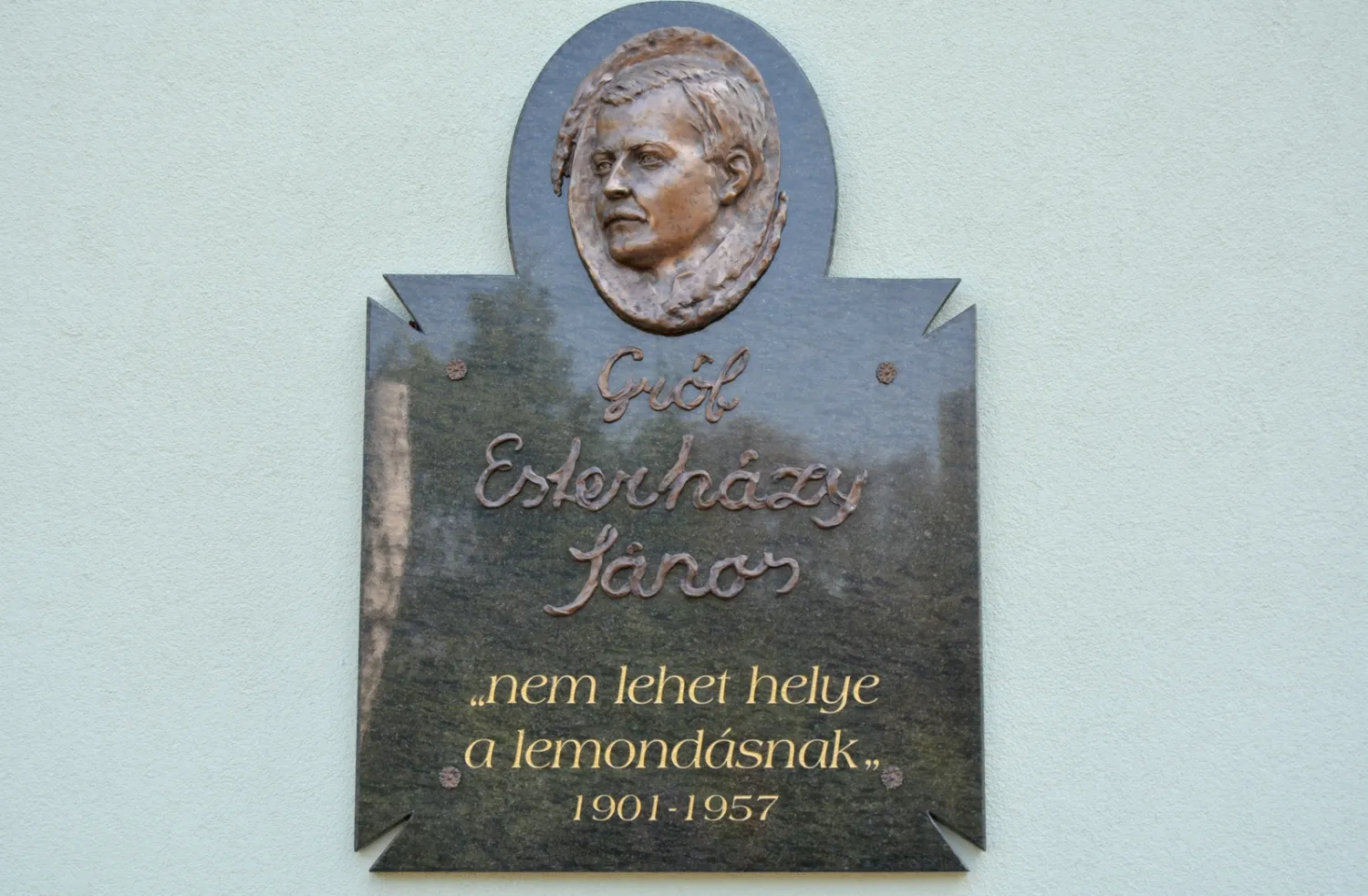
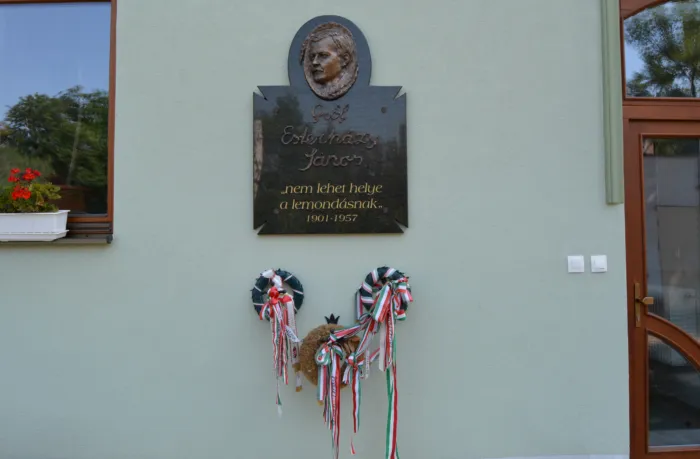
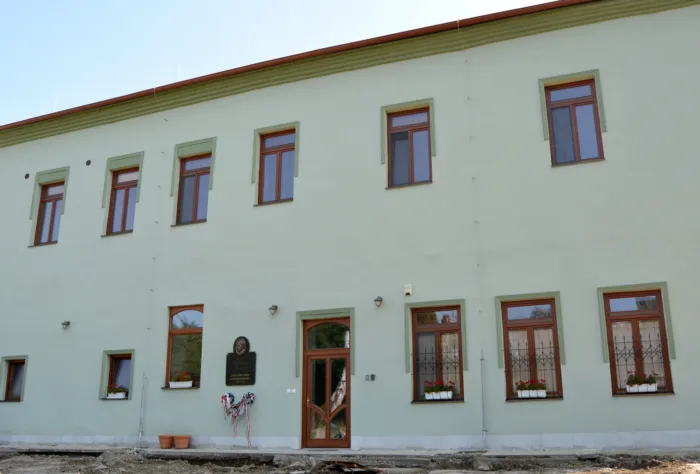
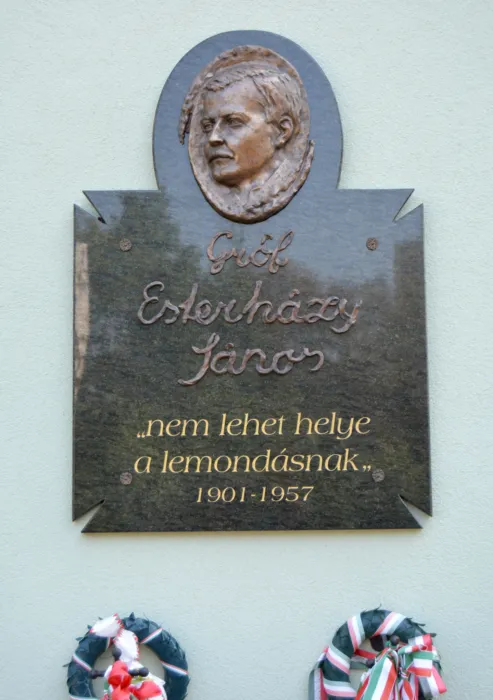
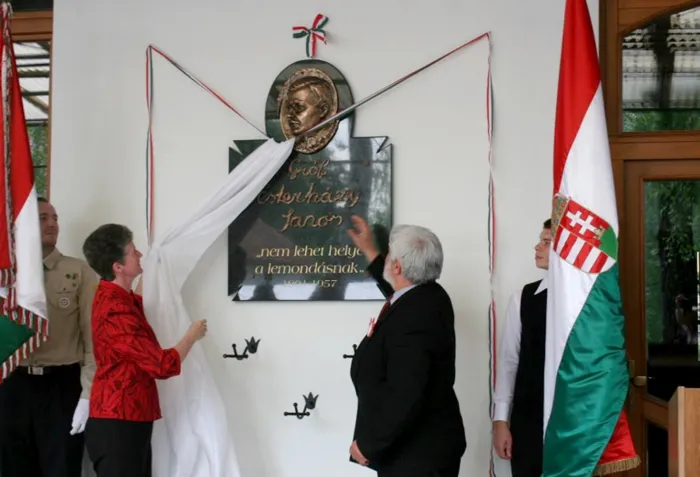
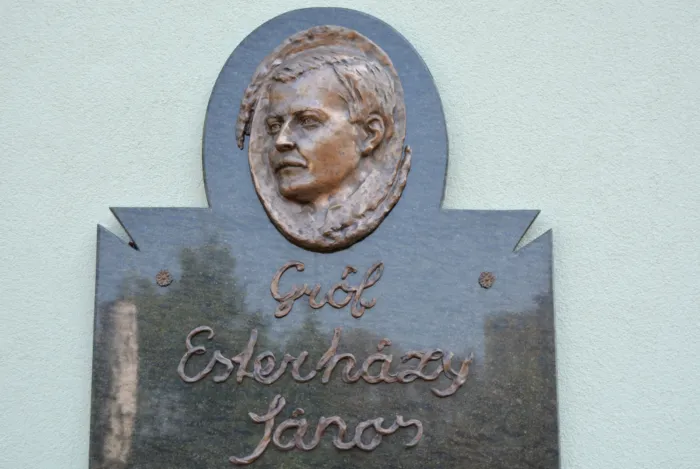
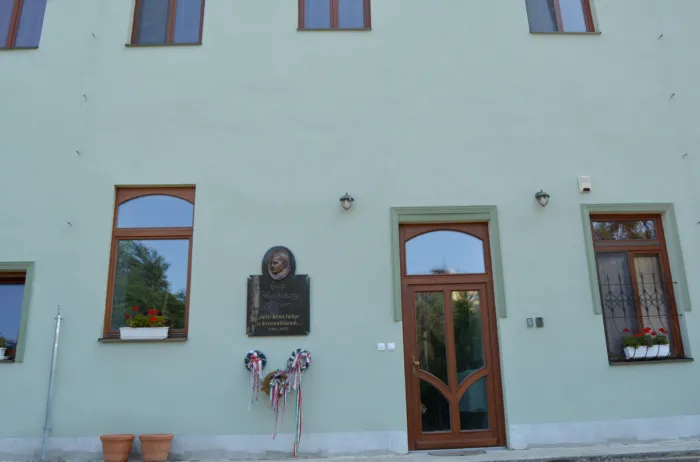
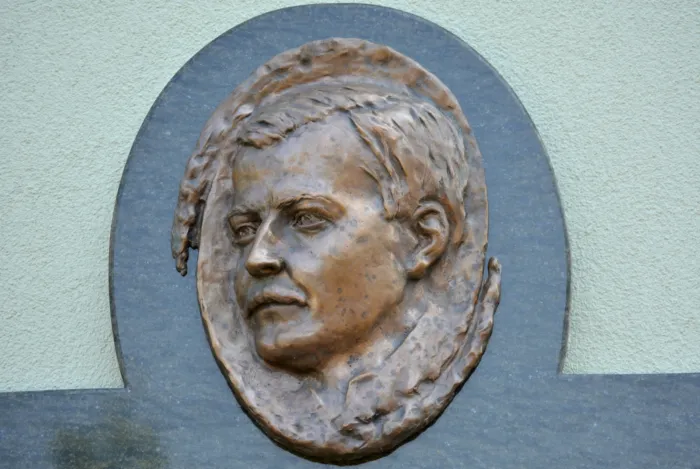
The Léva Memorial Plaque Committee, which was formed to erect the Léva Esterházy plaque, announced a single-round, open tender on April 26, 2012, for the design and construction of the relief memorial plaque of the martyr politician. ; The deadline for submitting the tender was May 30, 2012. The committee voted unanimously to accept the work of Péter Szatmáry. ; The technical data of the dimensions in the tender is 110 cm x 60 cm, the choice of material is based on the contrast of Guatemalan green marble (the plaque) and bronze overlays (relief and letters). The cold green color of the stone highlights the warm, reddish color of the bronze, so they are complementary colors. The entire memorial plaque would be attached to the wall of the facade of the gymnasium courtyard with four screws, which would be covered by bronze buttons decorated with the historical coat of arms of the Esterházy family. ; In the artistic design of the relief and the letters, Péter Szatmáry was guided by a painterly influence, which adequately expressed the dramatic outcome of the life and sacrifice of the person depicted. He strove for an effect that, thanks to its brushstroke-like design, is airy and light, yet cathartic. This form-breaking painterly formulation coexists harmoniously with the classical Roman form of the marble tablet. He chose the slogan "there can be no room for resignation" (the quote comes from one of János Esterházy's manifestos addressed to the Hungarians who remained in Slovakia), which perfectly expresses the martyr politician's outlook on life and teachings. ; The memorial plaque was inaugurated on June 4, 2014, on the Day of National Unity, and was placed on the facade of the local Czeglédi Péter Reformed High School. ; The ceremonial inauguration was attended by Zsuzsanna Répás, Deputy State Secretary for National Policy at the Ministry of Public Administration and Justice, Olivér Fráter, Vice President of the National Strategy Research Institute, Árpád Martényi, President of the János Esterházy Memorial Committee, Dr. Imre Molnár, historian, Gyula Bárdos, National President of the Csemadok, and many others.