
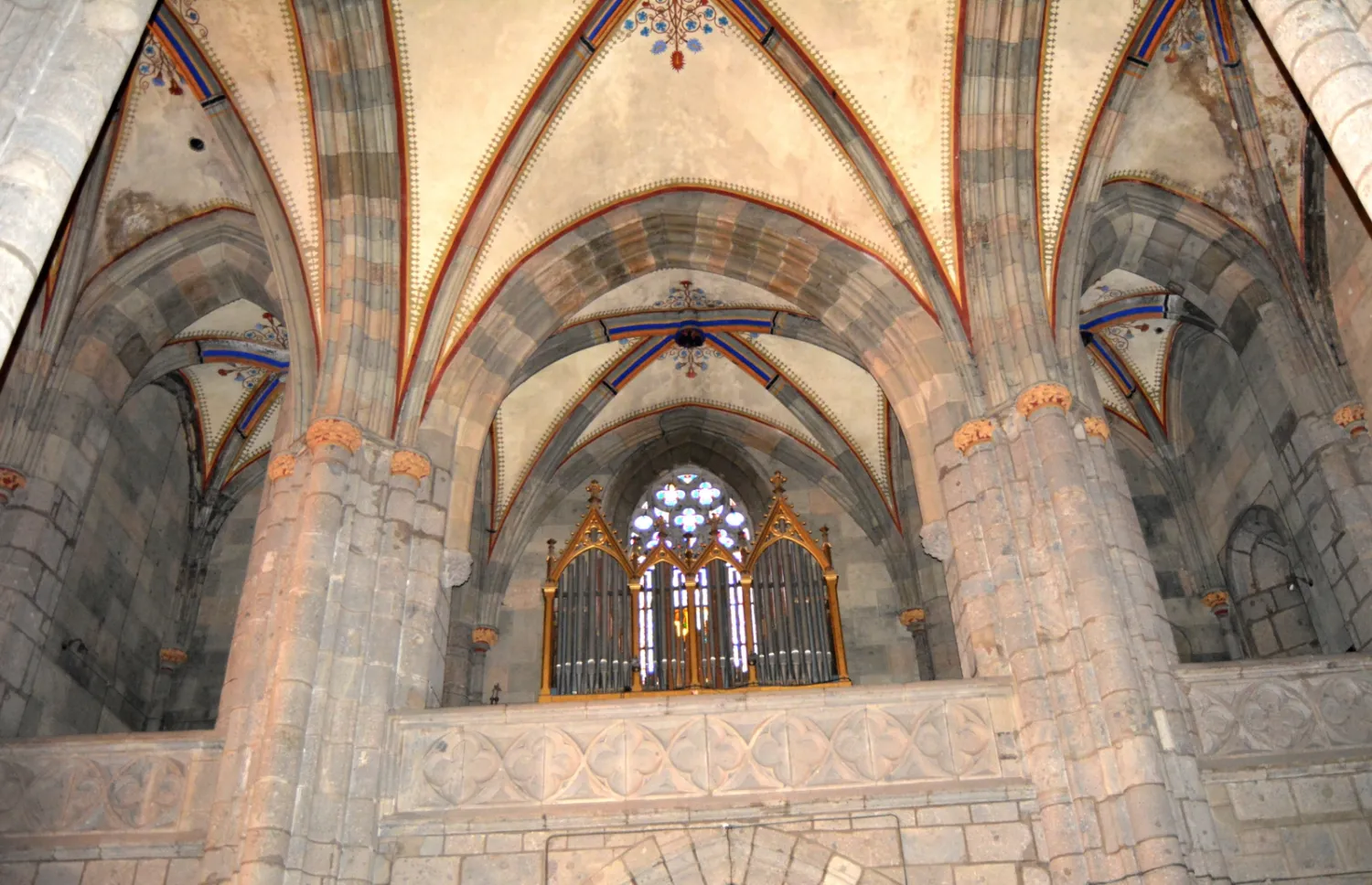
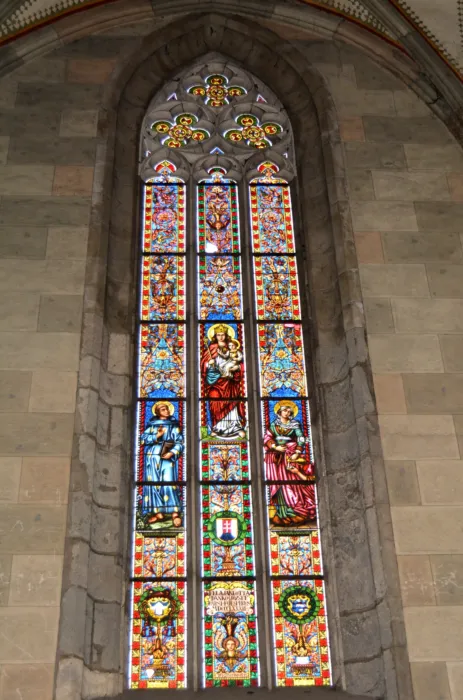
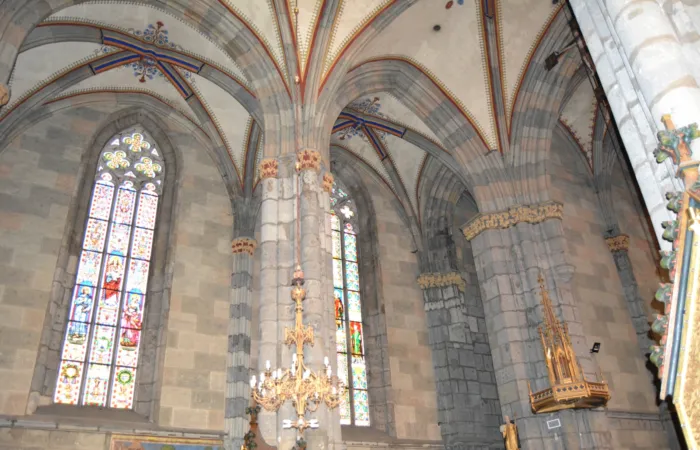
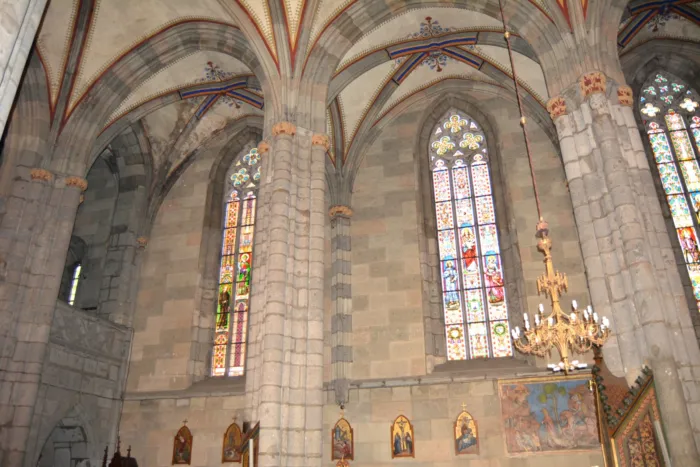
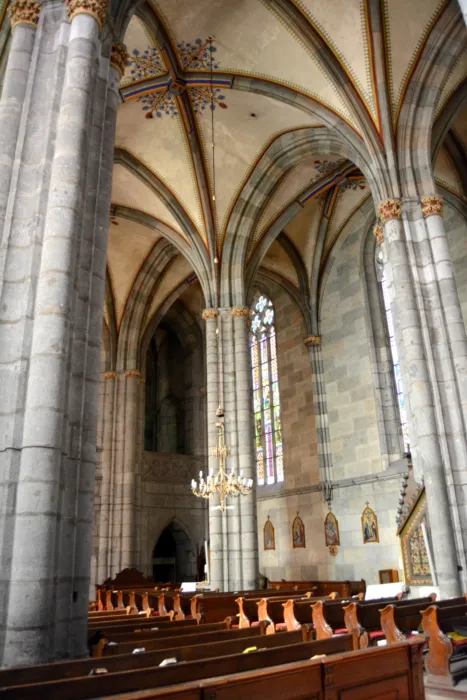
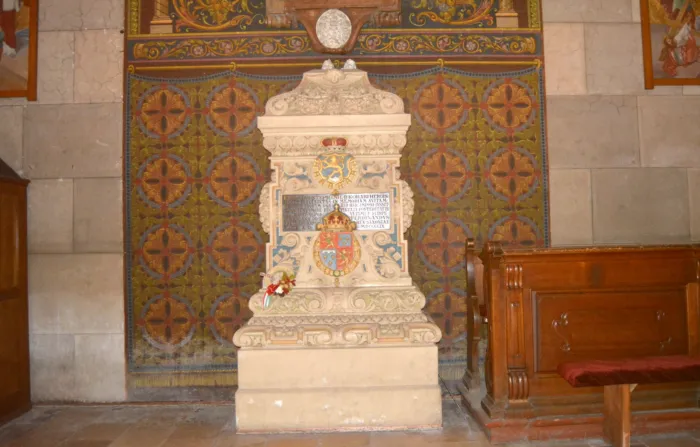
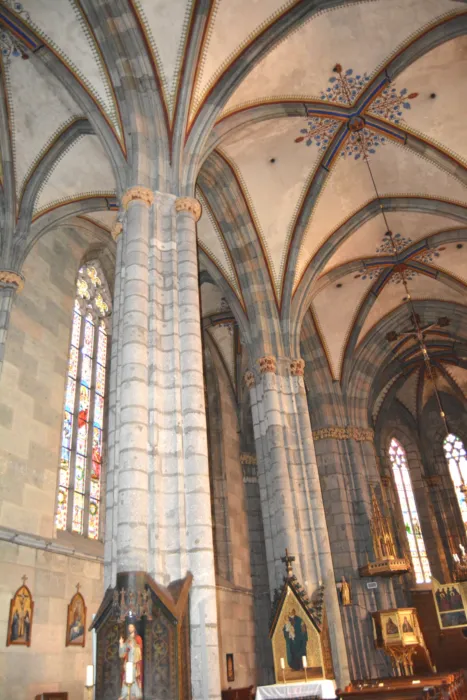
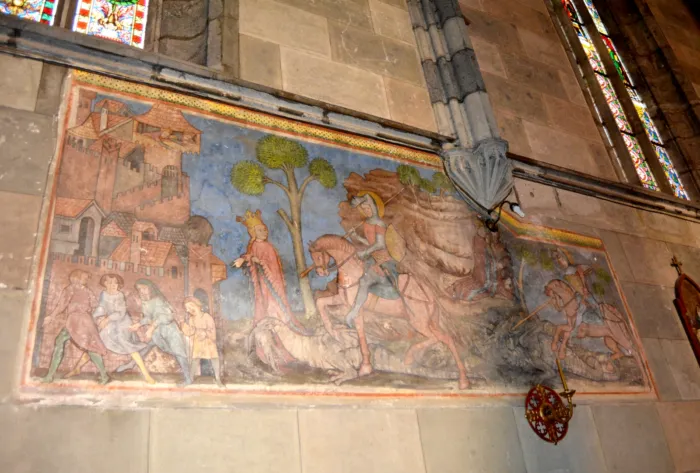
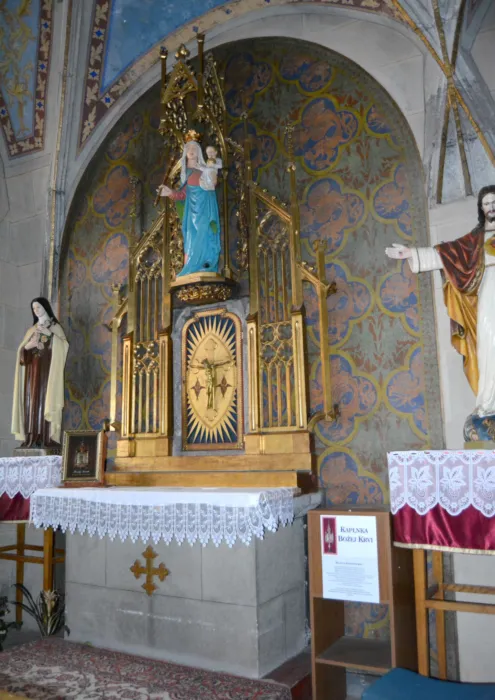
Garamszentbenedek Benedictine Monastery and Church - interior
Building, structure
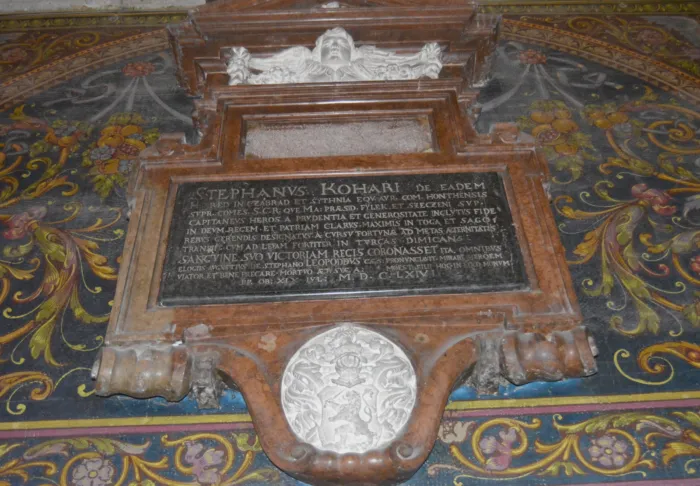
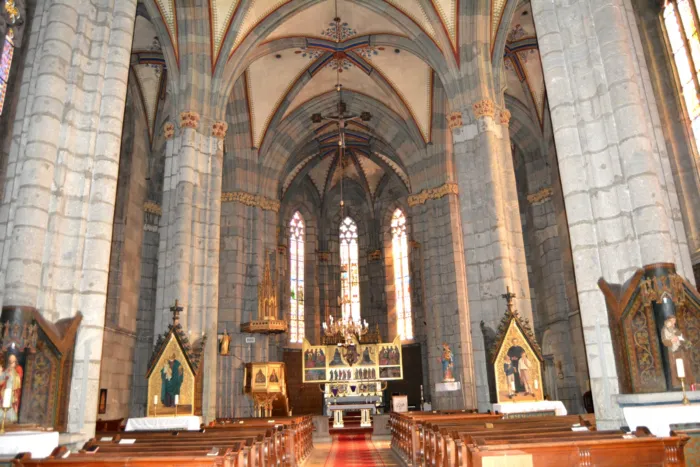
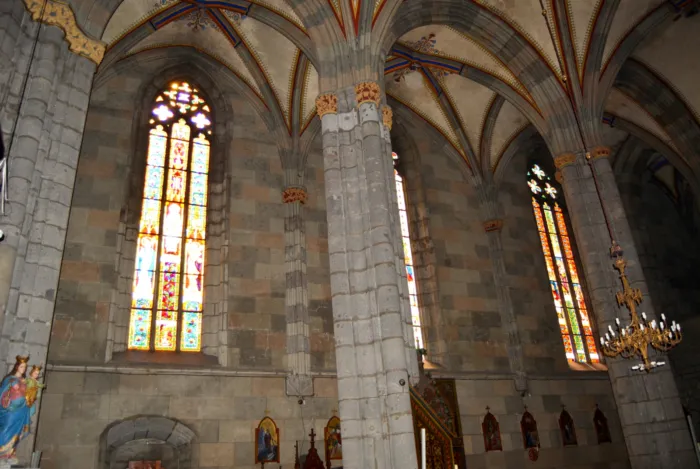
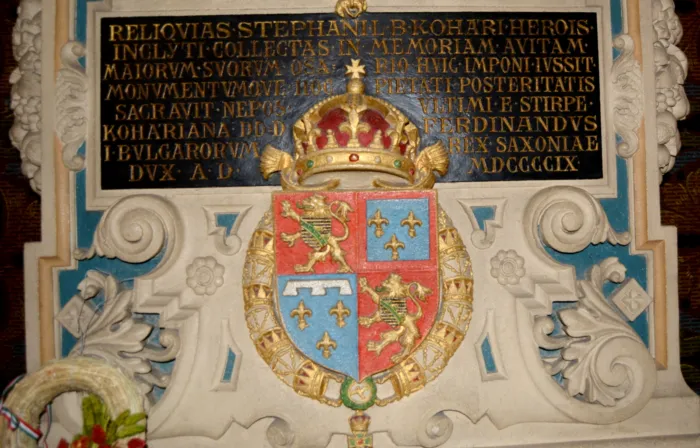
The Benedictine monastery and its church were founded by King Géza I of Hungary. It was consecrated in 1075, when his estates were also listed. According to archaeological observations, the first church dedicated to Saint Benedict was a basilica with 3 naves, a semicircular sanctuary, and a pair of western towers. In the 14th century, under the direction of Abbot Szigfrid, the present-day Gothic hall church was built around the old church, and the monastery wings were also rebuilt at that time. The statues and other stone carvings of the western main gate of the church are particularly ornate. The eastern part of this “second church” is dated by the carved coat of arms of King Louis I the Great, while the western part was completed almost a century later: it was consecrated only in 1483. In the 16th century, due to the Turkish threat, the Benedictines abandoned the building, and the monastery was surrounded by a defensive wall and bastions, some of which are still visible today. The fortification, which had minor military significance, played a role several times – for example, it changed hands – in both the Turkish and Kuruc wars. Its organ was built after peace was declared, in 1714. In the crypt under the church, members of the Koháry family, who were significant in the history of the Uplands, rest. The so-called Holy Blood Chapel was built in 1713 to store the Holy Blood relic (a piece of Veronica's shawl, which he received from Pope Paul II) donated to the Benedictines by King Matthias in 1483. ; After the fire of 1881, the building was restored under the leadership of the architect Ferenc Storno from Sopron. At that time, one of the most famous relics of the Garamszentbenedek, the Gothic wooden coffin from the end of the 15th century, was transferred to the Christian Museum in Esztergom. During the years of the socialist dictatorship, in 1950, the monastery was designated as an internment camp, where monks from many monasteries in Czechoslovakia that had been forcibly liquidated by the state were gathered. In the 1970s, it was declared a monument and partially renovated, which is when it acquired its present appearance.