
Neo-Gothic Esterházy Castle in Galánta
Building, structure
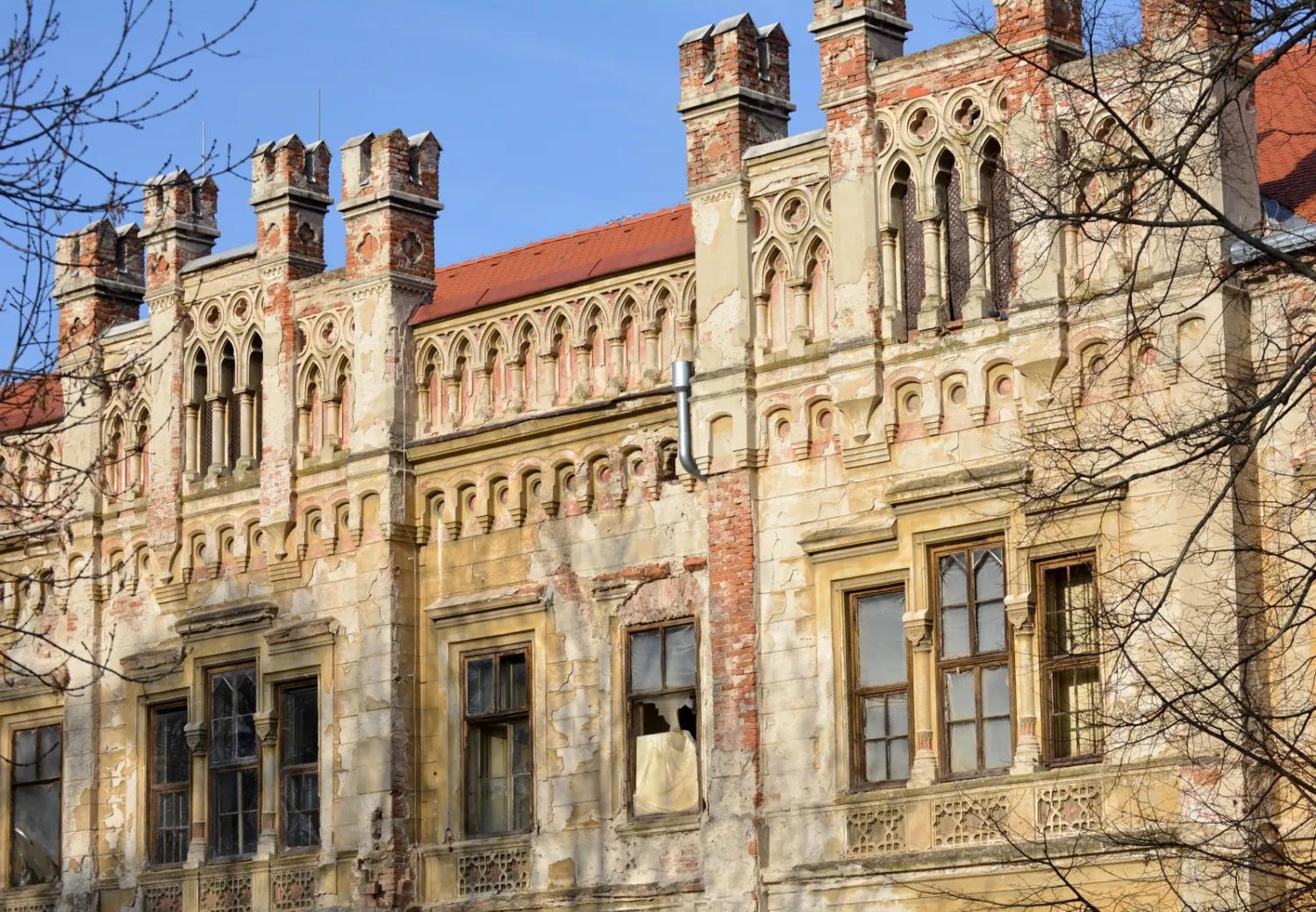
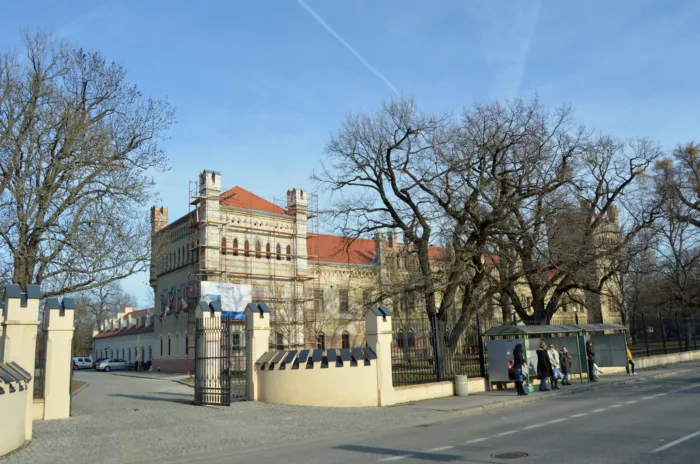
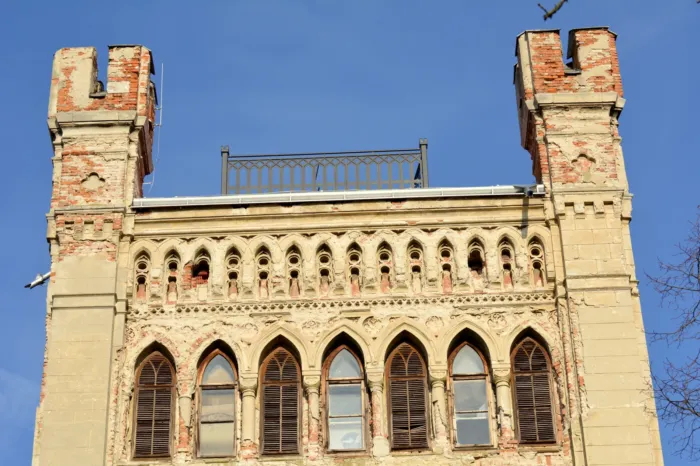
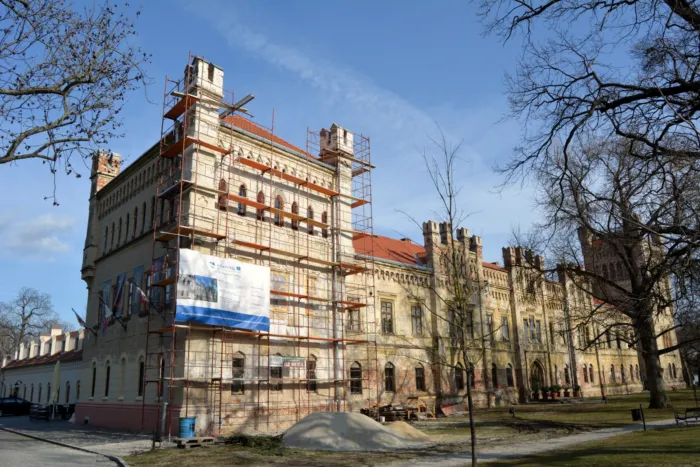
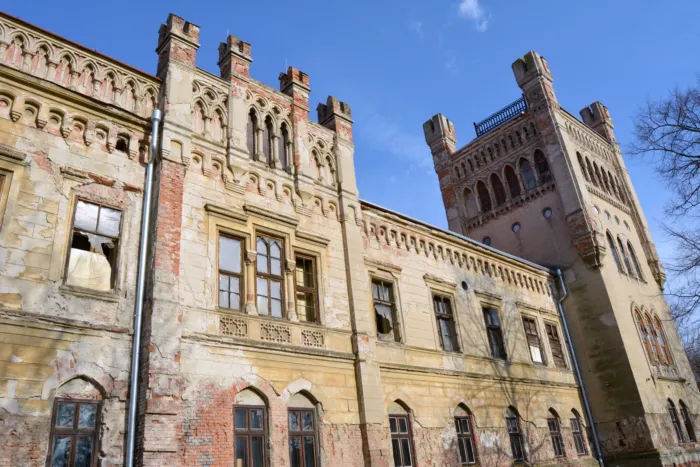
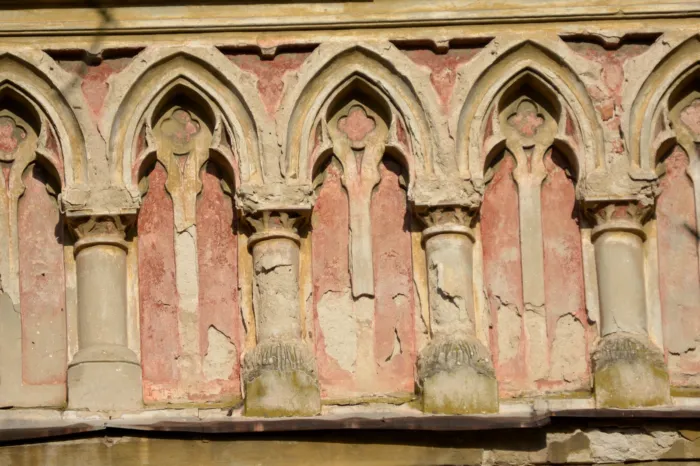
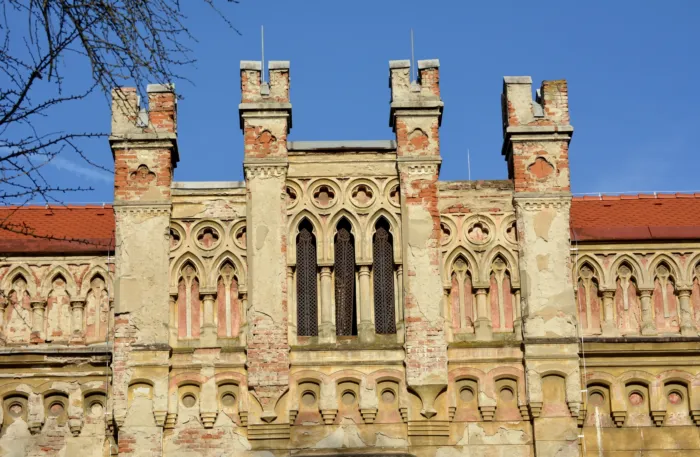
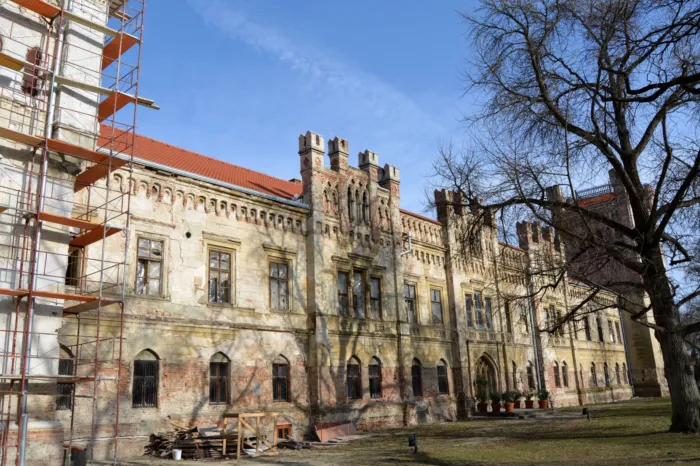
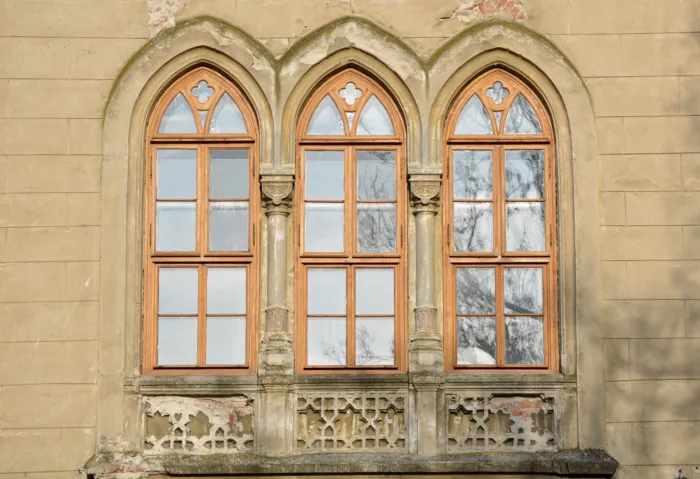
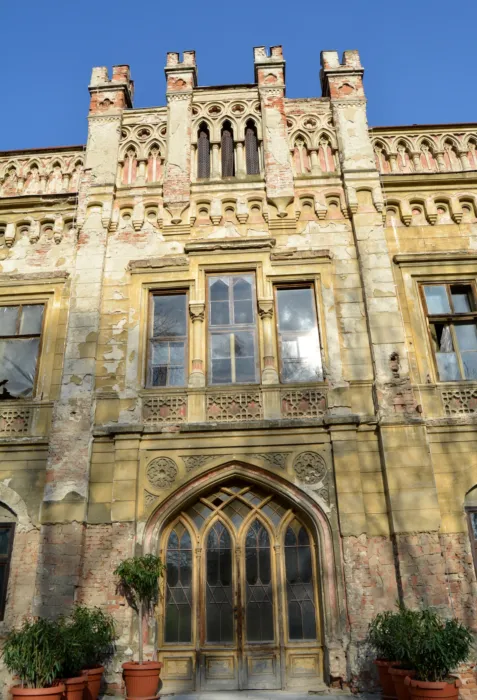
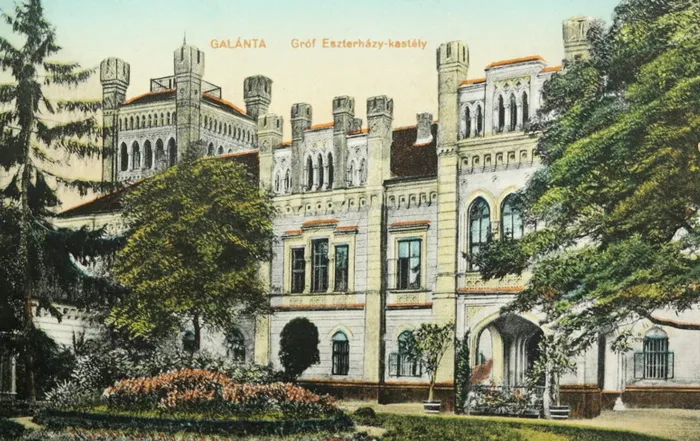
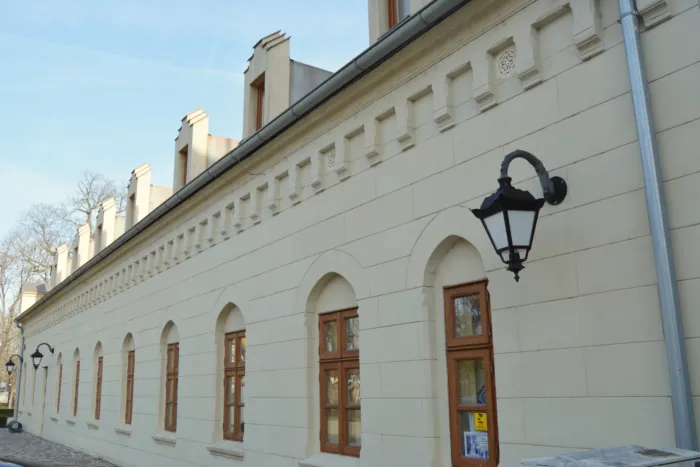
The Esterházys built several buildings in the city. Among the most significant is the neo-Gothic castle, which was originally a fortified Renaissance building from 1633. ; The castle was built in 1633 by Dániel and Pál Esterházy during the family's first strong rise to power and economic prosperity. The next member of the family, Imre, who was Bishop of Nitra, had the building rebuilt in Baroque style in 1736. The marble fireplaces on the first floor survived from this reconstruction. It acquired its current neo-Gothic-Tudor style during the reconstruction completed in 1861, associated with József Esterházy. The imposing building is currently in a state of decay, but in recent years the park and the northern wing of the building have been renovated. The castle is owned by the municipality. ; The castle is surrounded by a natural landscape park, the scale of which contrasts with the rich decoration of the building's facades. The castle is a monumental building built on a U-shaped floor plan. Side wings enclose the courtyard. The central part is two-storey, the side farm buildings are single-storey, these are located in the place of the original Renaissance reinforcement. In the central part of the main building there is the representation staircase, which leads to the ceremonial halls on the first floor. The plinths are richly articulated in the English Gothic style. In the interior, the artificial plaster vaults also copy the Gothic style. ; József Sisa writes about the building as follows: ... The reconstruction took place around 1860, for which the plans were made by Antal Weber. The renovated Galanta Castle shows many similarities to Weber's other castle built at the same time, Vörösvári, especially the prominent tower placed on the corner, which thickens in the upper part, although the styles of the two buildings differ, as one is Gothic, the other is semicircular in style. The long, single-storey main wing is flanked by an acute-angled corner tower. The one on the right rises almost ominously to a height of three storeys, its topmost level enriched by a pointed-arched loggia, a row of arches, corner pillars with loopholes and a viewing terrace. The middle of the main facade is divided by three similarly designed gables. The rich architecture and ornamentation of the tower and the projections lend the building an almost oriental character. In contrast to the pointed-arched openings of the ground floor and the tower, those on the first floor have straight ends and eyebrow cornices, probably products of the castle's previous construction period. The rear facade of the building, which was designed in a similar way to the main facade, also had a donkey-arched carriage driveway added in the 1860s. The staircase opens below it, in the Gothic-ribbed covered space of which the three arms of the staircase are accompanied by a richly patterned, Gothic-style cast iron grille. The more important rooms are covered by neo-Gothic and neo-Renaissance stucco vaults. In addition to the main staircase, there is a further side staircase at each end of the wing leading to the upper floor, and the tower has its own spiral staircase. The castle stands in the village, but is separated from the main street by a front garden. Two ground-floor side wings, the former farm buildings, are connected to the main wing from the rear, which enclose a spacious back garden. This was closed off from the outside world by a Gothic cast-iron fence and a pillar with a loophole, and around the turn of the century a round, convex flower bed and a statue were placed inside.