
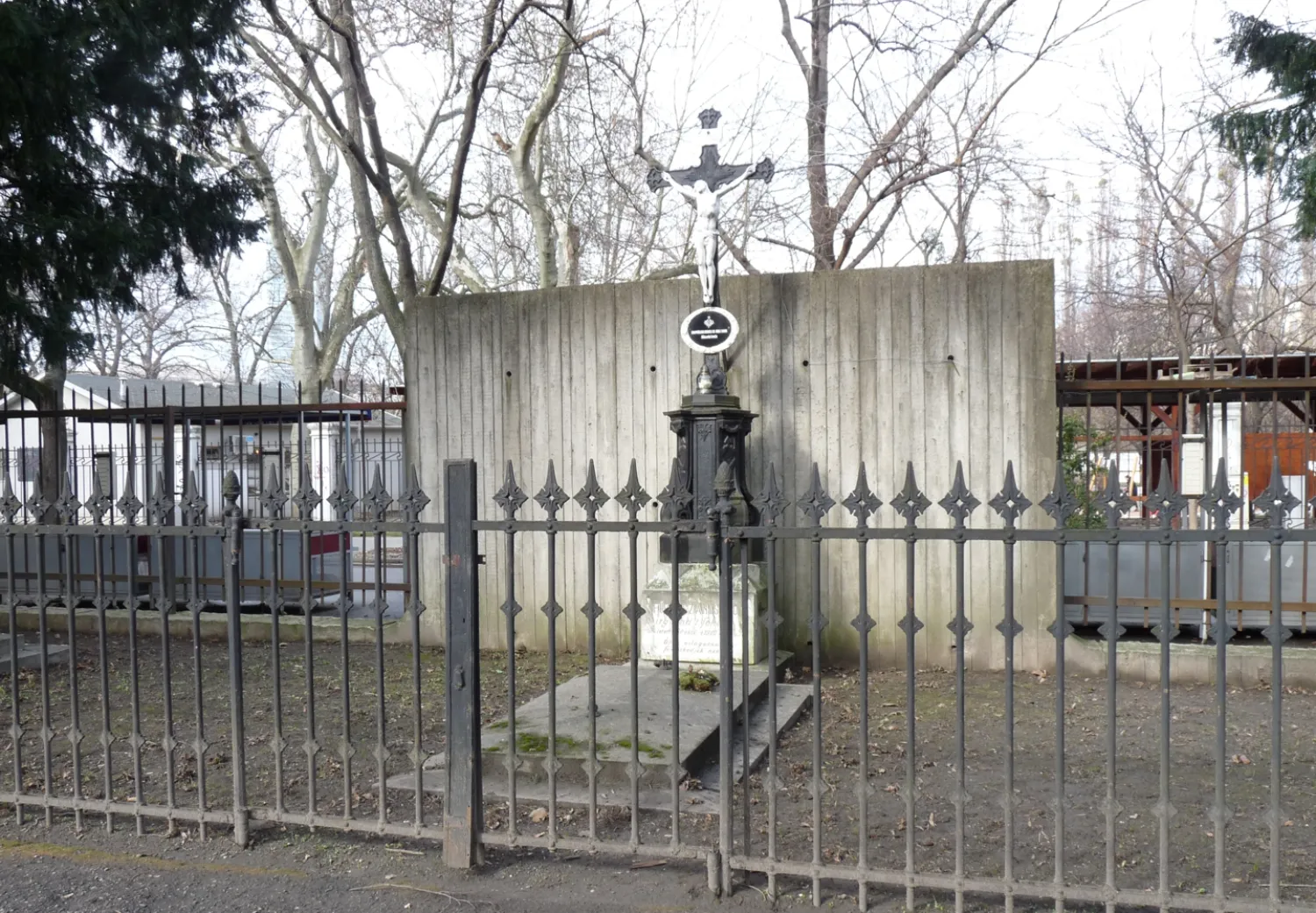
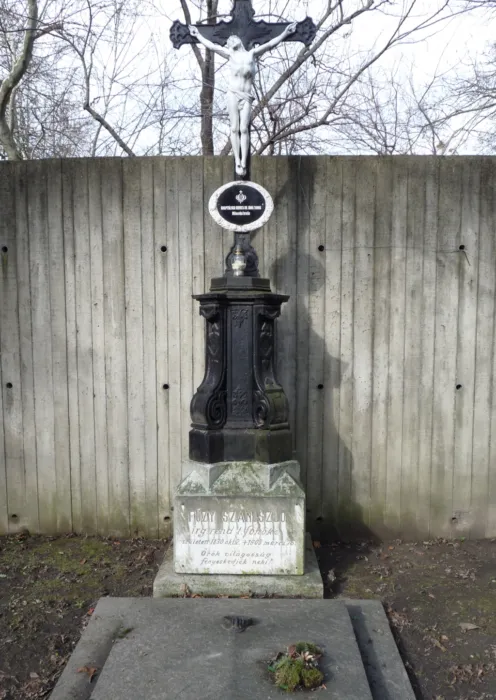
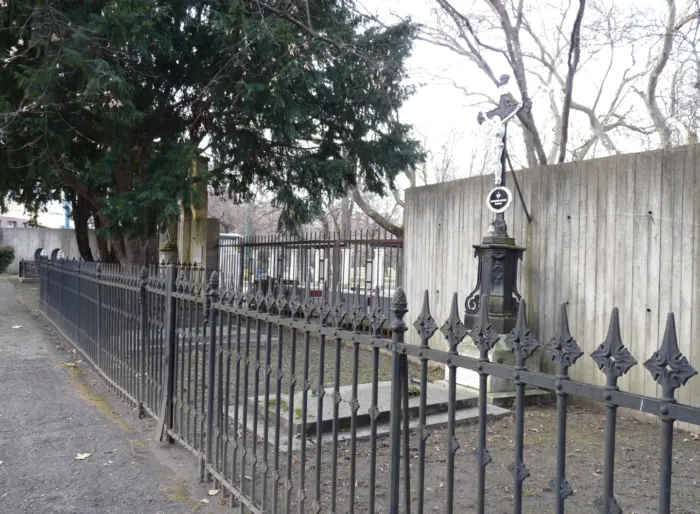
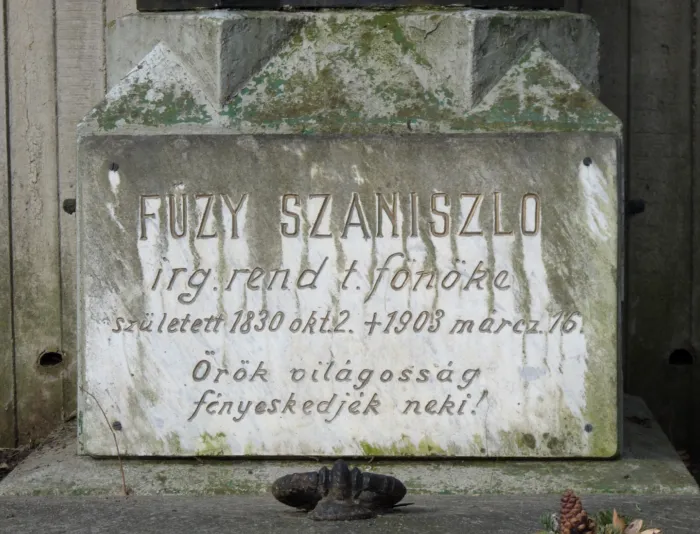
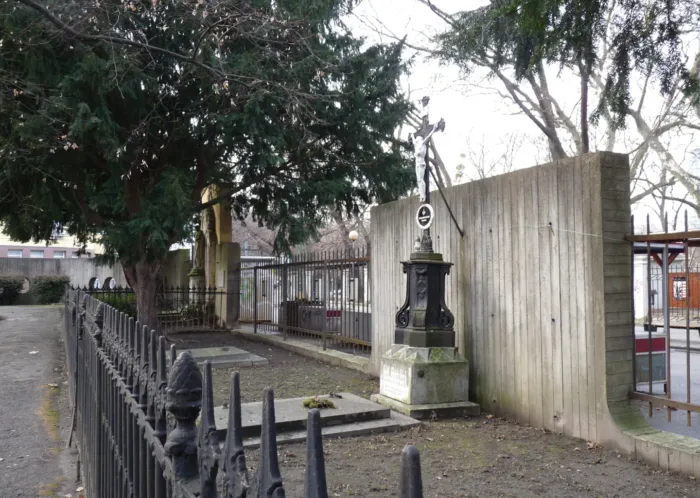
The grave of Szaniszló Füzy
Cemeteries, tombstones, graves
Füzy Szaniszló János, OH (Ordo Hospitalarius - Order of the Hospitallers of Mercy) (Veszprém, 2 Oct. 1830-Bp., 16 Mar. 1903) pharmacist, provincial superior. ; He graduated from the Piarist high school in Veszprém. In 1849 he joined the order in Buda, and in 1848-49 he also treated wounded soldiers of the War of Independence. He studied theology in Bratislava, where he was ordained a priest in 1859. He was a pharmacist trainee in the “Granátalma” pharmacies in Bratislava, Buda, and Szatmár, and in Vienna he obtained a pharmacist’s diploma in 1861. In 1862 he was the caretaker of the pharmacy in Temesvár. Here in 1863. VI. On the 28th, he summoned the pharmacists of Banat to the monastery to form the “communion” of the pharmacists of the Maros-Tisza-köz region. 1864: the “Gránátalma” pharmacy in Pécs was provisional. In 1874, he was the prelate of the monastery in Timisoara, and from 1875, the head of the house in Bratislava. When the Order of Mercy became an independent province in Hungary in 1882, he was elected head of the province. He was elected head of the province and the prelate of Bratislava six more times in a row. In 1877, he offered the king 500 beds for the wounded in case of war. The Order of Mercy built a separate tomb for him, which is located in sector I/½ of the cemetery. ; The actual establishment of the Hungarian province of the order — for administrative reasons — took place in 1856, based on the proposal of Prince Primate Scitovszky. The provincial headquarters was in Bratislava between 1856 and 1903, and then operated in Budapest. ; When Szaniszló Fűzy took over the office of provincial head, there was a great deal of laxity in the order. For his vigorous action, he was involved in many inconveniences and even slander. According to his goal, he wanted to achieve a unified direction. This included: cultivating religiosity, behaving in a manner befitting a monk, and accurately fulfilling the prescribed official duties. Before Fűzy took office, there had also been cases of mismanagement of the order's property. (Since his predecessor was ill, some took advantage of this and did not submit any accounts for 11 years.) There were many complaints about the doctors, and Szaniszló Fűzy took measures to eliminate the many abuses. Fűzy also thought about increasing the order's property, and therefore he dealt with the intention of purchasing the Lukács Bath in Buda. The treasury wanted to sell it, and Fűzy wanted to save the neighboring Császár Bath, which was the property of the order of mercy, from competition. The provincial head eventually received the Knight's Cross of the Francis Joseph Order for his work and merits. However, the order of mercy did not receive Szaniszló Fűzy's award with undivided joy. One of his fellow order members accused him of mismanagement of the order's property. These accusations seemed well-founded and justified, and it seemed, as the number of resignations and accusations increased, that the Hungarian order of the order was beginning to disintegrate. The primate of Esztergom then risked the opinion in a letter that the operation of the order of mercy in the field of patient care could be replaced by nuns. Despite what had happened, Fűzy was again nominated for an award in the last years of the century. Information about his person was also prepared on this occasion. This included doing a lot for the order, for its discipline, and taking its financial concerns to heart. He had the Szakolca monastery put in order with the help of the wealthier monasteries of Eger, Oradea and Szatmár. He was often strict with excessive consistency, and this often caused resentment. His successor was Kornél Thuróczy from 1903.