
Castle of Ears
Building, structure
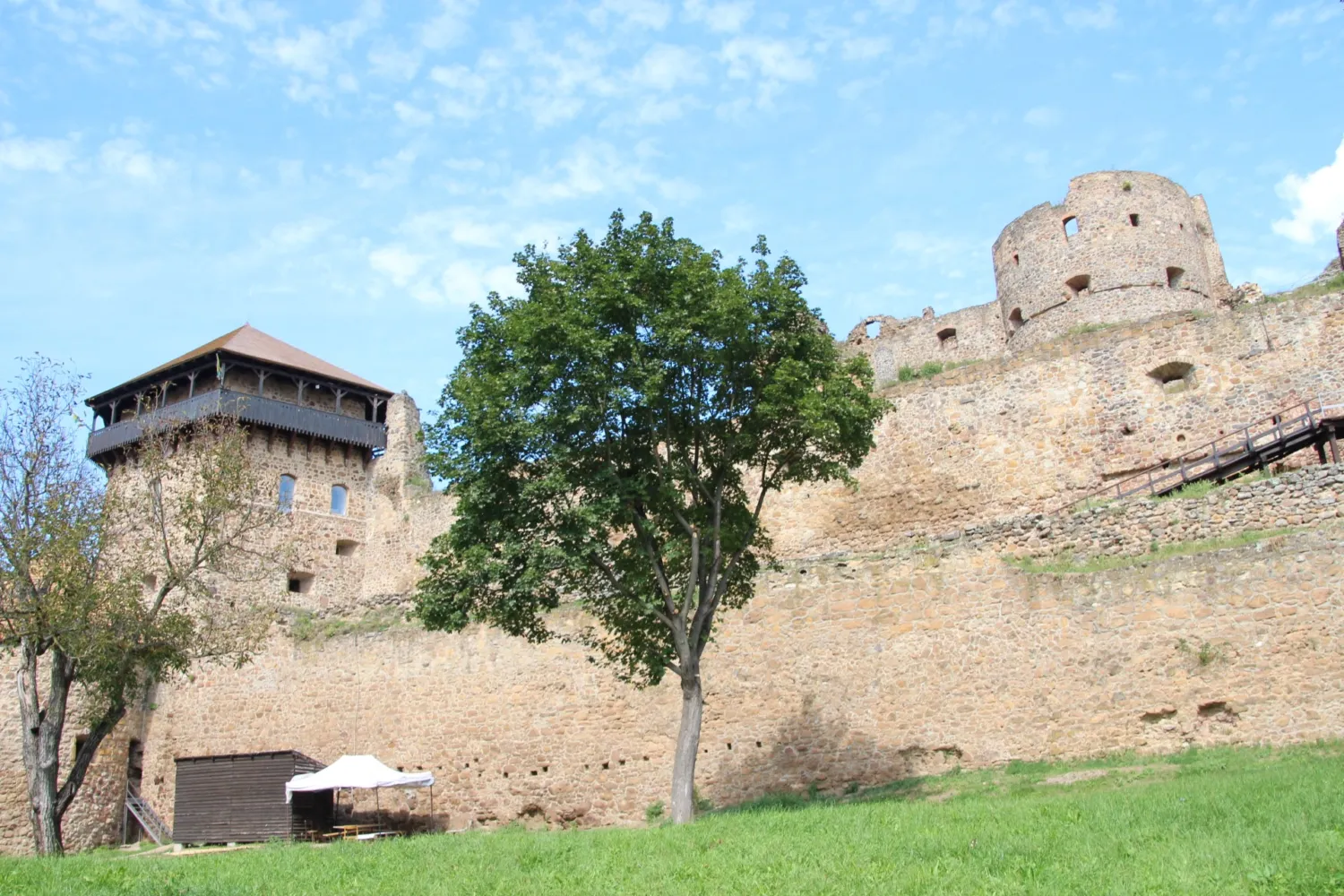
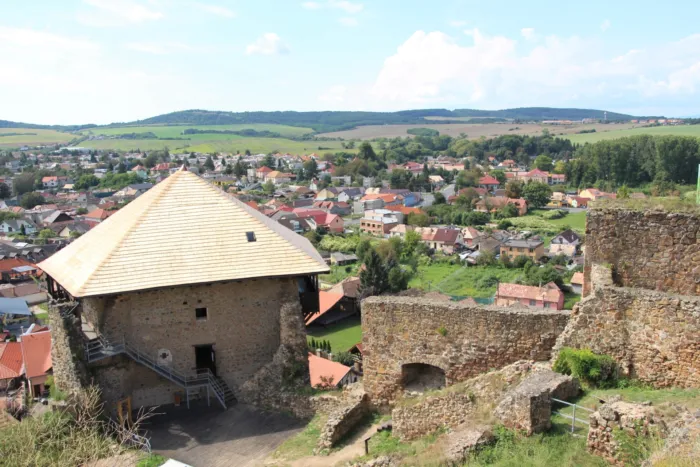
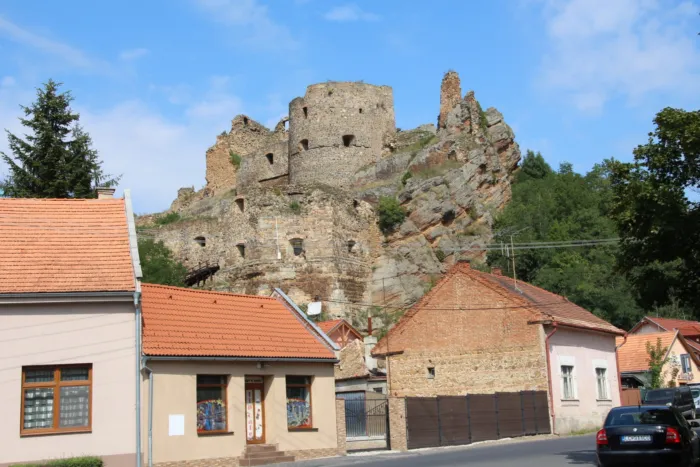
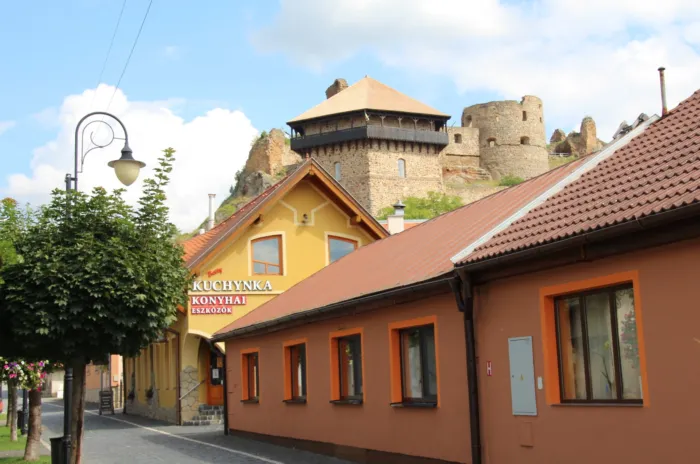
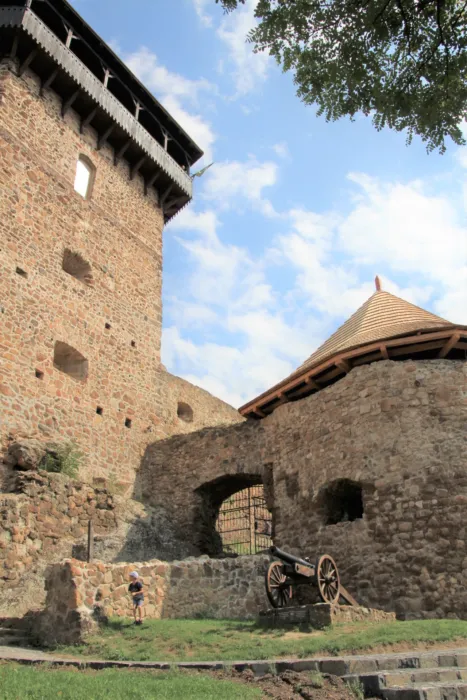
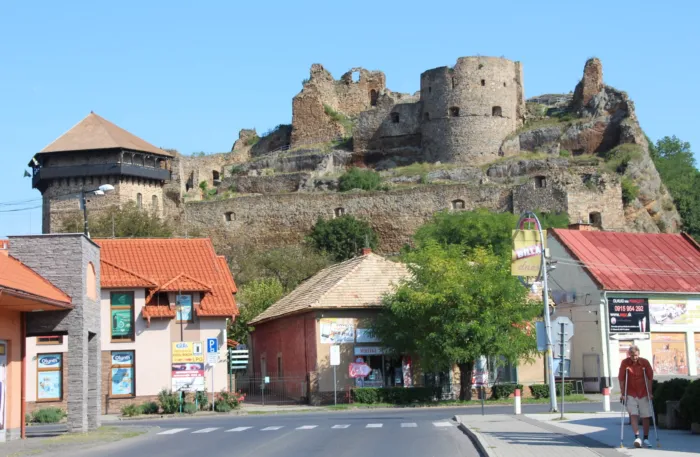
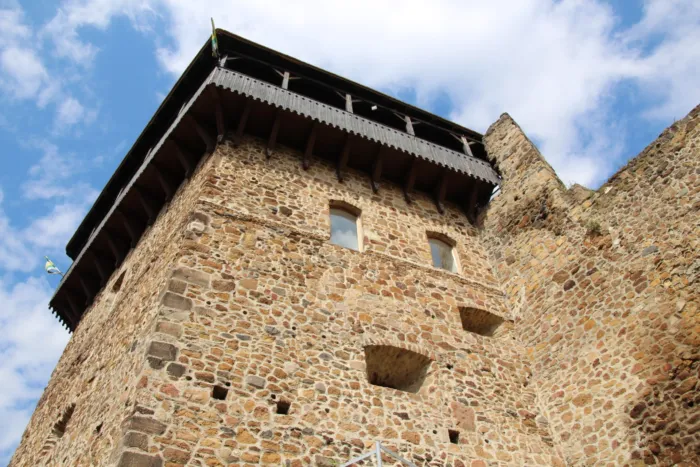
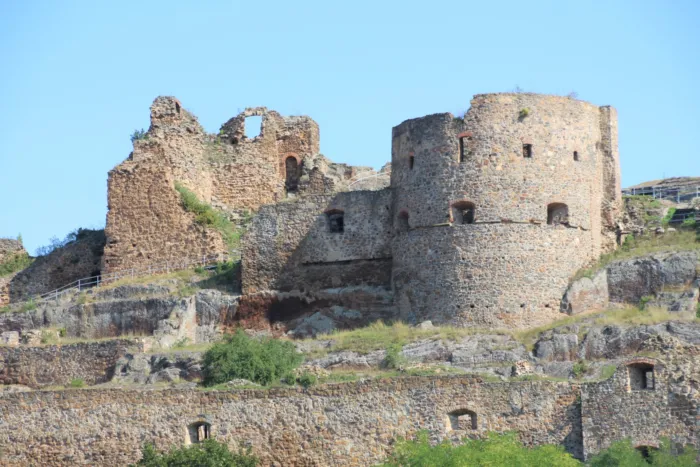
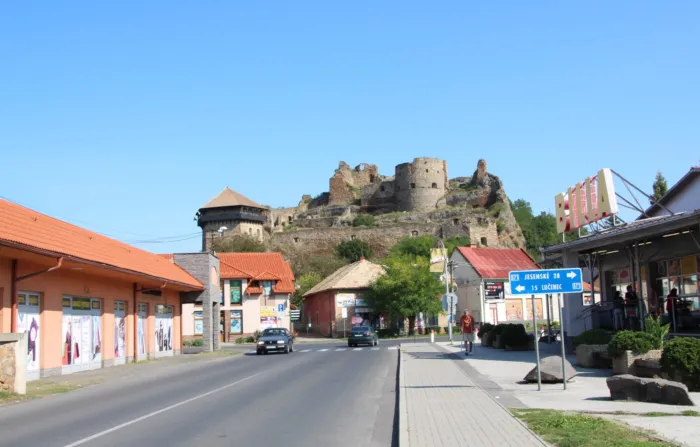
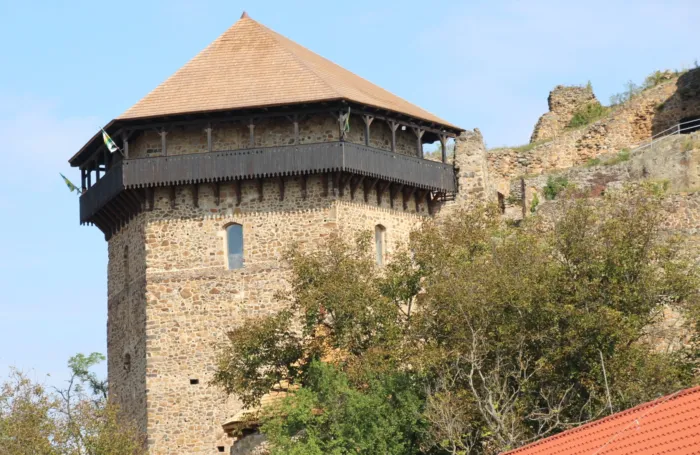
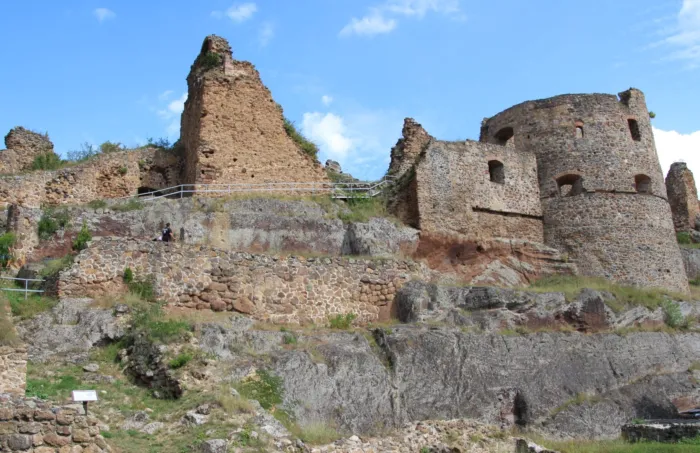
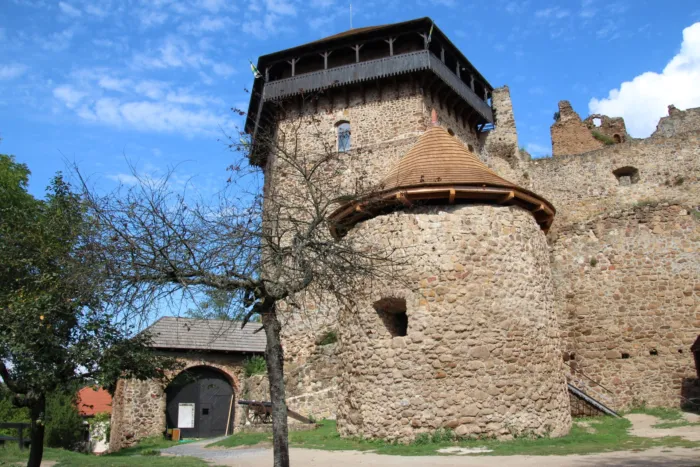
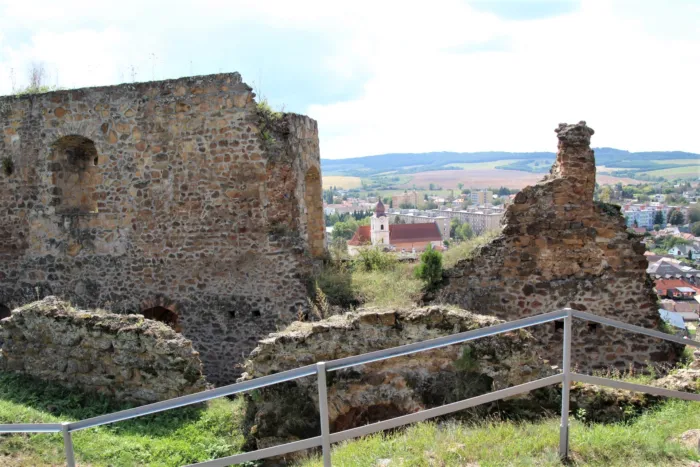
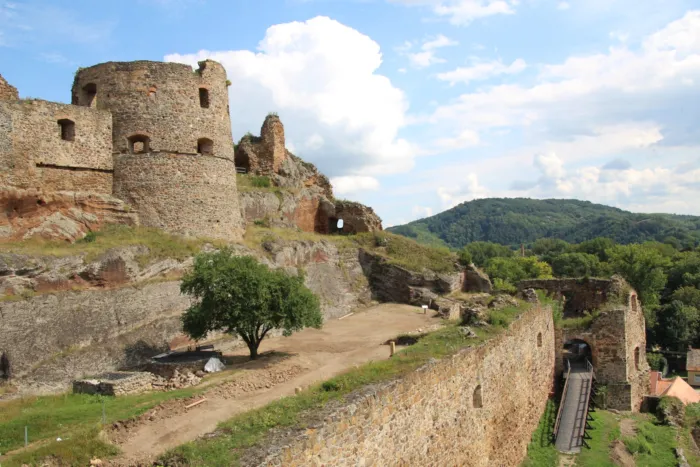
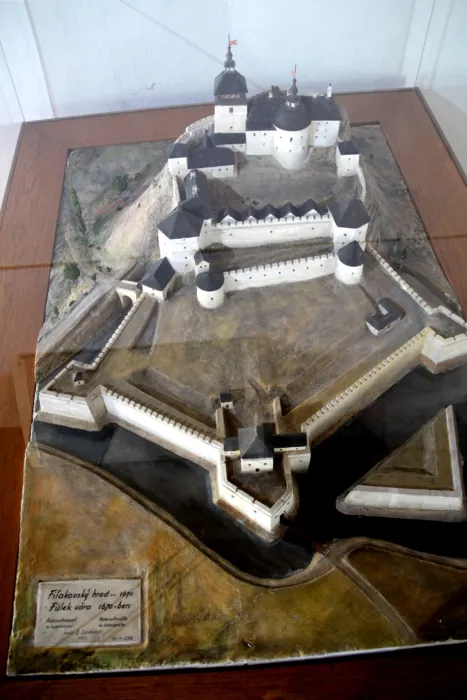
The Fülek Castle was built on a 65-meter-high volcanic cone rising very steeply on its N side in the first half of the 13th century. It can be divided into three parts: the lower, middle and upper castles. The lower castle was built on a low hill rising above the plain in the 17th century. Deep ditches and modern, neo-Italian bastions protected its territory. The guard's farm buildings, warehouses and stables stood here. Nothing of these can be seen today, as the very destructive siege of 1682 and the subsequent bombings damaged the lower castle the most, and the collapsed stones were later carried away by the city's population to their houses and for road construction. Only the gate tower of the lower castle has survived. In the Middle Ages, a wooden bridge and a drawbridge led here across the wide ditch. Our path leads through stone steps to the wall gorge. The entrance to this was protected by a horseshoe-shaped bastion. Further in, cellars carved into the rock can be seen. Another, smaller bastion from the lower castle also blocked the way for the besiegers. The narrowing path of the wall leads to the Perényi Gate Tower. Before this, a wolf's lair and a drawbridge secured the entrance. In the Middle Ages, water could be released from the cistern on the upper level into the deep rock ditch, thus preventing attackers from approaching the gate. The Perényi Gate Tower, built in the 1430s, was three-storeyed, its upper parts were destroyed by the explosions of 1682. From the gate, we reach the courtyard of the middle castle via further stairs. To the right, the ruins of the former lift house are visible. Here, heavier crates and barrels were pulled up the slide cut into the rock using pulleys. It is likely that the Turks also invaded here one night in 1554. Three vaulted cannon positions were built in the thick wall of the middle castle. In the middle of the courtyard, a deep cistern and a well reaching the groundwater level were carved out of the rock. The former observation post of the guard who looked after the drinking water can still be seen. A little further on, the foundation walls of the prison dug into the rock. When we reach the southwest corner, the Bebek cannon tower, a characteristic of Fülek Castle, rises above us. The strongest defensive structure of the medieval castle was built by Ferenc Bebek of Pelsőc, a powerful robber knight of the 16th century, in 1551. The building forms a peculiar transition between the tower and the bastion. Its four levels and thick walls are still fully intact today. A small castle history exhibition can be seen in its hall. It was possible to fire on enemies breaking into the lower castle from its loopholes. Its top floor was built later. To the north of the Bebek cannon tower stood the chapel building, which was completely destroyed by the Turks. Of this, only a deep cavity remains. From here, the road leads up steep steps carved into the rock to the oldest part, the upper castle. The gate tower was also destroyed by the explosion of 1682, only some of the foundation walls are visible. Going up the stairs that curve to the right, the semicircular cannon roundel opens up before us. Behind it stood a palace wing with deep dungeons. In the small castle courtyard, a 5 x 5 meter grain pit cavity opens up. In this place, during the Middle Ages, a dry mill ground grain for the guards. It is clearly visible that the loopholes on the north side were carved out of volcanic andesite material. Having reached the highest point of the Fülek fortress, below us is a terrifyingly deep mountainside. The castle was impregnable from this side. The old tower built in the early days is crumbling in the western part. This too was a victim of the bombings of 1682, and its walls are still standing. The fortress of Fülek has changed from an irregularly planned castle with an inner tower in the early days to a modern Italian bastion fortress that has gradually developed over the centuries. As one of the strongest border fortresses in the Uplands, its capture meant the possession of a distant region. With its gradual restoration, we can save another historical monument for posterity. ; ; History: ; ; Fülek Castle is one of the few fortresses in Hungary that was built before the Tatar invasion. King Endre II (1205 – 1235) allowed the owner of the area, the Kacsics clan, to build a stone castle on the steep, volcanic rock peak. In the Battle of Muhi in 1241, the army of King Béla IV suffered a decisive defeat from the Mongol armies that had invaded the country. The light cavalry troops plundered and burned down the inhabited areas, towns and villages, only the relatively few fortified places were able to resist their attack. The lord of the stone castle of Fülek, Folkus (Fulkó), son of Simon of the Kacsics clan, and his men-at-arms defended the castle. According to contemporary sources, they even lured the Christians who had wandered there to a safe haven with the sound of bells, and then, after robbing them of all their valuables, they threw the unfortunate victims into the abyss from a high cliff. The reconstruction of the destroyed country began under the leadership of King Béla IV, who later returned from the Croatian coast. One of the most important tasks of the ruler was to curb the extremely numerous robbers and murderers. In the course of this, in 1246, the ruler confiscated the Fülek castle estate from the robber knight Folkus and granted it to one of his most trusted followers, the cupbearer Móric II of Pok. The Fülek estate consisted of 11 villages at that time. After the extinction of the Árpád kings, it was occupied by the oligarch Máté Csák, who formed a private lordly province from the vast territories of the Highlands. In 1320, the army commanders of Charles Robert of Anjou, who had risen from a pretender to the Italian throne to become King of Hungary, the Transylvanian voivode Dózsa of Debrecen and the ispans of Spis Fülöp Drugeth, took it back from him by siege. In the remaining centuries of the Middle Ages, the royal ispan of Gömör ruled it as an honorary estate, meaning that he could enjoy the income of the castle estate during his term of office. King Sigismund of Luxembourg distributed vast estates among the lords who had helped him to the throne and who had remained loyal to him against the claimants to the throne. The estate of Fülek was given to Baron Leusták of Jolsvai in 1390, whose family died out in 1427. It was later a pawn estate of Queen Borbála Cillei, then it was occupied by the Czech Hussites, from whom it passed to the noble family of Perényi. The military role of Fülek Castle was appreciated in the middle of the 16th century, during the Turkish conquest that occupied significant areas of the country. Its landlord at the time, Ferenc Bebek, the lord of Nógrád, fortified its walls with a cannon tower, but this was of no use either, as the Turks took it by trickery in 1554. According to contemporary chronicles, the cleaning of the rooms of the Fülek castle was carried out by a szerecsen prisoner, who emptied the collected garbage through an opening in the eastern wall of the lower castle (now the middle castle) that could be closed with an iron plate. The slave noticed that there was a narrow ledge on the upper edge of the rock wall under the window, which allowed a few people to stand on it and enter the castle through the window. He and a fellow Turkish prisoner who had been released reported his discovery to Kara (Black) Hamza, the bey of Szécsény, who set out with 400 selected warriors to take the important fortress. On the night of September 4, a group of Turks from Szécsény climbed the wall of the Fülek lower castle, where the szerecsen prisoner was already waiting for them. Having entered through the garbage disposal opening, they occupied the towers and opened the gate. Since Captain Pál Jánossy was not in the castle the previous day, most of the guard was drunkenly partying and now fell into a deep sleep. The awakened defenders fought desperately, but the superior army of Tojgun Pasha of Buda soon occupied the strategically important Fülek castle. Even in those days, also by trickery, the Kara Hamza Bey of Szécsény also occupied the Salgó castle. In the following decades, Fülek castle formed an important base for the Muslim conquerors, and its guard consisted of 323 people according to the contemporary lists of mercenaries. The raids that started from here devastated and taxed the Christian population of distant regions. For example, it has been preserved that in 1559, during the raid of Veli Fülek Bey, he extorted five thousand forints from the judge of Szikszó. The Ottoman rule was ended in the autumn of 1593 by the siege of the army led by the royal general Teuffenbach, when the defenders, discouraged by the defeat of the liberating Turkish army, surrendered the fortress after barely two days of shelling. The Muslims stipulated in the surrender conditions that they could freely withdraw armed, with their wives and children. The besiegers agreed to this. The 2,450 inhabitants of the castle - having first buried most of their valuables - began their withdrawal. However, the Turkish women had packed so much jewelry on themselves that they could barely walk under its weight. The soldiers of the royal army noticed this and, relieving them, took the gold. The victors also discovered the treasures buried in the castle, which caused great joy in the Christian camp. In the 17th century, the In the 19th century, its walls also witnessed many turbulent events, such as in 1605, the hajdú soldiers of István Bocskai rose up against the tyranny of the imperial and royal house of Habsburg, and then in 1619, the army of the Transylvanian prince Gábor Bethlen marched under its walls. The commanders of the Fülek castle, which was of important strategic importance, tried to make it resistant to sieges, so new walls and bastions were built, from which they could subject the attacking enemy to devastating cannon fire. Among its more famous castle captains is Ferenc Wesselényi of Hadad, who captured the castle that was enthroned like an eagle's nest in Murány in a night raid in 1644. Of course, let us add that one of the co-owners, Lady Mária Széchy, who was jealous of the castle's ownership, also helped in his reckless plan, whom the victorious Wesselényi soon married. In 1657, Emperor and King Leopold of Habsburg granted the castle estate of Fülek to Baron István Koháry the Elder for his loyal services. During the 1663 campaign led by the Turkish Grand Vizier Köprülü, the important strongholds of the royal border castle system were occupied one after another, including Érsekújvár, the castles of Nyitra, Léva and Nógrád. Upon hearing of this, István Koháry had the castle and town of Szécsény burned down, and then retreated with his army to the stronger Fülek. The following year, the Christian armies launched a counterattack, in whose ranks the Fülek soldiers also fought there. Baron István Koháry, the Honti chieftain, fell in the battle near Léva, and was succeeded in the position of castle captain by his son, István the Younger. According to the contemporary mercenary list, the Fülek guard numbered 400 hussars, 300 hajdús and 26 gunners. After the suppression of the Wesselényi-type conspiracy against the Habsburg imperial and royal house, the poor lads called kurucs appeared more and more frequently in this region, with whom the mercenary troops in the castle often clashed. The largest siege of Fülek castle took place in August 1682, when the besieging armies led by Ibrahim Pasha of Buda, Imre Thököly Kuruc leader and Mihály Apaffy, Prince of Transylvania, arrived and set up camp under its walls. The defense of the fortress was led by Baron István Koháry the Younger, at the head of a guard of 4,000 men according to contemporary data. After a few days, the defenders set fire to the ramparts of the city, which was deemed indefensible, and retreated to the fortress on the rock. Under the cover of fire, the Janissaries attacked the castle, but were bloodily repulsed. The border fortress on the cliff was then bombarded, which the defenders tried to retaliate with night raids. On September 8, despite all the threats of the castle captain István Koháry, the terrified royal mercenaries began negotiations with the besiegers. By then, 3,000 Turkish corpses lay in front of the walls, but the cannons shot huge gaps in the lower castle, which could hardly be held. Finally, two days later, the royal guard, in exchange for a free retreat, gave up the ruined fortress and retreated. However, the Kuruc leader Imre Thököly captured Koháry and sent him to the castle of Regéc as a prisoner. According to contemporary sources, Kohary was placed in protective custody by the leader of the Kurucs, in front of the enraged Janissaries, as he wanted to win the excellent commander for himself. However, the baron, who was unwaveringly loyal to the emperor, opposed this, so Thököly, enraged, locked him in the prison of the Regéc castle. The heavily ruined Fülek castle was occupied by the victorious Turkish troops. Ibrahim Pasha allowed three days of free plundering, and then, despite Thököly's opposition, blew up the walls of the Fülek castle with gunpowder in several places. The documents of the counties of Heves, Külső-Szolnok and Pest-Pilis-Solt kept here were destroyed in the fire that broke out at that time. With this destruction, the military significance of Fülek castle was permanently lost, and its walls were never rebuilt. In fact! Our poet Sándor Petőfi, visiting this place, bitterly noted that the stone walls soaked with the blood of heroes are being demolished by the population one by one and taken away as building material. The castle ruins were first explored in the 1940s, and then their remains have been gradually restored since 1970. Nowadays, the border castle, which once saw many bloody sieges, can be visited for an entrance fee.