
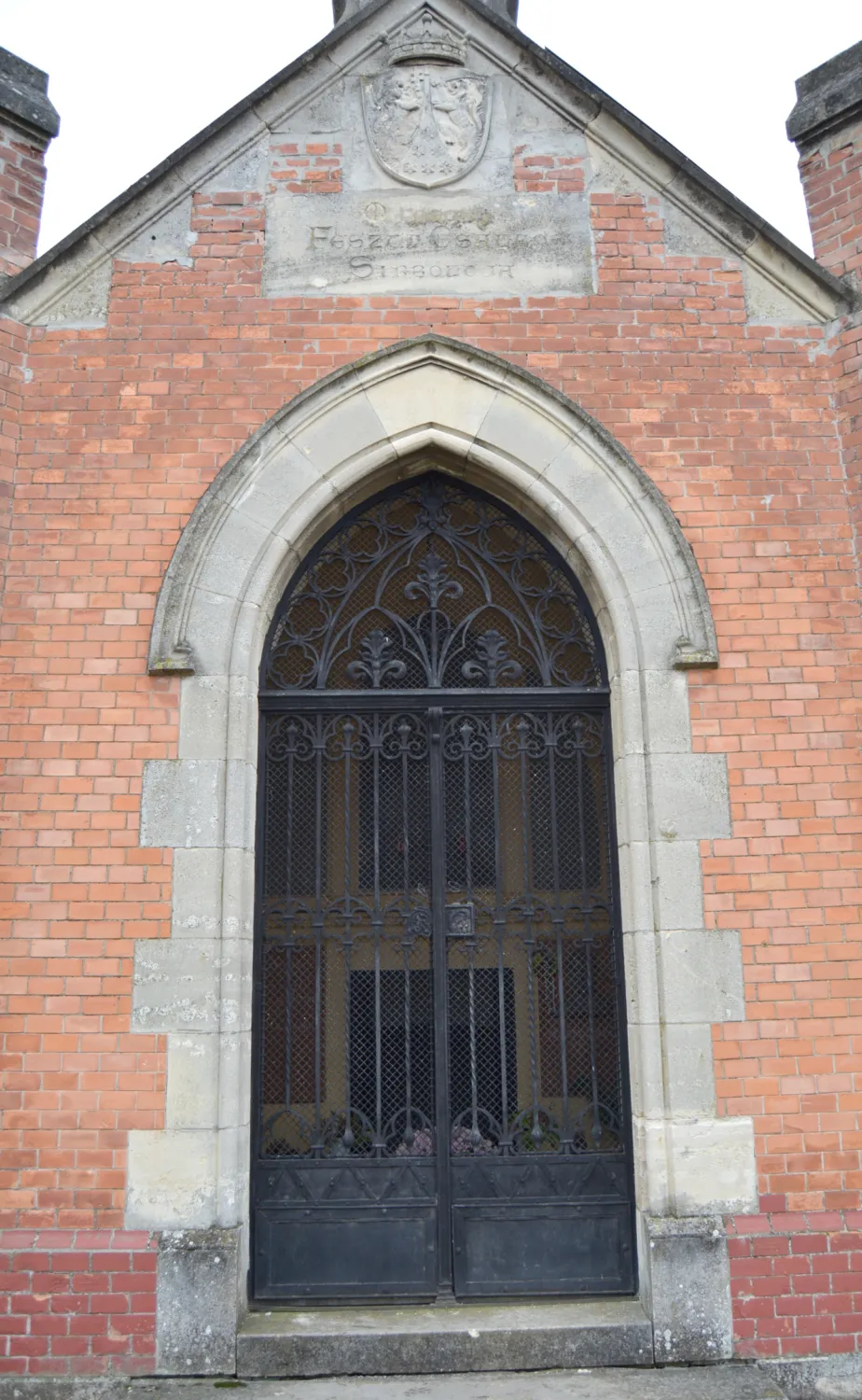
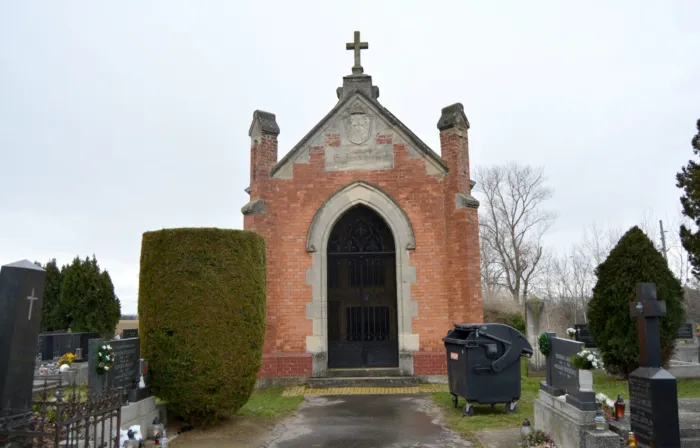
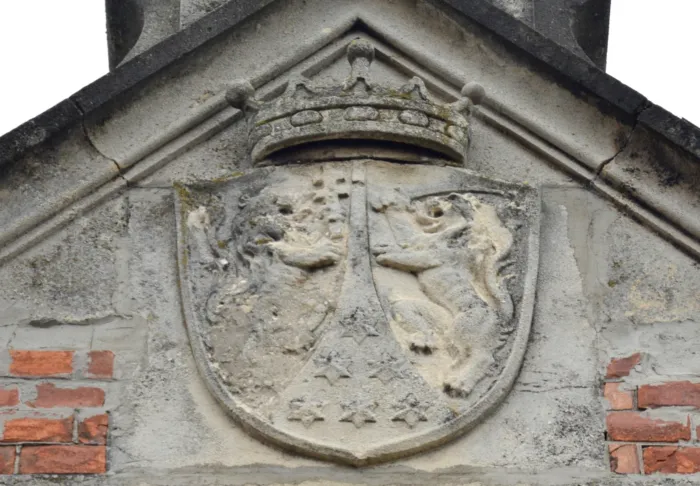
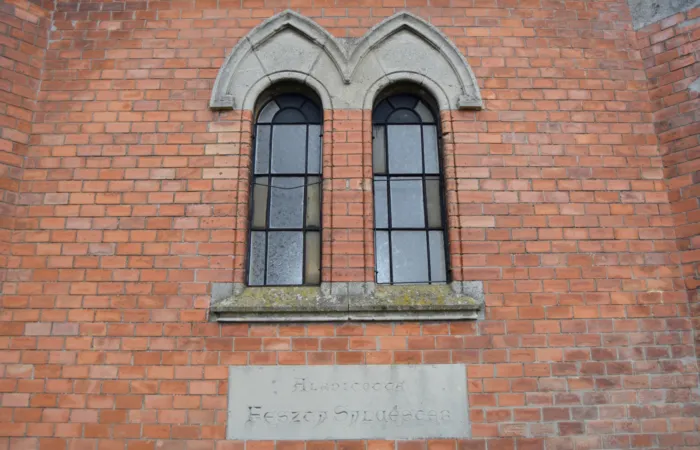
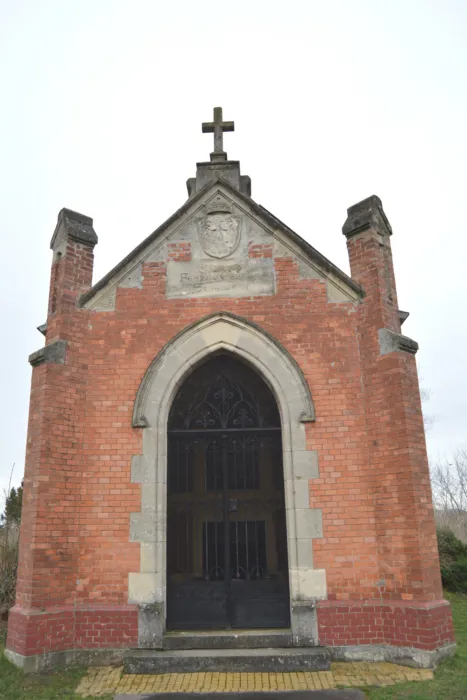
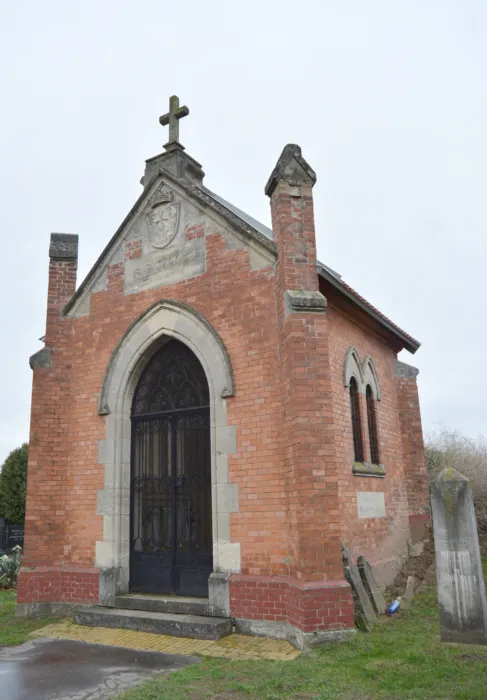
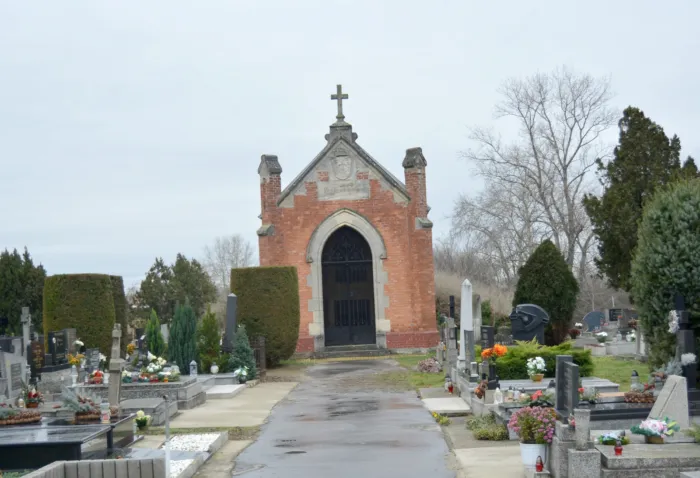
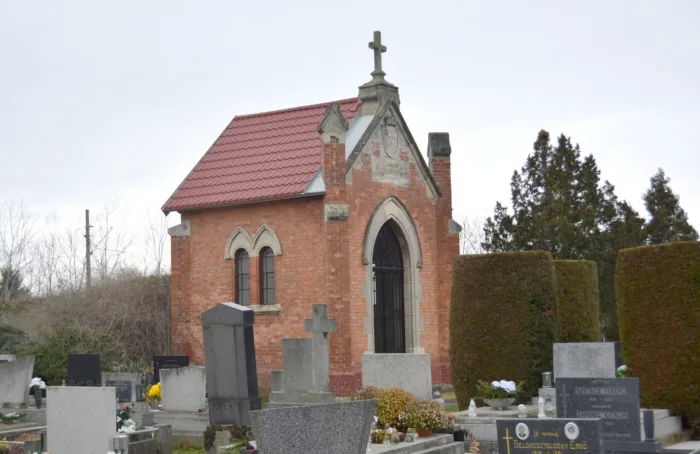
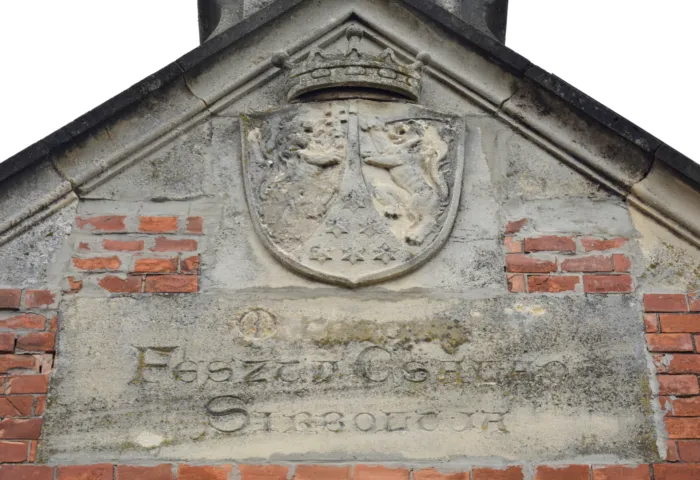
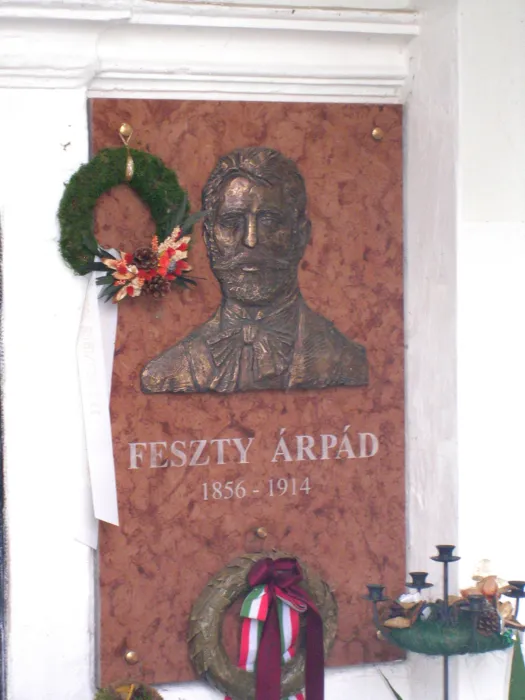
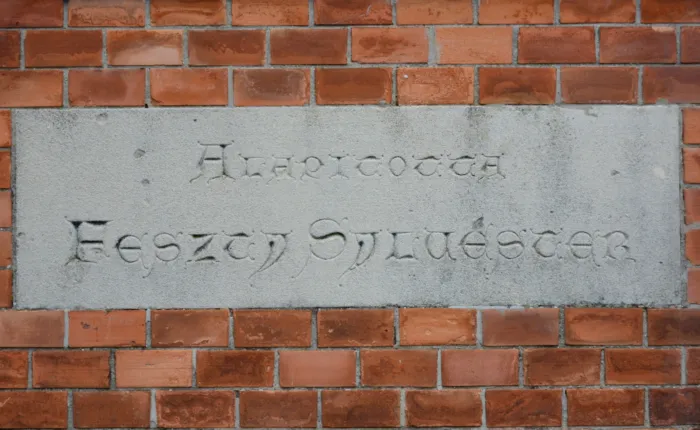
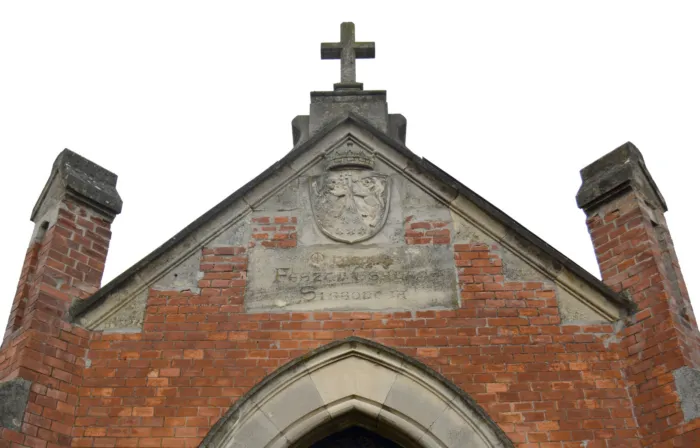
Feszty family tomb
Cemeteries, tombstones, graves
Árpád Feszty Martosi (born Árpád Szilveszter Rehrenbeck, Ógyalla, December 21, 1856 – June 1, 1914) was a Hungarian painter. His father, Szilveszter Rehrenbeck (1819-1910), was a landowner in Ógyalla, and his mother was Jozefa Linzmajer (1822-1885). ; The ancestors of the family originate from Linz, Austria, in the 18th century. The Rehrenbeck family is completely Magyarized. Sziveszter Feszty settled from Vágvecs to Ógyalla in the middle of the 19th century. The Hungarian name Feszty is derived from the name Szilveszter. Until 1945, the family had a decisive influence in Martos. Their estates were spread in and around Martos. The family received nobility, a family coat of arms and the noble surname "Martos" from the Hungarian King Franz Joseph I. The Fesztys started real farming in the Martos area. They were mainly engaged in the cultivation of tobacco, fruit and paprika. Of the 14 children of the Feszty family, 6 boys and 2 girls were raised. Adolf was an architect, Lajos was a lawyer, Gyula was an architect, István was a hussar officer, Béla became a ministerial advisor, and Árpád was a painter. ; The young Árpád Feszty was attracted to the arts from an early age. For example, at the age of 16, he founded a secret literary association. It was his mother who noticed his son's talent and fought for her children to graduate from university and study abroad. Feszty also traveled from city to city as a traveling actor, because he fell in love with this kind of "acting" at an early age during the theatrical performances held at the Feszty House. This childhood acting left an unforgettable impression of experience and splendor, but the landscape meant much more in Feszty's later art. ; The Martos estate was acquired by his father after the artist was born. The journey to Martos, even by carriage, took half a day or so because of the endless bends between the water mirrors, marshy meadows, and reeds. The landscape was like a piece of the post-conquest period that remained here. ; He started high school in Komárom, which was a bustling military town at the time. He studied here for two years, during which time he got to know and love the city. ; From there he came to Buda. Among the teachers at the Buda Realist Academy was the famous Miklós Izsó, who taught drawing to the young talent. Due to the rigor of the school, Feszty nevertheless ran away from there, and it was then that he joined the Völgyiék company as a traveling actor and set painter. ; After finishing high school, Feszty enrolled at the University of Munich, whose rules he could not really get used to, but his first paintings were received with interest by the public, and even most of the critics praised them. This is also thanks to the fact that he respected and loved his teachers - among them Miklós Mészöly. ; When he returned home, he hurried to Pest to visit his sisters, and here he met Pál Gyulai and Arnold Ipolyi, who obtained a two-year scholarship to Vienna for him. The president of the Fine Arts Society often hosted Feszty and his friend Antal Ligeti at his summer house. His paintings from these times are “Landscape of the Great Plain” or “Meeting in the Desert in Winter.” These were praised by critics in the columns of the Vasárnapi Újság, which was worth its weight in gold. ; Feszty's life was rich in experiences. As a result of hard work, fruitful years followed, marked by such successes as the works "Damaged" and "Mining Disaster". In 1880, he painted the picture "Golgotha", which became the sensation of the autumn gallery. We should also remember the opera house frescoes entitled "The Sounds of Nature". The painter also participated with great energy and enthusiasm in the organization of artistic and social life. Károly Lyka describes him as: "...a gentleman and a bohemian, a hunter of reeds...". ; He met his future wife in 1888, so in 1889, breaking off his long and sometimes stormy relationship with the actress Mari Jászai, he married Róza Jókai, the adopted daughter of Mór Jókai. Masa Feszty, the painter's daughter, remembers her mother as follows: "Beautiful, pure and noble-minded, intelligent, cultured...". ; In 1896, she painted her panorama entitled The Arrival of the Hungarians for the Millennium Exhibition. The painter was inspired by Jean-Baptiste-Édouard Detaille and Alphonse-Marie-Adolphe de Neuville's monumental panorama, the Battle of Napoleon. ; She began painting the panorama in 1891. The work began with a family storm. The idea of painting a panorama captured the imagination of Jókai, her father-in-law, but Feszty was dissatisfied with the idea of painting the flood with his original choice of theme. He thought that since the country would celebrate the millennium in a few years, a theme from Hungarian history should be chosen. At that time, Jókai was already working on the drama "Levente", so its similar theme gave the idea for the Panorama. The first sketches were completed in the summer at the Vereckei Gorge, which was followed by a lot of research, data collection, and hard work. Feszty worked especially carefully on the group of leaders, and in fact everyone thought he saw himself in the figure of Árpád. After careful study, he selected the portraits of the figures in the foreground from among the residents of Martos. He made these sketches on the Kingyes farm near Martos in the silence of nature. The great work was completed in the spring of 1894, which became the highlight of the millennium series of events. The entire composition can be divided into six parts: ; 1. Árpád's victory ; 2. The entry of the Hungarian chariots ; 3. The victim of the táltos ; 4. The cavalry charge ; 5. Encampment ; 6. Spoils of war ; Among other things, he is credited with establishing the literary salon where many of the great intellectuals of the time could meet regularly. The salon tried to unite politicians, writers, artists, and the so-called "high society" circles of the capital into one society. These included, for example, Géza Gárdonyi, Gyula Justh, etc. Feszty also enjoyed trying his hand at writing. In 1897, he published his collection of short stories entitled Én parasztjaim, and then in 1908 his poetic narrative entitled Árva Bandi. ; At the same time, Feszty's desire was to settle in Ógyallá or Kingyes, because he was becoming increasingly tired and ill. Due to his kidney inflammation, he went on holiday to the seaside on the advice of his doctors. During this time, the painter's greatest joy was brought by his daughter, Masa Feszty, with whom he developed a special relationship. Later, Masa became a recognized painter of Hungarian church art. ; Árpád Feszty died on the dawn of Pentecost in 1914. He was cremated at the Budapest Art Hall, and after being taken to the cemetery in Ógyalla, he was laid to rest.