
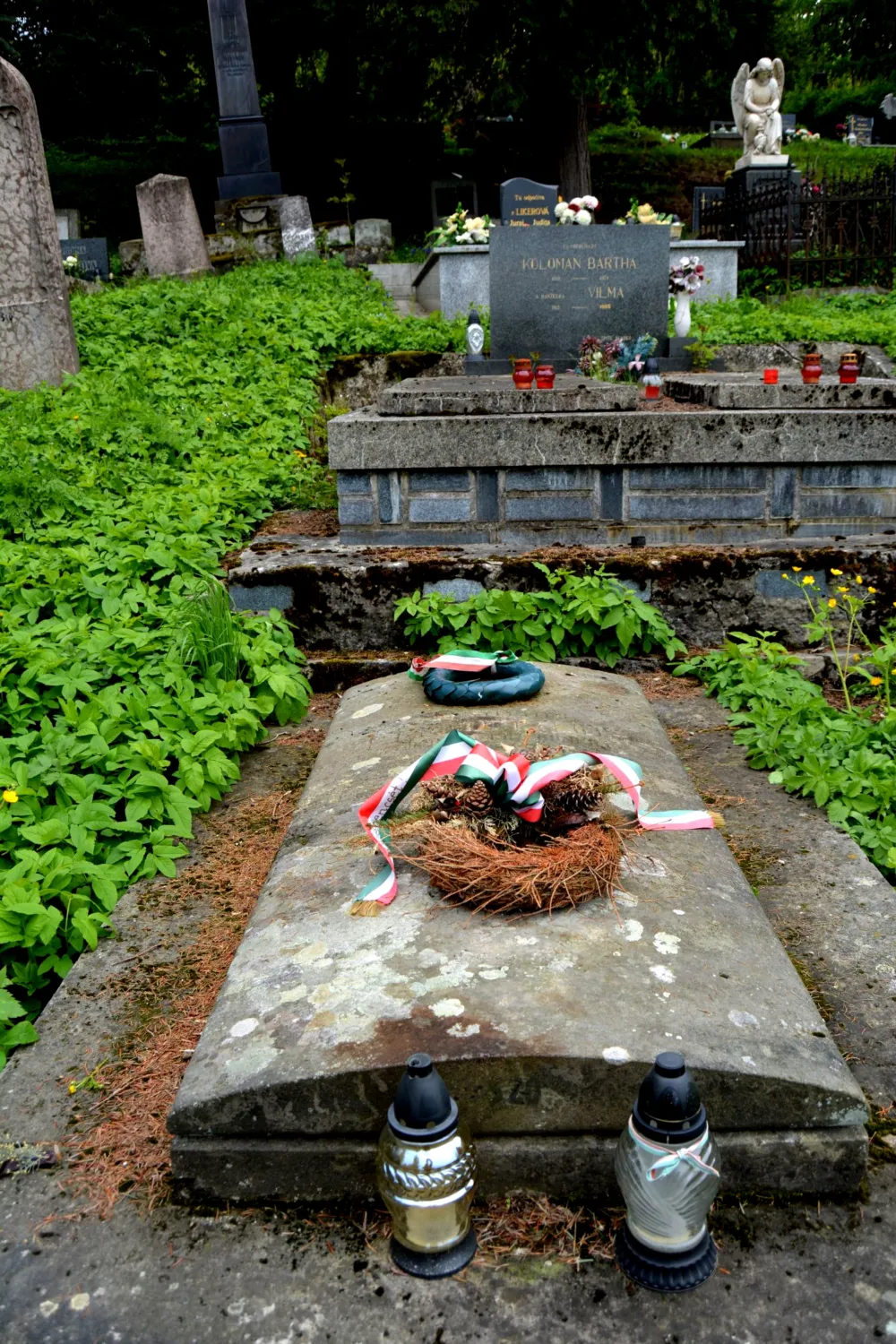
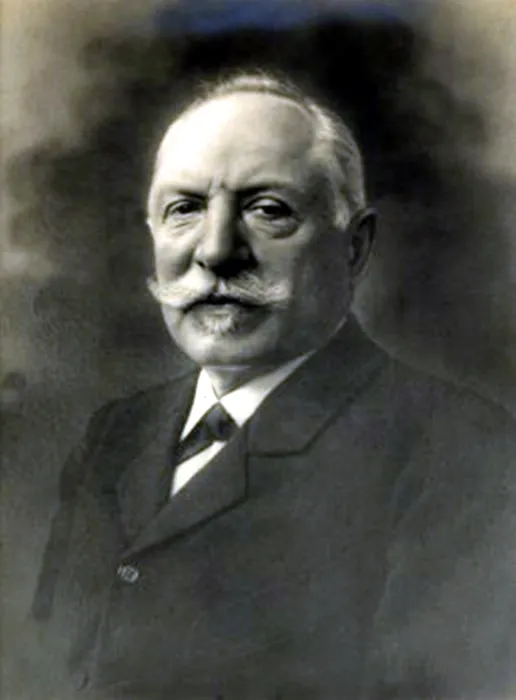
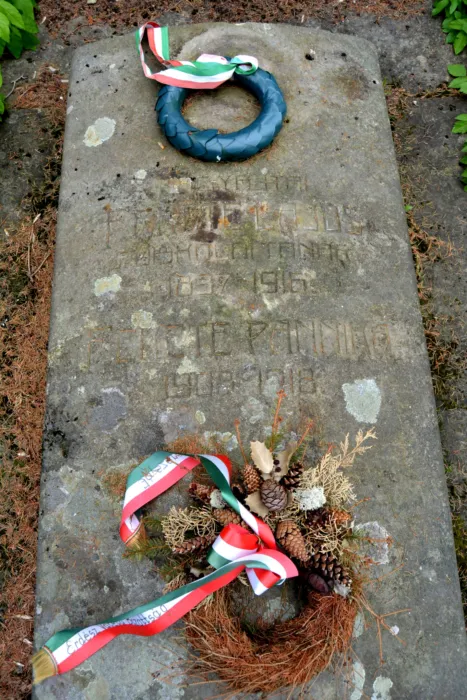
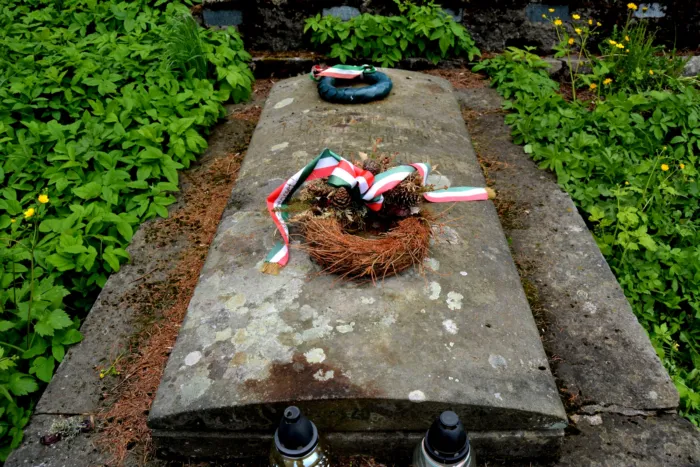
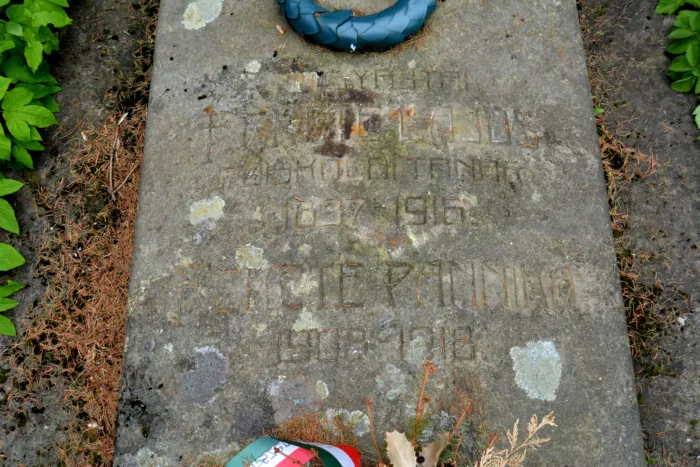
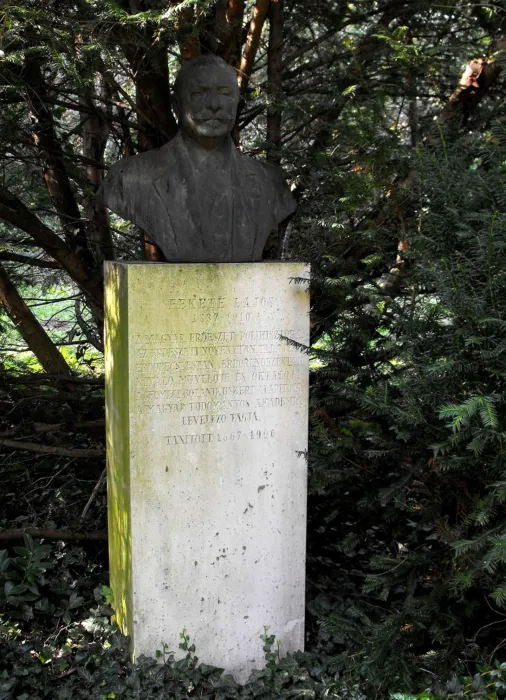
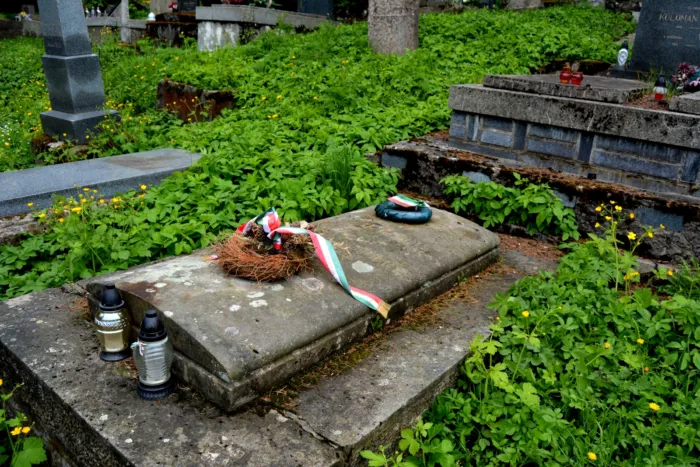
The grave of Lajos Fekete, forester, botanist, college professor, and first member of the Hungarian Academy of Sciences.
Cemeteries, tombstones, graves
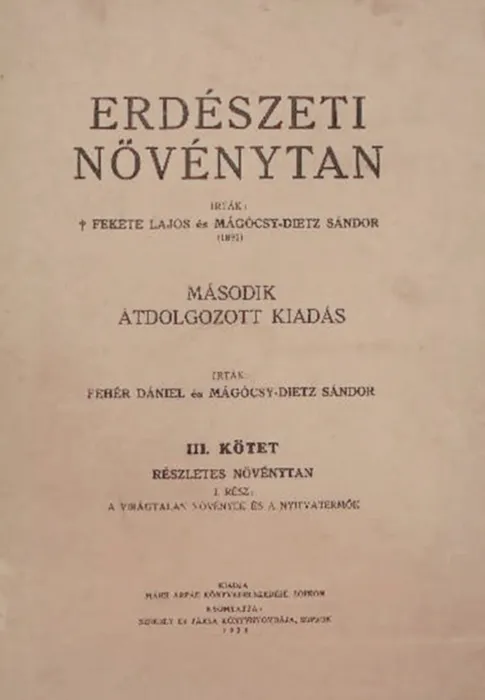
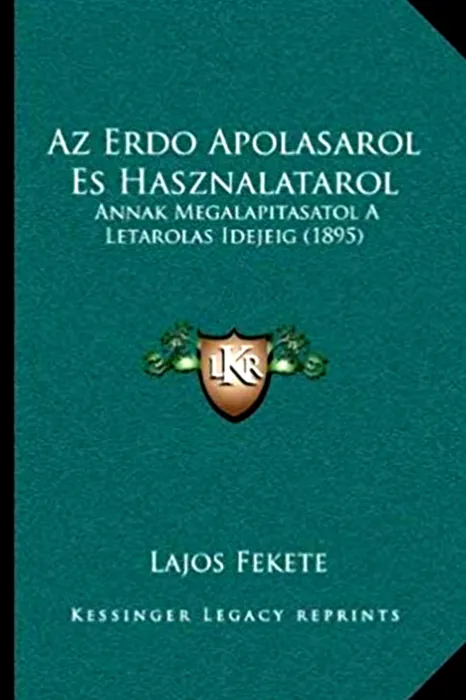
The beginning of Hungarian forestry literature actually dates back to 1862, when the first issue of Erdészeti Lapok was published under the editorship of Károly Wagner. In 1867, “the sweet voice of the long-awaited Hungarian language resounded” at the Selmec department. Károly Wagner also took care of the teaching staff. In addition to professional preparation and presentation skills, he demanded from his subordinates a perfect knowledge of the Hungarian language and “devoted patriotism”. He was one of the first teachers to teach in Hungarian. Dr. Ernő Nemky quotes the lines published about Lajos Fekete in the 1966 issue of Erdészeti Lapok. According to this, the name of the distinguished teacher is intertwined with the college's "era (39 years) in which the idea of Hungarian forestry education, which had already become a reality in 1848, but had almost failed with the Hungarian War of Independence, finally took on a lasting form with the revival of our constitution, and our Hungarian forestry literature and expertise rose to a respectable height - practically from nothing". (Dr. Nemky E., 1966. p. 199) ; Lajos Fekete was born on June 18, 1837 in Torda. After graduating from the Unitarian Gymnasium in Cluj-Napoca, he entered the Selmec Forestry Academy in 1856. There he became a deputy assistant teacher and forestry trainee from 1867. From 1869 he also performed the duties of secretary at the Forestry Academy. In 1873 he was appointed extraordinary professor and became the head of the botany and forestry department. He taught several subjects, such as botany and practice, zoology and practice, forestry entomology, silviculture and forest protection, as well as hunting and landlord laws. In 1891 he took over the leadership of the forest planning department, in 1893 he was the deputy director of the academy, and in the academic years 1897–98 and 1899–1900 he was its director. Lajos Fekete's pedagogical activity is outstanding in its kind. As one of his biographers put it: “His sharp mind and broad knowledge fully enabled him to create something excellent and lasting in the foundation and further development of a single scientific field. This would perhaps have meant greater recognition and more glory for him. However, he preferred work that brought less recognition and less glory: the development of the Hungarian language of forestry sciences, the extension of the domestic literature to as many sciences as possible, the creation of a universal Hungarian forestry literature, the foundation of the knowledge of Hungarian forestry professionals and thus the initiation of their development. Therefore, the goal of his life was not to serve his individual interests, but to lay the foundation for the greatness of the future of Hungarian forestry and to initiate its development.” (Dr. Nemky E., 1966. p. 201) His educational work was guided by the goal of educating professionals who were as well-qualified as possible, with ever-increasing knowledge. “He was therefore a true teacher, who found the greatest joy in seeing that his teaching was not in vain, that it fell on fertile soil and began to develop there.” (Dr. Nemky E., 1966. p. 201) As a teacher, he placed great importance on illustration. For this purpose, he created various collections. “His students confessed throughout their lives that they not only got to know and learn, but also loved the subjects he taught.” (Taraba M., 1987. p. 533) Fekete, as “a true champion of true labor and progress, fought tirelessly to advance the cause of the forestry academy. He furnished the academy’s botanical garden, in which he naturalized numerous foreign tree species...” (Vadas J., 1896. p. 232) Lajos Fekete’s literary work is also significant. He published his studies mainly in the Forestry Journals, but he also published several independent works. He wrote his first book together with Nándor Illés. It was published in Budapest in 1873 under the title Közerdész. The following year, he published his first independent work, Forest Value Calculation, in Selmec. His professional reputation was established by his work entitled The Timbering of the Barren Fields of the Mezőség (Kolozsvár, 1876). Many of his books were published in Selmecbánya, including Outlines of Forest Protection (1877), Forest Rotomology (1878), Forest Soil Science (1882), Forest Profit Calculation (1900) and Forest Planning (1902). Jenő Vadas wrote about him that he did a great job as a forestry specialist. “With his versatility and rich experience, he is so knowledgeable in forestry issues that he rightfully deserves the honorific adjective of a living forestry lexicon.” (J. Vadas, 1896. p. 233) The distinguished man who became the Hont County Councilor also actively participated in public affairs. He was a founding and board member of the National Forestry Association, the Natural Sciences Society. He gave lectures at the Selmecbánya Medical-Pharmacist and Natural Sciences Association, was a member of the Selmec-Bélabánya sz. royal towns' legislative committee, etc. From 1910 he was a corresponding member of the Hungarian Academy of Sciences. He died in Selmec on June 29, 1916, at the age of eighty. He was buried there in the cemetery next to Kopogtató. The “most distinguished” member of Hungarian forestry went to his grave with him. Because “there is no one who has as much direct merit in Hungarian forestry education as Lajos Fekete”. (Dr. Nemky E., 1966.201. p.) So he deserves respect and appreciation. ; ; His main works: ; - The public forester: Practical guidance for forestry technical assistants, as well as a brief outline of forestry for the use of small landowners and economic educational institutions, Budapest, 1873. (with Nándor Illés) ; - Forest value calculation: For forest owners, forest officers and those generally involved in the forest business, Selmecbánya, 1874. ; - The afforestation of the barren lands of the Mezőség, Kolozsvár, 1876. ; - Outlines of forest protection, Selmecbánya, 1877. ; - Forestry entomology I–II., Selmecbánya, 1878. ; - Human manure in agriculture, Kolozsvár, 1881. (with Zsigmond Nickel.) ; - Forestry soil science, Selmecbánya, 1882. ; - Handbook of forest valuation, Selmecbánya, 1882. (with Gyula Sóltz.) ; - Oak and its cultivation, Budapest, 1888. ; - Cultivation and planting of seedlings of the main tree species occurring in Hungary, Budapest, 1889. ; - Forestry botany I–II., Budapest, 1891–1896. (with Sándor Mágócsy-Dietz and Adolf Rejtő.) ; - On forest sowing and planting, Budapest, 1893. ; - Forestry profit accounting, Budapest, 1900. ; - Forest Management, Budapest, 1903. ; - The Distribution of Trees and Shrubs of Forestry Importance in the Territory of the Hungarian State I–II., Budapest, 1913. (with Tibor Blattny.)