
Carnival egg hunt, a centuries-old folk custom
Cultural heritage
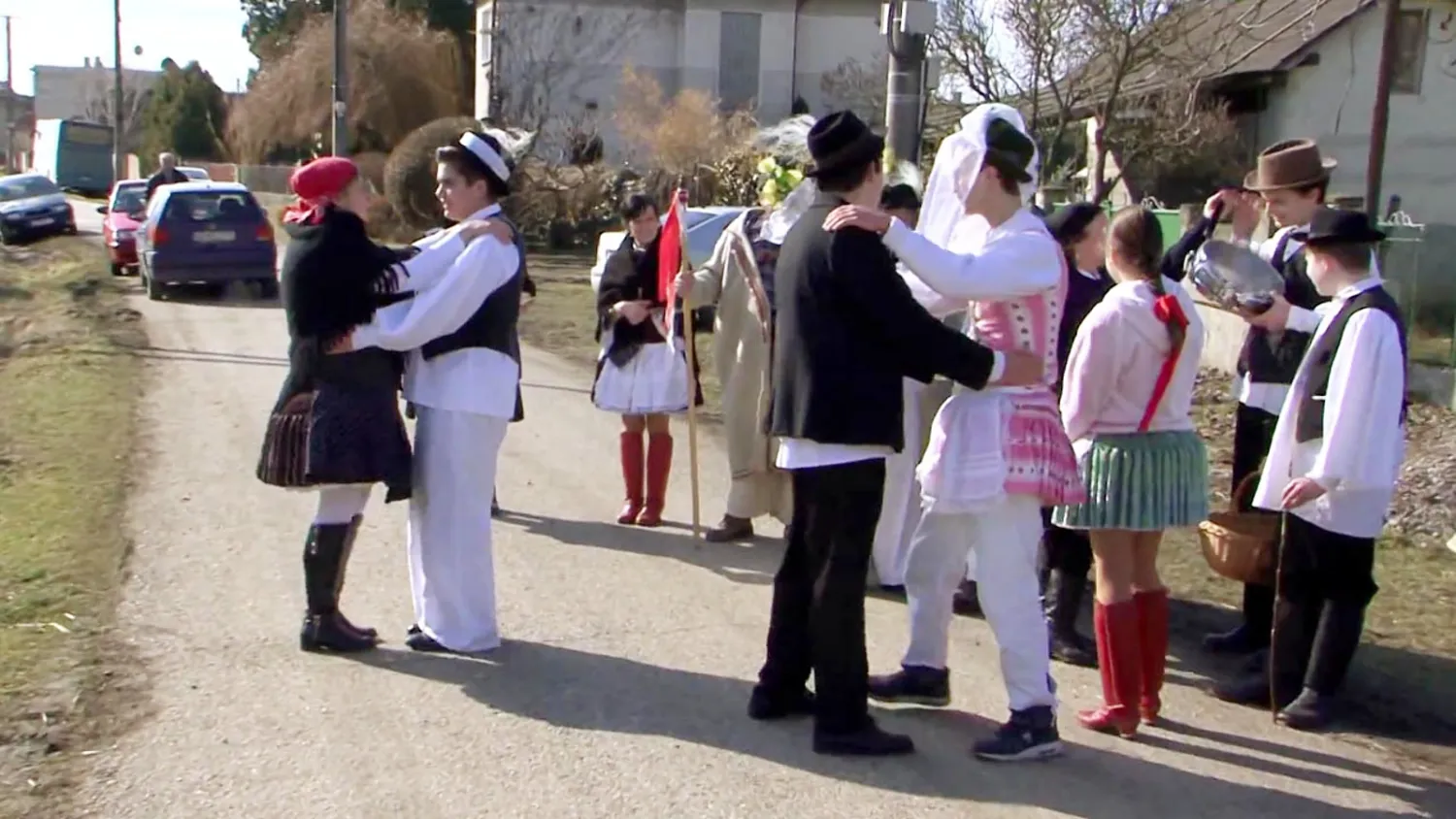
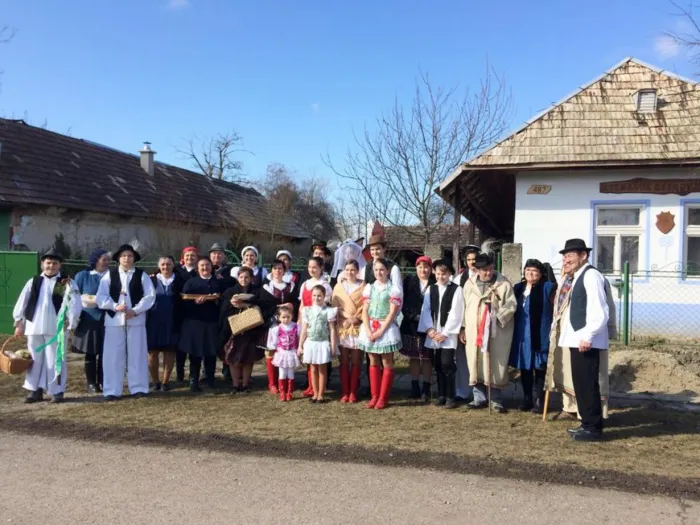
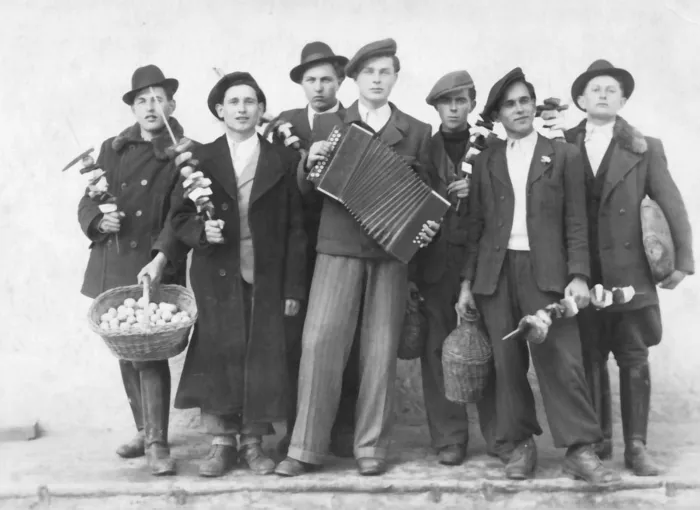
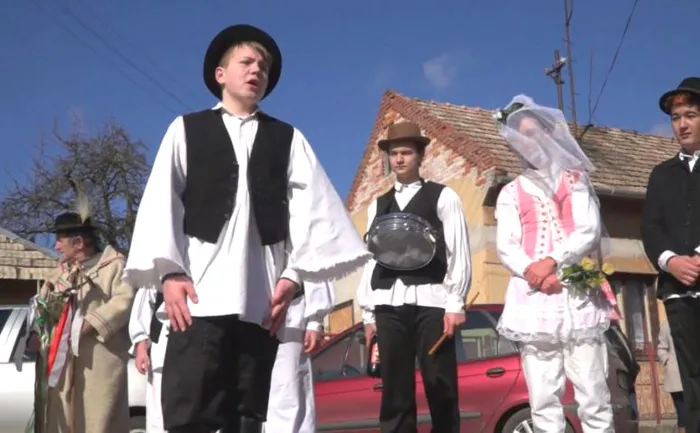
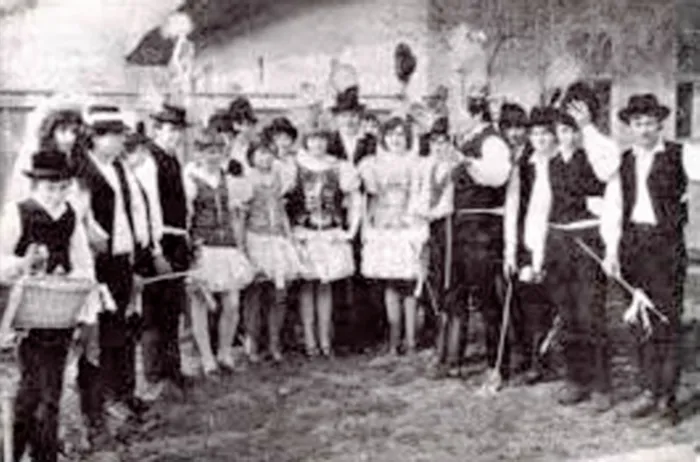
Bény is a Hungarian village with a population of 1,500, a settlement rich in historical and tourist attractions. It is also a leader in the processing of folk customs, all the folk customs that once existed are processed and occasionally presented. ; The presented photograph was taken in 1947, the accompanying folk custom still lives today, called carnival egg picking, we have not heard of a similar folk custom anywhere in the country. It also existed back in the 1700s, and it still lives today. ; The young men in the photograph are Uncle Feri Csókás (he also collected this folk custom), as well as Vidor Jankus, László Závodszky, Imre Székely (or Gyula Polcsák), László Ivanics, Ferenc Dávid, Nándor Kadasi. ; Carnival egg picking, original folk custom. ; On the Saturday of Carnival, the young men who were conscripted for the year set off for the village girls' houses, so that they could make the girls dance and choose a mate for themselves during the last days of Carnival. If there were any better-off peasants among them, they would hitch a ride in the horse-drawn carriage, put a few baskets and a demijohn, and set off for the girls' houses in the village. In the last century, this meant going to every house, because back then, every house had a girl, but not just one, and they were waiting for them. They recited the poem: ; ; February snow, winter time is a lovely time for Carnival; Carnival fun, give us bacon; If it's not in the pantry, it's in the little kitchen; Let's put sausage and bacon on our spits. ; Eggs in our basket, wine in the demijohn. ; ; Every girl was made to dance, and for this they were given sausage, wine, eggs, and bacon. But it often happened that they themselves collected the eggs, tithed the bacon, ham, and sausage in the pantry. There was never any disagreement about this, because they took everything they could, but where the young men were once not allowed in, they never went there again, and this was a great shame for that family. That girl was ostracized for the whole year and was not made to dance at the parties. If a more affluent peasant young man had a sister who was about to get married, he would even roll a barrel of wine onto the cart. ; Since it was carnival, carnival fun could not be missing either, there was always a young man who was available, who was dressed as an ugly bride, to symbolize that during carnival, ugly brides also sell out. In every village, including Bény, several young men played some kind of musical instrument, on street corners, if no one else was waiting, they would make the ugly girl dance, the accordion sounded and everyone started dancing. ; It was evening by the time they had gone all the way through the village. The cart was full of baskets, they say they were poor, but their hearts were full of love, they would have given away the last one. Sometimes they collected more than 1000 eggs, this happened even in the 1970s-80s. ; All the collected food and drink was taken to the big pub, where the pub owner and his wife organized the cooking, in the evening the girls also went, and the fun lasted until dawn. The menu was fried eggs with bacon and sausage. It depended on how much they collected, that's how long the carnival party lasted. It used to be until Tuesday evening, because Wednesday was Ash Wednesday, and the forty-day fast came, which was strictly observed at that time. ; This was the past, but we still observe it as a folk custom. Since there are no more young men subject to military service, the actual military service has ceased, young boys are reviving the folk custom, although the doors are opening less and less often, but we still try to present it to posterity. There are many difficulties, there is no horse-drawn carriage, if there is one, they ask for an exorbitant price, there are no hens from which the young men can collect the eggs, there is no pantry loaded with ham, bacon, and well, there is no one to cultivate the vines. But those who love tradition still welcome the children with the same love, with eggs, ham, sausage, bacon, wine, but with the opportunity brought by the changing world with soft drinks, chocolate, and cookies. The collected eggs, bacon, sausages, and wine are now not taken to the big pub, but to the craft house, where the children's parents usually prepare the delicacies, fried eggs, ham, and bacon, which they enjoy. They might not even eat them at home, but here they can't wait for them to be on the table. It's true that they don't party until morning, because today we can only involve children, but we talk until late at night. They recall how they were received at which house and promise to come again next year. Let's trust in it. ; I, the head of the craft house, promise, and if my health allows it, as long as I live, I will encourage those who come after me to keep this rare, perhaps unique folk custom. ; ; I remain respectfully, Katalin Koczka, head of the Bényi tradition preservation group and the craft house. ; ; https://youtu.be/9OSogqDTKwI ; ;  ,