
Zoltán Fabry
Hungarian Heritage Award
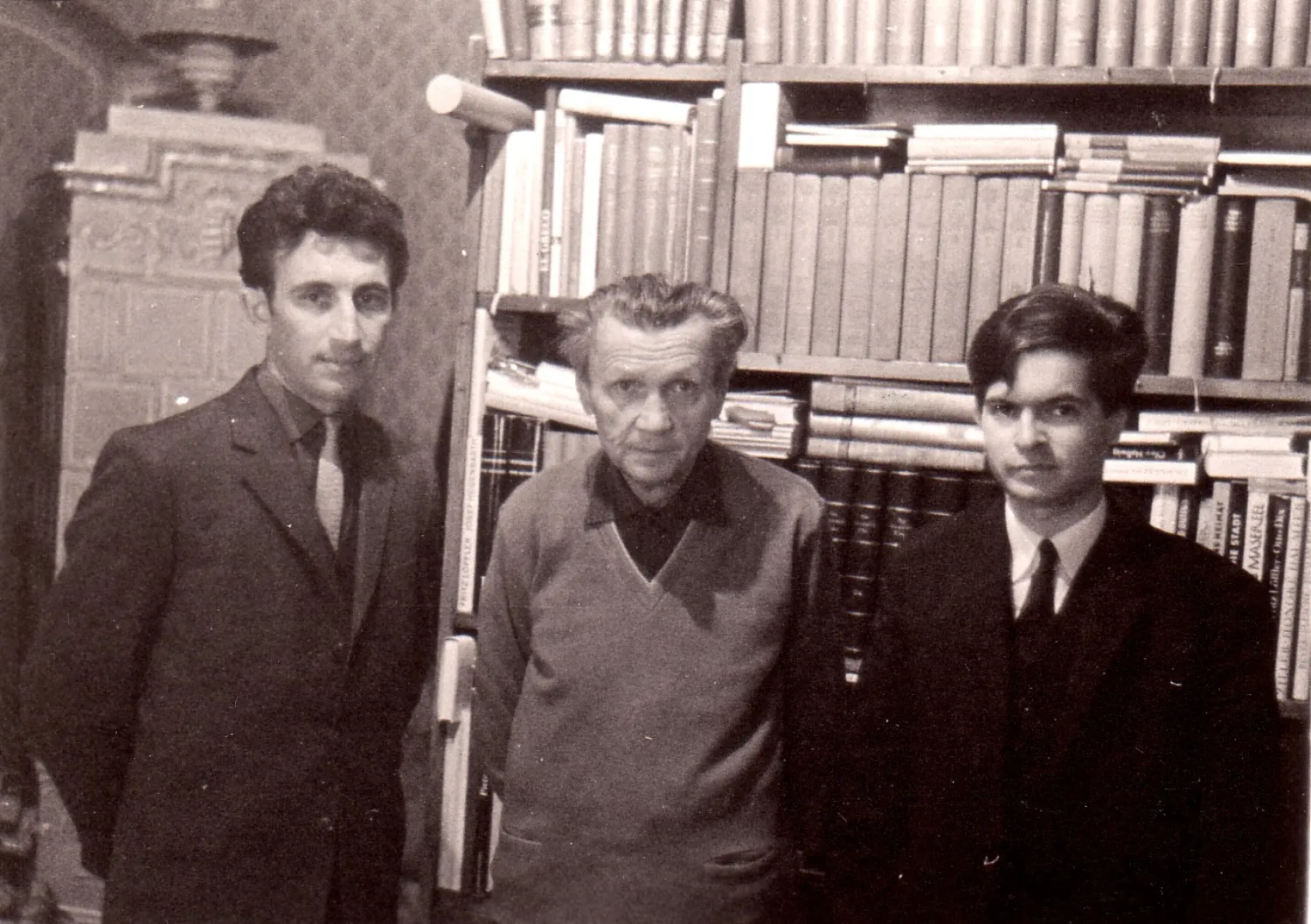
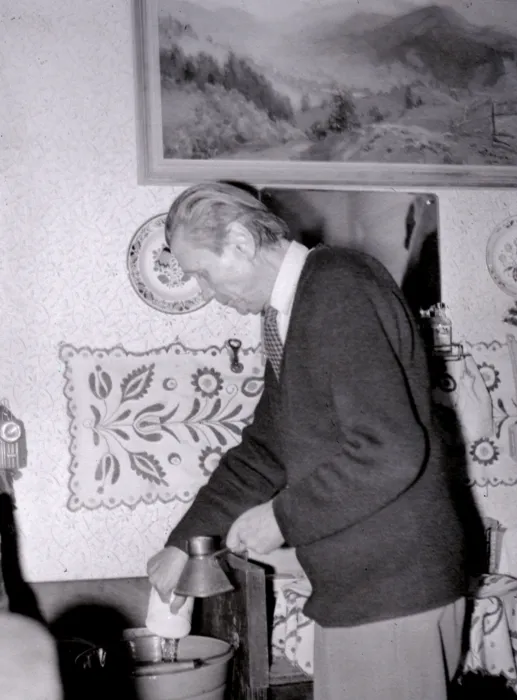
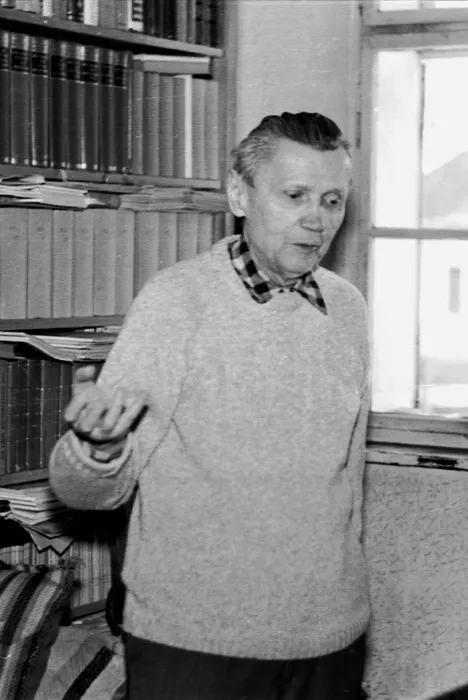
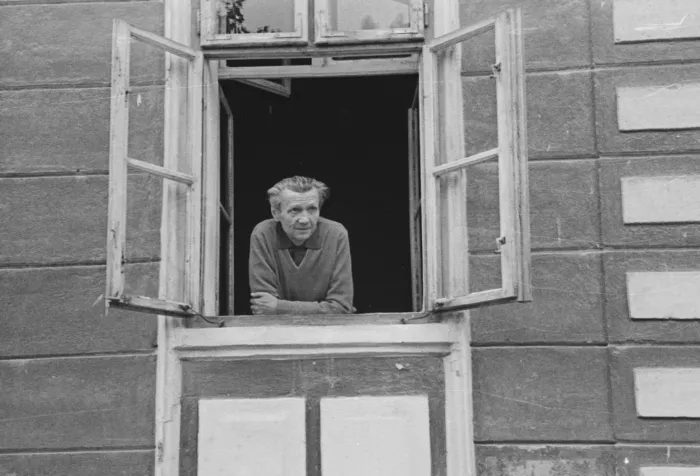
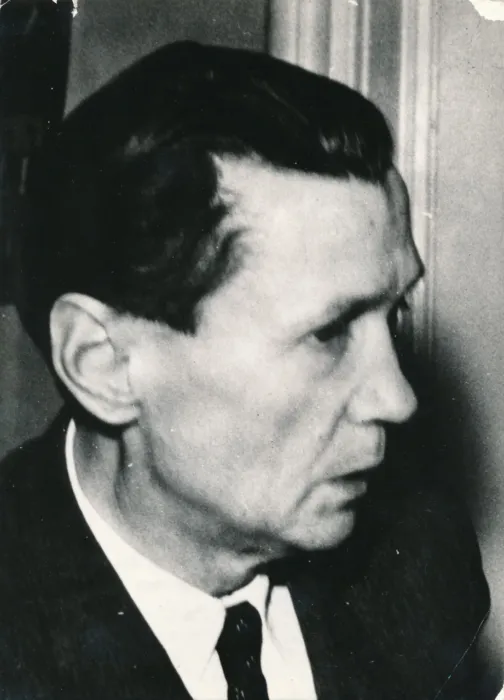
Writer, literary critic, publicist. Born in Stósz in 1897. He graduated from the Evangelical High School in Rozsnyó (1915), then fought on various fronts of the First World War. In 1918, he studied Hungarian literature in Budapest, but abandoned his studies due to family problems and lung disease. He published regularly from the 1920s, and from 1930 primarily in the left-wing press. Between 1927 and 1939, he was the Slovenszko editor of Korunk in Kolozsvár, and between 1931 and 1936, he was the editor of Az Út. In the autumn of 1938, Fábry was offered the opportunity to emigrate, but he remained in Stósz. During the war, he was a tireless advocate of the anti-fascist and anti-war movement, and for his activities he was imprisoned in the Illava Castle Prison in 1941. He was not allowed to publish between 1939 and 1948. His 1946 manifesto The Accused Speaks was a protest against the disenfranchisement of Hungarians in Slovakia, but it was only published in 1968. After 1948 until his death, he was the leading figure of Hungarian literature in Czechoslovakia, almost a one-man institution. In 1949, he was elected the perpetual honorary president of the Cultural Association of Hungarian Workers in Czechoslovakia (CSEMADOK). Between 1953 and 1956, he was a contributor to the Csemadok Fáklya newspaper. He was also a contributor to Új Szó, which was launched on 15 December 1948, and a senior contributor to Irodalmi Szemlen from 1958 until his death. He died in Stósz in 1970. His main awards and honors: Merent művész (1957); the Nationality Award of the Czechoslovak Writers' Association (1964); Madách Award (1967); Order of Merit for Labor (1967); Order of Merit for Labor of the Hungarian People's Republic (1967). After 1989, a heated debate arose in the Hungarian press in Slovakia regarding his life's work. His work was awarded the Hungarian Heritage Award in 2009.
In his will, he named Csemadok as his heir. The Association established the Zoltán Fábry Days in tribute to his life and work. The days were initially held in Košice, then in Košice and Szepsi alternately, and are currently held in Szepsi. The main organizer is the Csemadok Szepsi Foundation, commissioned by the National Council of Csemadok. The Zoltán Fábry Days were open until 2018 to present the Zoltán Fábry Award.
The National Presidency of the Csemadok intends to proceed with the utmost care in the matter of the Fábry legacy. With the support of the Hungarian government, the Fábry house was renovated. The Fábry Days will be held in Szepsi under dignified circumstances. The legacy can be visited and researched in Stósz and Somorja. (Fábry's correspondence has been placed at the Forum Minority Research Institute in Somorja for easier access.)
The National Presidency of the Csemadok decided at its meeting held on November 4, 2017, that from 2018, the Zoltán Fábry Award may be awarded to a non-Slovakian person working for the unity of the Hungarians in the Carpathian Basin. The award consists of a plaque and a certificate certifying the award. The Zoltán Fábry Award will be presented to the recipient at the Hungarian Culture Day celebration in Felvidék. In 2018, the Zoltán Fábry Award was awarded to Károly Dudás from Vojvodina.
Fábry’s memory
Against weapons and bravery
There is an abandoned house in Stósz along the Bódva stream and the lime tree row, which I myself once visited several times. Its last inhabitant is dragged by fate – as a teenager – into the First World War. Zoltán Fábry miraculously escapes the murderous stab of a Russian soldier’s bayonet, but the terrible experience leaves a lifelong scar on his soul. The young man is demobilized before the end of the war, but a lung problem forces him to a sanatorium, and from there he returns home to Stósz, to the healing protection of the pine forests of his homeland.
Zoltán Fábry realizes at a young age that war builds up in the tissues of society over weeks, months, and years just like cancer. He suffers the horrors of the twentieth century, but he exposes that the acquisition of power over others and the greedy desire for booty cause the slaughter of innocent millions. At the same time, he makes us aware that even a single person can do a lot for the harmony of the world. He fights against weapons and heroes in his books all his life. Thus, after the Second World War, he becomes the spiritual leader of the Hungarian national community living in Czechoslovakia. He always defends the vulnerable in inhumanity and argues for the right of peace. He sympathizes with the Hungarians who were crippled after the second, even more terrible world war – our grandparents, our parents, and us. They respect, esteem, and love him because he speaks the truth, because he is honest, because he makes sacrifices for all of us.
And he, who believed that the greatest weapon of minorities could be immaculate morality, wrote in his secretly kept diary in 1947: “All community morality pales in comparison to that of Jesus: Love your neighbor as yourself.”
György Batta, writer
A gift from Stósz
In 1967, when Zoltán Fábry celebrated his seventieth birthday, I was teaching at Buzita, and we sent him a letter of greetings on behalf of the teachers and students of the elementary school. The writer responded to the well-wishes. He wrote that he would follow the successful work we were doing, and sent us three gifts: a (hand-signed) photograph, the book Bottle Post, and the manuscript of one of his studies. Unfortunately, due to the turbulent events of 1968, we postponed our visit, and in the meantime – unexpectedly – he died. Zoltán Fábry took on his post, called the “Stószi guardhouse,” even with broken health and never left it. He always defended us, the Hungarians of the highlands, when they were unjustly wronged: he was a kind and considerate grandfather to our national community. This is confirmed by his last will: he left everything to us. Keeping him and his legacy: a matter of honor!
László Máté
Called his court photographer
I first met Zoltán Fábry as a fifteen-year-old industrialist from Košice. I was already taking photos back then: a contemporary camera hung around my neck, and a bag-shaped flash device was wrapped around my chest. Since I also wanted to film, a three-kilo camera pulled on my shoulders. The straps got tangled, and the writer noticed this. He felt sorry for me and already posed for the pictures that were being taken, although this was in sharp contrast to his natural modesty. Later we met more often, I also visited him in the hospital in Košice. Zoltán Fábry loved young people. Members of the Košice youth clubs often visited him. He drew my attention to László Németh and Gyula Illyés. His death still lives in me as a painful memory, and while I look at the photographs taken of him, I think that we are increasingly missing a real man like Uncle Zoli.
Péter Kolár
Letter from Zoltán Fábry to the Central Committee of the Csemads
Stósz, October 5, 1969. Letter from Zoltán Fábry to the Central Committee of the Csemads, in which he expresses his concern about the disintegration of the unity of the Hungarian minority in connection with the debate between the Csemads and the Új Szó.
TO THE CENTRAL COMMITTEE OF THE CSEMADS
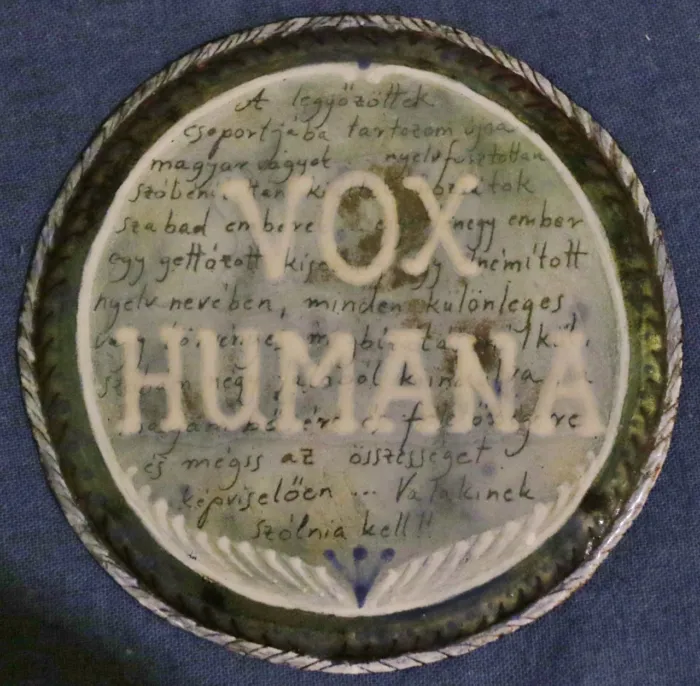
I am writing to you sick and with concern. Let no one expect me to say anything that is perfect in terms of style and structure. For days, even weeks, the debate between CSEMADOK and ÚJ SÓ has been worrying me. Here and there, the seeds of an internal discord are sprouting: instead of unity, distortions against each other. Why did a realistic statement that takes into account the circumstances have to be degraded into a search for an alibi?! As a result of this and such disputes — within the framework of CSEMADOK — the Hungarians in Slovakia are the ones who are suffering: CSEMADOK is today the Hungarian forum that sums it up. For us, arguing to the point of a knife is a luxury, because we are knocking each other down and the responsibility that belongs to the Hungarian minority in each other — and therefore its future fate. Therefore, we must weigh every word and deed: to what extent do we benefit or harm ourselves, the Hungarian minority in Slovakia, with it? The cause and relationship between the party and the Hungarian minority, which strengthens each other, is the first item on the agenda today. And here we must declare right away — in medias res — that the fate and existence of our minority, in the present circumstances, stands or falls with the fate of the party. The reason is clear and simple: for the party and the Hungarian minority alike, the greatest danger is the ascendancy of right-wing Slovak chauvinism: the possibility of fascistization. Let us not forget what happened in 1968, when Slovak reactionary chauvinism could only talk about the deportation of Hungarians. The lists were already being diligently produced: their victory would have meant our destruction: our dispersion. The curbing of Slovak chauvinist currents is the result of the party's operation, and what we have achieved on a minority level, we have achieved with the help of the party. But then let us not fall through, cutting straight to the heart of things, without any evasions. on the other side of the horse, and the right and duty to suppress this Slovak chauvinism should not be equated with the legitimate elementary demands of the Hungarian minority, saying that voicing this is a nationalist stunt. Our cause is not a chauvinist pursuit, but an elementary question of existence: the cause of man and humanity, the life-giving air necessary for life, the ozone, which is none other than the Hungarian language. This is what it is about and nothing else. We do not want to and cannot remain deaf and dumb. Our rights and duties stem from our internationalism. It cannot be otherwise. The law of Marxism-Leninism is immutable in this respect and speaks for us. The settlement of minority rights is a moral imperative of the party. If the majority transgresses on the minority level: internationalism pays the price. Only the minority whose rights are ensured and guaranteed by internationalism can fulfill and exercise its internationalist duties and rights. Injured and offended minorities can easily disrupt the chemical composition and credibility of the community. A socialist community can only be built and secured with satisfied, equal-rights, equally respected members. The proposition of our agenda item is clear and simple: if the potential stifler of the Hungarian minority is Slovak chauvinism, then in the current situation we can only expect good and life from the brake on this fascistic chauvinism, the party. But what is happening in our ranks now? Instead of taking advantage of the opportunities provided by the party, discord is breaking out in our ranks, which threatens that we ourselves will succeed in blowing up the very results provided and achieved by the party, and thus we ourselves will be the ones who make the opportunities provided by the party illusory in our own ranks. This suicide must be prevented. This is the last chance for our minority to make use of the opportunities. If we fail to do this, if we disrupt it with petty internal distortions, then nothing will save us from destruction. With party and state assistance — even if it is haphazard — they provide us with an organization, a framework, which we only need to fill with content: with our own strength. If this framework proves to be without content — that is, spineless — then it will collapse of its own accord. And then — it is done. But the responsibility before the people, the party, Hungarians, the future and history is ours! First and foremost, we only have as much as we ourselves can provide ourselves with wisely and purposefully. The framework given by the party is the greatest opportunity in twenty-five years. But if we weaken this opportunity by squabbling among ourselves, then the party will acknowledge this as a fait accompli: you yourselves wanted it this way, you did it, we can wash our hands of it. And so it is not only Slovak chauvinism that poses the main danger, but we, the minority Hungarians, who are cutting the tree from under ourselves. Yet the fate and future of the Hungarians here depend first and foremost on us. We are responsible to the present and future for how we have managed the treasure and opportunity entrusted to us. Let us not look for scapegoats where we ourselves were the culprits! Let us be equally faithful to our internationalism and our Hungarianness. Fifty years of minority existence are behind us. Our maturity, our formation, our goal are summed up in one word: vox humana! To live with humanity, humanely. This “Slovensk mission” was formulated during fascism, in opposition to fascism — that is, the maximum of inhumanity. We use it as an adjective given by ourselves, but today people are amazed even beyond our borders. And this vox humana demands from us the supreme law of socialist humanism: humanity.
Because of your trust, I have become the perpetual honorary president of CSEMADOK. The word “perpetual” attracts the concept of “heritage”. I will not be with you, among you, for long; I have to think about what will happen to me, what will come after me, what will happen to us, what will happen to you Hungarians in Slovakia?! Continuity is our life and this must not be interrupted. I want to be with you and stay. I bequeath my life’s work — the “Stósz measure”, its maintenance, its continuity — to you, just as I left my property, my material and spiritual legacy to CSEMADOK in my will. Let us be and remain worthy of each other: of our Hungarianness, our internationalism, socialist humanism, our Slovak mission: the vox humana!
Š t ó s, October 5, 1969 Zoltán Fábry
Read more: https://www.csemadok-hu.eu/fabry/
In his will, he named Csemadok as his heir. The Association established the Zoltán Fábry Days in tribute to his life and work. The days were initially held in Košice, then in Košice and Szepsi alternately, and are currently held in Szepsi. The main organizer is the Csemadok Szepsi Foundation, commissioned by the National Council of Csemadok. The Zoltán Fábry Days were open until 2018 to present the Zoltán Fábry Award.
The National Presidency of the Csemadok intends to proceed with the utmost care in the matter of the Fábry legacy. With the support of the Hungarian government, the Fábry house was renovated. The Fábry Days will be held in Szepsi under dignified circumstances. The legacy can be visited and researched in Stósz and Somorja. (Fábry's correspondence has been placed at the Forum Minority Research Institute in Somorja for easier access.)
The National Presidency of the Csemadok decided at its meeting held on November 4, 2017, that from 2018, the Zoltán Fábry Award may be awarded to a non-Slovakian person working for the unity of the Hungarians in the Carpathian Basin. The award consists of a plaque and a certificate certifying the award. The Zoltán Fábry Award will be presented to the recipient at the Hungarian Culture Day celebration in Felvidék. In 2018, the Zoltán Fábry Award was awarded to Károly Dudás from Vojvodina.
Fábry’s memory
Against weapons and bravery
There is an abandoned house in Stósz along the Bódva stream and the lime tree row, which I myself once visited several times. Its last inhabitant is dragged by fate – as a teenager – into the First World War. Zoltán Fábry miraculously escapes the murderous stab of a Russian soldier’s bayonet, but the terrible experience leaves a lifelong scar on his soul. The young man is demobilized before the end of the war, but a lung problem forces him to a sanatorium, and from there he returns home to Stósz, to the healing protection of the pine forests of his homeland.
Zoltán Fábry realizes at a young age that war builds up in the tissues of society over weeks, months, and years just like cancer. He suffers the horrors of the twentieth century, but he exposes that the acquisition of power over others and the greedy desire for booty cause the slaughter of innocent millions. At the same time, he makes us aware that even a single person can do a lot for the harmony of the world. He fights against weapons and heroes in his books all his life. Thus, after the Second World War, he becomes the spiritual leader of the Hungarian national community living in Czechoslovakia. He always defends the vulnerable in inhumanity and argues for the right of peace. He sympathizes with the Hungarians who were crippled after the second, even more terrible world war – our grandparents, our parents, and us. They respect, esteem, and love him because he speaks the truth, because he is honest, because he makes sacrifices for all of us.
And he, who believed that the greatest weapon of minorities could be immaculate morality, wrote in his secretly kept diary in 1947: “All community morality pales in comparison to that of Jesus: Love your neighbor as yourself.”
György Batta, writer
A gift from Stósz
In 1967, when Zoltán Fábry celebrated his seventieth birthday, I was teaching at Buzita, and we sent him a letter of greetings on behalf of the teachers and students of the elementary school. The writer responded to the well-wishes. He wrote that he would follow the successful work we were doing, and sent us three gifts: a (hand-signed) photograph, the book Bottle Post, and the manuscript of one of his studies. Unfortunately, due to the turbulent events of 1968, we postponed our visit, and in the meantime – unexpectedly – he died. Zoltán Fábry took on his post, called the “Stószi guardhouse,” even with broken health and never left it. He always defended us, the Hungarians of the highlands, when they were unjustly wronged: he was a kind and considerate grandfather to our national community. This is confirmed by his last will: he left everything to us. Keeping him and his legacy: a matter of honor!
László Máté
Called his court photographer
I first met Zoltán Fábry as a fifteen-year-old industrialist from Košice. I was already taking photos back then: a contemporary camera hung around my neck, and a bag-shaped flash device was wrapped around my chest. Since I also wanted to film, a three-kilo camera pulled on my shoulders. The straps got tangled, and the writer noticed this. He felt sorry for me and already posed for the pictures that were being taken, although this was in sharp contrast to his natural modesty. Later we met more often, I also visited him in the hospital in Košice. Zoltán Fábry loved young people. Members of the Košice youth clubs often visited him. He drew my attention to László Németh and Gyula Illyés. His death still lives in me as a painful memory, and while I look at the photographs taken of him, I think that we are increasingly missing a real man like Uncle Zoli.
Péter Kolár
Letter from Zoltán Fábry to the Central Committee of the Csemads
Stósz, October 5, 1969. Letter from Zoltán Fábry to the Central Committee of the Csemads, in which he expresses his concern about the disintegration of the unity of the Hungarian minority in connection with the debate between the Csemads and the Új Szó.
TO THE CENTRAL COMMITTEE OF THE CSEMADS
I am writing to you sick and with concern. Let no one expect me to say anything that is perfect in terms of style and structure. For days, even weeks, the debate between CSEMADOK and ÚJ SÓ has been worrying me. Here and there, the seeds of an internal discord are sprouting: instead of unity, distortions against each other. Why did a realistic statement that takes into account the circumstances have to be degraded into a search for an alibi?! As a result of this and such disputes — within the framework of CSEMADOK — the Hungarians in Slovakia are the ones who are suffering: CSEMADOK is today the Hungarian forum that sums it up. For us, arguing to the point of a knife is a luxury, because we are knocking each other down and the responsibility that belongs to the Hungarian minority in each other — and therefore its future fate. Therefore, we must weigh every word and deed: to what extent do we benefit or harm ourselves, the Hungarian minority in Slovakia, with it? The cause and relationship between the party and the Hungarian minority, which strengthens each other, is the first item on the agenda today. And here we must declare right away — in medias res — that the fate and existence of our minority, in the present circumstances, stands or falls with the fate of the party. The reason is clear and simple: for the party and the Hungarian minority alike, the greatest danger is the ascendancy of right-wing Slovak chauvinism: the possibility of fascistization. Let us not forget what happened in 1968, when Slovak reactionary chauvinism could only talk about the deportation of Hungarians. The lists were already being diligently produced: their victory would have meant our destruction: our dispersion. The curbing of Slovak chauvinist currents is the result of the party's operation, and what we have achieved on a minority level, we have achieved with the help of the party. But then let us not fall through, cutting straight to the heart of things, without any evasions. on the other side of the horse, and the right and duty to suppress this Slovak chauvinism should not be equated with the legitimate elementary demands of the Hungarian minority, saying that voicing this is a nationalist stunt. Our cause is not a chauvinist pursuit, but an elementary question of existence: the cause of man and humanity, the life-giving air necessary for life, the ozone, which is none other than the Hungarian language. This is what it is about and nothing else. We do not want to and cannot remain deaf and dumb. Our rights and duties stem from our internationalism. It cannot be otherwise. The law of Marxism-Leninism is immutable in this respect and speaks for us. The settlement of minority rights is a moral imperative of the party. If the majority transgresses on the minority level: internationalism pays the price. Only the minority whose rights are ensured and guaranteed by internationalism can fulfill and exercise its internationalist duties and rights. Injured and offended minorities can easily disrupt the chemical composition and credibility of the community. A socialist community can only be built and secured with satisfied, equal-rights, equally respected members. The proposition of our agenda item is clear and simple: if the potential stifler of the Hungarian minority is Slovak chauvinism, then in the current situation we can only expect good and life from the brake on this fascistic chauvinism, the party. But what is happening in our ranks now? Instead of taking advantage of the opportunities provided by the party, discord is breaking out in our ranks, which threatens that we ourselves will succeed in blowing up the very results provided and achieved by the party, and thus we ourselves will be the ones who make the opportunities provided by the party illusory in our own ranks. This suicide must be prevented. This is the last chance for our minority to make use of the opportunities. If we fail to do this, if we disrupt it with petty internal distortions, then nothing will save us from destruction. With party and state assistance — even if it is haphazard — they provide us with an organization, a framework, which we only need to fill with content: with our own strength. If this framework proves to be without content — that is, spineless — then it will collapse of its own accord. And then — it is done. But the responsibility before the people, the party, Hungarians, the future and history is ours! First and foremost, we only have as much as we ourselves can provide ourselves with wisely and purposefully. The framework given by the party is the greatest opportunity in twenty-five years. But if we weaken this opportunity by squabbling among ourselves, then the party will acknowledge this as a fait accompli: you yourselves wanted it this way, you did it, we can wash our hands of it. And so it is not only Slovak chauvinism that poses the main danger, but we, the minority Hungarians, who are cutting the tree from under ourselves. Yet the fate and future of the Hungarians here depend first and foremost on us. We are responsible to the present and future for how we have managed the treasure and opportunity entrusted to us. Let us not look for scapegoats where we ourselves were the culprits! Let us be equally faithful to our internationalism and our Hungarianness. Fifty years of minority existence are behind us. Our maturity, our formation, our goal are summed up in one word: vox humana! To live with humanity, humanely. This “Slovensk mission” was formulated during fascism, in opposition to fascism — that is, the maximum of inhumanity. We use it as an adjective given by ourselves, but today people are amazed even beyond our borders. And this vox humana demands from us the supreme law of socialist humanism: humanity.
Because of your trust, I have become the perpetual honorary president of CSEMADOK. The word “perpetual” attracts the concept of “heritage”. I will not be with you, among you, for long; I have to think about what will happen to me, what will come after me, what will happen to us, what will happen to you Hungarians in Slovakia?! Continuity is our life and this must not be interrupted. I want to be with you and stay. I bequeath my life’s work — the “Stósz measure”, its maintenance, its continuity — to you, just as I left my property, my material and spiritual legacy to CSEMADOK in my will. Let us be and remain worthy of each other: of our Hungarianness, our internationalism, socialist humanism, our Slovak mission: the vox humana!
Š t ó s, October 5, 1969 Zoltán Fábry
Read more: https://www.csemadok-hu.eu/fabry/