
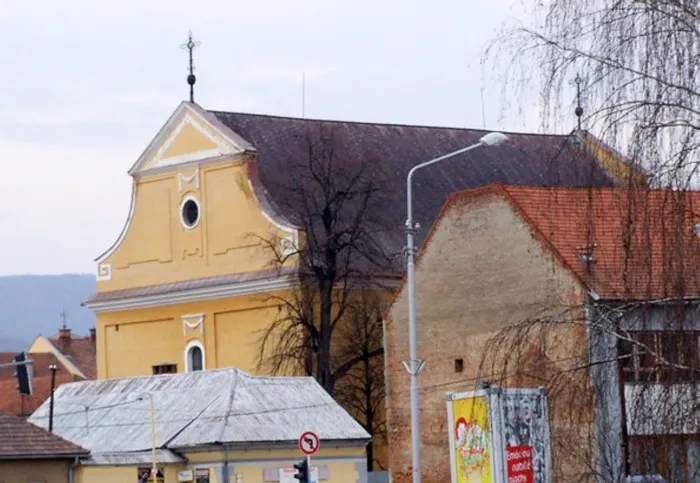
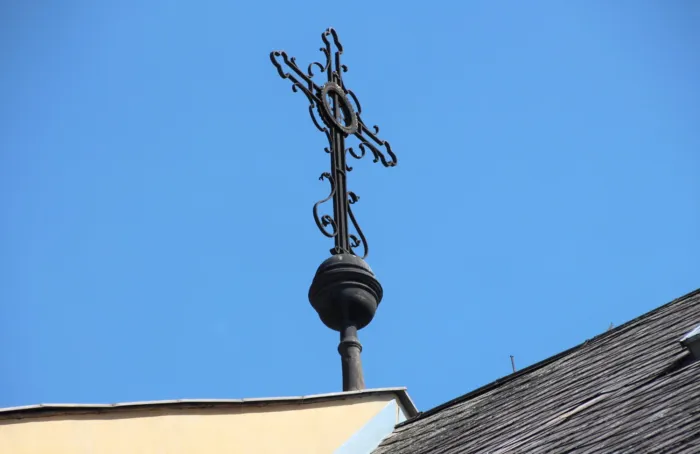
Evangelical Church, Rožňov
Building, structure
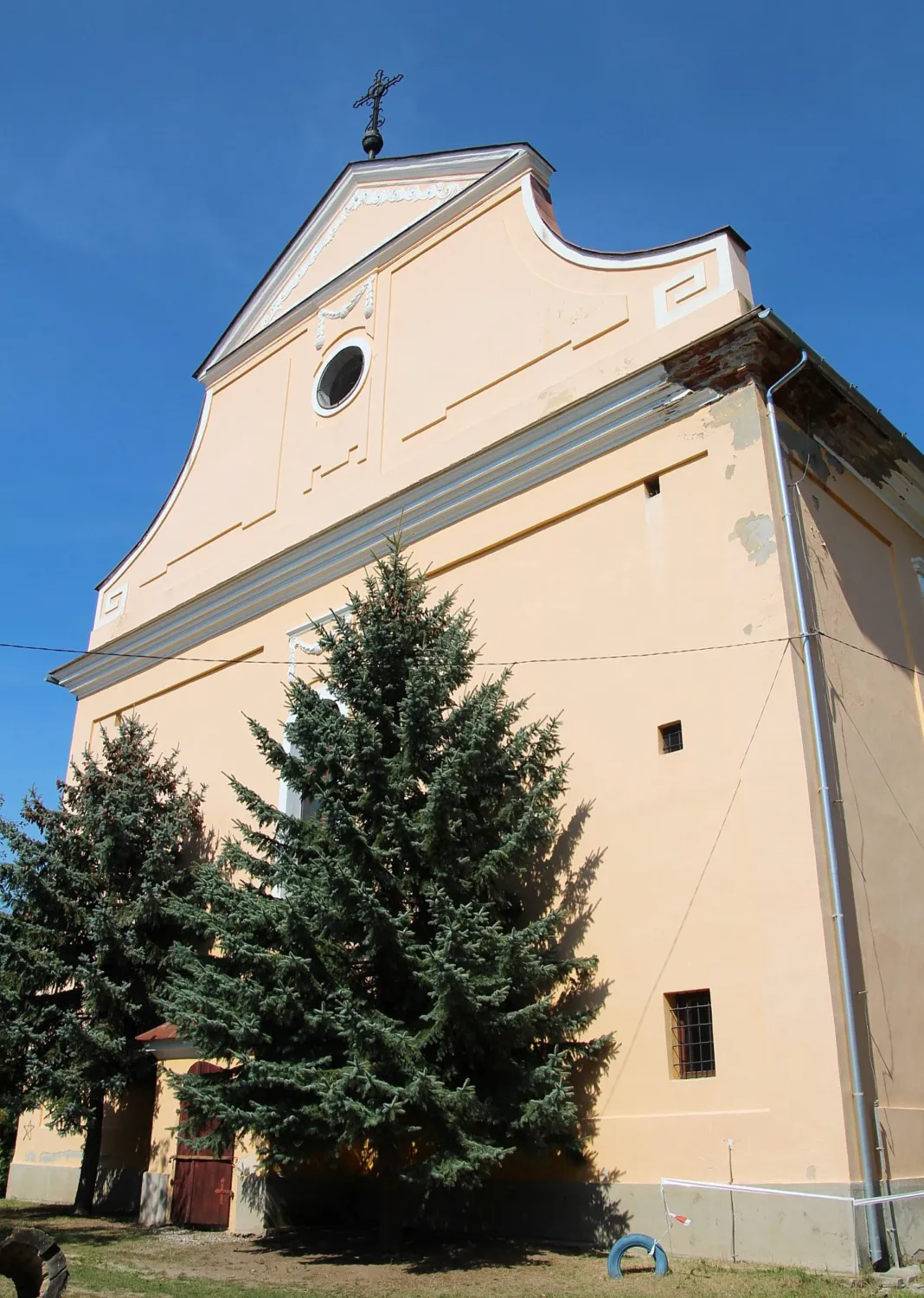
Before turning to the artistic appreciation of the noble architectural proportions of the Lutheran church, we must take a quick look at the history of the church whose devotees created this worthy place of worship with their sacrifice. It is not possible to determine exactly when the Reformation began to take root in Rožňava. The city minutes mention the name of "Péter dér alté Pfarrer" in 1523, who abandoned many church customs and, in addition to his church duties, was also involved in mining, but had not yet broken away from the Catholics. Rožňava maintained close trade relations with Spiš, so the new doctrines that spread there early soon filtered down here. In 1529, András Fischer, a theologian from Wittenberg, and later his student, György Leudischer, arrived in Rožňava. In their footsteps, the rapid spread of Luther's teachings began, an important milestone of which was the date of 1555, when Rozsnyó entered into an alliance with Ferenc Bebek. At that time, the formal organization of the Protestants began. First, they accepted the articles of faith of Ciprián Fried, then of Rimanovi. In 1570, almost the entire bourgeoisie converted to the Lutheran faith and the Catholic community ceased to exist for good. However, the Catholic church was already in their possession by then. Since the word of God was preached in the language of the people, it became necessary to designate a separate place of worship for both Hungarian and German-speaking believers. The Germans, who were in the majority, got the large church, while the Hungarians gathered in the old Bakócz chapel, the so-called "small" church. The city paid the priests and also ensured the good maintenance of the church, and in the statutes of 1574 and 1603 the population was encouraged to attend the services. ; The start of the Counter-Reformation is linked to the 1604 Diet, which soon made its impact felt in Rozsnyó, when Andrássy Péterné Betlér, led by Zsófia Bech, returned to the ancient faith. Tamás Széchy was a powerful patron of Rozsnyó at that time, where not only Catholicism and Protestantism began to fight, but also the Hungarian and German nationalities. The conflicts became most acute under the Archbishop of Esztergom, György Lippay. The Lutheran priests faithfully fulfilled the duties of the Gömör bishop in 1661. IX. On the 26th of July, he issued an order in Jolsva, according to which "one must preach with the greatest moderation and beware of inciting passions, because we live in dangerous times and the majority of the patrons have converted to the Roman Catholic or Hetvetian faith". Thus, in 1670, church attendance found order and flourishing conditions. However, the Evangelical church and school were nevertheless abolished in 1671. ; Imre Thököly, when he became the leader of the exiles, sent his colonel, Péter Madách, to Rožsná in 1682 at the head of a small infantry force, who restored religious practice and returned the church. In 1686, after the fall of Thököly, the Jesuits who had fled returned again and expelled the Evangelical pastors. In 1705, religious freedom was fully restored in Rožsná as well. Based on an accurate census, the large church belonged to the Hungarian Evangelical Church, the small church to the German Evangelical Church, and the Jesuit church on the market square to the Roman Catholics. Rákóczi also provided many financial benefits to the Evangelical Church. However, after the failure of his War of Independence, the invading imperial armies returned the church to the Catholics. In 1711, the Evangelical pastor wrote in the registry: "On February 13, which fell on Friday, the papists took our church, and we were completely inhibited from our services. They will give an account before God that they close heaven to others, while they themselves do not want to enter it." The expelled pastors found refuge in Berzéte and those believers who continued to remain Evangelicals made pilgrimages here. The Germans gathered at the portico of Ferenc Máriássy, the Hungarians at the plot of Tamás Szirmay, although the Jesuits strictly forbade this. This situation did not change even with the Carolina Resolution issued in 1731 under Charles III. The situation worsened so much that when Superintendent György Ambrózy came to visit the church in 1743, he was not allowed to enter the city, so the faithful received him in Berzéte. In 1745, they turned to the prince-primate, Gr. Imre Eszterházy, with a request to allow them to hold services in the suburbs or near the city. In 1750, they also asked Maria Theresa for this, but they were not heard in either place. Their wish was only fulfilled by the decree of tolerance issued by Joseph II in 1781. This was announced in 1782 at the Gömör County Assembly and in 1783 the Lutherans received permission to hold church services in the city. ; The decree of tolerance also allowed the Lutherans to build a church. The church was not allowed to open onto the street, they were not allowed to build a tower or use a bell. The believers of the new church, who had gained strength, immediately began to organize themselves so that the construction could start as soon as possible, they bought up the gardens and farm buildings on the site of the present church. On May 27, 1784, a meeting was held at the apartment of Inspector Mátyás Szvoboda. At this, Dávid Frankendorfer, the inspector assigned to the church construction, announced that he could barely finish the work, the believers were carrying the building materials in such large numbers and pooling the money, so a second inspector was elected to his side. ; June 1784 On the 21st, the foundation stone is laid at the southern corner of the church, accompanied by a song of thanksgiving and prayer. Construction begins, with the most distinguished believers carrying the stone and mortar together with the poorest and day laborers. On the first Sunday of Advent 1786, the new abode of faith is ready. ; In 1793, the general assembly orders the making of a church seal. "A woman standing on a mountain holds three roses in her hands, the year 1783 should be carved into the middle, as it is on the city seal, it should be as large as a poltura, with the inscription: Sigillum Eccl. Evang. A. Conf. Rosnaviensis". The conflict with the Catholics is revived again. Leadership increasingly falls into the hands of the laity. In 1803, when the Evangelical Universal Church ordered the organization of presbyteries, this was essentially already the case in Rožňany, it only had to be transformed in form. The 19th century was the age of internal development. ; The construction of the church lasted from 1784 to 1786. Its master was János Mayer. According to the provisions of the tolerance decree, the church could not open onto the street, so it was built in a garden. The designer was therefore given a task: he had to build a church that would fit into the environment. It could not have a monumental Baroque facade, and due to the prohibition, he could not build a tower that reached high. For the architect, he had to cope with the most difficult material, the environment. The master emerged victorious from this struggle. He managed to build a building that, with its evenly distributed mass, harmoniously fits into its environment and yet does not get lost among the houses. The church stands on a square enclosed by iron gates, surrounded by lime trees and decorated with flower beds, and closed all around, not opening onto the street. The church is a 32.0 m long and 20.5 m wide hall. In its construction, we encounter the structural idea of the Romanesque style. Entering through the gate on the southern facade, we reach a vestibule, above which the organ gallery rises. Next to the main nave are two narrow side naves, above which an emporium runs. The nave is divided into 3 sections. The side naves and emporiums open into the main nave with a semicircular opening according to the sections. Each section is covered with a cross vault divided into 4 sections. The outer wall is reinforced with slightly protruding, wide pediments in accordance with the running ridges, in the middle of which are the windows with semicircular closures. The two closing walls are also pierced in the middle by a semicircular window. The church can also be entered through the door on the left, in the middle section. The north and south facades are designed in the same way. The uniform plane of the lower part is only broken by the aforementioned semicircular window opening. The gable is framed on two sides by a concave arch, and closes at the top in a triangular tympanum. A circular window opens in the middle. The external ornamentation is poor, limited to only one or two garlands of flowers. The building is a masterpiece of the classicizing Baroque, i.e. the Copf style. With the emphasis on horizontal elements, the calm walls, and the clean spatial effect inside, it makes a pleasant impression on the observer. ; It also strives for a puritan tone and harmony in its interior. Its altar was made by János Gode. Two half-pillars with Corinthian chapters placed in the middle divide the altar into three parts. It is framed by a column on each of the two edges. It is closed by a powerful cornice. Ferenc Gode decorated it with reliefs made of gilded silver. In the center is a relief of the Last Supper and the resurrection of Jesus, modeled with a good sense of perspective. On the sides, the flames of the sacrificial fire flicker from a baroque, vase-like candelabra. In the middle, a statue of the prophet Elijah stands between two angels. These statues are both excellent in terms of plasticity and expression. The richly gilded cabinet of the organ is a masterpiece of wood carving. The organ itself was bought in 1785 from an organ builder named Borevetaki in Prešov for 581 Rhineland forints. It took more than a year to erect it. Its cabinet was made by the master carpenter János Gertner. ; The Baroque pulpit was also made by János Gode. It is exactly the same as the pulpit in the cathedral. On top of the calmly-lined baldachin stands a statue of Moses. ; The interior was repainted in 1936, when Kálmán Tichy decorated it with ornaments consisting of painted geometric elements that fit the environment. ; The church's two display cases preserve the church's equipment, including the silver-embroidered communion covers with Hungarian motifs, and the beautiful large altar cloth. The gold embroidery and the colorful silk have not lost their color over the centuries. These covers are mentioned in the church visitation record of 1670. ; The oldest of the chalices is a goldsmith's work with reliefs. The reliefs depict three scenes. The first depicts Jerusalem, the second Golgotha, connected by the depiction of the words of the Bible: "As the eagle cries out for her young, so I yearn for you". The third scene depicts the tree of the Fall. The chalice has a double node, which is connected to the base by three finely chiseled bird heads. Inscription: Hic Calix Oblatus in Gloriam Dei a Michaele Crus alias Süveges An. 1669. 25. Dec. ; A blue enamel chalice has a floral braided ornament around the upper part. Its base is decorated with an enamel garland of flowers and then a row of blistered ornaments. There is no inscription. A similar enamel chalice, surrounded by net-like goldsmith work, bears the inscription: Martinus Tót capitaneus offert hunc calicem Ecclae. Evan. Rasnaviensae 1704. Dominica 1. adventu. ; The node of the gilded silver chalice of the Hungarian congregation is decorated with three angel heads, and its base is also decorated with three double angel heads. Inscription: For the shedding of the blood of Jesus (I Cor. X. J6.) - for the abolition of sin (see John I. 7.) - for the relief of exiles (Solt. XXIII. 4-5.) - for the gain of eternal life (John ev. VI. 54.) was made by the Hungarian Evangelical Holy Congregation of Rosnya in 1713. The inscription refers to the exile of the Evangelicals of Roznya in Berzéta. The inscription of the chalice of the German Evangelicals: In pium usum ecclesiae Germanorum anno 1708. Ege Georgius Tencerus aurifaber hunc calicem feci in perpetuam memoriam ecclesiae Germanorum Michael Unbehauen Rotenburgo Francus. According to the inscription, it was the work of the goldsmith György Tencer in 1708. ; The coconut chalice was made for the joint use of the Hungarian and German congregations during the exile in Berzéta. Its material is gold, beaten in blistering, both the node and the base are decorated with a baron's head. Inscription: D. Urbanus Lányi cum D. conshorali Barbara Vajszár huncce Calicem ad glor. Dom. aug. ev. ecc. Ros. pro Germ. et Hung. nat. Anno 1722. ; The upper panels of the two boxes of the host holder are completely identical: one depicts Luther, the other Melanchthon. The inscription on the first is: Modori Dav. Idt. 1638. - Philip. Mélan Lecat Eclesi Chri ad Comici Radispo. 1540., the inscription on the other: And widows made Vaxman Susanna Minor Die 6. Iuly. - One Brother Two Uncles. Vaxman Borbara Major 1715. - Doctor Martinus Lutherus Propheta Germaniae MDXXX. ; The age of the zinc cans made for the communion wine cannot be determined. The inscription on a silver jug can hardly be deciphered. This inscription: Evangelicals did good, they presented me to the honor of God at the table of our Lord, also visiting Berzété. It was moved by Márton Regius pr., initiated by István Kiss and signed by György Molnár, Spect. Do. Thomas Szirmai patronus, Nobil Do Martinus Ötves insp. Nobil Do Nicolaus Marichovszki insp. Another jug from the time of the Berzété exile, with a pelican on top, and the names of the donors are still engraved. ; Of the altar tin candlesticks, only two have the year and name: Jakob Kochanko 1704. On the two larger silver candlesticks, still in use today: In memory of the battle of Budamér Dec. On 11th 1848, the sad widow of her unforgettable husband, Keresztély Hornbacher, Gyürky Mária 1852. On the other, the donor's name is also on it. Two smaller silver candlesticks have survived from this time. The large church chandelier is solid copper, a noble line of goldsmith's work. On the frame: Obtulit dono Mathias Hebenstreit et Susanna Donnerin. M. H. 1787. M. H. (Probably the initials of the master's name.) ; There is also a rich, old library in the church, the most valuable piece of which is a Károli Bible in excellent condition.